Thanks for reading The Briefing, our nightly column where we break down the day’s news. If you like what you see, I encourage you to subscribe to our reporting here.
Greetings!
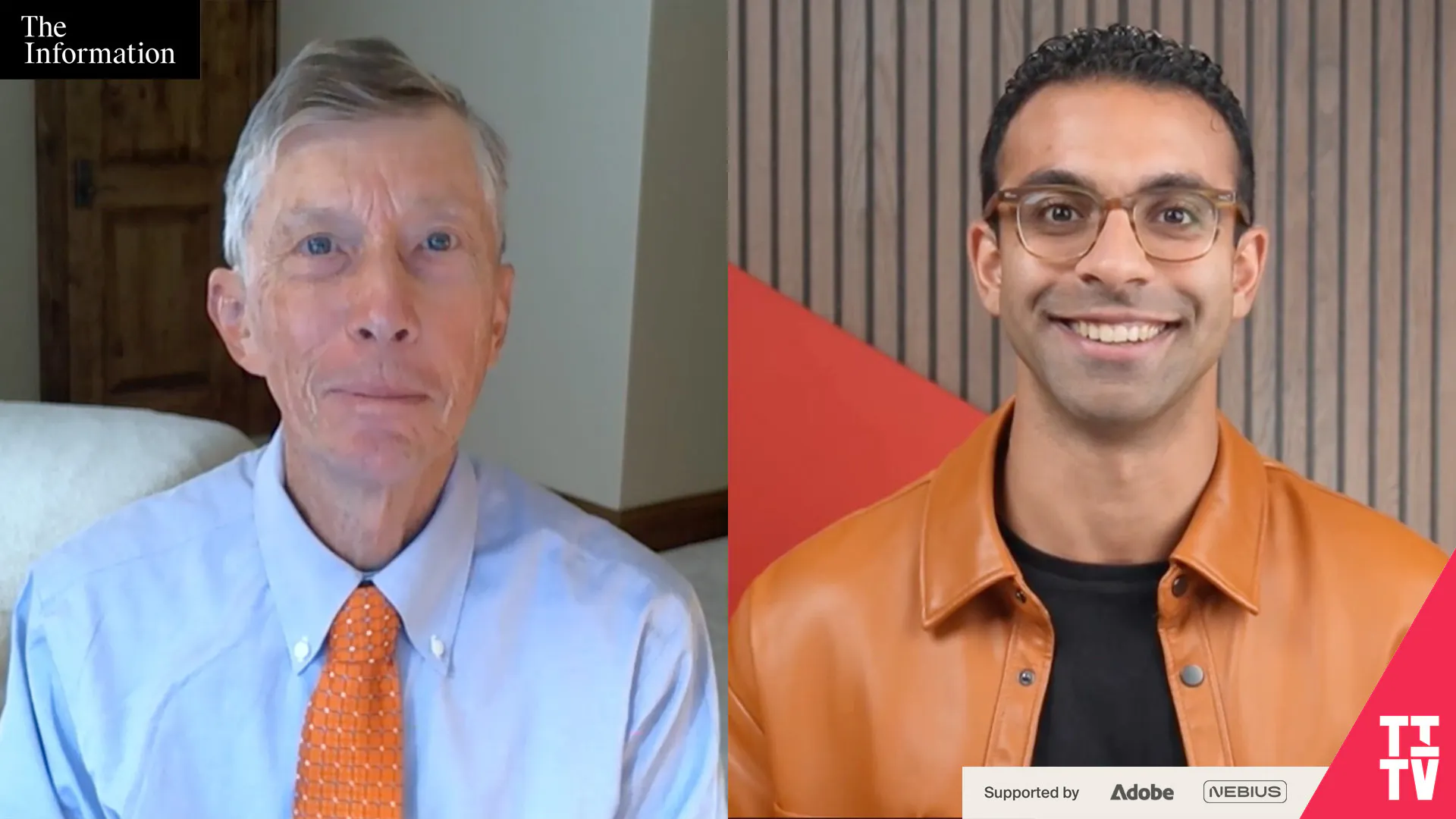
Sorry. We have no SpaceX news (if you define news as something you don’t already know). The rocket-and-cloud firm on Thursday priced its IPO at the $135 offering number announced last week, as it was widely expected to. Check back tomorrow, when shares start to trade. (Here’s a clue about the possible opening price.) Not to be a wet blanket, but don’t forget that a more telling indicator of investor sentiment is where the stock is trading in a year. (See University of Florida IPO expert Jay Ritter discussing SpaceX on The Information’s TITV on Thursday.)
Here’s a fun fact, though: SpaceX’s IPO valuation of around $1.75 trillion is 60% of Microsoft’s market capitalization, even though SpaceX’s 2025 revenue was just 6% of Microsoft’s. We’re not pointing this out to remind you yet again that SpaceX is overvalued. The point is that Microsoft, whose shares are down 19% so far this year, is undervalued. While that’s likely due primarily to worries about the impact of AI competition on its software business and the costs of its AI data center build-out, it doesn’t help that its gaming business is in shambles.
We’re basing that assessment on a blistering memo issued on Wednesday by the company’s new gaming chief, Asha Sharma. The bottom line is that the gaming business—which generated about 8% of Microsoft’s revenue in fiscal 2025—is barely making any money. And excluding the giant gaming firm Activision, which Microsoft acquired in late 2023, Microsoft’s gaming revenue has fallen over the past five years.
Let’s face it: The gaming industry is having a tough time. After surging during the pandemic, consumer spending on games globally has grown very slowly in the past five years, and barely at all for console games (like those that run on Xbox), according to data compiled by Matthew Ball. (To be sure, PC games—a business that is important to Microsoft—have grown at a faster rate, Ball’s data show.)
And console makers like Microsoft are struggling with skyrocketing component prices, as Sharma pointed out in her memo. Microsoft’s console business has been a money-loser for a while, as former gaming chief Phil Spencer acknowledged back in 2022. As component prices are now several times what Microsoft was paying last year, its losses on console sales must be very steep right now. All of this raises the question of why Microsoft is still in the gaming business, at least the hardware part—and whether its $75 billion purchase of Activision was a smart move.
So far there’s no sign CEO Satya Nadella is backing away from gaming. In an interview on Wednesday with The New York Times’ Hard Fork, he pointed out that gaming was an older division within Microsoft “than even Windows and Office.” He said Microsoft had to “build great games, build great hardware, but we’ve got to do it in an economically sustainable way.”
Sharma’s memo sets the stage for some serious cost-cutting at the gaming division in the next few months. While that should help boost the business’s profit margin, it won’t necessarily lift growth. Whatever strategic benefits of staying in gaming Nadella might see, there’s an argument that Microsoft should spin off or sell the gaming unit. Does Nadella want his legacy blighted by clinging to a troubled business for too long?
Snowflake’s AI Agent
As my colleague Kevin McLaughlin wrote today, Snowflake has an internally developed AI agent that helps CEO Sridhar Ramaswamy and Chief Financial Officer Brian Robins prepare for earnings conference calls. The agent prepares a list of expected questions and suggested answers.
Here’s a question: Does the agent hard-code the sycophancy of analysts, many of whom like to begin questions with the compliment “Great quarter, guys”?
In Other News
• Private equity firm KKR, the Kuwait Investment Authority, Nvidia and power-generation company Vistra launched a new company on Thursday to finance and help build AI data centers.
• Meta Platforms has fully separated its operations from Manus after Chinese authorities ordered the companies to unwind their $2 billion acquisition deal, Bloomberg reported.
• DoorDash launched a new AI assistant, Ask DoorDash, that customers can use to search for restaurants, shop for groceries and place orders in its app. In the coming weeks, customers will also be able to use the assistant to create restaurant reservations.
Today on The Information’s TITV
Check out today's episode of TITV in which we speak with Jay Ritter, “Mr. IPO,” about how SpaceX’s stock market debut could impact IPO markets.
Recommended Newsletter
Start your day with Applied AI, the newsletter from The Information that uncovers how leading businesses are leveraging AI to automate tasks across the board. Subscribe now for free to get it delivered straight to your inbox twice a week.
Join The Information and EY for an intimate executive discussion on closing the enterprise AI execution gap. We’ll share new research on embedding trust into AI decisions to accelerate business confidently. Request an invite.
Tickets are on sale now for The Information’s AI Agenda Live in San Francisco. Join top AI leaders for conversations on the future of AI, and secure early bird pricing while it lasts!
Save the Date: The Information returns to Napa Valley October 27-28 to convene senior women across tech, media, and finance. The event will feature two days of intimate, candid conversations with the leaders navigating today’s global shifts.