| | In this edition: South Africa launches diplomatic push amid xenophobic violence, Kenya’s growing Ebo͏ ͏ ͏ ͏ ͏ ͏ |
| |  | Africa |  |
| |
|
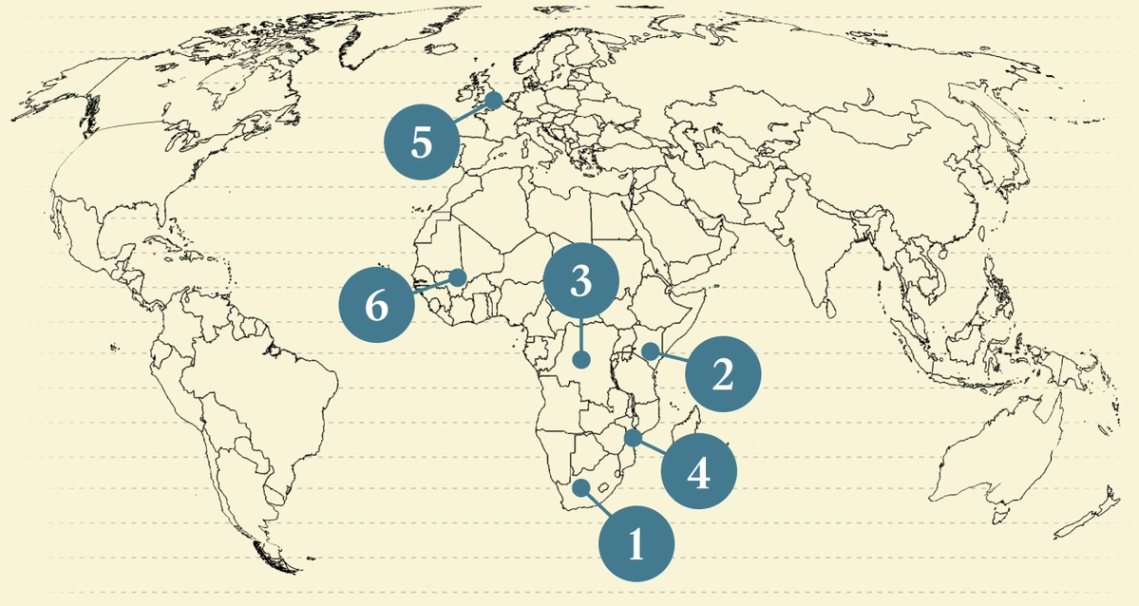 - Pretoria deploys envoys
- Ebola quarantine controversy
- DRC’s telco opportunity
- Mozambique’s mining change
- Ghana pursues investment
- Weekend Reads
 New research points to the power of paint. |
|
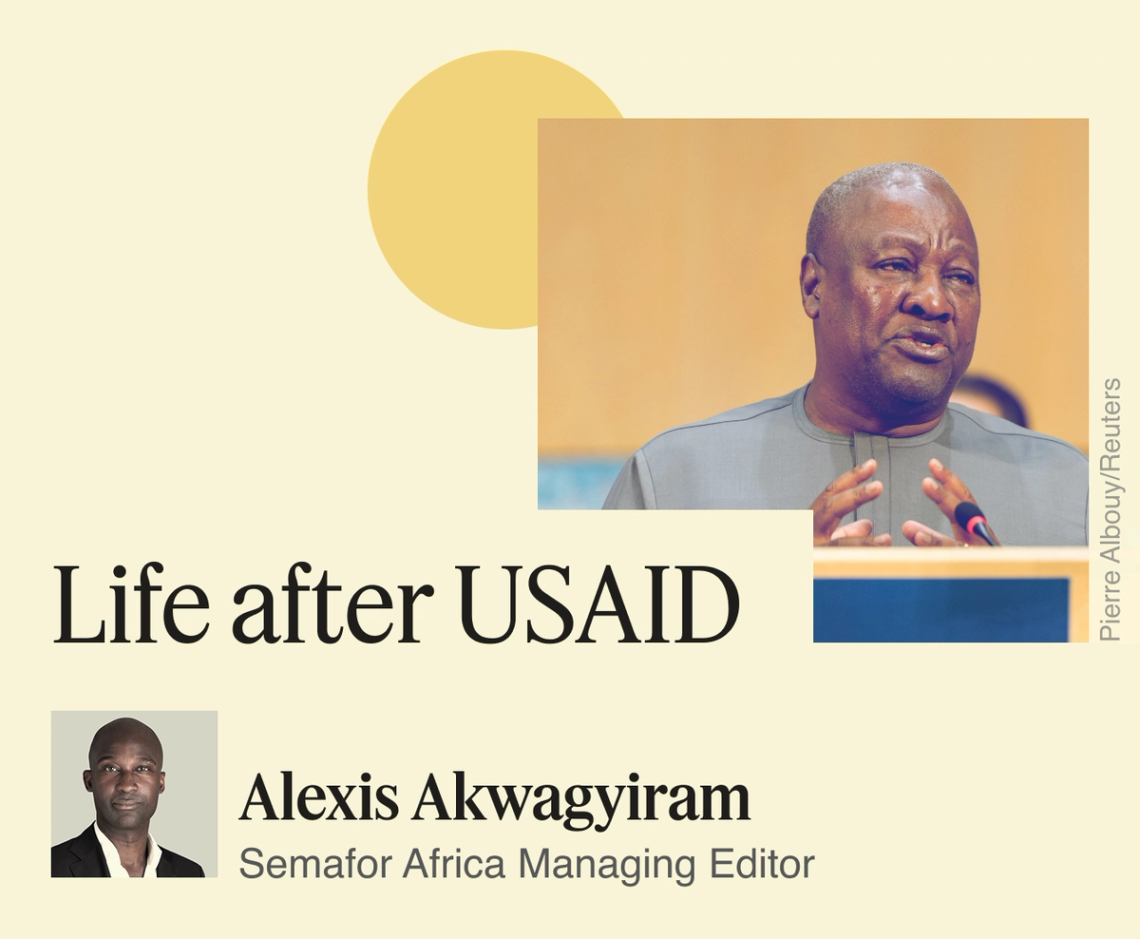 Ghana’s president gave a rare insight this week into what it is like to lead an African government hit by the shuttering of Washington’s international aid agency. Accra factored an average of $154 million a year from USAID into government budgets, of which nearly half went into “critical areas” of its health system, President John Dramani Mahama revealed at London’s Chatham House think tank. He tapped a government health fund to release $300 million but pointed out that other nations have been left reeling. That glimpse into policymaking in an increasingly turbulent world highlights the challenges faced by smaller nations and so-called middle powers in an era of dwindling multilateralism. Washington’s transactional approach to foreign policy is probably clearest in its global health policies, where the Trump administration’s America First Global Health Strategy asks countries to share health data about their citizens as a condition of receiving funding. Some African nations — including Ghana, Zambia, and Zimbabwe — have rejected the agreements. But US Secretary of State Marco Rubio, addressing a Senate committee this week, said 32 countries had signed the health compacts, including a number of African nations. Rubio said the strategy was an improvement on traditional donor-NGO relationships that created dependency and weakened local capacity. But critics warn the impact of US development cuts is already playing out through the Ebola outbreak in DR Congo, where the US was reportedly the largest donor, financing around 70% of humanitarian work. Nicholas Kristof of The New York Times recounted how health experts told him the sudden withdrawal of aid workers removed early warning systems that meant the Bundibugyo strain of Ebola, for which there is no vaccine yet, may have circulated, undetected, for weeks. At a time of shrinking aid budgets across Western countries and the shift to increased defense spending, it’s clear that African countries need to adapt to a new world. Mahama stressed the need for African governments to cut waste and improve governance as a buttress against increasingly frequent international shocks because a return to the old system of global support is very unlikely. His message was simple: “We must take our destinies into our own hands.” |
|
Pretoria sends envoys over migrant attacks |
 A man draped in a Ghana flag waits to be repatriated from South Africa. Siphiwe Sibeko/Reuters. A man draped in a Ghana flag waits to be repatriated from South Africa. Siphiwe Sibeko/Reuters.South African President Cyril Ramaphosa will dispatch special envoys across the continent to manage the diplomatic fallout from weeks of attacks targeting migrants. The violence has highlighted the depth of anger over an unemployment crisis in Africa’s biggest economy. This week, Mozambique said five of its citizens were killed across South Africa; Kenya, Lesotho and Zimbabwe have issued security advisories to their nationals; and Ghana, Malawi, Mozambique, and Nigeria have deployed emergency transport to evacuate their citizens. Political analysts say anti-migrant groups are weaponizing a mix of unemployment and inequality in South Africa, by some measures the most unequal society in the world where almost one in three is jobless. The violence comes weeks after the South African cabinet approved a plan to institutionalize a “First Safe Country” principle, which automatically disqualifies asylum seekers who pass through other safe nations before reaching South Africa. — Tiisetso Motsoeneng |
|
Ruto backs US Ebola quarantine facility |
|
Telco players eye opportunities in DRC |
| |  | Ruben Nyanguila |
| |
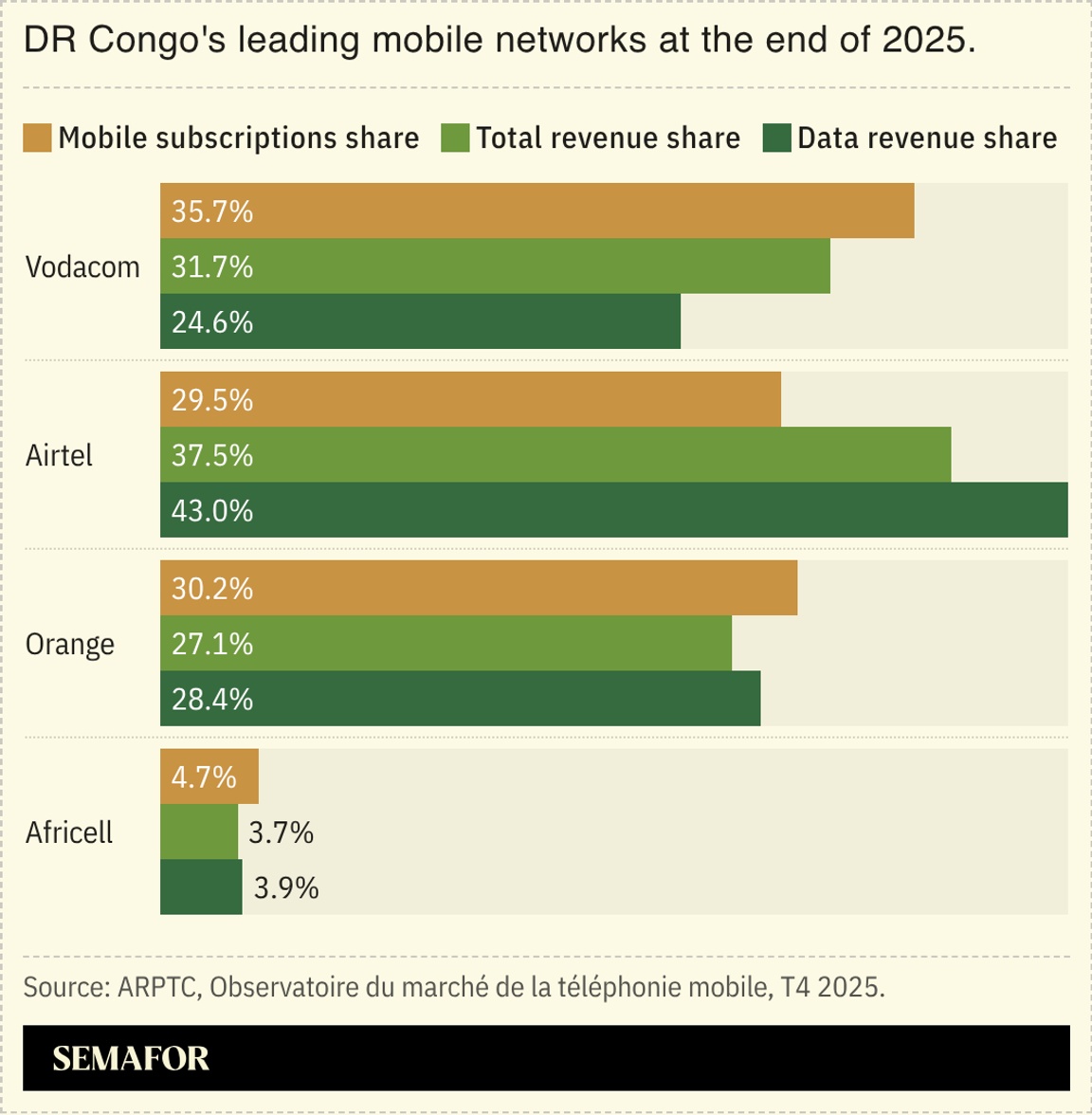 Two telecom tower companies said they would commit more than $200 million to building mobile infrastructure in DR Congo, betting that rising data use and growing demand from the mining sector will transform one of Africa’s largest underdeveloped telecom markets. The investment comes as African internet data consumption is projected to quadruple over the next five years. With a population of 110 million people and mobile penetration still well below saturation, DR Congo offers the scale investors want in a market where much of the network buildout remains ahead. Eastcastle Infrastructure, a Jersey-based operator with towers in DR Congo and Nigeria, is investing another $100 million in the central African country over the next 18 months after spending nearly $200 million since entering the market five years ago, its CEO told Semafor. London-listed Helios Towers, DR Congo’s largest independent tower operator by reported sites, announced a $110 million investment this year. |
|
Mozambique rolls out mining change |
 Goran Tomasevic/Reuters Goran Tomasevic/ReutersMozambique will take a 15% stake in domestic mining ventures and push for minerals to be processed locally by prohibiting companies from exporting non-processed resources. The southern African nation is the latest on the continent to pursue more government ownership of minerals, especially for elements critical to the global energy transition. It is the world’s third largest producer of graphite, a mineral used to make batteries, and has significant quantities of gold, copper, titanium, and tantalum, another mineral of high demand by electronics makers. Several African nations have imposed new rules in recent years to benefit from their mineral resources. Last week, DR Congo added lithium to a list of strategic minerals that are subject to increased royalties, as part of the government’s drive to boost revenues and Zimbabwe banned exports of all raw minerals last year to favour “in-country value addition.” But some mining experts point out that this is not necessarily a good strategy because smelting and refining is arguably the most volatile part of the minerals value chain. In situations where mined materials are in short supply, for example, processors must pay for their feedstock. — Alexander Onukwue |
|
Ghana pursues UK investment |
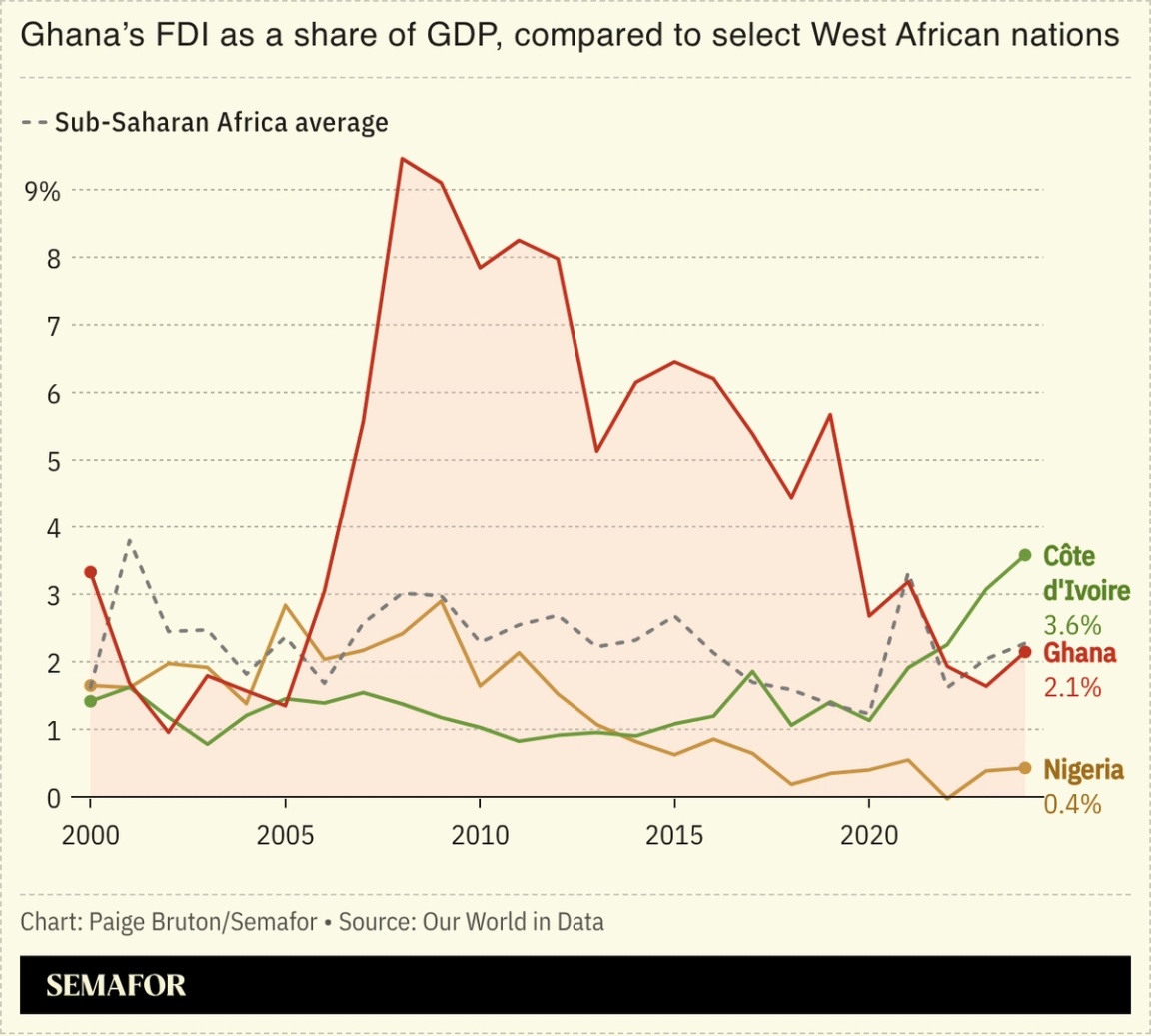 Ghana agreed private sector deals worth up to £215 million ($289 million) during an investment event in London, capping President John Dramani Mahama’s trip in which he sought to present the West African country as investor friendly after emerging from its worst economic crisis in decades. Mahama, meanwhile, said African debt was “mispriced” and there needed to be faster restructuring tools, while his finance minister said the gold and cocoa producer was targeting an investment-grade credit rating within three years. Ghana last month exited its $3 billion bailout program from the International Monetary Fund, a pact it entered under Mahama’s predecessor. The country sought IMF support in 2022 after debt-servicing costs soared following years of overspending and supply chain shocks drove up inflation and weakened the cedi currency. Inflation has, however, eased for 15 consecutive months, before an uptick in April. Fitch upgraded the country’s sovereign rating last month but its rating with global agencies remains at junk status. — Alexis Akwagyiram |
|
 - The recent increase in jihadist terrorist attacks in Mali offers lessons for Nigeria, which has also long struggled with politics and religion-motivated violence, a security expert argues in The Conversation. The prospect of collaboration between insurgent groups, as seen in Mali in April, could be devastating for Nigeria. West African nations should not abandon Mali and other junta-led Sahel states, Saheed Babajide Owonikoko argues, because if Mali falls to terrorism, the threat will only increase.
- South Africa’s industrial triangle — made up of the cities of Vereeniging, Vanderbijlpark and Sasolburg — was once a poster child for economic development following the apartheid era. However, in the following decades, the African National Congress failed to invest what was required to sustain heavy industry, and now unemployment stands at 56%. New Lines Magazine speaks to residents in some of South Africa’s most neglected communities about their challenges and hopes for the future.
- The Dangote refinery marks a historic economic shift for Nigeria and Africa more broadly, challenging a longstanding system in which the continent’s nations export crude oil while importing refined fuel, says African Arguments. The removal of Nigeria’s fuel subsidies in 2023 helped create conditions in which domestic refining could compete more effectively with foreign exporters, while the refinery itself has begun displacing imports and disrupting established trade dynamics. The project demonstrates how “African capital, sufficiently concentrated, can bypass the intermediary roles historically imposed on it,” Nouridin Melo argues.
- A Hausa-speaking journalism conference in mid-2024 hosted in Niamey, Niger, may not have aroused much attention at the time; however, an investigation by HumAngle Media suggests the summit was not only highly politicized, but a deliberate attempt to sow divisions among Hausa speakers in West African nations. Since Niger experienced a coup in 2023, analysts have identified increased activity from disinformation networks affiliated with Russia in the country, with one journalist who attended the conference describing it as a “sophisticated plan… to promot[e] the Nigerien junta and anti-Western sentiment.”
- Gulf states are increasingly filling the vacuum created by Washington scaling back its diplomatic and development footprint in Africa, writes analyst Annette Weber in Foreign Policy . They have extended their influence through ports, military bases, mediation efforts, and commercial investments across the continent, spending $65 billion in East Africa alone. Weber argues that the recent US retrenchment has enabled the United Arab Emirates and Qatar in particular to pursue more assertive roles in the Horn of Africa, often shaping local conflicts and political dynamics in places including Sudan to advance their own strategic interests rather than broader regional stability.
|
|
 Business & Macro |
|
|


