|
Dear all,
Please find below your weekly update from the UK Health Security Agency (UKHSA).
If you have any questions please get in touch by emailing externalaffairs@ukhsa.gov.uk
As always, you can also follow UKHSA on X, on Instagram, on BlueSky, and on LinkedIn for all the latest updates. You can also find the latest news from UKHSA on our news page on GOV.UK.
Best wishes,
UKHSA External Affairs Team
New stories
- STI rates fall with overall diagnoses down 8.3%
- Salmonella cases in England at a decade high
- Latest information on the hantavirus cruise ship outbreak
- Ebola disease outbreak in the Democratic Republic of the Congo and Uganda
- National Immunisation Network Conference 2026 - next week
Ongoing issues
- UKHSA and partners publish first One Health annual Vector-Borne Disease surveillance report
- UKHSA Strategy 2026–2029
- UKHSA Conference 2026 – sponsorship and exhibition sales open
UKHSA communications toolkits
- Information on how to access UKHSA communications toolkits
UKHSA data, analytics and surveillance
- Statistics at UKHSA
- UKSA data dashboard
- Notification of Infectious Diseases report
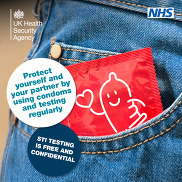
Yesterday we published our 2025 report on sexually transmitted infections (STIs) and screening for chlamydia in England.
The data shows shows a fall in STIs in England, with overall diagnoses down 8.3%. This is a positive development that reflects the hard work of sexual health services and community-based organisations.
The data shows:
- a 18.7% decline in syphilis diagnoses in gay and bisexual men which means the have fallen to their lowest level since 2016. There has been a 13.5% decrease in infectious syphilis diagnoses in all groups.
- a 10.9% decrease in gonorrhoea cases in all groups.
- a 7.3% decrease in first episode genital warts in all groups.
While these decreasing trends are cause for optimism, STI cases remain high and these infections continue to particularly affect young people aged 15 to 24 years, gay and bisexual men and people living in deprived areas.
UKHSA is reminding everyone having sex with new or casual partners to use a condom and get tested regularly, whatever their age, gender or sexual orientation.
|
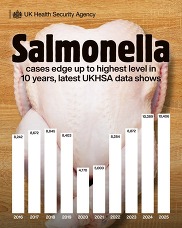
New data published last week by UKHSA shows consistently high levels of Salmonella and Campylobacter cases in England.
Salmonella cases increased slightly from 10,389 in 2024 to 10,406 in 2025 (the highest figure in a decade) but remain broadly comparable to the previous year.
Campylobacter cases in 2025 remained high and comparable to 2024, although they fell slightly from 70,392 in 2024 to 69,394 in 2025.
These infections spread in many ways - through contaminated food or water, contact with an infected person, or contact with infected animals or their environment.
We are reminding the public to take precautions against these bacteria, which are among the most common causes of food poisoning. Young children, older adults, and those with weakened immune systems should take extra care, as they are at higher risk of developing serious illness.
|
UKHSA is continuing to monitor, respond to and provide public health advice regarding an outbreak of hantavirus linked to the Dutch cruise ship MV Hondius. The risk to the general public remains very low.
Yesterday we confirmed that, following a review of the evidence on Andes hantavirus, the isolation period for contacts in the UK has now been reduced to 42 days in line with World Health Organization (WHO) guidance.
You can find further updates on the public health response:
|
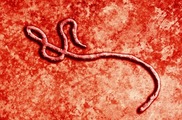
On 17 May, the World Health Organization (WHO) declared that the Ebola disease outbreak in the Democratic Republic of the Congo and Uganda constitutes a public health emergency of international concern (PHEIC).
The current Ebola outbreak poses a low risk to the UK population. Although the outbreak is serious, it is rare for Ebola cases to occur in returning travellers and the NHS has safe procedures in place for any such cases and specialist centres where they can be looked after. We will continue to work closely with international partners.
When a serious outbreak like this is identified overseas, UKHSA works to assess and monitor the situation and provide up to date information and advice to the public, travellers and the NHS. UKHSA also works with the Foreign, Commonwealth & Development Office, Department for Transport and Border Force to ensure travellers returning from affected areas know what to do if they develop symptoms. We also provide testing services to the NHS for anyone who is unwell after travelling to the affected areas and support workers returning from the outbreak area.
As this situation develops, we will continuously update our blog post 'what is Ebola and how does it spread?'.
|
We produce a range of blog posts to help provide accurate and timely health security information to the public. These often cover common questions people have, including on infectious disease risk, prevalence in the UK, transmission and signs and symptoms.
Latest posts on our blog include:
You can also sign up to subscribe for updates when new blog posts are published.
The UKHSA’s 13th National Immunisation Network (NIN26) Conference will be taking place next week, on Tuesday 9 and Wednesday 10 June 2026, at the Park Plaza in London Victoria. There will be a focus on current and emerging scientific issues in immunisation and implementation issues relating to the national immunisation programme.
You can find out more information and secure your place for the conference via Eventsforce.
If you have any questions, please email NIN2020@ukhsa.gov.uk.
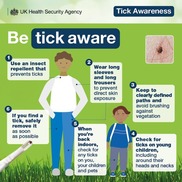
Last week the UK Health Security Agency (UKHSA), the Department for Environment, Food and Rural Affairs (Defra) and the Animal and Plant Health Agency (APHA) published the first annual One Health Vector-Borne Disease Surveillance report. The report emphasises the importance of a One Health approach bringing together human, animal and vector data from 2025 to give a comprehensive picture of the changing risk of vector-borne diseases in England. Alongside this, we also updated the National contingency plans for invasive Aedes mosquitoes in England and for West Nile virus with Defra.
Figures published in the annual report show that Lyme disease remains the most common locally acquired vector-borne infection in England, with 1,168 laboratory-confirmed acute cases reported in 2025. These figures demonstrate the importance of the public taking simple precautions such as avoiding tick bites and being aware of signs and symptoms after spending time outdoors.
A reminder that we have a tick awareness communications toolkit. It contains background information, key messages of the campaign, key behaviours for the public to follow, social media assets, suggested social media copy and links to useful information.
While no locally acquired mosquito-borne infections were reported in England, the report also highlights a growing risk from mosquito-borne viruses, particularly West Nile virus and Usutu virus.
To support the publication of the report, we published a blog on tick-borne encephalitis virus after the report found 2 further probable cases of TBE complex were identified in England in 2025.
|
We recently published the UK Health Security Agency (UKHSA) strategy 2026 - 2029, which shares our vision of how we will deliver on our mission as a science-led, data-driven and operationally excellent agency.
The document acknowledges that health threats are becoming more frequent, more complex and more interconnected. Climate change, global mobility, ageing populations and declining vaccination rates are reshaping the risk landscape.
The new strategy sets out how UKHSA will rise to that challenge. It commits to modernising how we detect, analyse and respond to health threats, investing in digital, data and laboratory capability, and deepening the partnerships that make effective health protection possible. Health equity sits at the heart of this work.
We will report our progress publicly and measure success against clear indicators. By 2029, we want the UK's health security to be in stronger hands — and we look forward to delivering that alongside you.
|

The UKHSA Conference 2026 will take place on Tuesday 22 and Wednesday 23 September at Manchester Central. The conference will bring together partners from across public health, health protection and the wider health security community to share learning, showcase innovation and strengthen collaboration.
Exhibition stands are now available to purchase, offering a fantastic opportunity to showcase your organisation to delegates from across the health security community. Sponsorship packages are also available for organisations looking to raise their profile and support this flagship event. To find out more about exhibition and sponsorship opportunities, check out our Sponsorship and Exhibition Brochure.
For more information, or if you’d like to arrange a call, email us at conference@ukhsa.gov.uk
|
The UKHSA External Affairs Team prepares a range of communications toolkits to support stakeholders to communicate health security messaging to your networks.
Our live toolkits cover a range of issues including outbreak response, vaccination programmes, and resources to help mitigate against the health impacts of adverse weather.
These can all be found on our Google Drive. Our vaccine communications toolkits are also available on the Campaign Resource Centre. If you are experiencing any issues accessing the Drive or the CRC, or have any questions on the toolkits please email externalaffairs@ukhsa.gov.uk.
UKHSA collects and publishes statistics, data and analysis related to planning, preventing and responding to external health threats. This includes official statistical publications on COVID-19, immunisation, healthcare associated infections, other infectious diseases, mortality surveillance and sexual and reproductive health. These can be found on our statistics page on GOV.UK.
The UKHSA data dashboard provides a weekly summary of public health data. It has recently been updated to include Invasive Group A Strep, tick surveillance and hepatitis C data. Over time, the data dashboard will be expanded further to present a wider range of data on public health topics in line with the remit of the UKHSA.
The weekly UKHSA NOIDs publication is currently paused (from 3 April 2025) to make changes, including adding the notifiable diseases which became reportable under the Health Protection (Notification) (Amendment) Regulations from 6 April 2025.
Public health action will continue to be taken on notifications as usual. It will not be impacted by the reporting development work.
For reports already published, please be aware that due to changes in how the data is processed and mapped, including local authority codes that have been updated to the latest geographies, it would be inaccurate to compare data since week 27 to historic reports.
The causative agent reports will continue to be published.
|