Thanks for reading The Briefing, our nightly column where we break down the day’s news. If you like what you see, I encourage you to subscribe to our reporting here.
Greetings!
If SpaceX pulls off what is widely described in the news media as the “largest IPO in history” next month, it will be a testament to Elon Musk’s skills as a salesman. The company’s newly public IPO prospectus makes it plain that SpaceX is largely a telecom firm with a rocket launch business on the side, with future growth coming from a cloud computing arm. Valued in line with its peers in those businesses, it would probably be worth no more than $700 billion (and that’s being generous).
In other words, anyone who buys into the company at the vaunted $1.75 trillion valuation (that’s at least what bankers are hoping SpaceX will achieve) is paying $1 trillion for the promise that SpaceX will overcome major technological hurdles and launch an orbital cloud-computing service, as well as industrialize the moon. It’s admirable Musk is shooting for the stars—but investors need to know what they’re getting into.
The prospectus breaks down SpaceX’s businesses by segment. About 60% of last year’s revenue came from the Starlink satellite broadband business. It grew revenue 32% in the first quarter, which suggests revenue could grow to $15 billion this year. But its long-term growth outlook is cloudy. Starlink is a niche service—it only has 10.3 million subscribers globally, compared to the 29 million U.S. subscribers just one broadband provider, Comcast, reports.
Cable firms like Comcast trade at around 2 times forward revenue. Even if you assume Starlink can keep growing at a double-digit percentage rate for a couple more years, it arguably is worth only about 10 times revenue, which implies a value around $150 billion.
Then there’s SpaceX’s rocket launch segment, whose revenue last year was $4 billion. The business shrank in the first quarter, but that’s likely a blip due to the timing of launches. More importantly, the space segment’s growth should accelerate once SpaceX gets its Starship rocket into service, but the timing on that is very up in the air. (The latest test launch, due on Thursday evening, was delayed).
Let’s use last year’s figure as a valuation basis. While SpaceX has no clear-cut rivals, given its stranglehold on the rocket launch business, my colleague Theo Wayt recently wrote that the biggest public competitor focused solely on space is Rocket Lab, which is trading at 73 times next year’s revenue, according to Koyfin data. That's way above any other space company, to be sure. But to be generous to SpaceX, given the potential of Starship, we’ll apply it to SpaceX’s space segment. That values the space segment at close to $300 billion.
And finally there’s SpaceX’s AI unit, a mix of the advertising business in X (formerly known as Twitter) and AI revenue. Advertising revenue last year was just $1.8 billion, a slight increase on 2024. That’s unlikely to grow much in the coming years (in fact, ad revenue fell in the first quarter). X’s performance brings to mind Snap, whose ad business is also not growing much, and that company is trading at 1.6 times next year’s revenue. Applying Snap’s multiple to X implies a valuation of just $3 billion.
The AI unit also had revenue of $1.35 billion from AI services last year, and it is likely to grow sharply now that SpaceX has started renting out AI servers to firms like Anthropic. We know from the prospectus that Anthropic is paying $1.25 billion a month for much of SpaceX’s capacity. That deal starts around now, so it will lift the AI unit’s revenue meaningfully this year.
Given that payment, the infrastructure business should be able to generate $20 billion a year going forward. Rivals CoreWeave and Nebius are trading at 5.8 and 10.7 times forward sales, respectively: Applying the average multiple of these two to SpaceX’s cloud unit suggests it is worth $165 billion.
Then there’s AI coding assistant Cursor, which SpaceX has an option to buy for $60 billion. The Information reported last month that Cursor had hit an annualized revenue run rate of $2.7 billion in March and was expected to lift that to $7 billion by year’s end. Given the competition Cursor faces from a range of other coding assistants, it’s hard to see that Cursor is worth more than what SpaceX is paying.
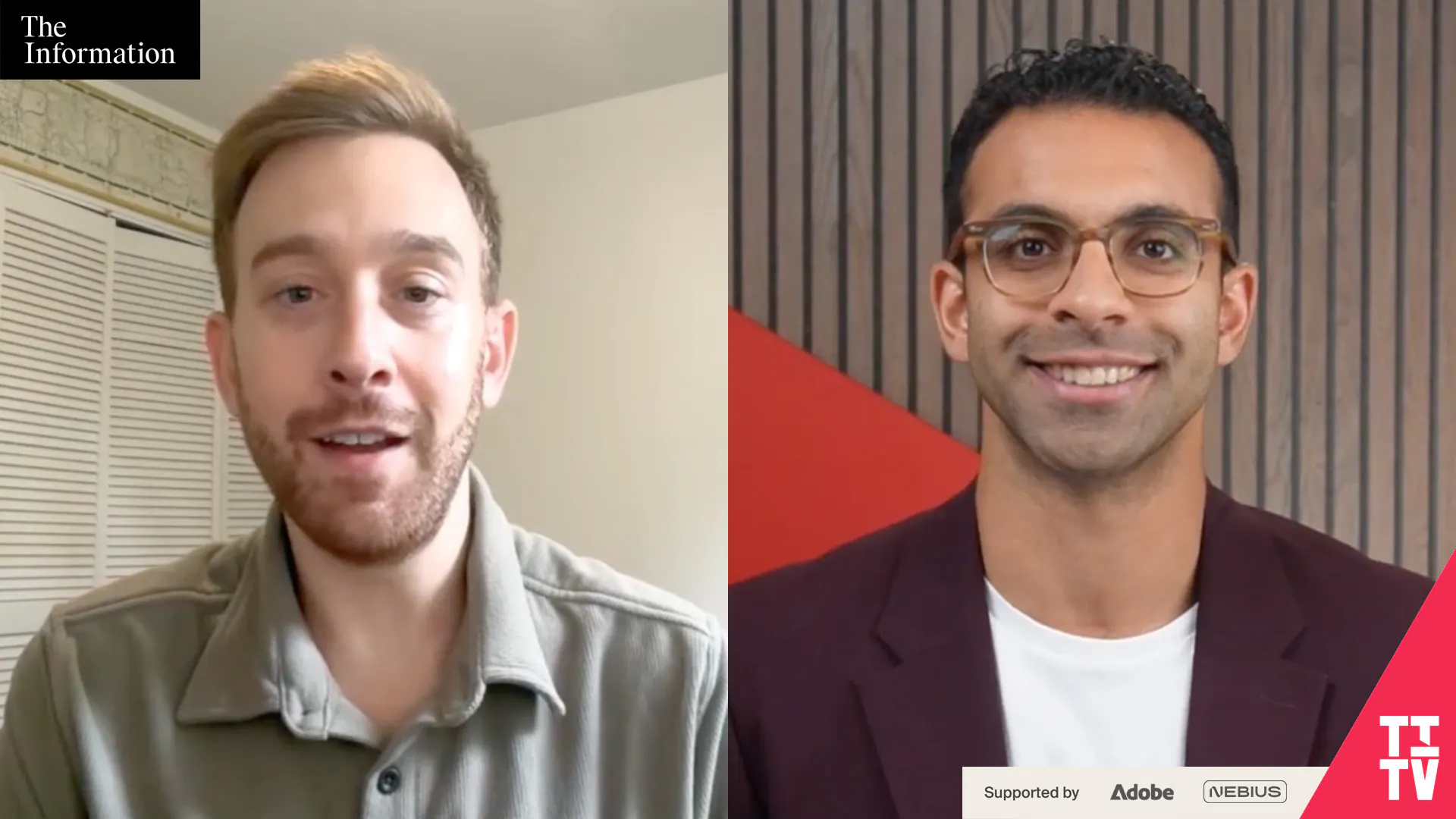
If we include Cursor, the total of this back-of-the-envelope math is $678 billion, which some would say is too high. For instance, Ross Gerber, a SpaceX investor who runs investment firm Gerber Kawasaki, said on The Information’s TITV today the “core business is worth $500 billion” but investors add another trillion dollars in value “just because it’s Elon.”
IPO Mania
IPOs are back! Oura said on Wednesday it had filed confidential paperwork with the Securities and Exchange Commission to go public, while crypto exchange Blockchain did the same thing on Thursday. OpenAI is expected to follow suit before too long.
(See our story today about OpenAI’s first-quarter revenue and this one about Sam Altman’s cautionary comments to staff about timing of an IPO.) And of course SpaceX made its IPO prospectus public, setting the scene for a mid-June offering.
Oura, which makes a ring people wear to track their health, announced on Wednesday it was “on pace to surpass five million” paid subscribers this quarter, “up 4x over the past two years.” It was valued most recently at $11 billion, according to PitchBook. The timing for an IPO seems right—health-based wearables are a thing nowadays. Shares of its closest public competitor, Garmin, are up 18.6% so far this year.
Prospects for Blockchain, a crypto brokerage, are a bit different given the poor crypto market. Rivals like Coinbase, Gemini and Crypto.com have been cutting jobs. Blockchain’s valuation has fallen to $6.9 billion as of April 2025, we reported today, about half its 2022 valuation. Our report also noted that two other crypto firms, Kraken and Grayscale, filed confidentially to go public last year, but neither one has moved forward.
If both proceed, they’d likely end up going public in the summer, around the same time OpenAI could hit the market. But nothing is guaranteed.
In Other News
• The White House postponed a Thursday afternoon ceremony to sign an executive order on AI. The order was expected to establish a voluntary framework for AI companies to submit future advanced AI models to intelligence and other government agencies for review ahead of their public release.
• Peter Levine, an Andreessen Horowitz general partner who stepped back from his role as an active investor six years ago after receiving treatment for a rare form of cancer, has made a full recovery and is returning to full-time work, according to a spokesperson for the venture capital giant.
Today on The Information’s TITV
Check out today's episode of TITV in which we unpack the last minute developments on an AI executive order from the White House.
Recommended Newsletter
Start your day with Applied AI, the newsletter from The Information that uncovers how leading businesses are leveraging AI to automate tasks across the board. Subscribe now for free to get it delivered straight to your inbox twice a week.
Tickets are on sale now for The Information’s AI Agenda Live in San Francisco. Join top AI leaders for conversations on the future of AI, and secure early bird pricing while it lasts!
Save the Date: The Information returns to Napa Valley October 27-28 to convene senior women across tech, media, and finance. The event will feature two days of intimate, candid conversations with the leaders navigating today’s global shifts.