(Karl Mondon/Getty Images) |
|
|
|
Standard Chartered announced a major “it’s not you, it’s me” corporate makeover yesterday with a 15% cut of its administrative roles (roughly 8,000 jobs) by 2030 in favor of automated systems, a move that CEO Bill Winters says is “not cost-cutting, but it is replacing, in some cases, lower-value human capital with the financial capital and the investment capital that we are putting in.” So congratulations to Standard Chartered employees who survive this culling; obviously, your CEO thinks you’re at least medium-value human capital.
Stocks sank on Tuesday as traders shifted to risk-off mode, with inflation fears increasing uncertainty about the Fed’s next move. Yields on 30-year Treasurys hit the highest level since 2007. |
|
|
|
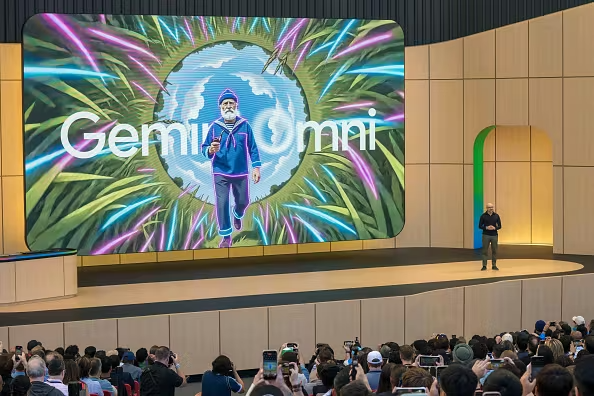
Each year at Google’s I/O conference, developers get a look at the new products and features that will define the company for the next year. This year’s three-hour-long keynote featured a dizzying array of announcements, but investors were not feeling it. The stock started the day down, and stayed down, dropping over 2% during Tuesday’s session.
|
- Probably the most significant new thing Google announced was Gemini Spark, Google’s answer to the persistent AI agent OpenClaw. Spark can run long-running tasks for you even when you turn off your phone or shut your laptop.
-
The next version of Google’s Gemini AI model was announced — Gemini 3.5. But only the smaller, faster version of the model, Gemini Flash 3.5, was ready for release. The company did showcase the new model’s benchmark scores, at least.
- Google also previewed a brand-new multimodal model called Google Omni and released the first version, Gemini Omni Flash.
- An update to Google’s AI-powered coding tool was released — Antigravity 2.0 — which competes against Anthropic’s Claude Code and OpenAI’s Codex.
-
And what tech keynote would be complete without some kind of AI face computer. Google announced a pair of chunky “audio glasses” in a partnership with Gentle Monster and Warby Parker that lets you ask Gemini what you are looking at. Warby’s stock absolutely tanked despite the news.
|
|
|
|
Investors may have been looking at this list of announcements and wondering if this justifies the $180 billion to $190 billion in capex that the company says it will spend this year — and saying, well, no.
In reality, most of that capex money is being spent on its increasingly important TPU 8 AI chips, which are seeing some real traction in the market. |
|
|
|
A real-world AI solution from Surf Air Mobility |
The companies best positioned to turn AI into real business impact are those embedded inside operationally complex industries: aviation, logistics, energy.
Surf Air Mobility (NYSE: SRFM) is doing this for private aviation and air mobility. SurfOS, its AI-enabled operating system powered by Palantir, runs inside the airlines that Surf Air Mobility operates today.
For example, two new SurfOS modules went live in Surf Air Mobility’s own scheduled operations: a fuel optimization module that tracks actual burn against plan on every departure and reconciles uplift records against vendor invoices, and a crew reserve module that automates assignments previously handled manually.
Now SurfOS is going to market across a $156B global aviation services industry with Palantir’s forward-deployed engineers supporting enterprise deals.
Built on real operations. Deployed across the industry. See the SurfOS commercial plan. |
|
|
|
Spotify announced Tuesday that it’s expanding its “Verified by Spotify” badges to include podcasts. According to the platform, podcasts with the verification badge have sustained listener activity, are in good standing with Spotify rules, and have “verified audience authenticity.”
|
- Spotify first introduced the tool last month for music profiles, acting as a signal for users that the verified profile represents a human. Podcast badges will appear on select shows beginning Wednesday and expand over time.
-
Spotify, like other major platforms including YouTube, has been expanding its efforts to distinguish between human content and AI-generated content on its platform.
-
Though, maybe some users don’t care either way: a January survey found that Gen Z and millennials listen to roughly three hours of AI music a week.
-
The rise of GenAI music and voice-cloning tools has seen a surge in deepfakes and unauthorized voice cloning across several platforms, while also boosting a “resurrection economy” that is propelling big deals for the estates of deceased celebrities.
-
With its podcast announcement, Spotify reaffirmed its policy against impersonation, including AI-generated content.
|
|
|
|
|