Regional Updates
 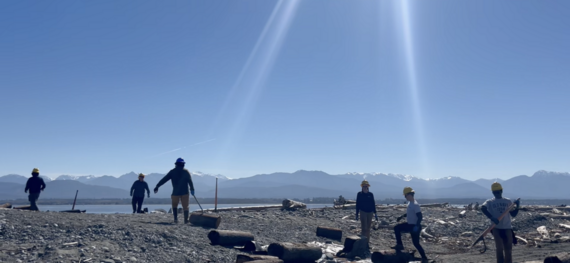 Hard hats on, mountains behind. The WCC Marine Debris team gets to work at Dungeness Spit this April (Photo Credit: Jacob Williams, WCC Crew Member).
20,000 Pounds, Six Miles, One Healthier Shoreline
This April, the Washington Department of Natural Resources Marine Debris Removal Program’s Washington Conservation Corps (WCC) crew completed a major cleanup effort along Dungeness Spit, in partnership with the Jamestown S’Klallam Tribe. Over two weeks, the crew removed nearly 20,000 pounds of creosote-treated wood and other marine debris from the six-mile stretch of shoreline along the spit.
Creosote, a wood preservative found in marine pilings, docks, old rail lines, and telephone poles, contains toxic compounds that can leach into surrounding waters and pose risks to marine life. Creosote has been linked to increased mortality rates and developmental abnormalities in herring eggs, which are a crucial food source for salmon.
Efforts like this help reduce ongoing contamination and protect critical nearshore habitats. Learn more about creosote and how to report debris on the MyCoast website.
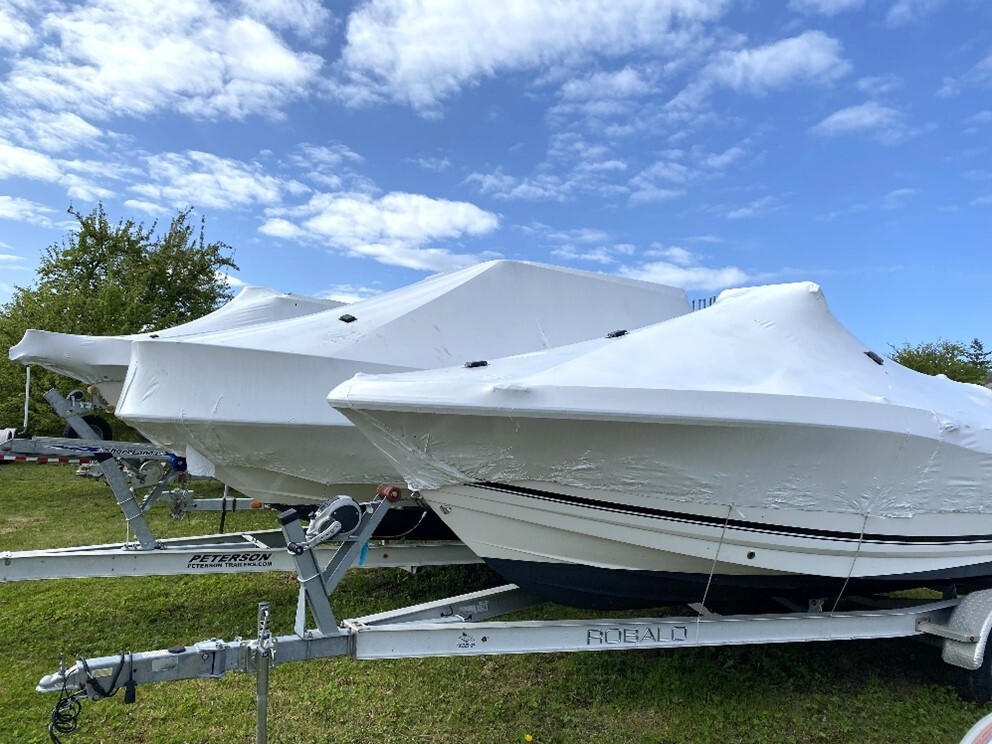 Did you know, the plastic on a single 25-foot boat is the equivalent of 2,060 plastic bags, or the amount an average American uses in 5.5 years? (Photo Credit: Kari Koski).
Think Before You Shrink!
The San Juan County Department of Environmental Stewardship and Plastic Free Salish Sea are piloting a recycling program to make it easy for people to recycle the plastic film on their shrink-wrapped boats. Just in time for boating season, the pilot program is offering a limited number of free recycling bags to put used wrap in that will be picked up with other film collection programs. Wrapping boats is a fast-growing trend with most of the used plastic ending up in landfills. This pilot program seeks to gauge the willingness of boaters and businesses to take extra steps needed to recycle and better understand costs of collection and transfer to processing centers. If successful, businesses that offer wrapping will include recycling into their service fees.
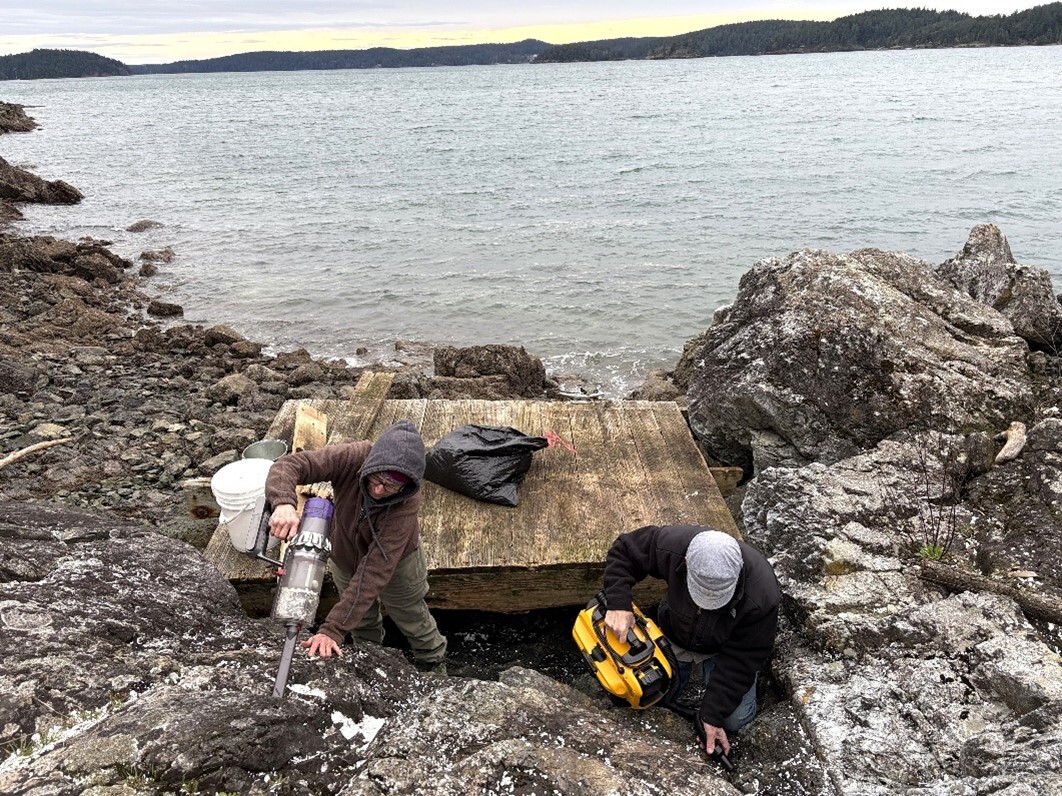 Volunteers vacuum tiny foam beads out of the intertidal on Orcas Island (Photo Credit: Pete Moe).
Who Ya Gonna Call?
This spring, a dock with foam floats drifted into West Sound, Orcas Island, and wedged into the rocks of a private beach. A neighbor reported it using MyCoast, and as an organizer of community beach cleanups and board member of local recycling services, she knew just who to call to organize a speedy local cleanup—volunteers! They were granted permission and made several trips equipped with electric vacuums and battery packs, tackling the tedious job of removing tiny beads embedded in rocky crevices. Now, a new group with members from San Juan County, Orcas Recycling Services, and the Great Islands Cleanup is forming to mobilize quick community response in coordination with MyCoast partners. Stay tuned!
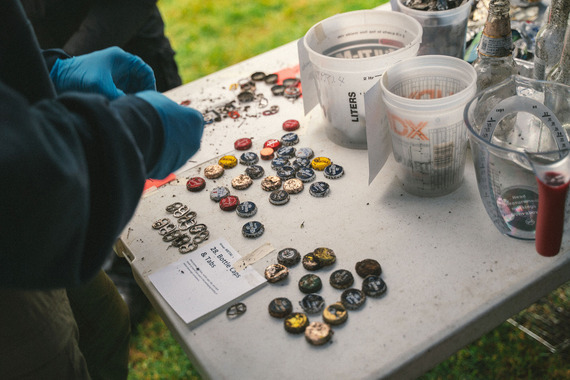 Volunteers sort debris collected during an Escaped Trash Assessment Protocol Survey cleanup (Photo Credit: Edward Yamut).
Escaped Trash Assessment Protocol Surveys
Puget Soundkeeper Alliance (Soundkeeper) is organizing a cleanup and community science project at Golden Gardens Park in Seattle this month. The Escaped Trash Assessment Protocol (ETAP) Survey was developed by the U.S. Environmental Protection Agency’s Trash Free Waters program. It is a quantitative survey protocol that provides a standard method for collecting and assessing litter data. Every year, Soundkeeper and other community science groups conduct ETAP surveys to better understand debris types and trends, and quantifies marine trash loadings that occur around Puget Sound. In 2026, the Golden Gardens ETAP event will be held on Saturday, May 16, 2026, and Puget Soundkeeper will also be conducting a second ETAP event at Mill Creek Canyon Earthworks Park in Kent, WA in August. To get involved, visit Puget Soundkeeper’s Events Page for information on how to register for these events.
Learn more about the survey protocol on the Environmental Protection Agency website. If you want to get involved in an ETAP event in your area or learn how to run your own ETAP and contribute to the effort to reduce marine pollution, contact Heather Trim at Zero Waste Washington, heather@zerowastewashington.org.
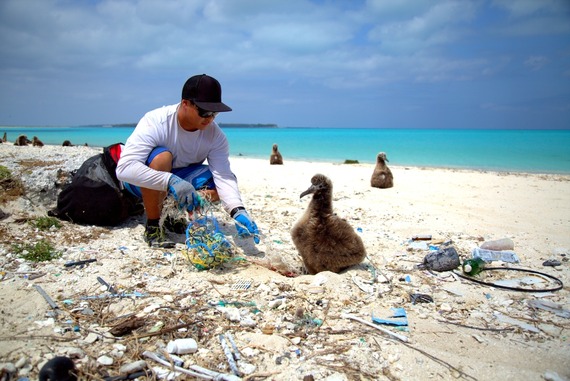 Clean ups protect Laysan Albatross and other ocean animals from plastic pollution (Photo Credit: NOAA).
Ocean Conservancy’s New Wildlife Impact Calculator
In March 2026, Ocean Conservancy researchers released a free, publicly available tool called the Wildlife Impact Calculator. This tool allows users anywhere in the world to estimate the potential benefit of their cleanup for seabirds, sea turtles, and marine mammals. Users enter the number of plastic items collected from a cleanup event to see how many animal lives would have been at risk had those items been ingested. The development of the calculator was informed by award-winning peer-reviewed research, also led by Ocean Conservancy scientists, that quantifies the deadly dose of macroplastics ingested by seabirds, sea turtles, and marine mammals.
 NOAA Marine Debris Program Updates
 |
|
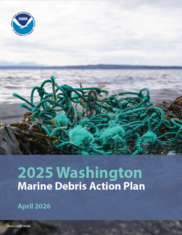
2025 Washington Marine Debris Action Plan Published
The NOAA Marine Debris Program is pleased to share the 2025–2031 Washington Marine Debris Action Plan. This document is the result of a collaborative and voluntary effort of organizations throughout Washington state. The Action Plan outlines work that will take place over the next six years to help reduce the impacts of marine debris on Washington state and its coasts, people, and wildlife.
|
 |
|
Reminder: Ocean Conservancy Requests Applications for Large Marine Debris Removal Project
Ocean Conservancy, with support provided by a 2024 award from the NOAA Marine Debris Program, requests applications for their Large Marine Debris Removal Project for the removal of large marine debris, including derelict fishing gear, from remote and hard-to-reach marine environments, including the Great Lakes. Successful projects will remove, prevent, and monitor large marine debris and derelict fishing gear that is too difficult to remove by hand due to its size, volume, or location.
Applications are due on May 31, 2026 by 5:00 PM Eastern Daylight Time (EDT)
Learn more on Ocean Conservancy’s Large Marine Debris Removal Project’s website.
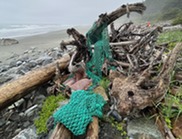
Photo caption: Derelict fishing nets litter the wrack line on Ankau Beach in Yakutat, Alaska (Photo Credit: Hava Rohloff/Ocean Conservancy).
|
 |
|
2027 Sea Grant Knauss Fellowship Applications Now Open
The Sea Grant Dean John A. Knauss Marine Policy Fellowship provides a unique educational experience to students enrolled in graduate programs in fields related to ocean, coastal, and Great Lakes resources and in the national policy decisions affecting those resources. The program matches graduate students with hosts in legislative or executive branch offices in the Washington, D.C., area for a one-year (12-month) paid Fellowship. The Sea Grant Knauss Fellowship is an extension of a student’s education—a chance to serve, grow, and learn in an area they may not have been exposed to in the past.
The application deadline is June 3, 2026. Additional information and application resources are available at seagrant.noaa.gov/prospective.
|
 |
|
Crunching the Numbers: An Abandoned and Derelict Vessel Reporting Platform
Under a 2023 award from the NOAA Marine Debris Program, the BoatUS Foundation is working to increase understanding of the abandoned and derelict vessel (ADV) issue. The BoatUS Foundation has utilized MyCoast to build a public reporting platform to collect information and improve understanding of the scope of the ADV problem, making this information available to the public as well as states and partners working to remove and prevent ADVs.
So far, 922 vessel reports have been submitted from boaters and other coastal stewards across the country. Report a vessel to help BoatUS Foundation gather information in your community! Anyone can report a vessel to the database, and you don’t need an account to submit a report.
|
 |
|
Pre-K–12 Teachers: Promote Watershed and Ocean Stewardship in Your School or Local Community by Becoming a NOAA Ocean Guardian School
A NOAA Ocean Guardian School makes a commitment to the protection and conservation of its local watersheds, ocean, and special ocean areas, like national marine sanctuaries, through implementing a school- or community-based conservation project.
Participation without funding: Any school (PreK-12) in the United States may apply to participate without funding.
Participation with funding: Grant amounts range from $1,000 - $4,000 per school depending on the program region and funding year. Any school (PreK-12) from the following locations may apply for an Ocean Guardian School grant.
-
Washington counties: Clallam, Jefferson, Grays Harbor and Pacific
Applications for the 2026 - 2027 school year are now available. Apply by July 1, 2026.
|
|