Ahoy and welcome back to Buffering. Your usual host, Joe Adalian, is off, but we’re happy to still provide some counterprogramming for those of you bored of the dance numbers and dead-on-arrival quips at this week’s upfront presentations. Below, a lightning-fast recap of all that, Ross Barkan’s analysis of Ben Shapiro’s cratering business, one of Rachel Handler’s reports back from Cannes, and Victoria Bekiempis’s walk-through of what comes next from Baldonigate |
|
|
|
Subscribe now to get unlimited access to everything New York, including subscriber-only newsletters, exclusive perks, the New York app, and more. |
|
|
|
In this edition: David Ellison, Josh D’Amaro, Ben Shapiro, Park Chan-wook, Demi Moore, Chloé Zhao, Stellan Skarsgård, Ruth Negga, Laura Wandel, Diego Céspedes, Isaach De Bankolé, and Paul Laverty, Blake Lively, Ryan Reynolds, Justin Baldoni, and several publicists still wrapped up in lawsuits … |
|
|
|
➽ Your 30-Second Upfront-Week Recap
|
|
|
|
➽ Streaming Ad Tiers Are Gobbling Up the TV Market
|
That’s the big takeaway from The Wall Street Journal’s report on the TV ad business this week. “Streaming ad spending is projected to approach $20 billion by 2029, not far off linear-TV ad spending,” the paper reports, fueled by the overwhelming popularity of ad-supported streaming in the wake of once-commercial-free services like Netflix or HBO Max holding their noses supercharging their subscriber bases with ad-supported streaming plans sold at lower rates. And their popularity is growing: Ad tiers drove nearly 51 million of the new subscriptions across streaming over the last nine quarters, according to Antenna. For most of these streamers, it’s important to understand that a customer paying that cheaper rate is often more valuable — in hard dollars and cents, since they monetize them with ads — than those who shell out for premium subs. —E.V.B.
|
|
|
|
➽ Ben Shapiro’s Media Empire Is Collapsing
|
There was a time, not very long ago, when Ben Shapiro could reasonably call himself the king of all conservative media. His company, the Daily Wire, dominated social-media feeds and podcast apps. Virality seemed to be the Daily Wire’s birthright: Scathing news items on Nancy Pelosi’s salon visits during the pandemic racked up millions more views than the websites of Fox News, CNN, and the New York Times. That’s all over now. The Daily Wire is instituting significant layoffs. Its YouTube channel’s subscriber base is starting to shrink, and its website has emerged as one of the great traffic losers in conservative media. The top comments all mock the low view counts.
If a variety of poor business decisions can be blamed, in part, for the Daily Wire’s fall from grace — ill-fated investments in feature films, an epic fantasy series, and peculiar merchandise — the greater story is the collapse of Shapiro’s constituency, especially among the young media consumers who once fueled the Daily Wire’s runaway growth….
➽ Read more from Ross Barkan at Intelligencer. |
|
|
|
Photo: Laurent Hou/Hans Lucas/AFP via Getty Images |
It’s a strange year for the Cannes Film Festival, what with the noticeable lack of Hollywood films and an ominous new partnership with Meta that means, among other things, a TikTok star is interviewing people on the red carpet through Ray-Ban Meta glasses and Mark Zuckerberg’s underlings have erected a temporary lair at the Majestic hotel for “hands-on demos” of their “latest AI and wearable technologies.”
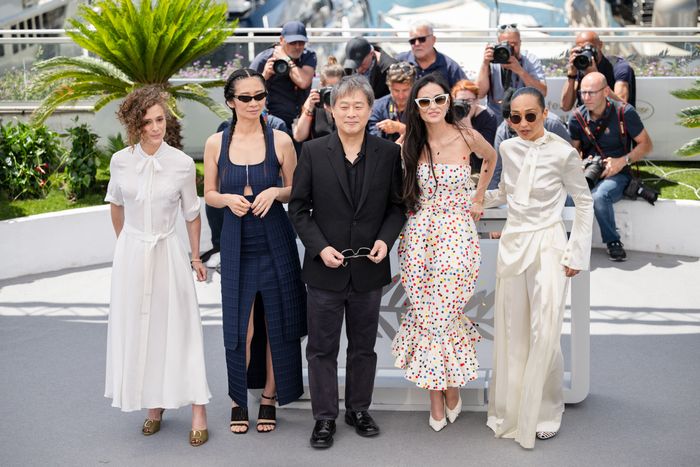
The fest kicked off this afternoon with a relatively low-key press conference featuring this year’s jury members: jury president Park Chan-wook, Demi Moore, Chloé Zhao, Stellan Skarsgård, Ruth Negga, Laura Wandel, Diego Céspedes, Isaach De Bankolé, and Paul Laverty. When asked about their initial reaction to being asked to serve on the jury, most waxed poetic about art and film and gratitude. Negga said her “heart skipped a beat,” Zhao said she was seeing the experience “almost as coming to a master class with Park,” and Moore said she felt like a “kid getting to play a grown-up.”
Skarsgård answered the question last: “Finally. I was so relieved because I didn’t die before I got here.” Most questions were directed at Park and Moore, who seemed to choose her words carefully with the knowledge that they would be blogged about exactly like this. Park equanimously answered a question about art and politics and whether they should be separate.
“I don’t think politics and arts should be divided,” he said. “I think it’s a strange concept to think that they’re in conflict with each other. Just because a work of art has a political statement, it should not be considered an enemy of art. At the same time, just because a film is not making a political statement, that film should not be ignored. Even if we are to make a brilliant political statement, if it’s not expressed artfully enough, it would just be propaganda. So what I want to say is that art and politics are not concepts that are in conflict with each other; as long as they’re artistically expressed, they are valuable.”
A similar question was posed to Moore — “Do you think speaking openly about politics is detrimental to the movies, to the industry, to this festival?” — and she answered vaguely. “I would hope not,” she said. “I think part of art is about expression. So if we start censoring ourselves, then I think we shut down the very core of our creativity, which is, I think, where we can discover truth and answers.”
Moore was a bit more expressive when asked for her thoughts about AI implementation and whether we’re “doing enough to protect human artistry.” She got a little Reese Witherspoon with it for a moment: “Well, that’s a big question. I think the reality is that to resist — I always feel that againstness breeds againstness. AI is here. And so to fight it is to, in a sense, to fight something that is a battle that we will lose. So to find ways in which we can work with it, I think is a more valuable path to take.”
But then she added, “To your question of, Are we doing enough to protect ourselves? I don’t know the answer to that. And so my inclination would be to say probably not. There’s beautiful aspects of being able to utilize it, but the truth is, there really isn’t anything to fear because what it can never replace is what true art comes from, which is not the physical. It comes from the soul. It comes from the spirit of each and every one of us sitting here, to each and every one of us that creates every day, and that they can never re-create through something that’s technical.”
A British journalist asked Moore if things had improved at all for women in Hollywood behind and in front of the camera and concluded with a brief aside about how Moore should have won an Oscar for The Substance, which the actress rather wisely did not address. “I think it’s still a work-in-progress,” Moore replied. She started to say more, then interrupted herself. “There’s more I can say, but I think that’s that.”
The conference ended with a question about whether Skarsgård and Moore felt a “spring in their step” after their recent Cannes successes — his with Sentimental Value in 2025, hers with The Substance in 2024. “Well, the spring in my step is a bit limp,” said Skarsgård. “I’ve had a stroke, and I’m trying to get up all the staircases … It’s really difficult.” Moore laughed. “I don’t think I can follow that,” she said. “It was a very unexpected impact with The Substance, particularly starting here. It really set off something that just really opened wide a reception for this film that was quite life-changing. So the spring in my step is quite buoyant. Sorry, Stellan.”
➽ Follow this story though the rest of our Cannes 2026 coverage. |
|
|
|
Photo Illustration: Vulture/NBCUniversal |
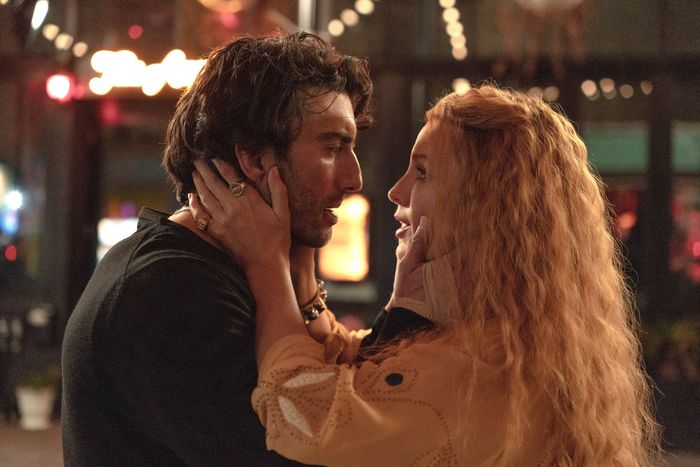
Just over a week ago, it seemed as if the most anticipated (and dreaded) celebrity court battle of 2026 had come to a close: Blake Lively and Justin Baldoni announced a settlement in her $300 million It Ends With Us lawsuit. Despite the barrage of headlines playing on the idea “end,” “ends,” and “ended,” the legal disputes between the former co-stars and their individual publicity teams still continue to simmer. The multiverse surrounding this feud is still expanding.
Several publicists enmeshed in the Lively-Baldoni drama (Stephanie Jones, Jennifer Abel, and Melissa Nathan) remain engaged in their own legal battle in a separate litigation. Lively wants Baldoni to pay legal fees related to the June 9, 2025 dismissal of his defamation claim against her. Meanwhile, the movie’s insurer, Harco, has insisted in court papers that it shouldn’t be on the hook for Lively-related liabilities. Here are some answers to your burning questions about the nonending end of It Ends With Us litigation.
|
|
|
|
Wait, go back: What exactly started the It Ends With Us litigation? |
There’s so much to unpack, so we’ll keep it as simple as possible. On December 21, 2024, the New York Times reported Lively’s claims against Baldoni and It Ends With Us producer Jamey Heath, including allegations that they ignored her physical boundaries and made inappropriate sexual comments. The newspaper, referring to Lively’s legal complaint, reported that Baldoni brought on crisis-PR specialists to “bury” her after she vocalized these concerns. Baldoni sued the Times on December 31, 2024, alleging the newspaper “cherry-picked” information. Also on December 31, 2024, Lively sued Baldoni Wayfarer, It Ends With Us Movie LLC, publicists Melissa Nathan and Jennifer Abel, as well as Nathan’s PR company. Lively claimed sexual harassment and intentional infliction of emotional distress, as well as other legal claims.
On January 15, 2025, Baldoni filed suit against Lively; her husband, Ryan Reynolds; and their publicist, insisting that her claims of mistreatment were defamatory. There was also a December 24, 2024 lawsuit filed by one of Baldoni’s former publicists, Stephanie Jones, against him, Nathan, and Abel. Nathan, Abel, and Wayfarer filed counterclaims against Jones. As time went on, however, the main litigation — between Lively and Baldoni — lost steam. Baldoni’s defamation claims against Lively and the Times were thrown out. A few weeks before the trial was supposed to start on May 18, Judge Lewis Liman tossed Lively’s sexual-harassment allegation, in addition to her defamation and conspiracy claims. There were no remaining claims against Baldoni. So the claims remaining for Lively at trial would have included breach of contract and retaliation.
|
|
|
|
And after all that, they just … settled? |
Yes, and with a joint statement. “The end product — the movie It Ends With Us — is a source of pride to all of us who worked to bring it to life. Rais |
|
|
|
|