News you can use from the National Ocean Service
May 14, 2026
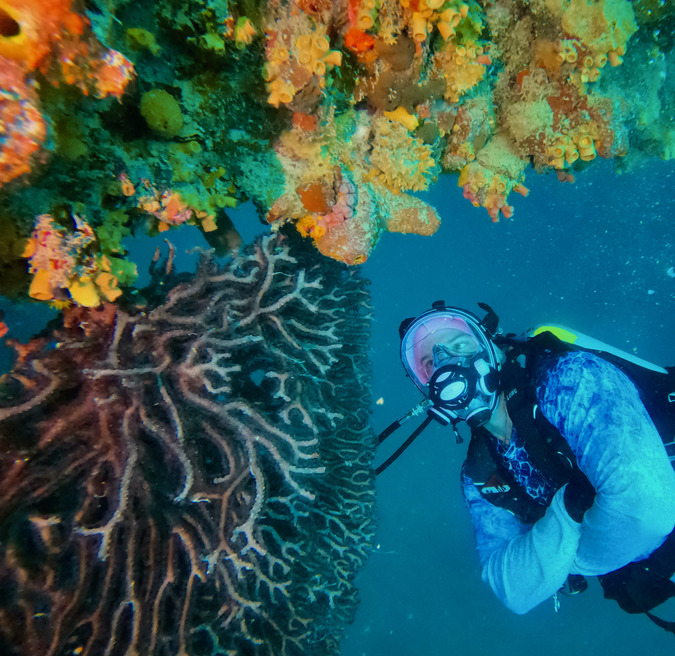 Check out this new career profile featuring Harrison Albert, Permit Coordinator and Resource Protection Specialist in the Office of National Marine Sanctuaries.
Monday, May 18, 2026 | 3 p.m. ET
Thursday, May 21, 2026 | 1 p.m. ET
Tuesday, May 26, 2026 | 2 p.m. ET

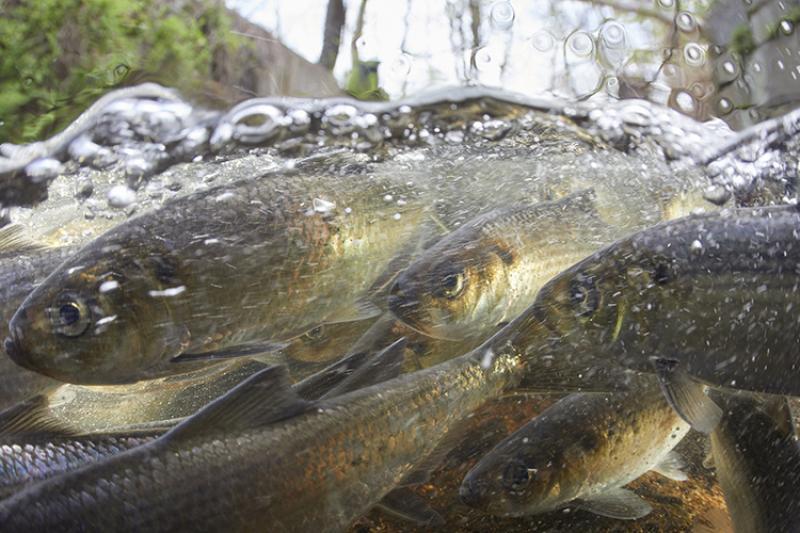 River herring in Town Brook, Massachusetts. Credit: Keith Ellenbogen.
Region: Nationwide
Required equipment: Computer and internet access
From April through June of each year, an underwater camera system records short videos (10 - 60 seconds long) of river herring at the Jenny Grist Mill dam located on Town Brook in Plymouth, Massachusetts. After each video is recorded, it is immediately uploaded to the Plymouth River Herring website so that folks like you can help count the number of herring passing through the dam. These video counts are used to make real-time estimates of the total number of herring that have migrated so far this year. Every video count matters, and helps bring us one step closer to an accurate estimate of the total herring run.
 |
The NOAA Ocean Guardian School program supports PreK-12 public and private schools nationwide who wish to establish conservation projects on campus or in their community—protecting watersheds and special areas like national marine sanctuaries. As part of this national initiative, teachers serve as campus leaders in enacting year-long stewardship projects in one of the program’s five pathways: school gardens/habitats, marine debris, watershed restoration, energy and ocean health, and “the six Rs” (Rethink/Reduce/Refuse/Reuse/Recycle/Rot).
Read the stories from a few of the enthusiastic teachers making an impact by leading NOAA Ocean Guardian School projects on their campus or in their classrooms.
Apply to be a 2026 - 2027 NOAA Ocean Guardian School.
Application Deadline: Wednesday, July 1, 2026
Participation without funding: Any school (PreK-12) in the United States may apply to participate without funding.
Participation with funding: Grant amounts range from $1,000 - $4,000 per school depending on the program region and funding year.
Any school (PreK-12) from the following locations may apply for an Ocean Guardian School grant.
- California counties: Del Norte, Humboldt, Trinity, Mendocino, Lake, Sonoma, Napa, Marin, Solano, San Francisco, Contra Costa, Sacramento, San Mateo, Alameda, San Joaquin, Santa Cruz, Santa Clara, Stanislaus, Monterey, San Benito, Merced, Madera, Fresno, San Luis Obispo, Kern, Kings, Tulare, Santa Barbara, and Ventura
- Washington counties: Clallam, Jefferson, Grays Harbor, and Pacific
- Oregon counties: Clatsop, Tillamook, Lincoln, Lane, Douglas, Coos, and Curry
- Hawaiʻi
|

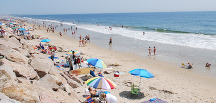
As beach season approaches, explore the following resources to learn how you can best prepare, stay aware, and take action through changing beach, water, and weather conditions.
-
Blue IQ: In this video series, ocean and coastal safety expert Bruckner Chase educates beachgoers about common threats in coastal waters. The series addresses the disconnect between ocean conditions and what people think they know about beach safety and their swimming strength.
-
Wave Safe: Join Bruckner Chase, Ocean and Coastal Safety Expert, as he visits our nation’s favorite coasts to share expert tips and local knowledge on how to ensure your visit to any beach stays fun and safe.
-
Rip Current Survival Guide: Rip currents can be dangerous to anyone. If you know how to spot them, and how to respond if caught in one, you could save your own life or the lives of others.
-
Discover Your World with NOAA Rip Currents Activity: Demonstrate why swimmers caught in rip currents have to swim following the shoreline to escape.
|
 |
The Sea Grant Dean John A. Knauss Marine Policy Fellowship provides a unique educational experience to students enrolled in graduate programs in fields related to ocean, coastal and Great Lakes resources and in the national policy decisions affecting those resources. The program matches graduate students with hosts in legislative or executive branch offices in the Washington, D.C., area for a one-year (12-month) paid Fellowship. The Sea Grant Knauss Fellowship is an extension of a student’s education—a chance to serve, grow and learn in an area they may not have been exposed to in the past.
Do you have an item you'd like to share
in future issues of The Watch?
|
|