Hi! Cool Britannia? Time Out just named London as the best city in the world for culture, based on a survey of more than 24,000 city dwellers globally, beating second-place Paris and New York in third. Today we’re exploring: |
-
For the content: Netflix has spent $135 billion on movies and TV shows in 10 years.
- Flashing red: Fresh tomato prices are rising sharply in the US.
- Title holders: What are America’s most popular baby names?
|
Netflix says it spent $135 billion on content in the last 10 years |
By far the world’s biggest streaming service, it’s hardly a surprise that Netflix has deep pockets when it comes to spending on licensing and producing the best — and sometimes absolutely not the best — movies and TV shows for its platform. But just how deep have those pockets been? |
According to a blog post accompanying a new interactive site called “The Netflix Effect,” a slightly navel-gazing exploration of the streamer’s various global impacts, the company revealed that it has invested more than $135B into films and TV series over the last decade.
And that might not be slowing down, as Ted Sarandos, Netflix’s co-CEO, went on to write: “While other entertainment companies pull back, we’re leaning in — spending tens of billions of dollars on content every year, investing in production facilities from Spain to New Jersey.”
Interestingly though, as Sherwood has noted previously, Netflix isn’t spending quite as wildly as it has in the past… at least on one metric. |
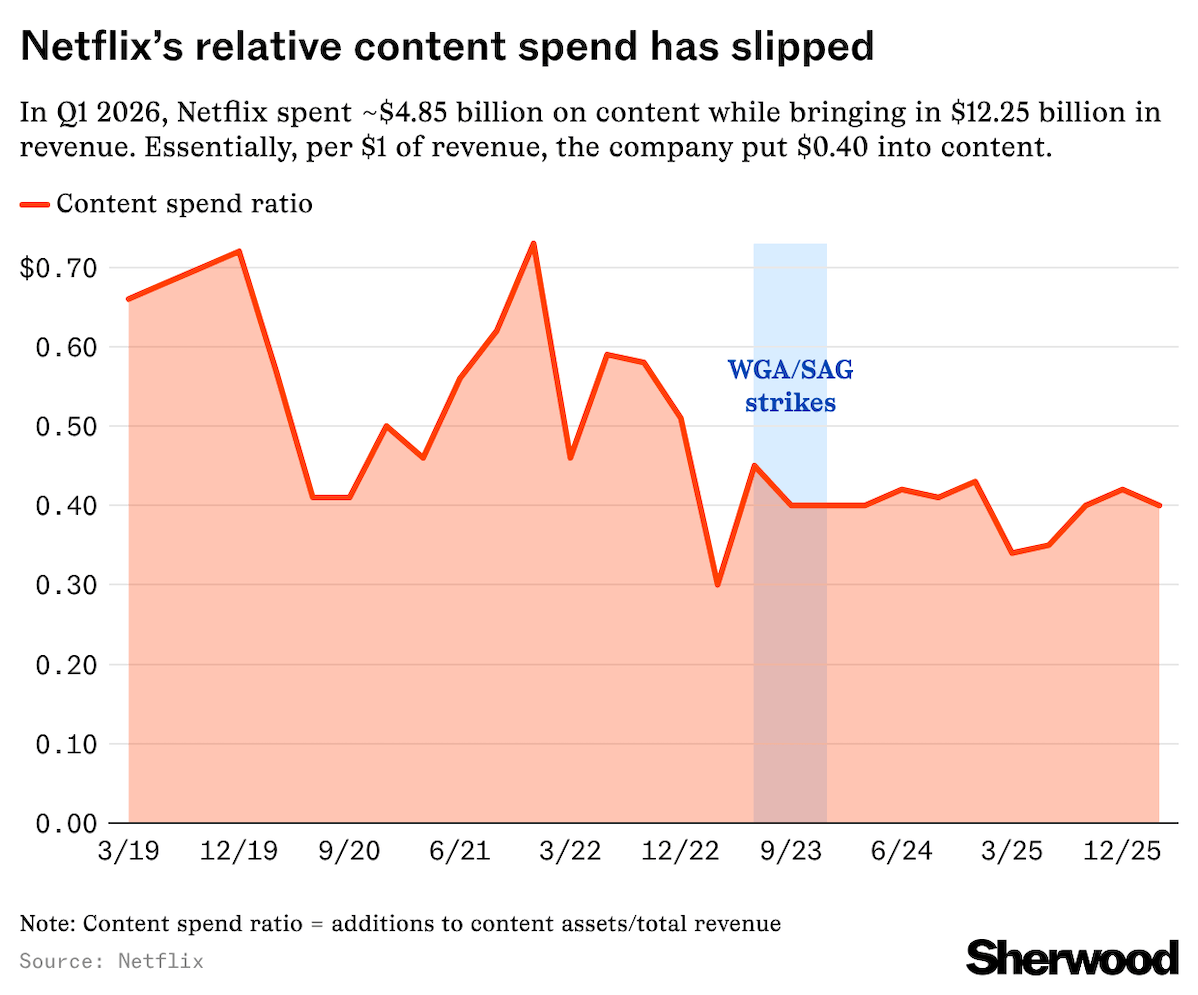
While the raw dollar figures that Netflix has been pumping into content have kept growing, having climbed from just under $3 billion in Q1 2019 to around $4.85 billion for the same period this year, that spending has slumped as a share of the company’s total revenues.
At the peak of its content cash splashing days in late 2021, Netflix was spending 73 cents for every dollar of revenue it brought in, as the streamer added hits, old and new, to try and keep viewers’ eyes glued to their screens in the post-pandemic landscape. In the last quarter, that ratio had dropped to just 40 cents per dollar. |
Fresh tomato prices surged 40% in April as supply shocks mount |
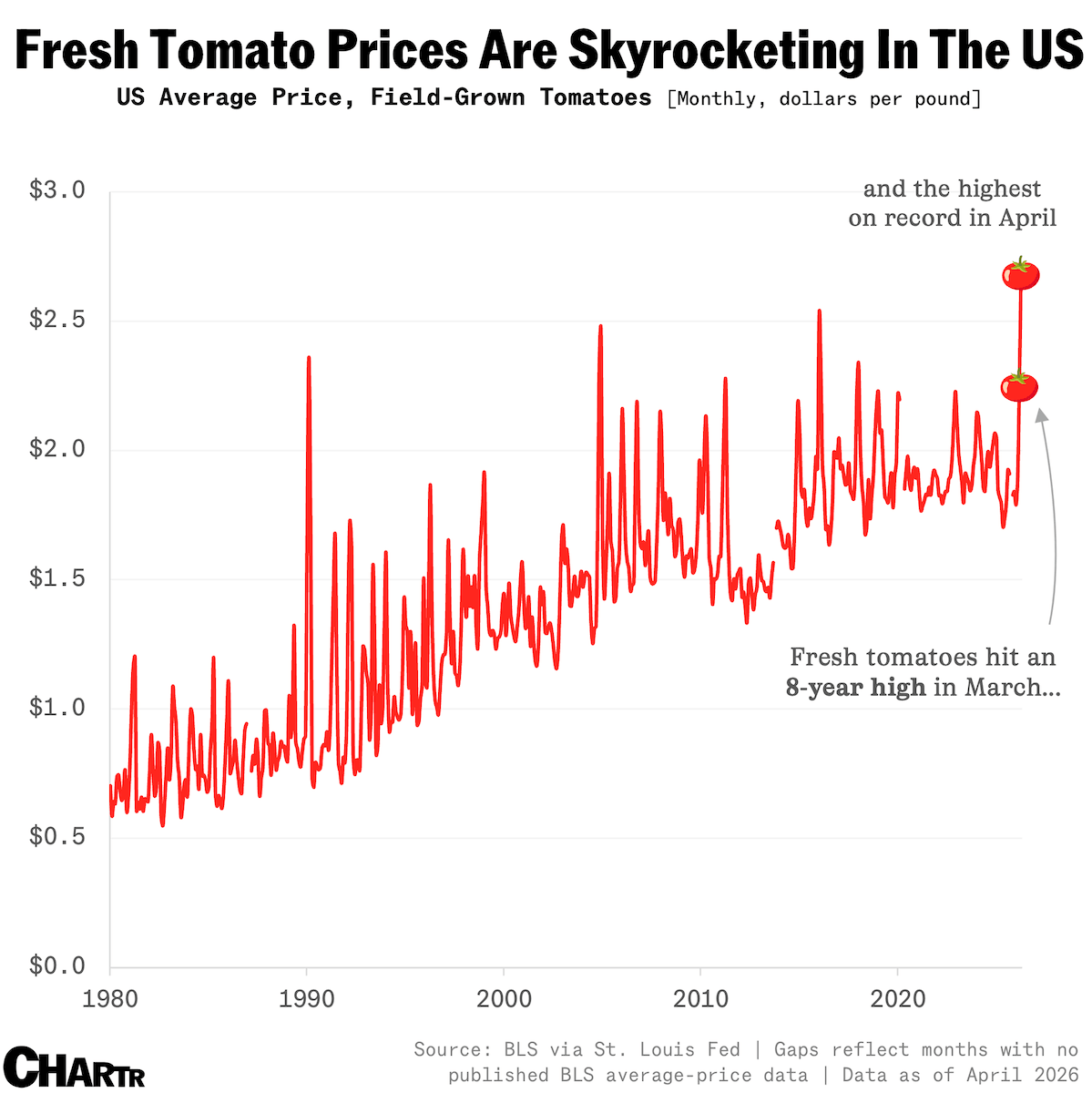
Gas might be the inflation supervillain getting all of the attention right now, but don't ignore the humble tomato. According to the latest CPI data, released Tuesday, fresh tomato prices surged nearly 40% year-over-year in April, contributing to a broader rise in fresh vegetable prices, which were up 11.5% from a year earlier.
|
Indeed, the average retail price of field-grown tomatoes climbed to $2.69 per pound in April — the highest level in the Bureau of Labor Statistics’ data going back to 1980, after prices had already reached an eight-year high in March.
|
The spike reflects a triple whammy of import pressure, domestic supply strain, and rising energy costs. With Mexico accounting for more than 90% of US fresh tomato imports, a 17% tariff imposed on Mexican tomatoes last year was already squeezing prices before heavy rain and disease further hurt the country’s yields.
At the same time, a rare freeze in Florida, the largest fresh tomato supplier in the US, devastated domestic crops, with state officials estimating 80% production losses. Then came the Iran war-driven energy shock, as higher fuel costs made it more expensive to move perishable produce quickly from field to grocery shelf.
One small relief, though, is that the rest of your BLT is holding up a little better. Lettuce prices are at least cooling, up 7.9% year over year in April — still elevated, but easing from 13.8% in March — while bacon has remained relatively level, rising just 0.7%. |
|
|
|
America’s most popular baby names haven’t changed in 7 years |
Last Friday, new data from the Social Security Administration revealed the most popular baby names in the US for 2025, based on Social Security card applications submitted at birth.
The report found that Olivia and Liam were again the top picks for baby girls and boys — marking the seventh straight year that Olivia’s been top of mind for girl moms and dads, and the ninth where Liam has been the go-to for American boys. |
Per the SSA release, last year saw “minimal shifts in the top 10” overall. Among the girls, Charlotte overtook Emma as the second-most-popular name after six years of the latter consistently being runner-up; Ava, which had been in the top 10 since 2005, was replaced in the ranking by Eliana.
Meanwhile, the boys’ top 10 was entirely unchanged from last year — also the same as 2023, barring a few slight position switches — with the top 4 rounded out by Noah, Oliver, and Theodore.
Looking back at SSA data across the last century, America’s most popular male name has switched hands only seven times, fewer than the 11 different names that have topped the girls’ chart through the years. |
That US females have more first-name diversity tracks with Census data, which surveyed the names of all US adults (not just babies) and found that 16% of the nation’s males had one of the top 10 most frequent names among men, compared with 7.8% of women.
However, even as parents’ top picks have remained largely the same, they are being chosen less frequently. Indeed, Liam was down 6% year over year from the ~22,000 births recorded for 2024 — still nowhere near the ~60,000 seen during peak Robert in the 1920s — while there were ~6,000 fewer new Olivias in 2025 than a decade before. |
|
|
|
-
Amazon just rolled out a 30-minute delivery service for groceries and household essentials in four US cities, with plans to expand to dozens more.
-
The US Mint’s $1 Steve Jobs coin, part of this year’s annual American Innovation Coin Program, went on sale yesterday — a roll of 100 will cost you $154.50.
-
Renovation costs for the Lincoln Memorial Reflecting Pool are nearing $15 million, which is almost 10x Trump’s estimate, according to federal contract records.
-
Add to Kart: Nintendo is offering a $499.99 Switch 2 bundle, giving customers the chance to buy a console plus one of three games before its planned September price hike.
-
Japanese snacks giant Calbee is temporarily switching 14 snack products to black-and-white packaging as Middle East turmoil disrupts its colored-ink supplies.
|
|
|
|
-
Dead ringers: How sophisticated AI tools are giving life to a resurrection economy.
- Our World in Data explores how today’s “cool” years are still hotter than “warm” ones of the past.
|
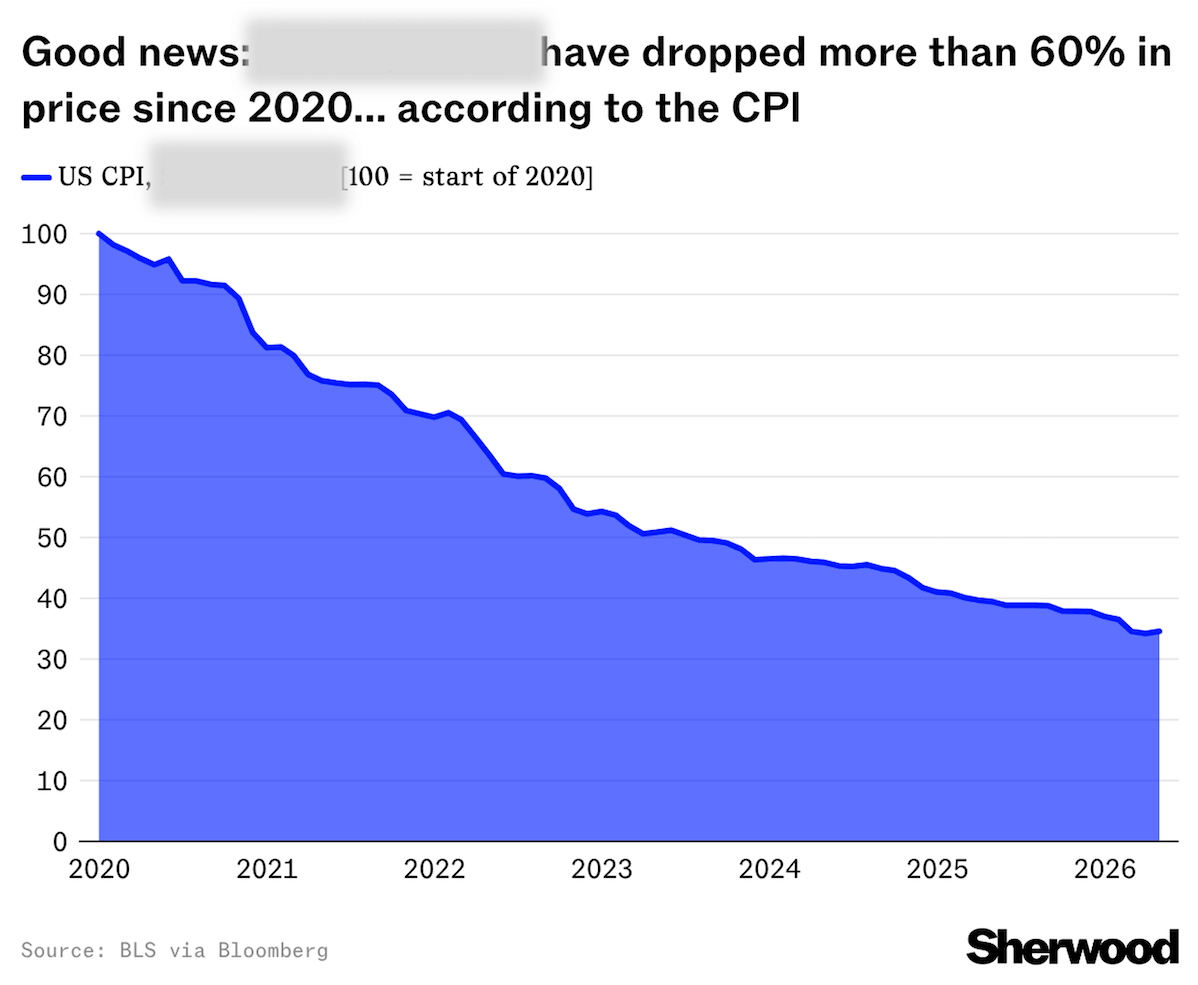
Off the charts: While tomatoes have hit new heights per the latest inflation data, which everyday tech product, according to the often misunderstood figures, has been getting “cheaper”? [Answer below]. |
Not a subscriber? Sign up for free below. |
Sherwood Media, LLC produces fresh and unique perspectives on topical financial news and is a fully owned subsidiary of Robinhood Markets, Inc., and any views expressed here do not necessarily reflect the views of any other Robinhood affiliate... See more |
|
|
|
SHERWOOD MEDIA, LLC, 85 Willow Road, Menlo Park, CA 94025 |
|
|
|
|