Plus, “Save us from Chinese EVs!”
 

Auto File

Auto File

By Nick Carey, European Autos Correspondent

Greetings from London!

Sometimes, it’s the small data points that stand out. For two months running, Autotrader, Britain’s largest automotive marketplace, has been saying that fully electric cars have been cheaper on its platform than gasoline-burning combustion engine models.

That comes with a few caveats, as those prices include British government incentives for electric cars and manufacturer discounts.

But for years, industry experts have predicted that price parity between EVs and fossil-fuel cars would be reached in 2026 or 2027 as electric car manufacturing ramps up.

Affordability has long been a major drag on EV adoption.

Autotrader’s data shows the gap is closing, but the remaining obstacle for mass adoption – and it’s a biggie – remains the availability of charging.

Fixing that could be a game changer.

Which brings us to today’s Auto File…

Today

  • Stellantis, Leapmotor take it to the next level
  • The U.S. circles the wagons against Chinese EVs
  • Toyota counts the cost of the Iran war 


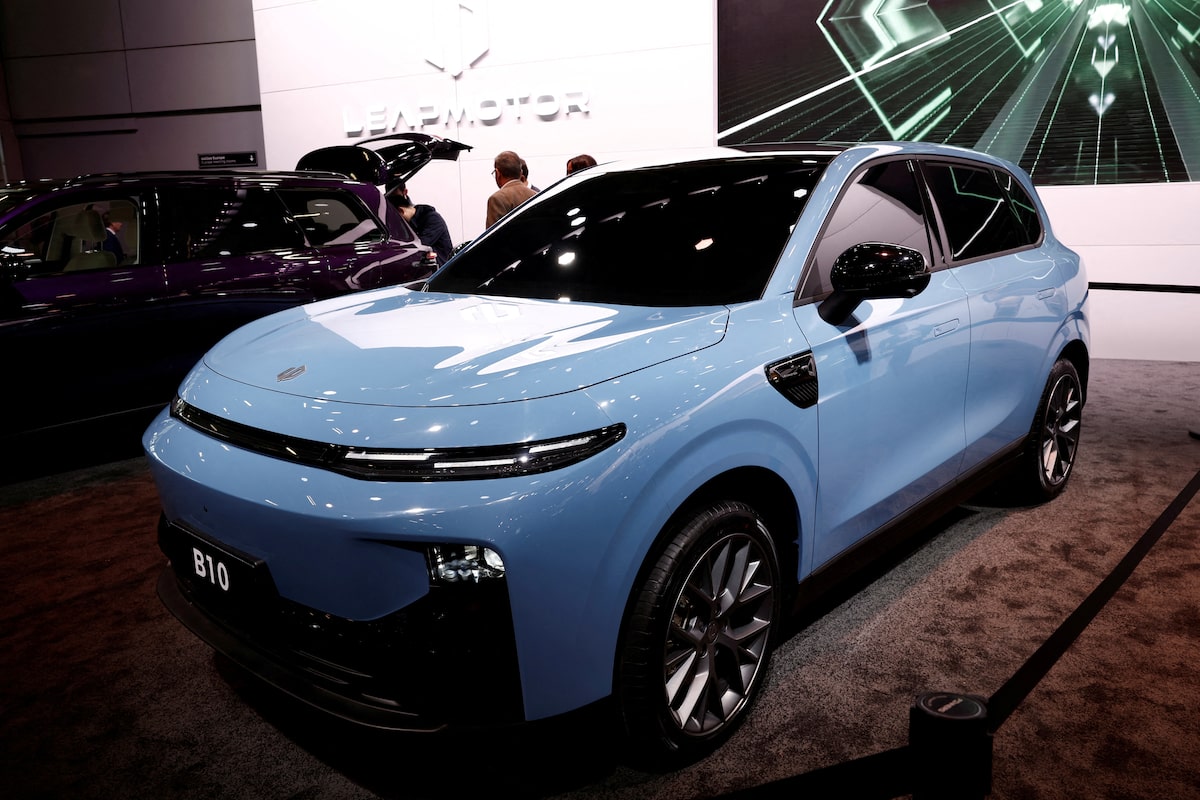
Stellantis will build the B10 in Madrid - REUTERS/Benoit Tessier.

Stellantis and Leapmotor’s new deal

Stellantis and Chinese EV maker Leapmotor are taking their partnership to the next level, with a new deal where they will produce and develop cars in Europe.

You can read all about it here.

When the world’s No. 4 automaker bought a stake in Leapmotor in 2023, the deal was that Stellantis would sell the Chinese company’s cars outside China and build some cars for it in Europe,

But under the new plan, the partners will build Leapmotor's B10 SUV and ⁠a new jointly developed electric C-SUV under the Opel brand at Stellantis' Zaragoza plant in Spain.

The companies are also considering allocating new Leapmotor models to Stellantis' Madrid plant from 2028 and potentially transferring the factory’s ownership to the Stellantis-backed joint venture Leapmotor International.

The partnership between Stellantis and Leapmotor in Europe is now beginning to look like a voluntary version of the joint ventures western automakers were forced into when they entered China.

Leapmotor gets greater access to Europe and local manufacturing, while Stellantis gets better utilization of its underused factories and access to its Chinese partner’s EV technology.

This is just the first such deal between a Chinese and European manufacturer.

There is more of this to come.


Essential Reading

  • China’s car sales drop again
  • Middle East war, Mexico hurt Expedia
  • Looming sulphur hit for Chinese EVs? 


U.S. lawmakers want to keep this out -  REUTERS/Stephanie Lecocq

Blocking Chinese EVs, again

Fear of Chinese EVs has reached new heights in the United States, where lawmakers have introduced legislation to codify an already-existing ban on China’s automakers entering the American market.

You can read about it here.

The U.S. has carefully constructed a protective wall around its car industry under successive administrations. You can debate all day whether U.S. protectionism or Europe’s engagement with Chinese automakers is the better approach, but going the extra mile to put existing regulations into law seems excessive.

Until you realize what U.S. lawmakers and the auto industry fear.

U.S. President Donald Trump is in China and needs a grand bargain with President Xi Jinping to help him out of an intractable conflict with Iran.

As recently as January, Trump publicly flirted with the idea of letting Chinese automakers build U.S. plants.

Fearing a grand bargain with Xi would bring the Chinese in, this week U.S. lawmakers and automakers sent Trump a simple message: please don’t.


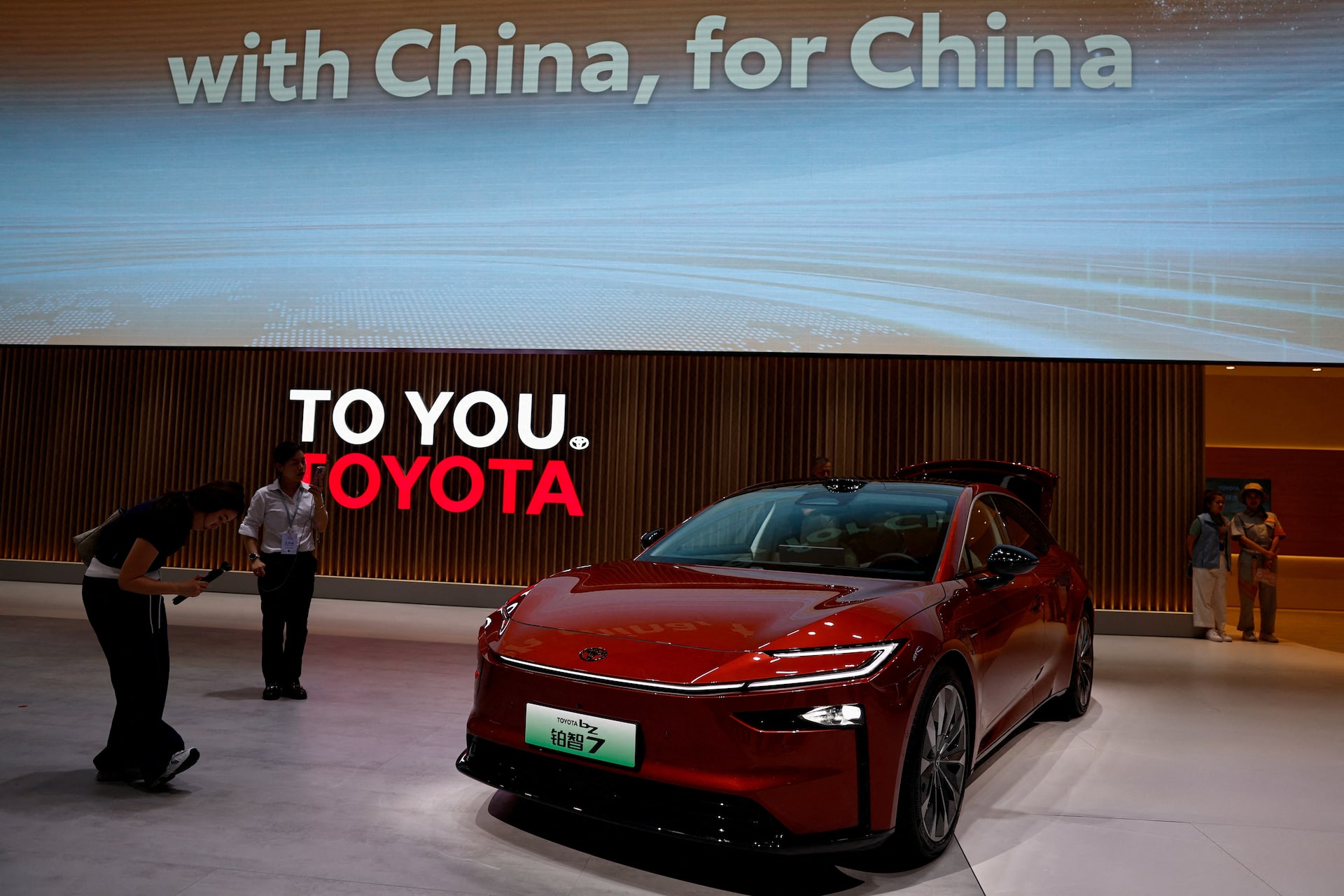
The Iran war is raising costs for Toyota - REUTERS/Tingshu Wang. 

Toyota’s war wounds

Toyota is already counting the toll the Iran war is going to take on its bottom line, warning that rising costs will cost it about $4.3 billion this year.

You can read all about it here.

The world's largest automaker reported an almost 50% drop in quarterly earnings and said its full-year profit should fall by a fifth, as rising costs from the war outweigh surging demand for hybrid vehicles.

The bulk of the $4.3 billion hit will come from higher material costs, with the remainder from delivery delays and lower sales volumes, Toyota's accounting group officer ⁠Takanori Azuma said.

The war’s impact is being felt in everything from "fuel costs, transportation expenses, and the cost of paint and other materials used at vehicle assembly plants," Azuma said.


Porsche starts cutting

German premium automaker Porsche has begun the long process of restructuring its operations and working its way out of the hole it has dug for itself, especially in China.

In one of the first real moves since CEO Michael Leiters took over earlier this year, Porsche ‌cut more than 500 jobs at three subsidiaries that it is shutting down to focus on its core business.

The units Cellforce Group ⁠GmbH, Porsche eBike Performance GmbH and Cetitec GmbH will be discontinued, in what Leiters called “painful cuts” but necessary ones.

This came just after Porsche said it is cutting the number of executive board members ‌to seven from eight as part of a strategic realignment.


Fast Laps

Countries in the European Economic Area and Switzerland have committed almost 200 billion euros ($235 billion) to their electric vehicle ecosystem, research group New Automotive said.

Many American car buyers are gravitating toward hybrid vehicles to offset the recent surge in gas prices from the Iran war, according to industry sales data and dealers.

U.S. safety regulator the National Highway Traffic Safety Administration said on Thursday the 2026