Thanks for reading The Briefing, our nightly column where we break down the day’s news. If you like what you see, I encourage you to subscribe to our reporting here.
Greetings!
Digital media historians will be intrigued by news this afternoon that media mogul Byron Allen is buying control of once-important media outlet BuzzFeed. For more on this unusual deal, see below. Meanwhile... if you’re using mass layoffs as an indicator for AI’s impact on the job market, you may be looking in the wrong place. It might be smarter to look at companies cutting back on hiring, even if they’re not firing anyone.
Take Monday.com, the enterprise software firm. Last fall it was talking about expanding its workforce 20% this year. In February it reduced that growth projection to middle teens in percentage terms. Today it said that after a 1.8% increase in headcount in the March quarter, it expected its workforce to stay “largely flat” through 2026, “reflecting the productivity gains AI is already delivering across our organization.” What a change of heart!
Monday.com is not unusual. As we described in this piece on Sunday, quite a few companies—including Shopify, Spotify and Uber—claim to be getting more productivity out of AI even while making minor job trims or slowing hiring. Of course, the extra use of AI is not free. Monday.com executives said they expected increased “computing costs related to AI” to hurt gross margin in the near term. Other companies, such as Spotify and Pinterest, have said something similar about either operating expenses or cost of revenue.
For enterprise software firms like Monday.com, this shift in hiring is happening alongside the introduction of usage-based pricing policies that could help revenue. The question now is whether those policies will result in customers getting hit with unexpectedly high bills. On that point, Chief Revenue Officer Casey George told analysts on Monday the company was giving customers what they asked for: the ability to track who at their company was using AI credits so “they can scope out the work that’s being done [and]…plan accordingly.” We’ll see how it goes over the next few quarters.
Otherwise, things seem to be looking up for Monday.com, which is trying to compete with everyone from Salesforce to Asana with its software suite, raising concerns about its vulnerability to competition from new AI tools. Indeed, in February, an unexpectedly bleak projection of slowing revenue growth sent the stock plunging 21% in one day. On Monday, though, the company delivered a slightly better quarter than it had projected and raised its full-year growth projection slightly. The outlook is still for much weaker growth—between 19% and 20%—than the 27% and higher growth of the past few years. But investors seemed relieved things weren’t as bad as they could have been, and lifted the stock 6.7%.
Despite the rally, Monday.com shares are still down 48% year to date. The jury is out on how it, like other enterprise software firms, will navigate the transition to AI.
Byron Allen to BuzzFeed’s Rescue?
Media mogul Byron Allen got his start as a comedian and his humor appears to have never left him. Allen, who now controls a media company encompassing TV stations and cable channels, announced on Monday he was buying control of the struggling digital media firm BuzzFeed for $120 million.
That’s an extraordinary price for a company whose market capitalization has lately hovered around $30 million (including debt, the company’s enterprise value is closer to $80 million). Then again, the price may not be what it seems.
Allen is paying $3 a share for 40 million newly issued shares, giving him 52% of the stock. But he is only putting up $20 million in cash up front, with the rest paid in the form of a note that will be due in five years. The note is only secured by the shares, so Allen could presumably walk away if he doesn‘t like how things are going in a few months’ time.
Even so, this is a better deal than BuzzFeed likely could have got anywhere else. After all, the company’s ability to survive has been in doubt for a while. At March 31, BuzzFeed had $58 million in debt. Earlier this year, it warned that its ability to continue as a “going concern” was in doubt.
So why would Allen pay several times the prevailing share price to get control? At $3 a share, he is valuing the company’s equity at $233 million, not including the debt. What are we missing?
As puzzling as the deal is, it was enough to persuade BuzzFeed founder and CEO Jonah Peretti to give up control. He is converting his supervoting shares into regular voting and giving up the CEO job, becoming president of “BuzzFeed AI,” whatever that is.
It’s a new era for BuzzFeed. Maybe.
Google's Security Warning
Sometimes it feels like we’re all frogs sitting calmly in water that’s slowly getting hotter. Witness a report on Monday from Google’s cybersecurity team about an AI-created hack it had identified—intended for a “mass exploitation event” that the company’s discovery preempted. That’s a lot of jargon for a really bad hack that could have affected lots of people.
And it’s another reminder that AI’s biggest contribution to humanity may be making it much easier for criminals—including those in places like North Korea—to screw up our lives with various nefarious malware. “AI-driven coding has accelerated the development” of dangerous software “by adversaries,” Google said. Eek.
Google added that it uses “proactive measures to stay ahead of these constantly changing threats.” In other words, this report might have been designed to be part warning, part marketing. Sounds familiar. Remember this report last November from Anthropic, revealing a “highly sophisticated espionage campaign” using AI “to an unprecedented degree…to execute the cyberattacks,” which Anthropic responded to. Its report made a similar point to Google’s: AI is making the risks worse—but don’t worry, because Anthropic has your back.
How worried should we be? Probably a lot more than most of us are. Reports of big hacks have become so commonplace—along with emails telling us our personal data has been exposed—that few of us pay any attention. Chances are this is building up to something really bad happening. You can bet we’ll see a flood of scary headlines that day. Until then, we’ll continue sitting in the water as it heats up, pretending nothing is going on.
In Other News
• Uber promoted its chief marketing officer, Jill Hazelbaker, to president and chief corporate affairs officer, adding human resources, real estate and safety to her remit.
• Microsoft CEO Satya Nadella testified in court Monday that Elon Musk never raised concerns that Microsoft’s deal with OpenAI amounted to OpenAI CEO Sam Altman trying to “steal the charity.”
• OpenAI on Monday announced its $10 billion private equity joint venture: the OpenAI Deployment Company, which aims to help businesses deploy AI and integrate it into their operations. OpenAI also announced it had bought Tomoro, an AI consulting and engineering firm, to be part of the new company.
• AI chip designer Cerebras Systems raised its preliminary IPO pricing range to between $150 and $160 a share from between $115 and $125, in a sign that investor demand for the company is strong. At the new pricing range, Cerebras would raise about $4.5 billion.
• Ilya Sutskever, the OpenAI co-founder and former chief scientist who left two years ago, owns a stake now worth close to $7 billion, he testified on Monday.
• Circle, the stablecoin issuer of USDC, on Monday said it raised $222 million for Arc, a stablecoin-focused blockchain, at a $3 billion valuation. Circle also reported that first-quarter revenue jumped 20% from a year ago to $694 million
Today on The Information’s TITV
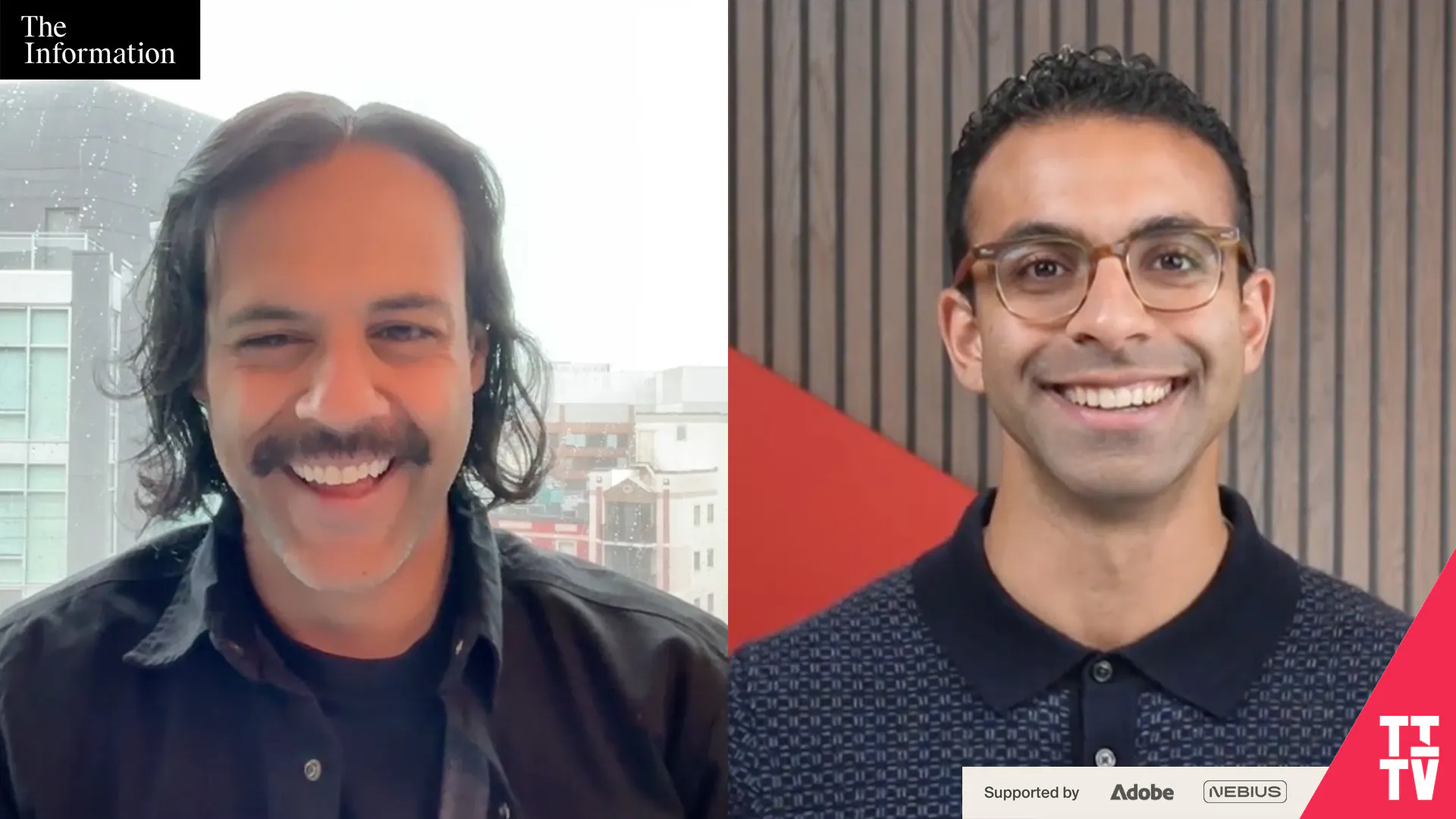
Check out today’s episode of TITV in which we hear from Robinhood’s co-founder about his orbital data center startup.
Recommended Newsletter
Start your day with Applied AI, the newsletter from The Information that uncovers how leading businesses are leveraging AI to automate tasks across the board. Subscribe now for free to get it delivered straight to your inbox twice a week.
Join The Information's Ken Brown and Anissa Gardizy as they discuss the global AI compute shortage with OpenAI’s Sachin Katti, Amp founder Anj Midha, and SemiAnalysis analyst Jeremie Eliahou Ontiveros.
Save the date for The Information’s annual AI Agenda Live in San Francisco, where top AI researchers, founders, investors and executives come together for a day of conversations about the breakthroughs and applications shaping the future of AI.
Save the Date: The Information returns to Napa Valley October 27-28 to convene senior women across tech, media, and finance. The event will feature two days of intimate, candid conversations with the leaders navigating today’s global shifts.