|



Looking for a copywriter? Hire me to turn your homepage from dangerously bland to dangerously persuasive. I’ve got one slot left for new copywriting projects starting after May 11th and it’s reserved for bold brands only. If you take copywriting seriously, don’t email me.
The marketing industry loves to brag about “targeting consumers where they are.”
Meanwhile, for 3 months during winter (even during snowstorms) every year millions of adults sit indoors drinking beer.
And ironically not one major beer brand thought to show up.
That’s the gap DraftLine (the in-house creative agency for AB InBev brands like Stella Artois) found.
On Sunday, January 25, 2026 Toronto had the snowiest single day in its history.
Up to 46 cm recorded at Pearson Airport.
Up to 56 downtown. Which meant the city did what cities do in snowstorms: Stayed home.
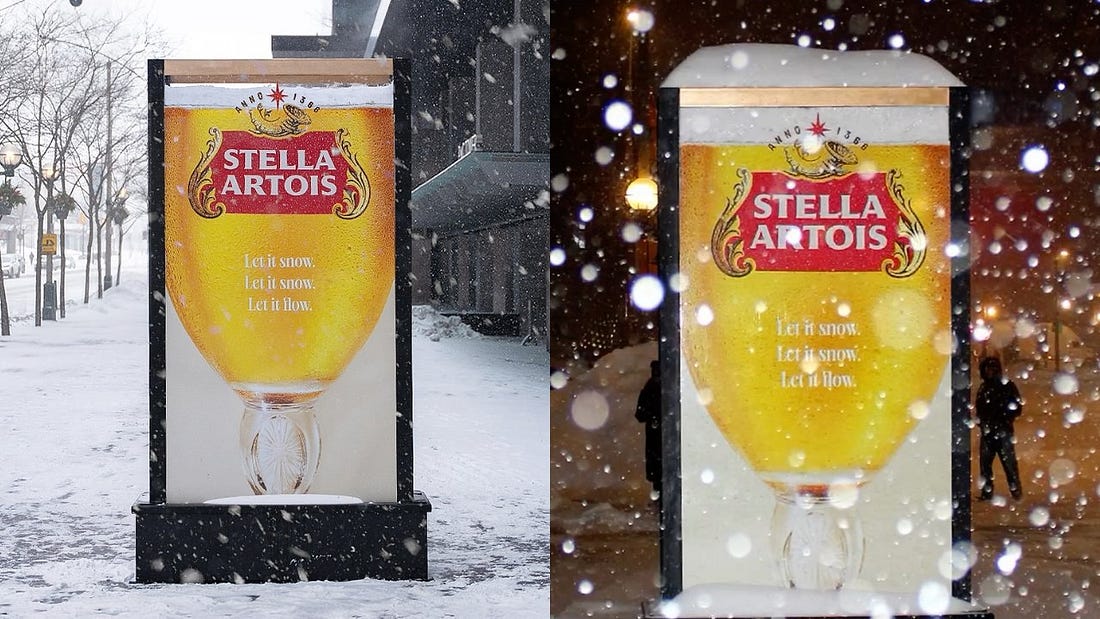
Meanwhile, Stella Artois quietly installed an oversized chalice at the corner of York Street and Front Street.
Then the snow started falling.
And slowly (and beautifully ) the chalice began to fill.
Until the snow piled up at the rim. Which made it look exactly like a foamy beer spilling over the top.
You see, most brands brands run from winter and bad weather. They pause campaigns and stay quiet. Or they migrate south to beaches, barbecues, and Instagrammable sunsets.
Stella Artois did the opposite. Stella ran straight into it. And turned a snowstorm into a branded moment. The kind that quietly nudges you to “let it flow”… preferably with a nicely poured, cold-weather Stella Artois pint in hand.
This wasn’t just another stunt. It was a strategic move.
Because the line “Let it snow. Let it snow. Let it flow.” did three things at once. First, it hijacks a cultural earworm everyone already has stuck in their head.
Second, it flips the script on winter and reframes bad weather from threat to an invitation.
And third, it connects winter weather to Stella Artois with a single, almost invisible swap: Snow → flow.
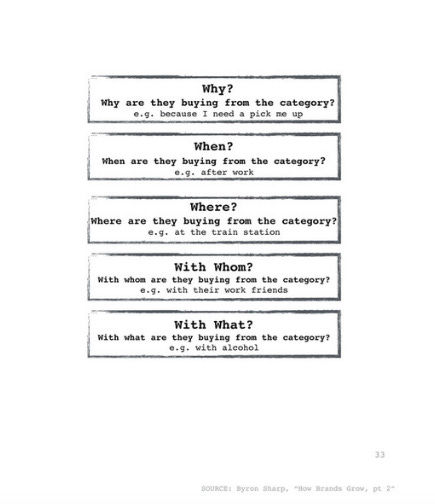
As Byron Sharp has been pointing for years brands should obsess less about targeting, and obsess more about category entry points. The moments, moods, and situations that mentally cue people to reach for your brand.
Corona spent decades teaching the world that summer and heat is THE category entry point for beer.
Stella Artois spent one snowstorm pointing out something the rest of the beer category somehow missed:
Winter is also a perfectly good category entry point for beer. The thing is, no one bothered trying to own it. Now Stella Artois owns winter beer.
 |
㋡㋡㋡㋡㋡㋡㋡㋡㋡㋡㋡㋡㋡㋡㋡㋡㋡㋡㋡㋡㋡㋡㋡㋡㋡
》Dangerous Ideas:
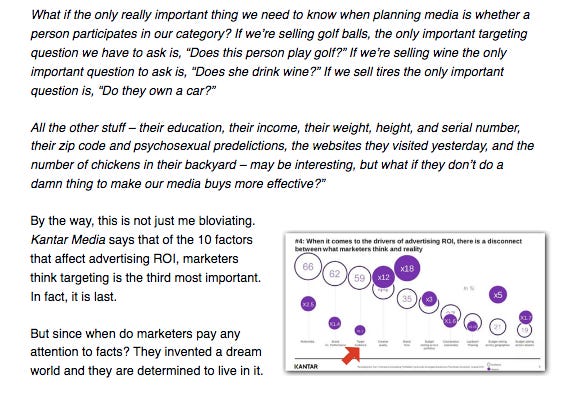
1/ Think less about targeting, think more about category entry points.
Marketers think targeting is more important than it really is.
 |
But they should focus more on identifying as many category entry points as possible. And figure out how to connect their brand to each one of them.
 |
2/ Sometimes the real category entry point isn’t the one most marketers assume.
As Rory Sutherland says: “The thing that drives ice cream consumption isn’t temperature, it’s sunshine.” Which is why ice cream is more popular in Sweden and Russia than in countries like Italy.