The Weekend

|
Apr 18, 2026
|
|
|
|
|
Supported by
|

|
|
|
|
|
| Welcome, Weekenders! In this newsletter: |
| • The Big Read: The rise of SemiAnalysis’ Dylan Patel, Silicon Valley’s favorite AI commentator |
| • Plus, Recommendations—our weekly pop culture picks: “The Obit Project,” “Disneyland and the Rise of Automation” and “Unfamiliar” |
| |
| Recently, a close friend of mine introduced me to another of his friends, a tech investment banker, and now this banker and I have become friendly, too. I’ve enjoyed learning a bit about his life. We’d not met before because he’s not around very much, with AI and tech and FOMO what they are these days. He lives right by one of the nicest beaches in California and has bought himself an expensive car. But he seldom seems to spend much time enjoying his seaside abode, and he’s burning the gas in his G-Wagon mostly to get back to the airport. He travels often for work, sometimes several times a week. |
| By his telling of it, investment banking sounds like an arduous, go-go-go profession. I don’t buy it, though, because it seems simple enough to me, and as it happens, over the past few days I’ve come up with a bunch of very plausible deals I think should happen. |
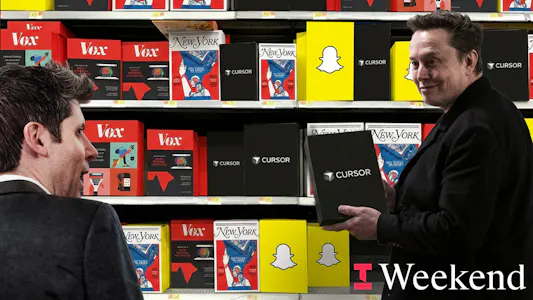
| Here’s the most straightforward one: xAI should buy Cursor. The two already have a blossoming relationship, with xAI agreeing to sell computing capacity to Cursor. That makes sense. The compute crunch is real. The fine folks at SemiAnalysis, the AI research outfit profiled in our latest Big Read, recently likened acquiring AI processing power to “trying to book airplane tickets on the last flight out.” |
| Joining up with xAI would give Cursor access to xAI’s “stockpile” of compute, as Business Insider termed it. (Imagine having a stockpile of compute! That’d be like laying out a smorgasbord in front of Tom Hanks in “Castaway.”) xAI, meanwhile, would get a leg up in the AI coding wars and gain its first real access to the enterprise market. |
| My second idea is slightly less plausible but still very fun to consider. I think Snap CEO Evan Spiegel should sell the company to OpenAI. Snap is slashing its staff in yet another attempt to engineer a turnaround, and it won’t work. None of Spiegel’s other turnaround efforts have. He should accept the inevitable and take the years he’s spent focusing on consumer hardware to a place that really, really wants to do consumer hardware. An added incentive: Whatever he came up with at OpenAI would have a much better chance of torpedoing Meta Platforms’ efforts to produce similar technology. And surely he would still like to take Zuck down a peg or ten. |
| At Snap, Spiegel has total power over the stock thanks to his supervoting shares. He’s the only one who can make the decision on a sale, and he has seemed resistant to the idea even as the stock has dropped and dropped and dropped. (A CEO with less control of the stock would’ve been ousted long ago.) But I think OpenAI’s recent acquisition of TBPN is real proof that it can win over founders who wouldn’t sell to anyone else. |
| Finally, let’s ponder what will happen to poor ol’ Vox Media, which will reportedly begin selling itself piecemeal. Vox owns more than 10 media brands, including New York Magazine, itself a collection of brands. If someone hasn’t already called Jay Penske, who owns a portion of the Vox parent company, they should—and they should talk him into buying Vulture, New York’s beloved outlet devoted to entertainment and Hollywood. Puck News says Karli Kloss has been interested in possibly buying The Cut, another beloved New York sub-brand. I find her interest intriguing: A couple years ago, I predicted that Vox Media would need to do a sale like this one and would sell New York Magazine to her husband, Josh Kushner. Clearly, my crystal ball tuned into the wrong corner of the Kushner-Kloss living room. |
| Vox also owns The Verge, the tech news site. I’m sure the same set of people who keep loudly talking about wanting to buy Wired might be interested in The Verge. They’d be buying it to profoundly change it, and I wonder if Vox CEO Jim Bankoff would want to be the one to push those brands into their hands. I also wonder if much of the Vox brands would get sold off to owners who seem to apparate out of nowhere, as Jeff Lawson did when he bought The Onion. |
| I’m gonna stop here and go try to track down that banker I mentioned. I expect a fat finder’s fee. |
| —Abram Brown (abe@theinformation.com) . |
|
|
|
| The Big Read |
 |
|
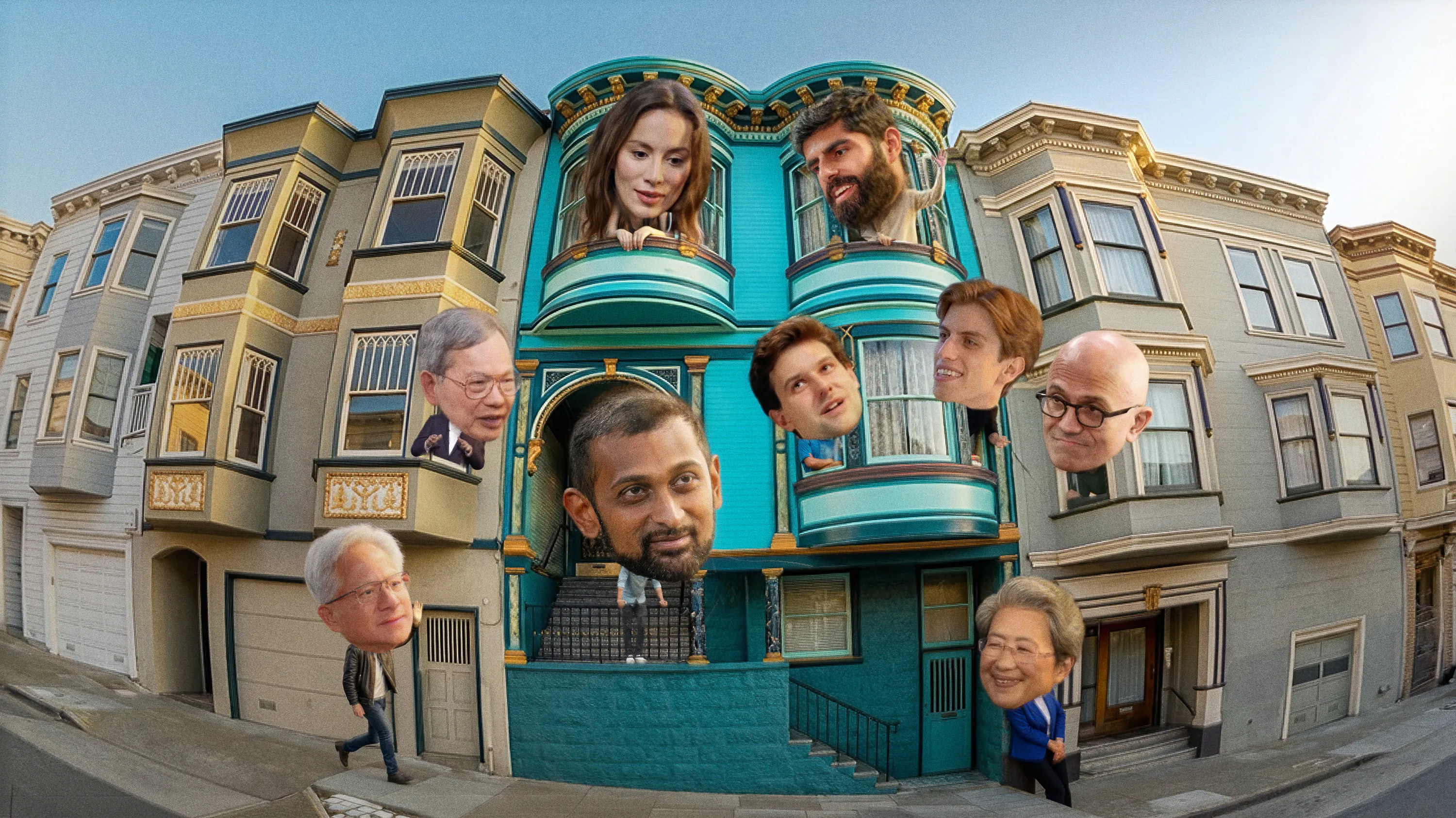
| The 29-year-old has adeptly navigated the blurred lines between media, tech and investing, turning himself into a hybrid of all three. |
| |
 |
| Listening:“The Obit Project” |
| Ostensibly, an obituary is meant to speak about a single person and their past. Of course, the finest obituaries have greater depth, offering a picture of the broader circumstances around whoever they’re trying to memorialize. “The Obit Project,” a podcast co-led by Radiolab creator Jad Abumrad, definitely falls into that latter category. Its series of obituaries are marvelous little earworms, full of charm, warmth and depth, each about a death in Montana. It’s “This American Life” trussed up in bear grass: The obits evoke a specific, singular place, but they have a universal resonance, documenting lives that take the shape of familiar archetypes: a restless, small-town salesman, an artist fleeing the city for love and nature, an immigrant who dies tragically far from her home. Abumrad and his team, which includes a former colleague from WNYC, Jule Banville, and her University of Montana journalism students, approach the task with pathos and playfulness. That immigrant I mentioned was in fact Old Pitt, a circus elephant struck dead by lightning in 1943.—Abram Brown |
| Reading: “Disneyland and the Rise of Automation” by Rolan Betancourt |
| Disneyland may seem like a place conjured from fairy dust, but that’s a misconception author Roland Betancourt, a University of California, Irvine, professor with a varied expertise in pop culture, art and the Byzantine Empire, is eager to dispel. He views it as a modern technological marvel, and his thorough research account shows how Walt Disney melded innovations from people like Henry Ford into the theme park to create the seamless dream world he wanted. |
| “The Evil Witch popping out of a corner in the Snow White ride is not merely a scare tactic, but an audio-visual stimulus triggered by a limit switch as your vehicle approaches a designated location,” writes Betancourt. “Every Disneyland ride is a carefully camouflaged assembly line where you are its signature product.”—A.B. |
| Watching: “Unfamiliar” |
| For those people missing “The Americans,” “Unfamiliar,” a new German spy drama available on Netflix, is a worthy replacement. Set in Berlin in present day, the six-episode show centers on husband-and-wife undercover spies who may or may not have retired—their exact status is a little fuzzy—but who get pulled back into action when the legacy of a 16-year-old operation resurfaces. If that sounds a little cliched, so be it. But the slick pacing and great performances, particularly from leads Susanne Wolf and Felix Kramer, make it highly enjoyable.—Martin Peers |
|
|
|
|
|
|