Top News | Sequoia Capital has reportedly raised about $7 billion for a new expansion fund, roughly double its 2022 predecessor, as it ramps up late-stage bets on AI giants like OpenAI and Anthropic under its new leadership. Bloomberg has more here. | | |
Fidelity — Your Pitch Isn’t the Only Thing Investors Are Evaluating | Investors don’t just listen to what you say - they look at how your company operates. Is ownership clear? Do your numbers match your story? Can you answer follow-up questions without digging through spreadsheets? The Fundraise-Ready Startup Kit equips founders with the materials investors expect to see, before pressure is on. Because confidence in the room doesn’t come from slides. It comes from preparation. | | Physical Intelligence, the Hot Robotics Startup, Says Its New Robot Brain Can Figure Out Tasks It Was Never Taught | 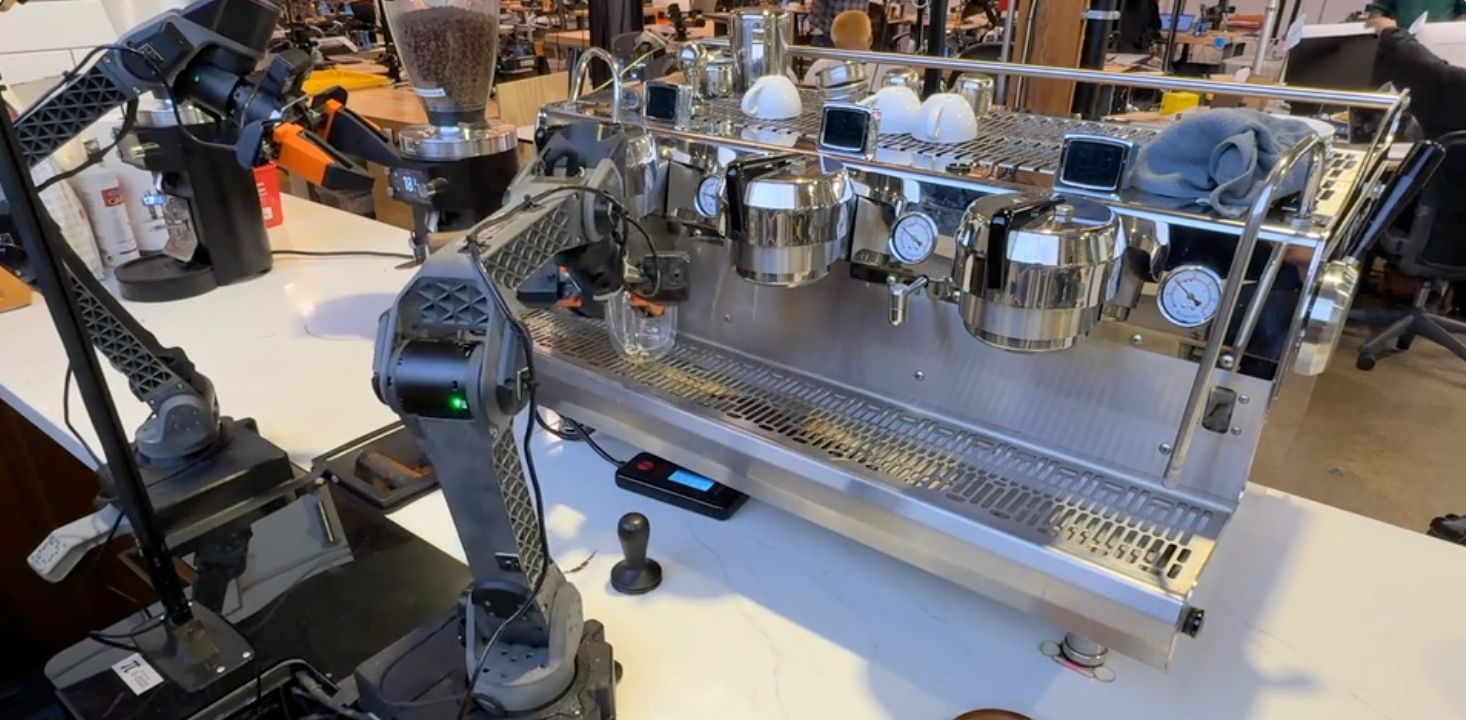 | Image Credits: Physical Intelligence |
| By Connie Loizos | Physical Intelligence, the two-year-old, San Francisco-based robotics startup that has quietly become one of the most closely watched AI companies in the Bay Area, published new research Thursday showing that its latest model can direct robots to perform tasks they were never explicitly trained on — a capability the company’s own researchers say caught them off guard. | The new model, called π0.7, represents what the company describes as an early but meaningful step toward the long-sought goal of a general-purpose robot brain: one that can be pointed at an unfamiliar task, coached through it in plain language, and actually pull it off. If the findings hold up to scrutiny, they suggest that robotic AI may be approaching an inflection point similar to what the field saw with large language models — where capabilities begin compounding in ways that outpace what the underlying data would seem to predict. | But first: The core claim in the paper is compositional generalization — the ability to combine skills learned in different contexts to solve problems the model has never encountered. Until now, the standard approach to robot training has been essentially rote memorization — collect data on a specific task, train a specialist model on that data, then repeat for every new task. π0.7, Physical Intelligence says, breaks that pattern. | “Once it crosses that threshold where it goes from only doing exactly the stuff that you collect the data for to actually remixing things in new ways,” says Sergey Levine, a co-founder of Physical Intelligence and a UC Berkeley professor focused on AI for robotics, “the capabilities are going up more than linearly with the amount of data. That much more favorable scaling property is something we’ve seen in other domains, like language and vision.” | The paper’s most striking demonstration involves an air fryer the model had essentially never seen in training. When the research team investigated, they found only two relevant episodes in the entire training dataset: one where a different robot merely pushed the air fryer closed, and one from an open source dataset where yet another robot placed a plastic bottle inside one on someone’s instructions. The model had somehow synthesized those fragments, plus broader web-based pretraining data, into a functional understanding of how the appliance works. | | | Massive Fundings | Beeline Medicines, a one-year-old Boston startup that develops precision therapies targeting immune pathways to treat autoimmune and inflammatory diseases, raised a $300 million Series A round led by Bain Capital. More here. | Factory, a three-year-old San Francisco startup that offers autonomous AI agents that write and manage code for enterprises, raised a $150 million round at a $1.5 billion valuation led by Khosla Ventures, with Sequoia Capital, Insight Partners, and Blackstone also participating. TechCrunch has more here. | Slash, a five-year-old San Francisco startup that offers business banking accounts, corporate cards, payments, and expense management tools for modern businesses, raised a $100 million Series C round at a $1.4 billion valuation. The deal was co-led by Ribbit Capital, Khosla, and Goodwater Capital and included previous investors New Enterprise Associates and Y Combinator. TechCrunch has more here. | Storm Therapeutics, an 11-year-old company based in Cambridge, UK, that develops therapies that target RNA modifications to reprogram malignant cells and treat cancer, raised a $56 million Series C round. Investors included prior backers M Ventures, Pfizer Ventures, Taiho Ventures, IP Group, UTokyo Innovation Platform Co., and Fast Track Initiative. EU-Startups has more here. | Upscale AI, a two-year-old startup based in Santa Clara, CA, that builds infrastructure to connect AI computing clusters and improve data center efficiency, is reportedly in talks to raise a $180 million to $200 million round at a $2 billion valuation. This would be its third raise in seven months. Bloomberg has more here. | Wealth.com, a four-year-old startup based in Tempe, AZ, that provides an estate and tax planning platform that analyzes documents and financial data to deliver insights for advisors, raised a $65 million Series B round led by Charles Schwab, with additional support from GV, Titanium Ventures, Pruven Capital, The K Fund, Dynasty Financial Partners, Citi Ventures, 53 Stations, Anthos Capital, and Alumni Ventures also participating. Wealth Management has more here. | | Big-But-Not-Crazy-Big Fundings | Alloy Therapeutics, a nine-year-old startup based in Waltham, MA, that operates an AI-driven drug development platform spanning antibody discovery, preclinical research, clinical development, and biologics manufacturing, raised a $40 million Series E round at a $1 billion post-money valuation. Investors included 8VC, JIC Venture Growth Investments, Echo Capital, Alexandria Venture Investments, Gaingels, and Ulysses Diversified Holdings as well as prior backers Mubadala Capital, Presight Capital, Thiel Capital, and Founders Fund. More here. | Drift, a five-year-old startup that operates a decentralized exchange for perpetual futures and spot crypto trading on Solana, raised a $147.5 million round led by Tether to repay users after a $270+ million exploit. CoinDesk has more here. | Mintlify, a four-year-old San Francisco startup that generates and continuously updates software documentation from codebases and answers user questions via embedded chatbots, raised a $45 million Series B round at a $500 million valuation. The deal was co-led by Andreessen Horowitz and Salesforce Ventures, with Bain Capital Ventures, Y Combinator, and DST Global also pitching in. Forbes has more here. | Nas.com, a six-year-old New York startup that provides AI tools to help individuals launch and run online businesses, raised a $27 million Series A round led by Khosla Ventures, with 500 Global, Shuo Wang, Stanley Tang, Scott Adelson, and Tim Ferriss also participating. Business Insider has more here. | Resolve AI, a two-year-old San Francisco startup that analyzes production system telemetry to detect incidents, diagnose root causes, and take corrective actions across complex software environments, raised a $40 million Series A extension at a $1.5 billion valuation. The deal was co-led by DST Global and Salesforce Ventures. The company has raised a total of $190+ million. More here. | Solidroad, a three-year-old San Francisco and Dublin startup that evaluates customer support interactions across human and AI agents and generates insights and training to improve quality and consistency, raised a $25 million Series A round led by Hedosophia, with First Round Capital, Y Combinator, and Sony Innovation Fund also engaging. More here. | Spektr, a three-year-old Copenhagen startup that provides compliance infrastructure with AI agents that execute tasks such as document reviews, ownership mapping, and risk analysis for financial institutions, raised a $20 million Series A round led by NEA, with previous investors Northzone, Seedcamp, and PSV Tech also digging in. The company has raised a total of approximately $26 million. Crunchbase News has more here. | | Smaller Fundings | Antioch, a one-year-old, New York-based startup building simulation tools for robot developers — it aims to make virtual environments realistic enough that robots trained inside them can operate reliably in the physical world — has raised an $8.5 million seed round that values it at $60 million. The venture firms A* and Category Ventures co-led the round and were joined by MaC Venture Capital, Abstract, Box Group, and Icehouse Ventures. TechCrunch has the story here. | Balerion, a newly formed San Francisco startup that uses AI to automate mortgage loan origination workflows from income calculation and document verification through underwriting and closing, raised a $6 million seed round led by Kleiner Perkins, with BoxGroup and Formation also participating. More here. | Brix, a one-year-old startup based in the British Virgin Islands that tokenizes emerging market assets and enables investors to access and trade high-yield strategies onchain, raised a $5.5 million round. Investors included FRWRD Ventures, Circle Ventures, ConsenSys, Webrazzi Ventures, Borderless Capital, and Paribu Ventures. The Block has more here. | Capsule Security, a one-year-old Tel Aviv startup that monitors AI agents at runtime to detect and block unsafe behavior, manipulation, and data exfiltration, raised a $7 million seed round co-led by Lama Partners and Forgepoint Capital International. SecurityWeek has more here. | Cookiy AI, a one-year-old Palo Alto startup that uses agentic voice AI to conduct conversations with consumers and generate structured insights on preferences, motivations, and decision-making, raised a $7+ million pre-seed round. Investors included Liquid2, Converge, GoAhead, and UpHonest. More here. | Gravity, a two-year-old Boulder startup that uses agentic AI to analyze business data and automate insights traditionally handled by business intelligence tools, raised a $7 million round led by Next Frontier Capital, with Foundry Group, K5 Global, and Denver Ventures also contributing. The company has raised a total of $10+ million. Tech Funding News has more here. | Outcraft AI, a one-year-old Vilnius startup that deploys autonomous agents that engage customers across voice, SMS, email, and WhatsApp to respond to real-time signals like new leads, abandoned checkouts, and declined payments, raised a $2.4 million pre-seed round. Practica Capital provided the financing. Tech Funding News has more here. | Sepion Technologies, a 10-year-old company based in Alameda, CA, that develops polymer coatings for battery separators that improve energy density, charging performance, and safety without requiring changes to existing manufacturing lines, raised a $10 million Series B round led by Fine Structure Ventures, with W. L. Gore & Associates, Syensqo Ventures, Volo Earth Ventures, Chailease, Catalus Capital, Impact Science Ventures, and ACVC Partners also investing. More here |
|