Image

Daily News Brief

April 10, 2026

Welcome to CFR’s Daily News Brief. Today we’re covering Israel’s announcement it will open truce talks with Lebanon, as well as...

  • An Orthodox Easter truce in Ukraine
  • A reported meeting with top U.S. banks on artificial intelligence (AI) risks
  • The falling U.S. birth rate


Top of the Agenda

Israel will pursue peace talks with Lebanon while continuing its attacks in the country, Prime Minister Benjamin Netanyahu said yesterday. The announcement came amid U.S. pressure to scale back Israel’s military campaign after continued Israeli strikes on Beirut threatened to derail planned U.S.-Iran negotiations in Islamabad this weekend. U.S. envoy Steve Witkoff asked Netanyahu to “calm down” strikes and open talks, unnamed U.S. officials told Axios. While Washington has confirmed it is sending a negotiating team to Islamabad, Iran’s foreign ministry spokesperson said Tehran would not participate unless the fragile two-week ceasefire negotiated this week includes Lebanon.


On Israel-Lebanon talks. U.S. President Donald Trump spoke to Netanyahu yesterday and received a commitment that Israel would reduce strikes on Lebanon, Trump told NBC News. Washington plans to host Israel-Lebanon talks next week, an unnamed U.S. official told multiple news organizations. Netanyahu said the talks would cover Hezbollah’s disarmament, while Lebanese Prime Minister Nawaf Salam told reporters yesterday that he ordered the Lebanese Armed Forces to regain control of Beirut and ensure only government forces had access to weapons. Yet hurdles to the talks remain. An unnamed Lebanese official told AFP Lebanon would only participate if a ceasefire with Israel is implemented first, while a Hezbollah member in Lebanon’s parliament said the group rejected direct talks with Israel absent a truce and Israeli withdrawal from Lebanon.


On U.S.-Iran talks. Trump told NBC News yesterday he was “very optimistic” about the prospects for a long-term deal with Iran and that its negotiators were “more reasonable” in private than in their public comments. Still, Trump accused Iran of violating the ceasefire agreement yesterday by not allowing sufficient oil to pass through the Strait of Hormuz and said Iran “better not be” charging tolls for passage. The waterway remains mostly closed, prolonging an energy shock that continues to weigh on the global economy. Trump also reinforced a request this week that NATO allies help reopen the strait, the alliance’s Secretary-General Mark Rutte reportedly told members after his meeting with Trump Wednesday.


“It’s just a ceasefire announcement. An agreement to stop bombing of some sort; to stop the killing. And it creates space for negotiation of the real underlying issues. The real underlying issues remain very difficult to resolve because the Venn diagram between what the United States is insisting on and what the Iranians are insisting on—there’s almost no overlap.”

—CFR President Michael Froman tells CNBC


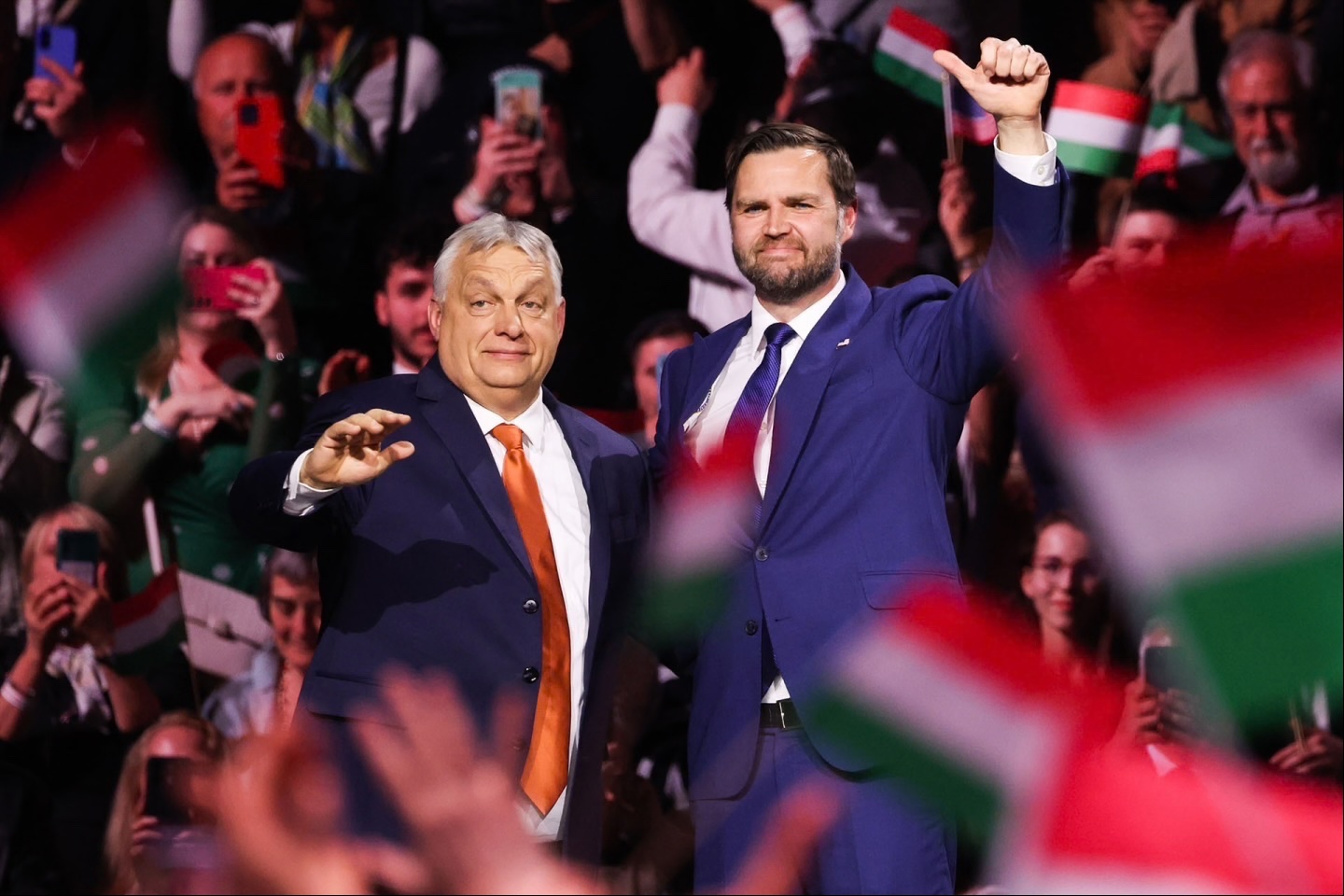
The Opposition Is Leading in Hungary, but Winning Is the Easy Part

Hungarian Prime Minister Viktor Orban stands next to American Vice President JD Vance during an election rally in Budapest, Hungary on April 7, 2026.

Beata Zawrzel/Getty Images

Hungarian voters face a critical election Sunday that carries political and foreign policy implications for Europe, Ukraine, and beyond, CFR Senior Fellow Liana Fix and CFR’s Benjamin Harris write in this Expert Take. 


Across the Globe

Warning about AI cyber risks. U.S. Treasury Secretary Scott Bessent and Federal Reserve Chair Jerome Powell met Tuesday with leaders of “systemically important” banks to warn about risks posed by Anthropic’s latest AI model and others like it, Bloomberg reported, citing unnamed sources. The Treasury, the Federal Reserve, and the banks did not comment. The short-notice meeting came after Anthropic said it would not broadly release its latest model, Mythos, over concerns it could facilitate cyberattacks.


Brief truce in Ukraine. In observance of Orthodox Easter, Russia and Ukraine will maintain a thirty-two-hour ceasefire beginning at 4 p.m. local time Saturday, both countries announced separately. Peace talks remain paused due to the Iran war, though Russia’s envoy is in the United States for talks with Trump officials on economic issues, the Kremlin’s press secretary said today.


Xi meets with Taiwan’s opposition. Chinese President Xi Jinping called Taiwan’s unification with China an “inevitability” at a Beijing meeting today with Cheng Li-wun, the leader of Taiwan’s main opposition party. Both officials described the visit—the first such meeting in a decade—as an effort to promote peaceful cross-strait relations. It comes ahead of Trump’s planned visit to China next month. 


UK accuses Russia of sub spying. The United Kingdom (UK) detected Russian submarines surveilling undersea cables and pipelines in recent weeks and then deployed its own navy to signal to Moscow that the vessels had been exposed, Defense Secretary John Healey said yesterday. Russia’s embassy in London said Healey’s announcement was “impossible to either believe or verify.”


Venezuela’s mining law. The country’s legislature approved a new regulatory framework for mining backed by both acting President Delcy Rodríguez and the United States. It is designed to facilitate private investment through measures like simplifying the tax code, allowing independent arbitration of disputes, and banning top officials from holding mining titles. The law faces a constitutional review before being enacted. It follows a January law that liberalized the oil sector.


Falling U.S. births. The U.S. fertility rate continued its two-decade decline in 2025, falling around 1 percent from 2024, according to new federal data released yesterday. While economists have voiced concerns that fewer births and less immigration could have negative consequences for the economy, the U.S. population remains larger on the whole than the period when the country’s birth rate peaked.


U.S. diplomats in Iraq targeted. The State Department summoned the Iraqi ambassador yesterday to condemn attacks that it said were by Iran-aligned militias against U.S. diplomats and facilities, a department spokesperson said. The U.S. Embassy in Baghdad said earlier that militias had conducted drone attacks Wednesday near a diplomatic support center and Baghdad’s international airport. 


New Philippine sea base. Manila opened a new coast guard base yesterday on a contested South China Sea island. Filipino civilians and forces have long been present on Thitu Island, which Beijing also claims. The base will be a “sentinel of our sovereignty,” Manila said. China did not immediately comment.  


Peru Is About to Elect Its Ninth President in a Decade

Peruvian presidential candidates participate in a televised debate on March 31, 2026, in Lima, Peru.

Angela Ponce/Reuters

Peru’s frequent impeachments, political clashes, and lack of legislative majorities have fueled chronic political instability, CFR’s Diana Roy writes in this article. 


What’s Next

  • Today, Djibouti holds a presidential election.

  • Today, the Artemis II mission is due to splash down on Earth.

  • Sunday, Hungary holds parliamentary elections.

  • Sunday, Benin and Peru hold presidential elections.


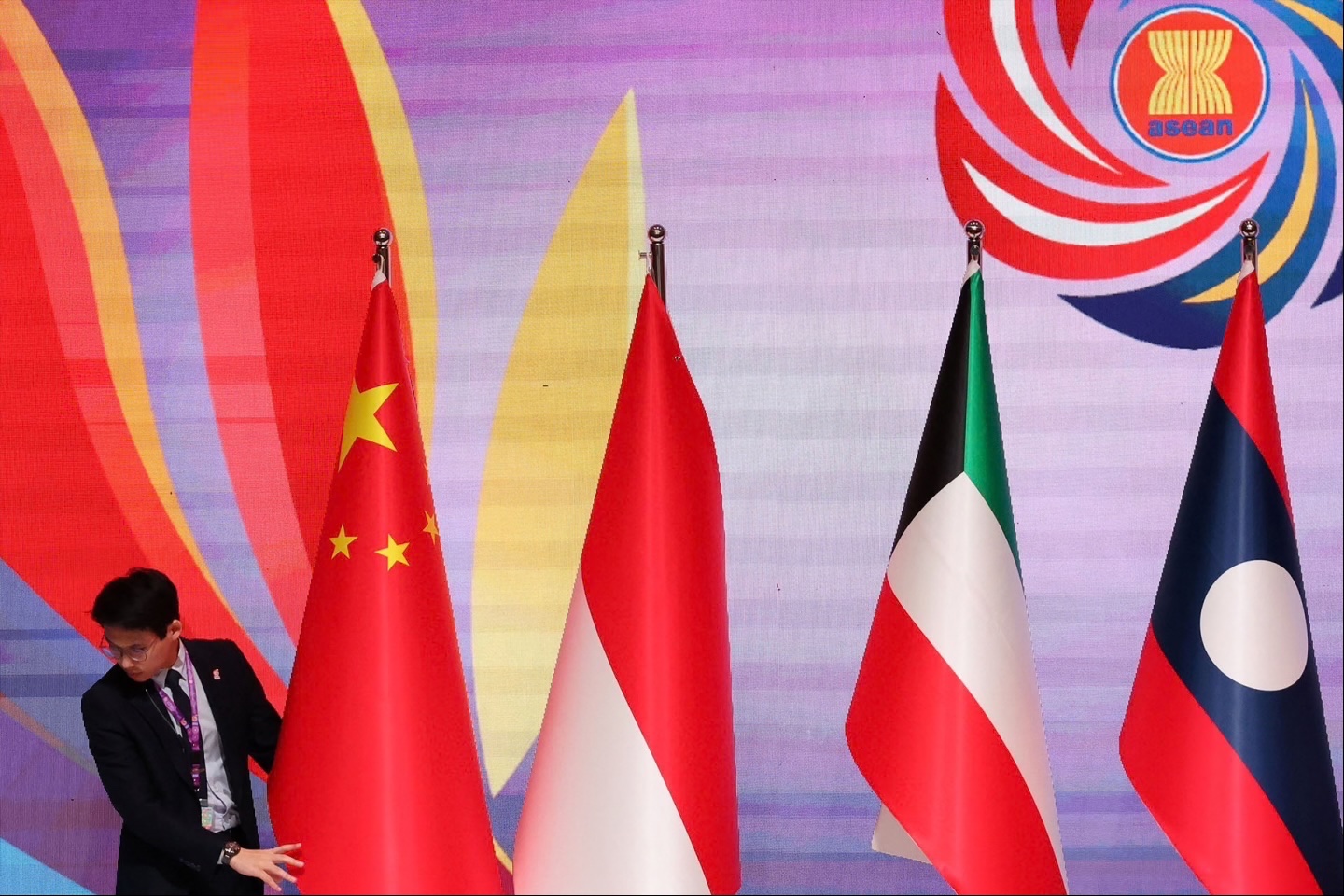
The U.S. Is Pushing Southeast Asia Toward China

An officer arranges the Chinese flag during the ASEAN-GCC-China Summit in Kuala Lumpur, Malaysia, May 27, 2025.

Hasnoor Hussain/Reuters

A new survey of Southeast Asian opinion leaders shows they prefer China to the United States as a partner, while the region’s biggest geopolitical concern is U.S. global leadership, CFR Senior Fellow Joshua Kurlantzick writes in this Expert Take.


Council on Foreign Relations

58 East 68th Street, New York, NY 10065

1777 F Street, NW, Washington, DC 20006

Was this forwarded to you? Subscribe to the Daily News Brief