Easter 40% off* sale now on! |
Before we get into how to protect your portfolio, don’t miss our Easter Sale. Upgrade your plan and get more Company Reports, Portfolios, Watchlists and Screeners. So you can make sharper, more profitable decisions during this volatile time. |
|
|
|
After an incredible 2025, 2026 so far has been… well… gotten off to a slower start.
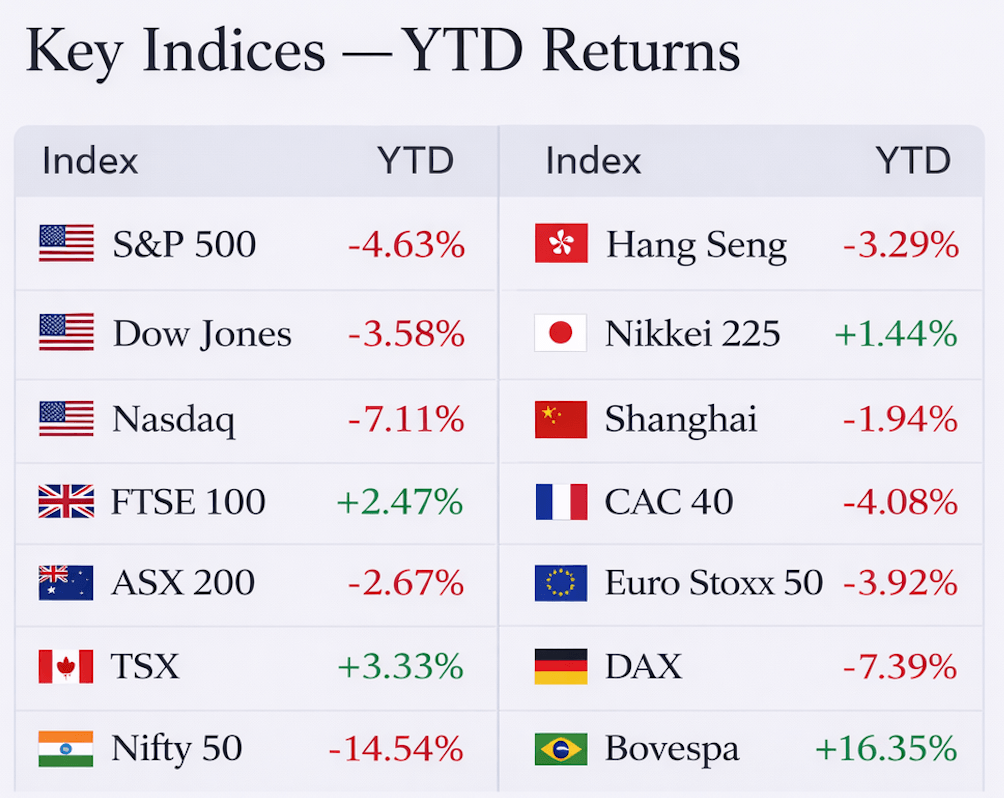
Markets this year operated with the backdrop of extremely volatile geopolitics – Venezuela, new tariffs, US-Iran War – so it’s not at all surprising that the majority of global markets are in the red. You can see how the world’s most active markets performed from January 1 to March 31, 2026:
|
|
|
|
Aside from market performance, many investors are also facing uncertainty from fluctuating currencies, impending stagflation, and higher costs of living due to increasing fuel prices. The S&P 500 VIX index soared by 69% this year, showing the data behind the worries.
But if we’re being perfectly candid… this downturn is just one of many in history and will realistically be one in many more to come.
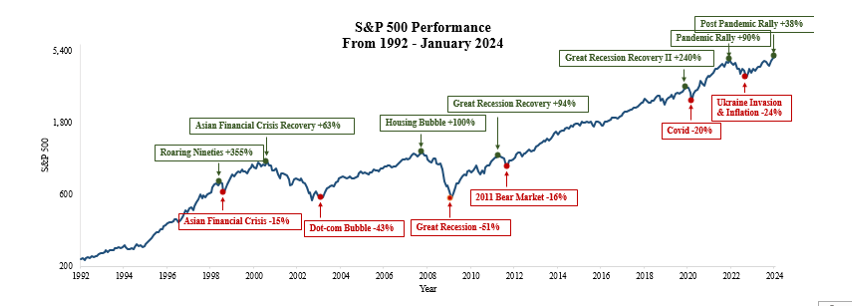
Experienced investors know this as a fact. Just look at the below graph showing every shock (and subsequent recovery) the S&P 500 has seen in the last three decades alone:
|
|
|
|
While yes, past performance does not always guarantee the same future returns, but the long-term backdrop of stock market investing as a means for growing or retaining wealth and being able to gain exposure to companies has not changed. And your reason for investing has likely always been the same too.
With that said, it’s a good time to review your investing strategy and perhaps even find new opportunities in this weak market.
Here’s a checklist we’ve made for you to use today.
|
|
|
|
Investor checklist for volatile times |
1. Reality check your holdings
|
With the market in red, it’s highly likely that a number of your holdings are struggling too.
It’s not fun to watch, but this is the time to look at the logic rather than feel the emotions.
Ask yourself:
|
-
Has anything changed with the stocks you own?
- Have their earnings, balance sheets, or long-term outlooks deteriorated… or has the price simply followed market sentiment?
- Ignoring its recent price performance, would you still buy that stock today?
|
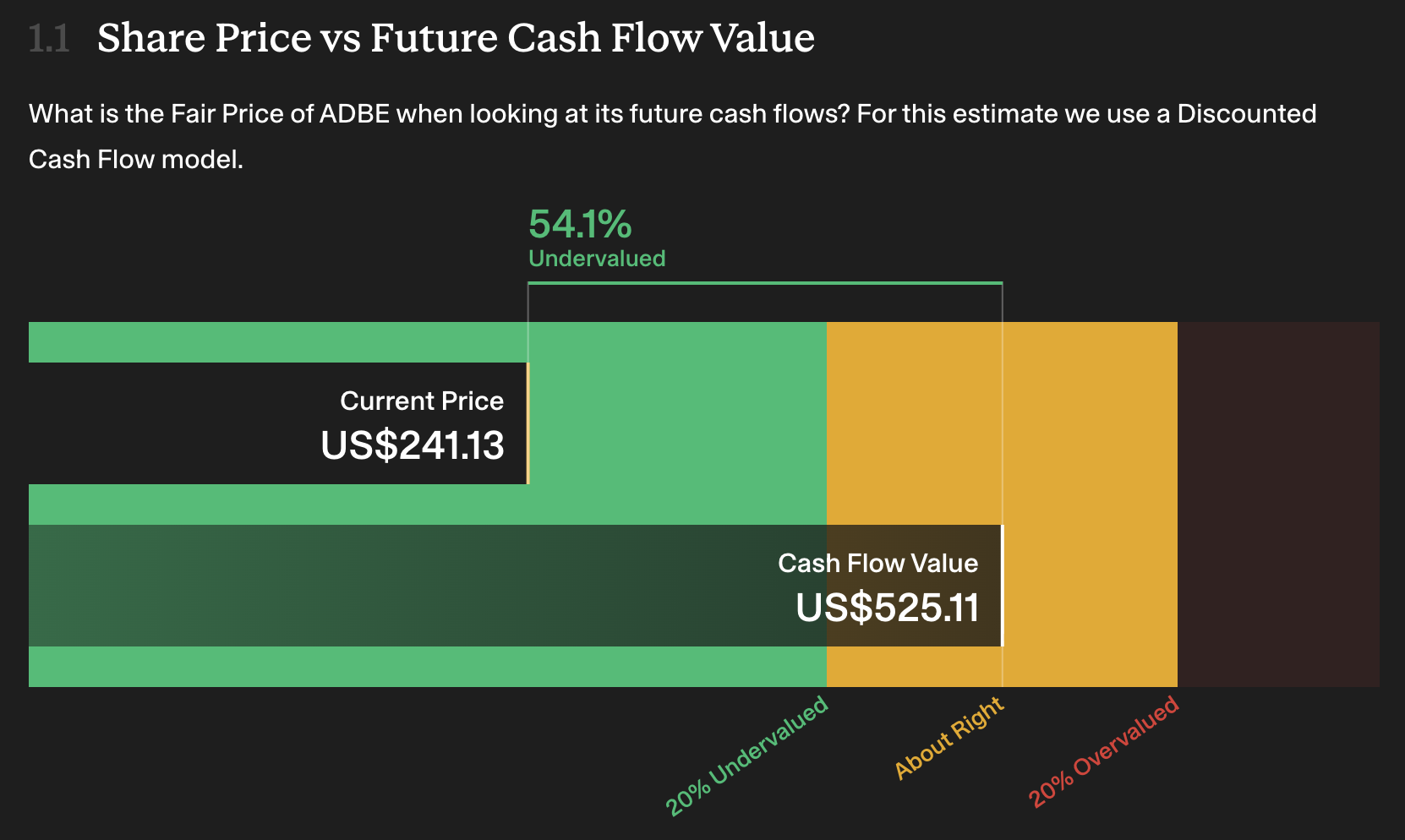
Here’s a good example showing Adobe, which is down 30% since the start of the year. The story behind its fall has largely been due to the rising threat AI poses to Adobe.
But our DCF model shows a different story, because Adobe’s latest quarterly report actually broke records. Its annual recurring revenue from AI actually tripled year-over-year.
|
|
|
|
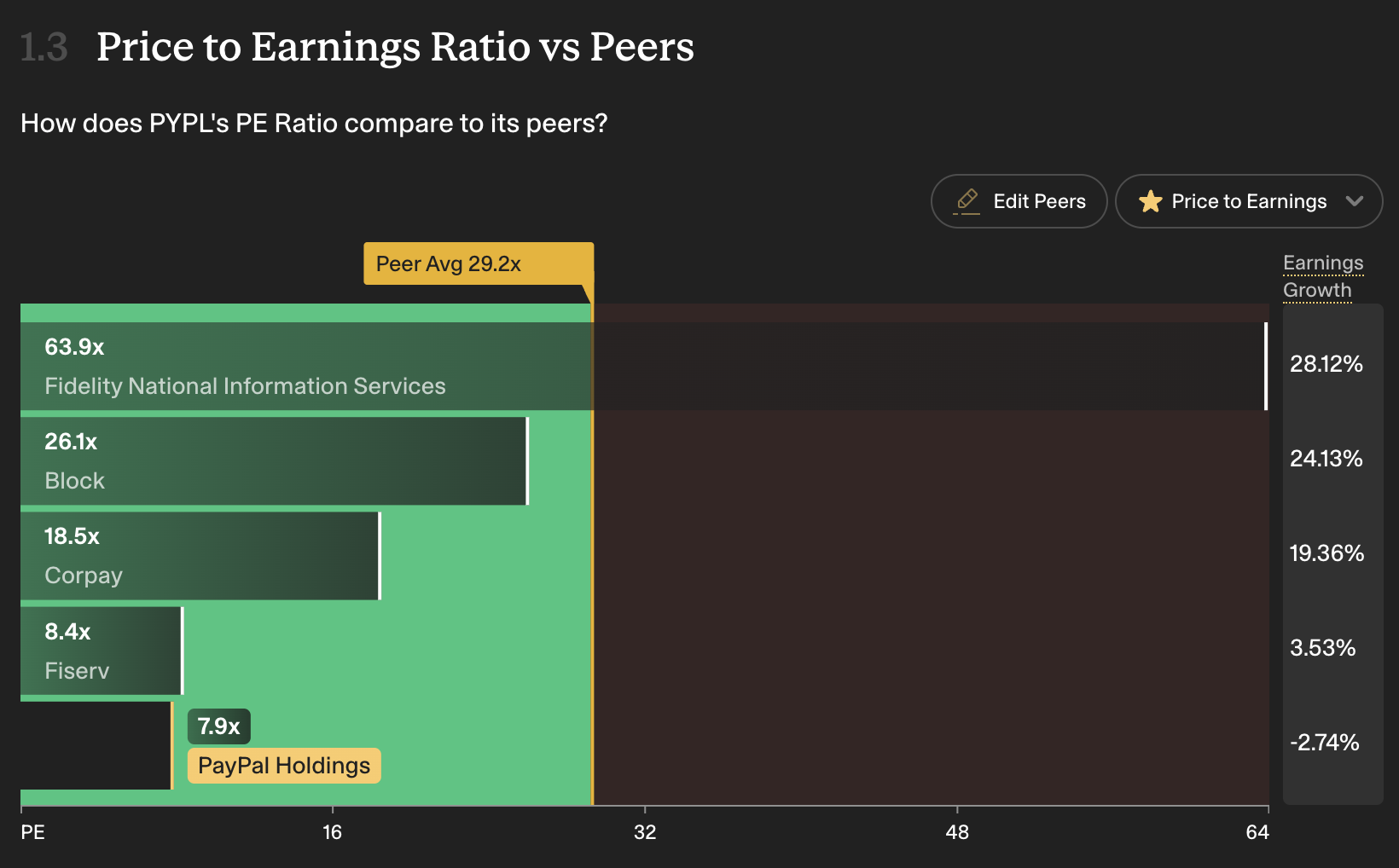
Another example of a trending stock is PayPal, which is down 23% YTD. Its latest drop has now positioned its P/E ratio to below other peers. All of which arguably… are far behind PayPal in terms of market share. |
|
|
|
Whatever you have in your portfolio… it’s worth taking a closer look. Let numbers and logic, rather than emotions, make your moves for you. |
|
|
|
Once you’ve looked at your individual holdings, take a step back and look at the bigger picture.
Because even if each stock makes sense on its own… your portfolio as a whole might not.
Here are a few questions to ask yourself:
|
-
Are you overexposed to a single sector, theme, or geography?
- Are you holding too many similar companies that all move together?
- Has your original allocation drifted after the recent market moves?
|
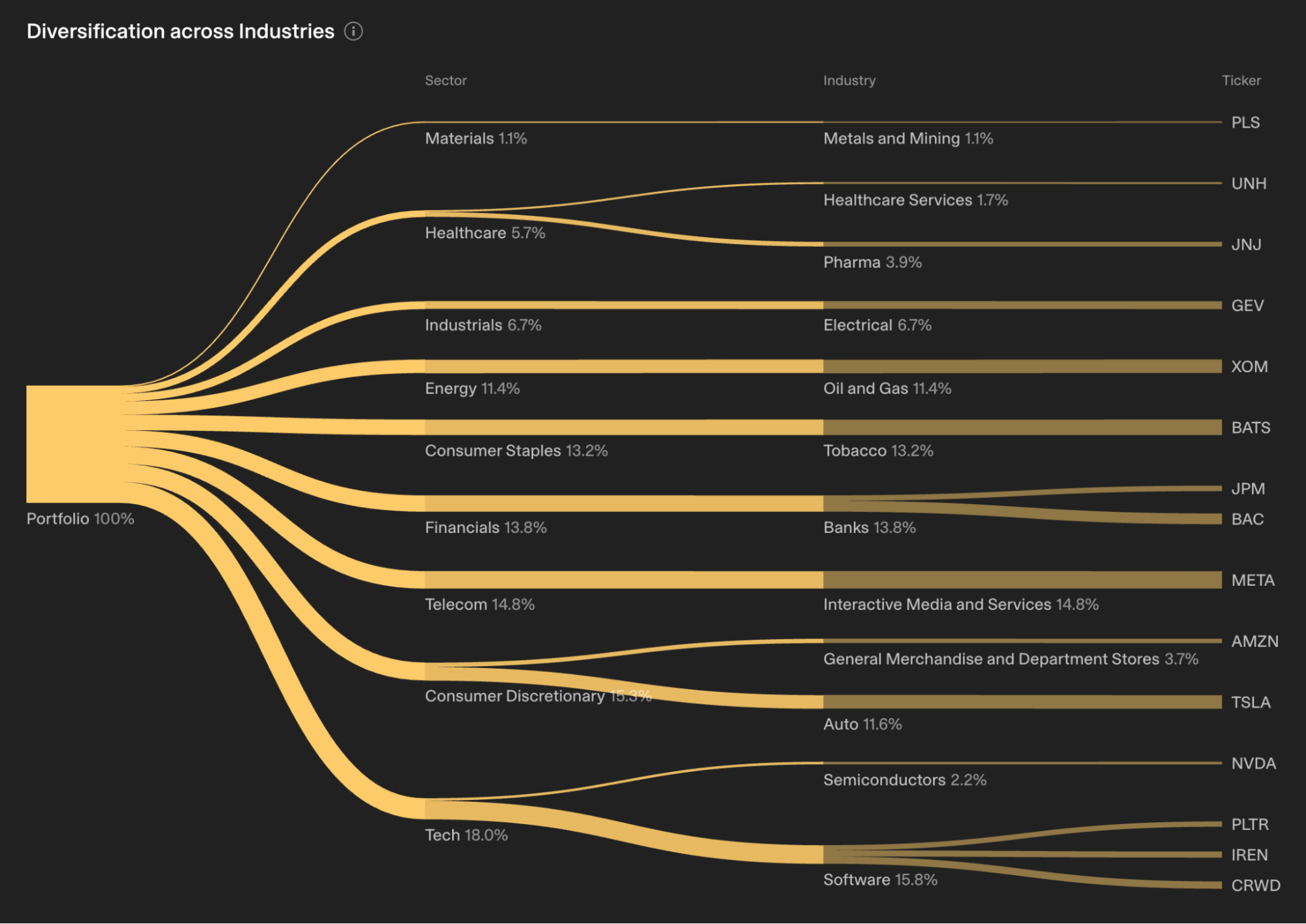
It’s easy to end up concentrated without realizing it, especially after a strong run in certain sectors over the past few years. Unintentional overexposure may mean your portfolio is no longer aligned with your overall investment strategy, and you likely don’t want that. |
|
|
|
Tip: If you’ve got your portfolio set up with Simply Wall St, you can click the analysis tab (example) to show the diversification across industries and companies. |
|
|
|
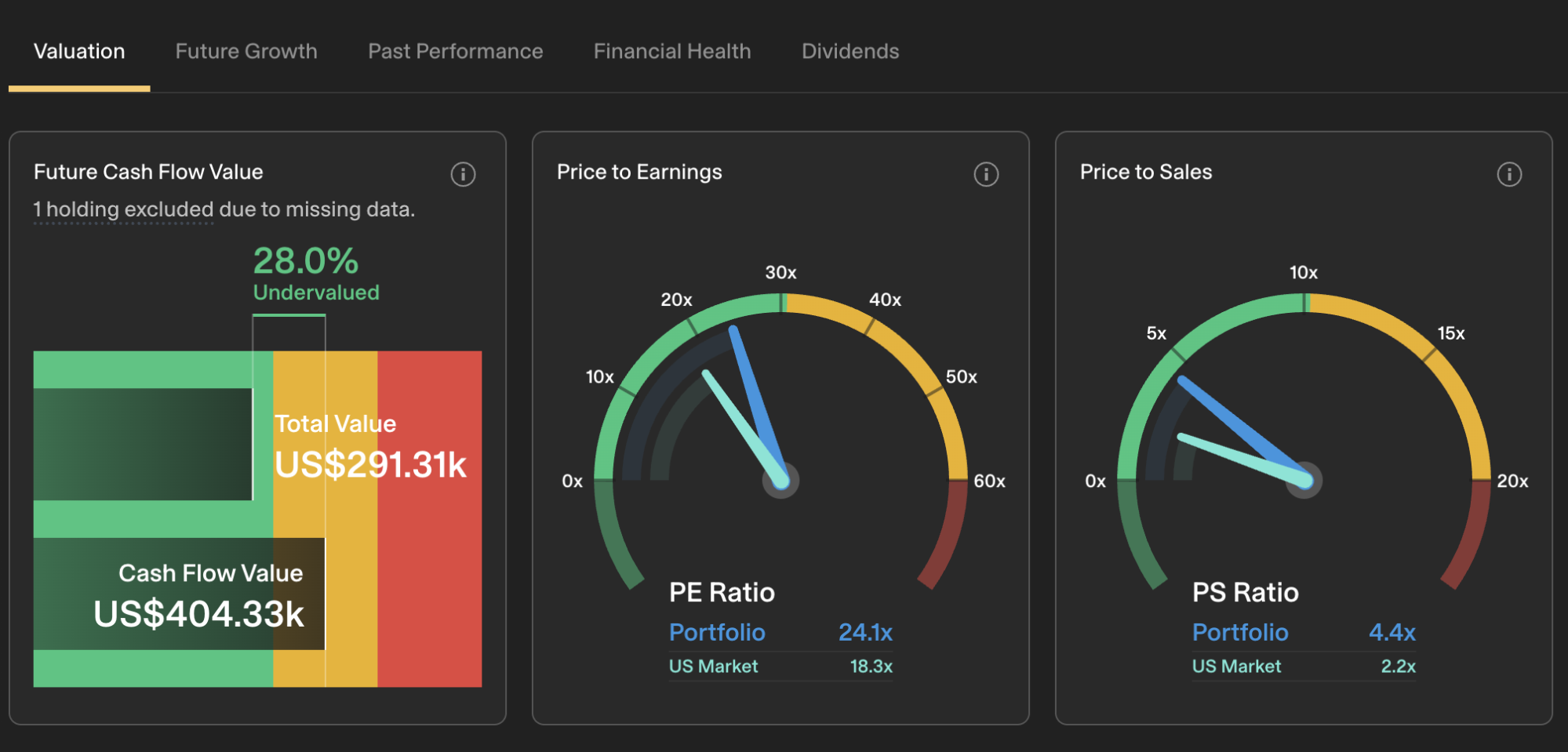
Aside from diversification, it's also worth looking at the overall valuation of your portfolio. If your portfolio is now overvalued or trading at a premium compared to your broader market, it may mean that some of your holdings are priced for high expectations, leaving less room for error if sentiment shifts.
These holdings can be particularly sensitive to volatile markets like today’s.
On the flip side, a portfolio that looks undervalued relative to the market could mean there’s still room to grow if those businesses continue to deliver.
|
|
|
|
3. See what fellow investors are saying |
Investing can sometimes feel like a solo game… but for good and for bad, you’re actually in the same boat as everyone else.
If you’re feeling uncertain or just want to pressure-test your thinking, the easiest way is to see how others are viewing the same stocks you own, or even others you haven’t considered.
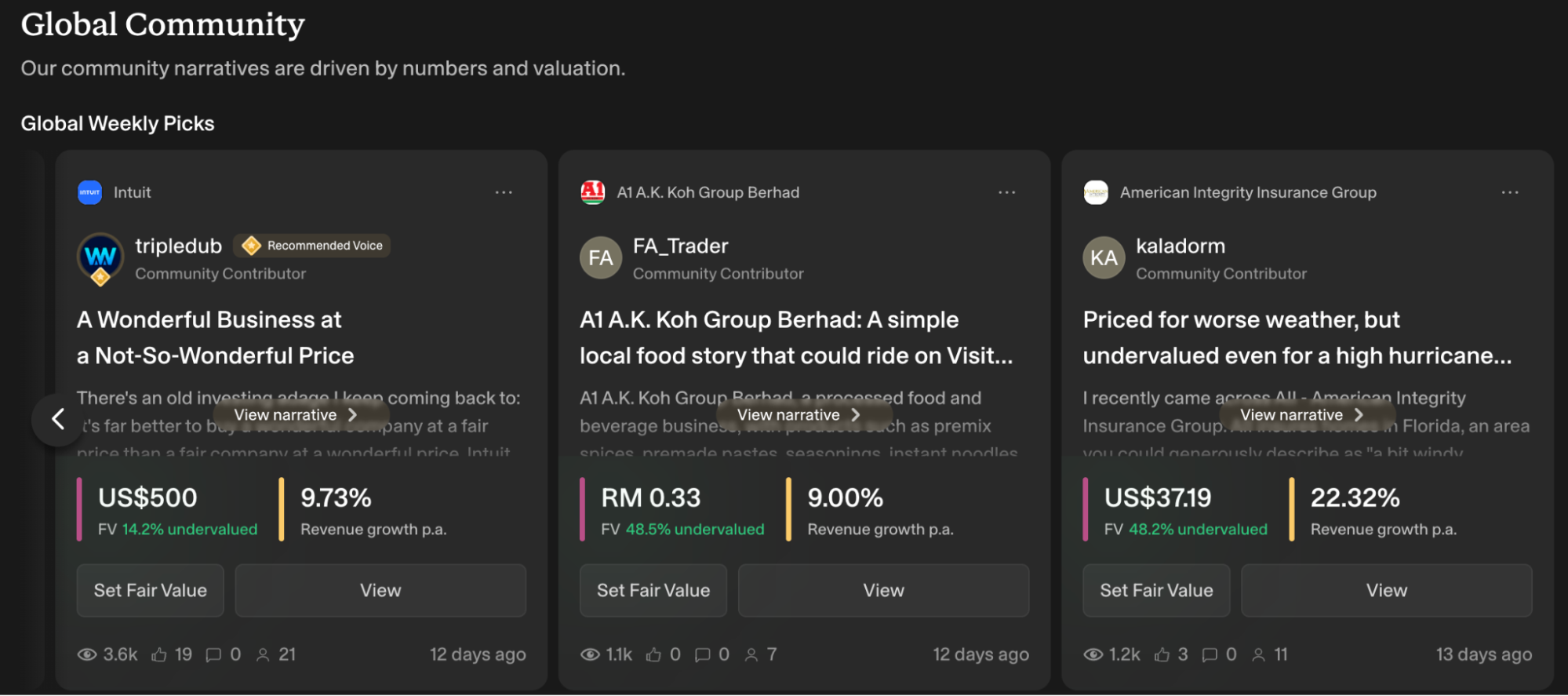
Our Community is highly active and easy to visit when you’re logged in. There, you’ll see what fellow investors are saying about specific stocks, whether they think they’re now over or undervalued, and what their price targets are.
|
|
|
|
You’ll often find that the biggest moves, both up and down, are driven as much by narrative as they are by fundamentals.
And who knows? Maybe someone’s stock narrative may just entice you to invest in a whole new company.
Bringing us to our last point in this checklist…
|
|
|
|
4. Open your mind to new opportunities |
To the long-term investor, to those comfortable with volatility, to those who thought last year’s markets were too expensive… this is where things get interesting.
When prices fall across the board, quality companies often get dragged down with everything else. The examples on Adobe and PayPal were just a few of those that were now “undervalued” according to both analysts and our DCF model.
If you see opportunity in today’s market and want to screen for a list of companies in a certain industry and with certain metrics to fit your goals, you can easily access Simply Wall St’s Screener. Here, you can easily screen for stocks then look at each company’s report to determine if a stock will suit your portfolio.
|
|
|
|
|