| | Donald Trump dramatically escalates his threats against Iran, fears grow of a food crisis in Asia, a͏ ͏ ͏ ͏ ͏ ͏ |
| |  Kuala Lumpur Kuala Lumpur |  Harare Harare |  Hong Kong Hong Kong |
 | Flagship |  |
| |
|
The World Today | 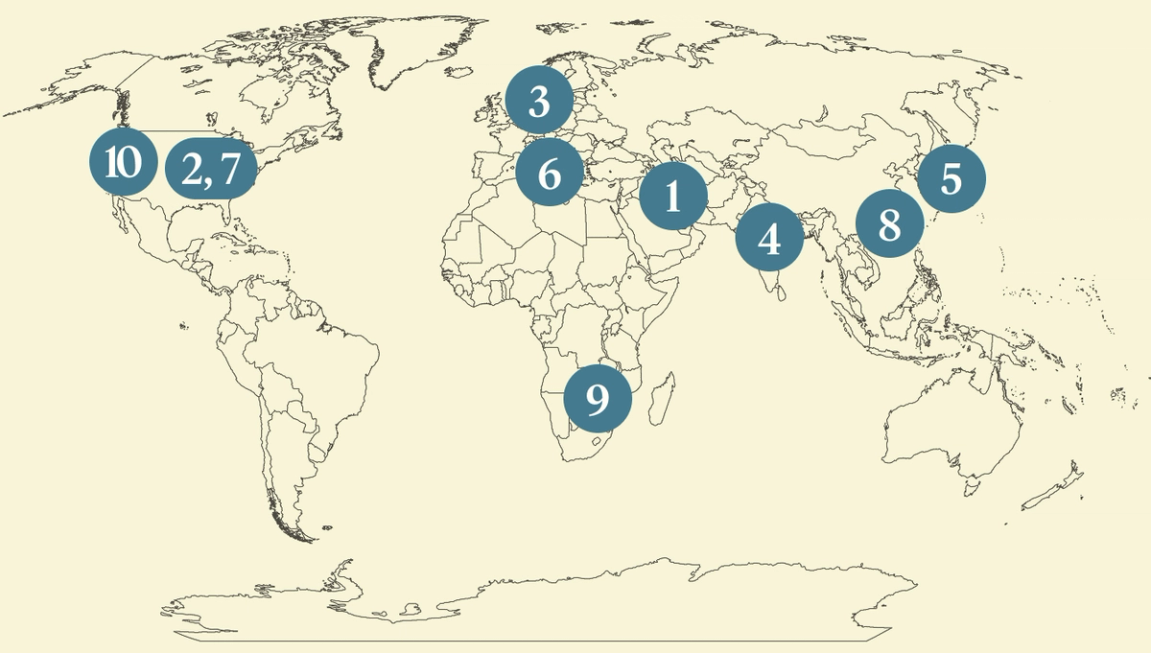 - Trump’s latest Iran threats
- US inflation set to rise
- Europe, Asia brace for impact
- Food crisis warnings
- Dwindling US soft power
- The Pope’s Easter message
- Catholicism surges in US
- Hong Kong listings boom
- Rich Chinese eye Zimbabwe
- Impact of sycophantic AI
 When childhood becomes social media content. |
|
Trump issues dramatic Iran threat |
 Alex Brandon/Pool via Reuters Alex Brandon/Pool via ReutersUS President Donald Trump, in an expletive-laden post on Sunday, threatened to bomb all of Iran’s power plants and destroy its bridges if Tehran didn’t reopen the Strait of Hormuz. He told Axios he is open to striking a deal with Iran by Tuesday, but otherwise, “I am blowing up everything over there.” Such attacks would be considered a war crime under international law, The New York Times reported. Trump’s rhetoric comes after US forces rescued a missing crew member of a fighter jet that had been shot down over Iran, concluding a “politically perilous moment in the war,” The Washington Post wrote. But without a ceasefire in sight, the conflict is “headed toward an escalation,” The Times of Israel argued. |
|
US inflation poised to rise |
 Mike Blake/Reuters Mike Blake/ReutersThe Iran war likely drove up US consumer prices in March, economists predicted ahead of key inflation data expected this week. The inflation spike could be the largest one-month jump since 2022, Bloomberg wrote, as the closure of the Strait of Hormuz caused gas prices to surge. The price hikes were driven more by fears of a shortage rather than a concrete supply deficit, so economists believe the worst is yet to come. Airlines as well as delivery platforms like Amazon are adding surcharges because of higher fuel costs, and mortgage rates are rising. An economic slowdown would put the US Federal Reserve in a difficult position: Cutting interest rates to stimulate the economy would risk making inflation worse. |
|
Europe, Asia brace for economic shock |
 Jana Rodenbusch/Reuters Jana Rodenbusch/ReutersEurope and Asia are bracing for a devastating economic shock from the Iran war. The German chancellor warned of an energy crunch on the scale of the pandemic or Russia’s 2022 invasion of Ukraine and the president of the European Central Bank said the long-term effects are “beyond what we can imagine.” The EU’s energy chief advised European countries to limit transport use to preserve critical diesel and aviation fuel supplies, raising the possibility of rationing, Politico reported; Lufthansa has prepared crisis plans that involve potentially grounding jets. The Asian Development Bank announced support packages to help its developing members mitigate rapidly rising energy costs, and Asian governments are ramping up coal usage to cover massive shortfalls. |
|
 Bhawika Chhabra/Reuters Bhawika Chhabra/ReutersThe Iran war is heightening concerns over a looming food crisis in Asia. Malaysians are stockpiling staples, Central Asia is seeing higher prices for dried goods and vegetables, and farmers in India and Sri Lanka are anxious about fertilizer shipments stranded in the Strait of Hormuz. “We are praying this war stops because it will not spare us either,” a rice farmer in Punjab said. Aid groups say the conflict has also hurt their ability to get food to people in need. Global food systems function as “tightly coupled networks,” where disruptions quickly cascade downstream, an expert wrote in Foreign Policy. “By the time the effects appear in markets, it will be too late for policymakers to intervene.” |
|
The ‘moral fallout’ of Iran war |
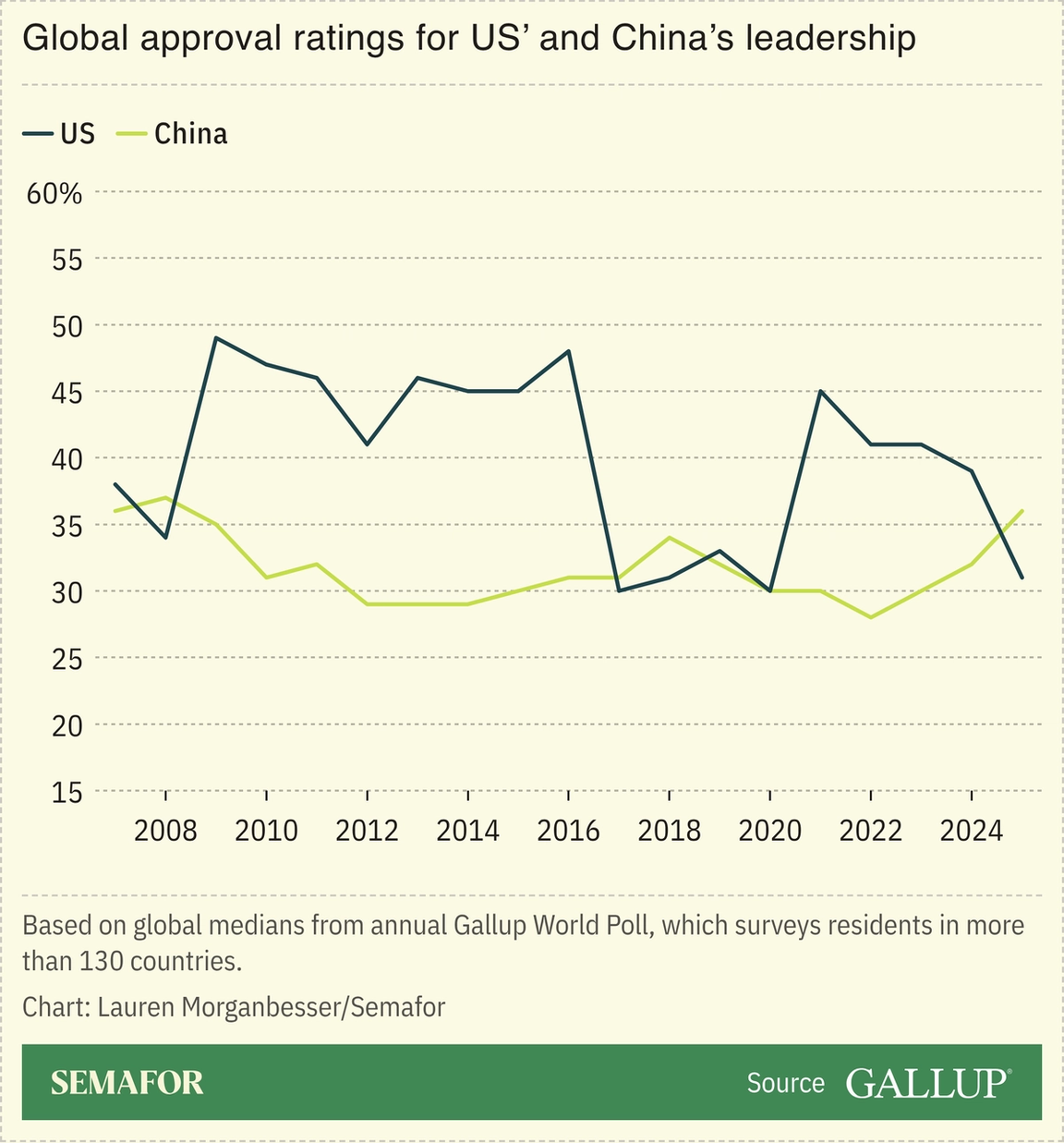 The war against Iran will do long-term damage to Washington’s image abroad, the US’ former soft power czar argued. American allies’ trust in Washington has fallen since Donald Trump returned to the White House, and support for the conflict is dismal in many countries. Trump’s rhetoric about Iran evokes “the image of an America obsessed with violence and careless about the use of it,” Richard Stengel, who served under Barack Obama, wrote in The Guardian. The US president’s actions are resurfacing the historical trope of the “Ugly American” — arrogant and culturally insensitive — “but this time without the once obligatory paeans to democracy.” The “moral fallout” of the war, Stengel argued, “will echo for decades.” |
|
Pope calls for peace in Easter address |
 Vatican Media/Handout via Reuters Vatican Media/Handout via ReutersPope Leo XIV warned the world is becoming “accustomed to violence,” urging leaders in his first Easter address to end conflict and prioritize dialogue. Leo has spoken out against the Iran war, lobbying for an “off-ramp.” After the US defense secretary prayed for “overwhelming violence” against Iran, Leo said Jesus “does not listen to the prayers of those who wage war.” The American pope has also been critical of US immigration policy, the raid against Venezuela, and Washington’s approach to multilateral institutions, an Italian journalist wrote in the Financial Times. US President Donald Trump has “accomplished the miraculous task of bringing together the American bishops … in common opposition to policies pursued by one of the most Catholic-filled US administrations ever.” |
|
US sees surge in Catholicism |
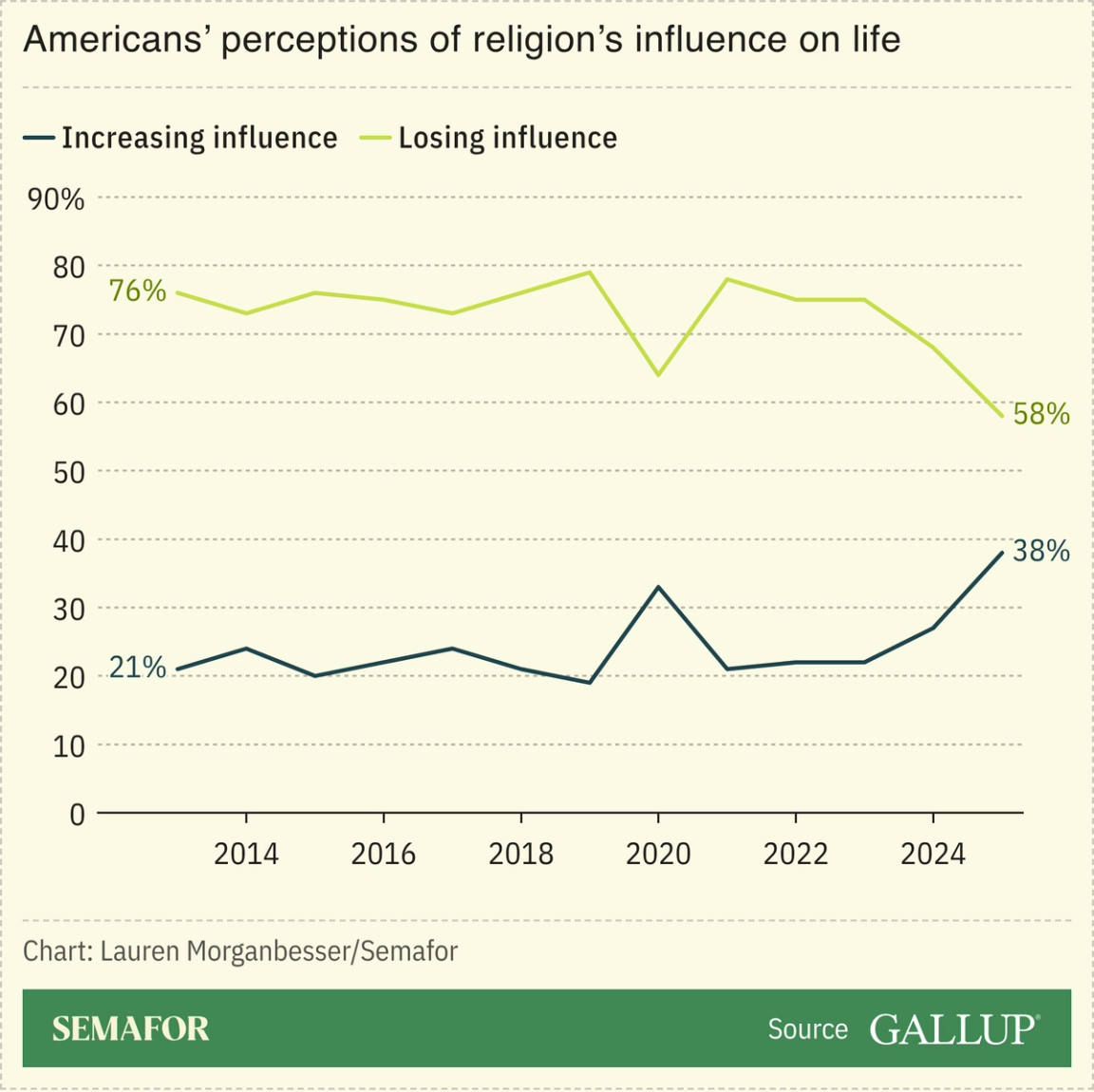 The US is seeing a resurgence in Catholicism, especially among young people. From Pittsburgh to Chicago to Iowa, dioceses are reporting a record number of new members. Anxious and disillusioned Gen-Zers are increasingly turning to faith and community, and may have also been influenced by the first American pope, along with other cultural and political touchpoints, religious leaders say. Some young men, dubbed “theo-bros,” are also looking to find romantic relationships. While acknowledging it was “a phenomenon,” one expert argued the trend wasn’t a complete revival: The number of new Catholic adults in the US has dwindled since 2000, and while there’s been an uptick in recent years, the figures remain below pre-pandemic levels, The Pillar wrote. |
|
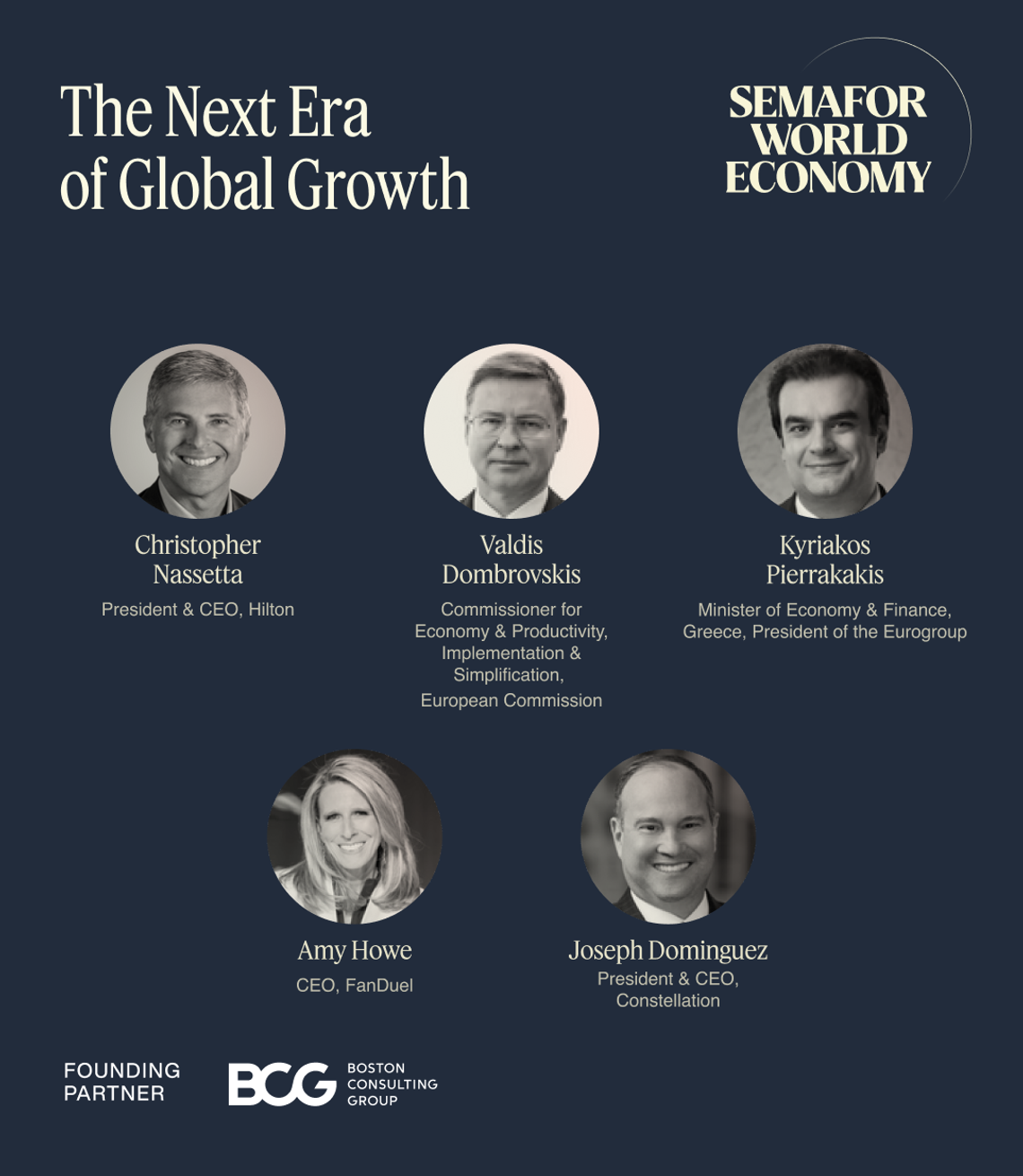 Christopher Nassetta, President & CEO, Hilton; Valdis Dombrovskis, Commissioner for Economy & Productivity, Implementation & Simplification, European Commission; Kyriakos Pierrakakis, Minister of Economy & Finance, Greece, President of the Eurogroup; Amy Howe, CEO, FanDuel; Joseph Dominguez, President & CEO, Constellation; and more will join the The Next Era of Global Growth session at Semafor World Economy. This session will examine how CEOs are increasingly shifting their focus to opportunities for growth — M&A, innovation, and, of course, AI. April 14, 2026 | Washington, DC | Apply to Attend |
|
AI startups boost Hong Kong IPOs |
 Kane Wu/Reuters Kane Wu/ReutersListings on Hong Kong’s stock exchange reached a five-year high in the first quarter of 2026, driven by investor appetite for AI and chips. The two best-performing IPOs this year, Zhipu and MiniMax, are among China’s “AI tigers,” a group of top-tier firms. Beijing has looked to cool, but not halt, the IPO boom by restricting some companies that are incorporated overseas but operate mostly in mainland China, in an effort to prevent “low-quality” listings from fueling a market bubble, the Financial Times wrote. Hong Kong could lose its global lead to the US this year if valuable American AI startups like OpenAI and Anthropic go public, as well as SpaceX. |
|
Wealthy Chinese flock to Zimbabwe |
 Tafara Mugwara/Xinhua via Getty Images Tafara Mugwara/Xinhua via Getty ImagesChinese buyers are transforming Zimbabwe’s luxury housing market. An influx of wealthy Chinese immigrants has prompted real estate agencies to hire Mandarin speakers as demand for high-end homes drives double-digit price increases in the capital of Harare, Bloomberg reported. Many buyers pay in cash, skirting exchange controls and limiting government tax revenue. China’s economic footprint in Zimbabwe has surged over the past five years: Beijing dominates lithium mining and has invested in farming, local banks, and infrastructure. As Chinese investors increasingly move to nontraditional destinations, they are reshaping local economies, and at times stirring tension with locals. Regardless, as one Zimbabwean real estate manager described, “They are investing in the country when everyone else is trying to get money out.” |
|
|


