Hi! Have A Break, Have 413,793 KitKats… More than 12 tons of the chocolate bars were stolen in Europe last week, Nestlé confirmed — though the company added the theft won’t disrupt supply ahead of Easter. Today we’re exploring:
|
- The great divergence: Why are stocks falling even as earnings estimates rise?
- Tastemakers: Hot sauce giant McCormick wants a bite of Unilever.
- Way to go: Waymo is logging some 500,000 paid rides every week.
|
Stock prices and earnings estimates are diverging wildly |
Over the long term, earnings drive stock prices.
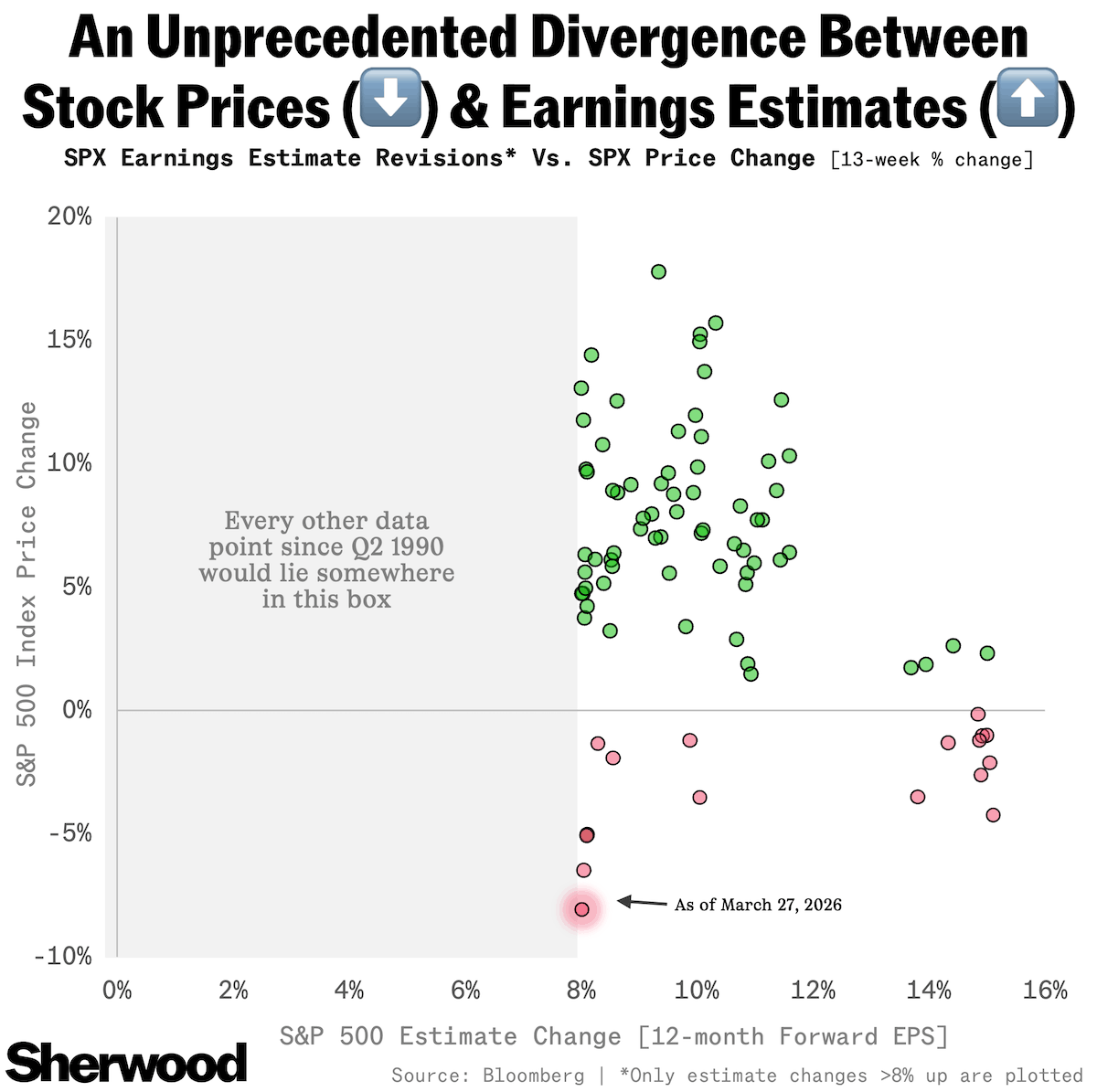
But in the here and now, we’re experiencing an unprecedented divergence between the S&P 500’s earnings estimates and its actual performance, driven by skittishness about the return of oil shipments through the Strait of Hormuz and the long-term ROI for the hundreds of billions in AI capex.
Over the three months ended March 27, analysts have ratcheted up their projected bottom-line results for the largest US publicly traded companies by 8%. Over the same time, those stocks are down 8%. Stocks have never been down this much when earnings estimates have risen by this much, based on data going back to Q2 1990. |
The closest such episodes were in mid-2010 amid fears of a double-dip recession after the financial crisis, and in 2018 following a short-lived blowup in volatility markets.
The world in which these earnings estimates are realized is incompatible with a long-lived oil disruption that might spark a US economic downturn. Oil price spikes are infamously a drag on other parts of consumer spending — durables and household personal products are the two worst-performing S&P 500 industry groups since February.
But markets still don’t appear to be pricing in elevated recession risk. US junk bond spreads remain below their average since 2015, and even oil markets haven’t shown the same degree of alarm despite a bigger supply shock than what followed Russia’s Ukraine invasion.
In fact, the divergence between earnings (higher) and stocks (lower) spans three months; the war has only been going on for one. The unwillingness to buy megacap AI stocks predates the Mideast conflict, as investors have more creeping doubts on whether the capex binge will prove worth it in the long run — or simply erode free cash flow amid aggressive build-outs. |
Americans won't tolerate bland food anymore — and it's turned McCormick into a ~$7 billion a year spice and sauce giant |
Whether it’s salty, sweet, umami, spicy, or sour, Americans have come to expect their food to punch its way through their palette, the result of a decades-long trend that's seen more humble “meat and potatoes” style meals replaced by exciting flavors borrowed from other cuisines. And even if it is meat and potatoes on the menu now, there's a decent chance you’ll be having it doused in hot sauce, as our collective love for mouth-tingling condiments has grown.
|
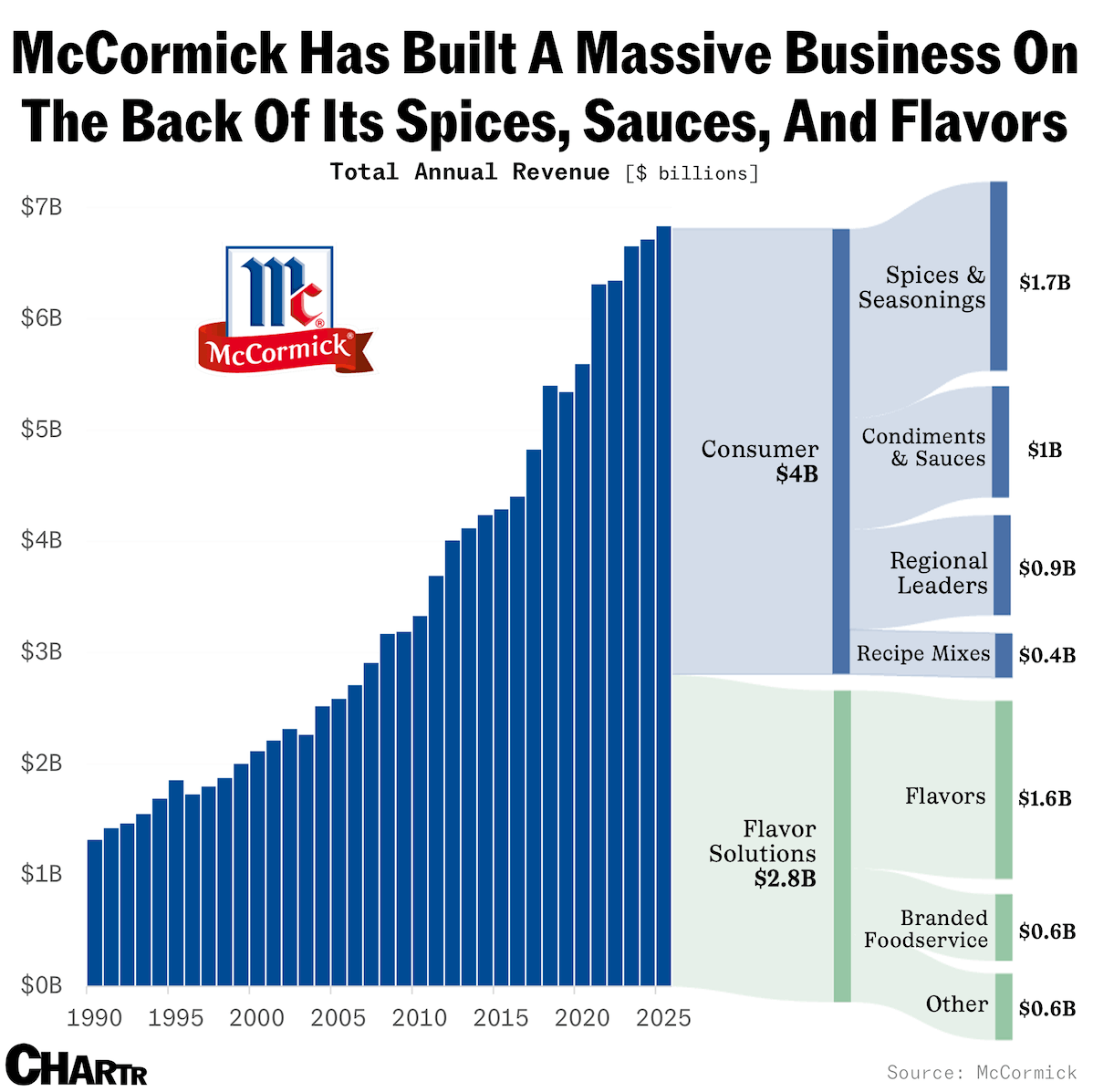
McCormick has been a key component in that flavor revolution through the years. After starting as a spice-selling business based out of a cellar in 1889, the company has now been recognized by Euromonitor as both the world’s top hot sauce company and the leading name in herbs and spices, thanks to its vast pantry of global brands.
In recent years, McCormick has leaned into acquisitions to add bold flavors to its portfolio — like Frank’s RedHot and French’s Mustard in 2017 and the popular Cholula Hot Sauce in 2020 — helping the business boom to nearly $7 billion a year in sales.
|
Now, the company is looking to take a bite out of a behemoth in the space to power its next leg of growth. |
Earlier this month, British mega-conglomerate Unilever confirmed that it had received an offer from McCormick for its food business, which houses mayonnaise maker Hellmann’s, Knorr, and Marmite, and announced that it had entered deal talks with the American company, while noting that “There can be no certainty that any transaction will be agreed.”
Deal discussions between the two are progressing quickly, per sources cited by Reuters, and McCormick seems to be sweetening the deal as the smaller of the two businesses, with Unilever shareholders reportedly set to take more than 50% of the new combined company. |
|
|
Need versatile tools for tactical tech trading? |
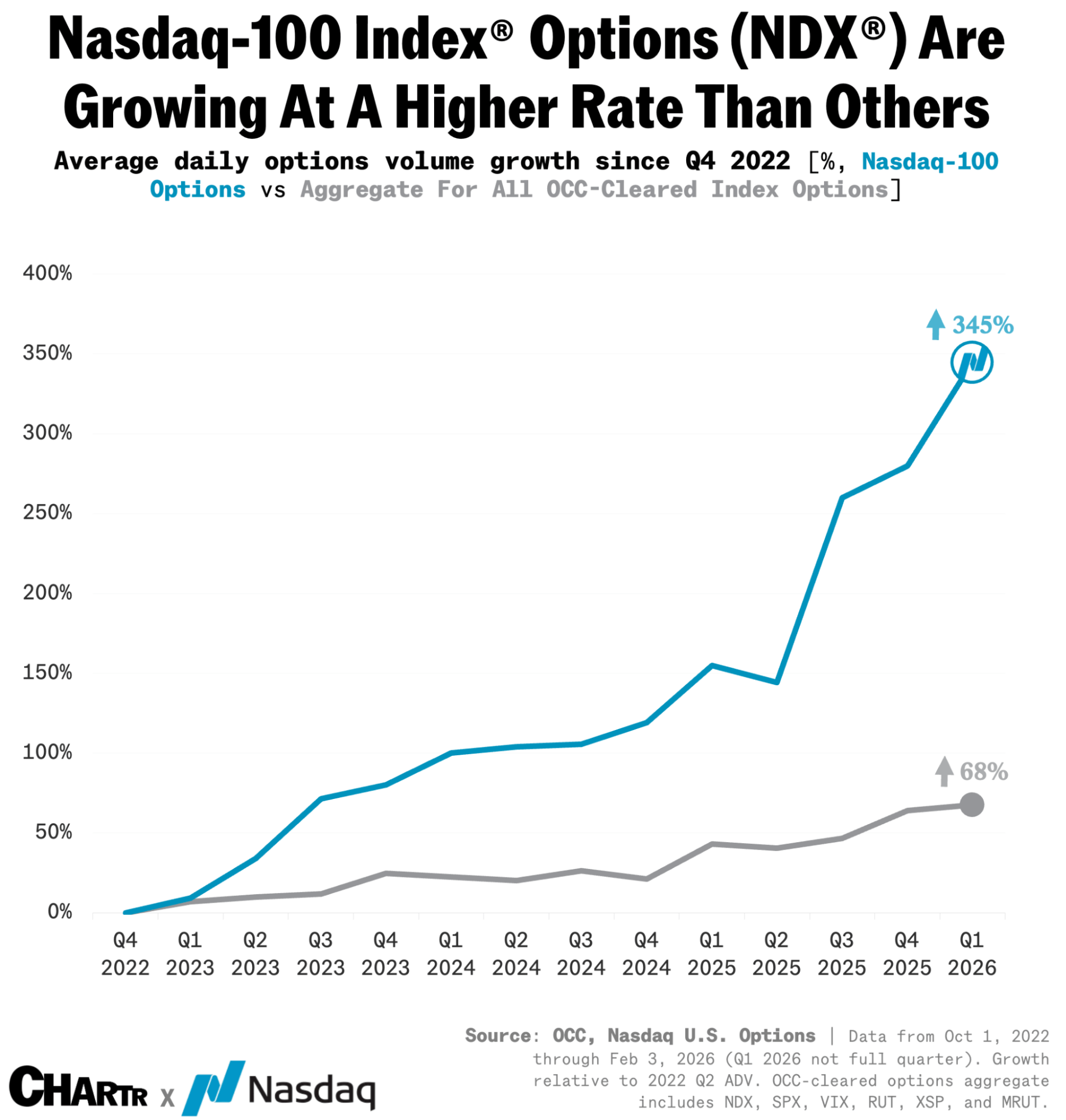
Index options are growing rapidly. In aggregate, average daily volume across all index options has grown 68% since the end of 2022 — but Nasdaq-100 Index® Options (NDX®) have notched 345% growth in the same period. |
In fact, over the past three years, Nasdaq-100 Index Options have seen strong uptake in the retail market. That’s because they offer the precision traders need: |
-
Two sizes: Choose between 100% (NDX) and 1% (XND®) of the full value of the Nasdaq-100 Index, offering flexibility for different portfolio types.
- Strategic flexibility: Daily, weekly, monthly and long-term expirations are available, suited to use in all types of strategies from risk management to income generation.
- No surprises: Nasdaq-100 Index Options are cash-settled and European-style, eliminating the risk of early assignment.
|
|
|
Waymo’s now serving more than 500,000 paid robotaxi rides every week |
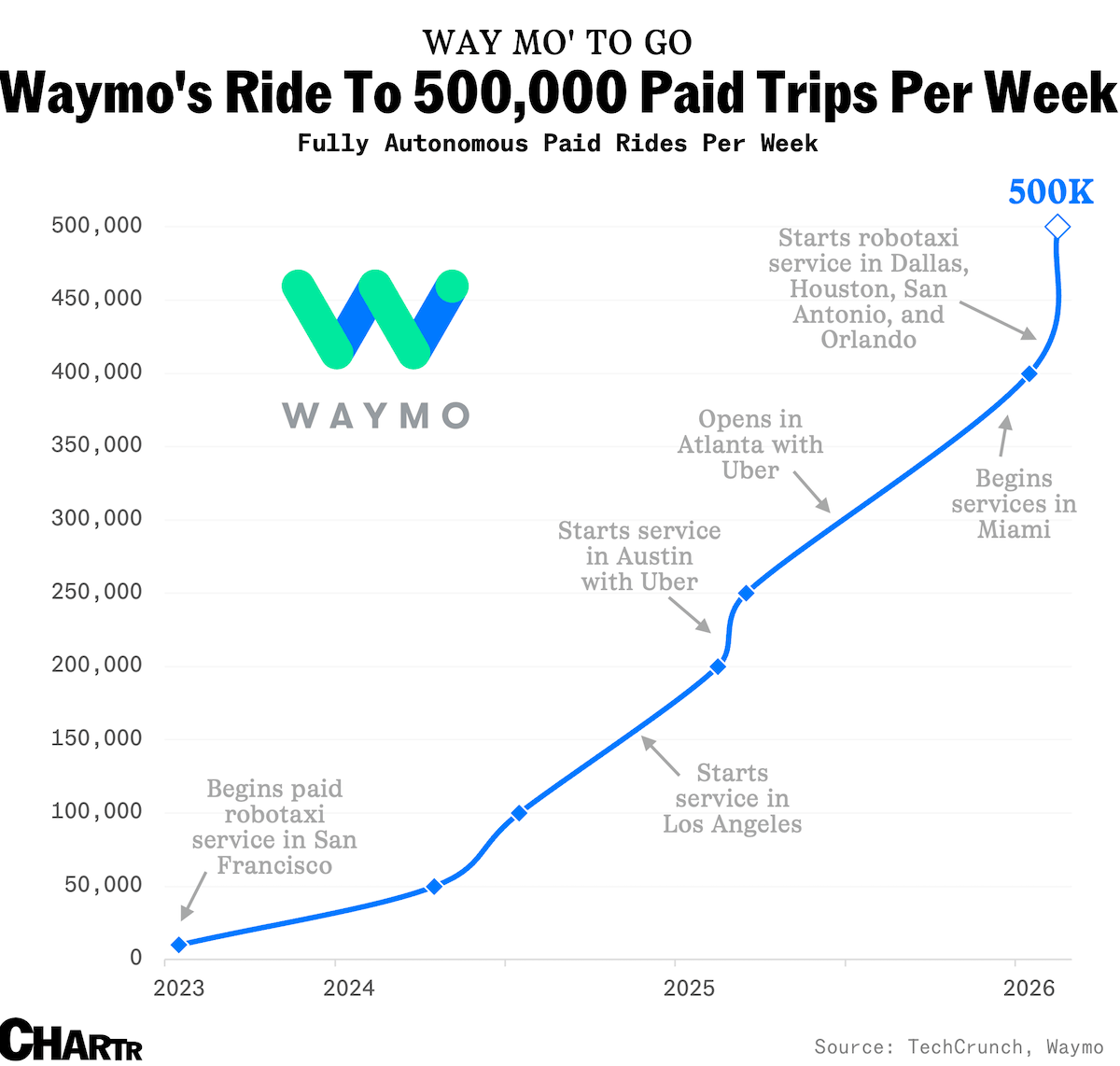
Per a company post on X last Thursday, Google-owned Waymo is now providing 500,000 paid robotaxi rides every week — an eye-popping figure that’s slowly turning the self-driving vehicles into a common sight on American roads for millions across 10 cities in the US.
Great reporting from TechCrunch has captured the scale and speed of Waymo’s journey. Back in May 2024, the company clocked just 10% of that current weekly figure, but thanks to a rapid expansion to new markets in Austin, Atlanta, Miami, Dallas, Houston, San Antonio, and Orlando, that’s now rocketed up to the half a million milestone.
|
In terms of mileage, Waymo reached 171 million cumulative miles by the end of last year, or some “200 lifetimes of driving,” per the company. Its robotaxi fleet has grown to more than 3,000 vehicles as of December 2025, and might even size up 18x if reports of Hyundai looking to supply Waymo with 50,000 cars come to fruition.
Operating as a standalone entity, but owned by Google and YouTube-owner Alphabet, Waymo has the deep pockets needed to invest in the expensive autonomous driving technology, raising $16 billion to hit $126 billion last month — miles ahead of smaller, independent competitors like Wayve or Pony.ai. In February, CEO Tekedra Mawakana said she expects the company to hit 1 million weekly paid rides this year.
|
For now, Uber and Waymo are working together in the get-people-somewhere game, with Uber providing exclusive access to Waymo vehicles in cities like Austin and Atlanta through its widely popular app. But that mutually beneficial relationship could become an existential threat for Uber if people continue to adopt robotaxis at this pace: J.P. Morgan analysts expect Waymo to account for 7% of the entire US rideshare market by 2030, “taking some share from Uber and Lyft,” adding that such an estimate “could still be conservative.”
|
|
|
-
Oil is headed for its largest-ever monthly gain in March, topping $115 a barrel, while aluminum neared a 4-year high after Gulf smelters were attacked by Iran.
- Wouldn’t bank on it… 84% of Americans say they’d rather go a year without social media than give up their banking apps, according to a new Wells Fargo survey.
-
Eli Lilly just struck a deal worth up to $2.75 billion with Hong Kong biotech firm Insilico Medicine to commercialize AI-developed drugs.
-
US consumer sentiment fell to a 3-month low in March as the Iran war drove up gas prices and rattled financial markets, per the latest University of Michigan survey.
-
SycophAIncy: A new Stanford study found AI chatbots were 49% more likely than humans to validate users’ actions, even when they were deceitful, illegal, or harmful.
|
|
|
Nasdaq-100 Index® Options have seen a 345% increase in average daily volume since Q2 2022, partly due to uptake among retail traders. See how NDX® and XND® could support your tech trading strategy. |
|
|
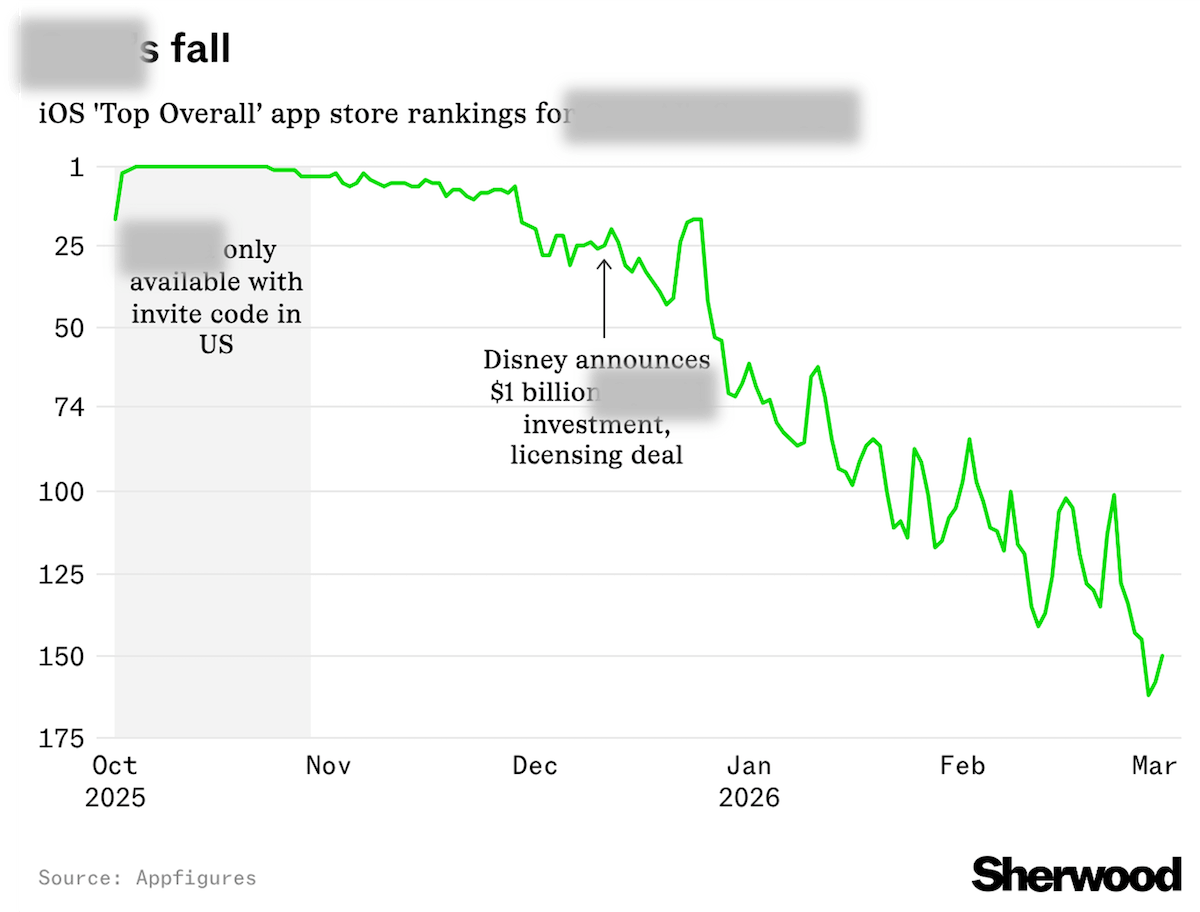
Off the charts: Which now-abandoned text-to-video app made a splash when it landed last October, despite being invite-only at the time? [Answer below]. |
Not a subscriber? Sign up for free below. |
| |
|