|
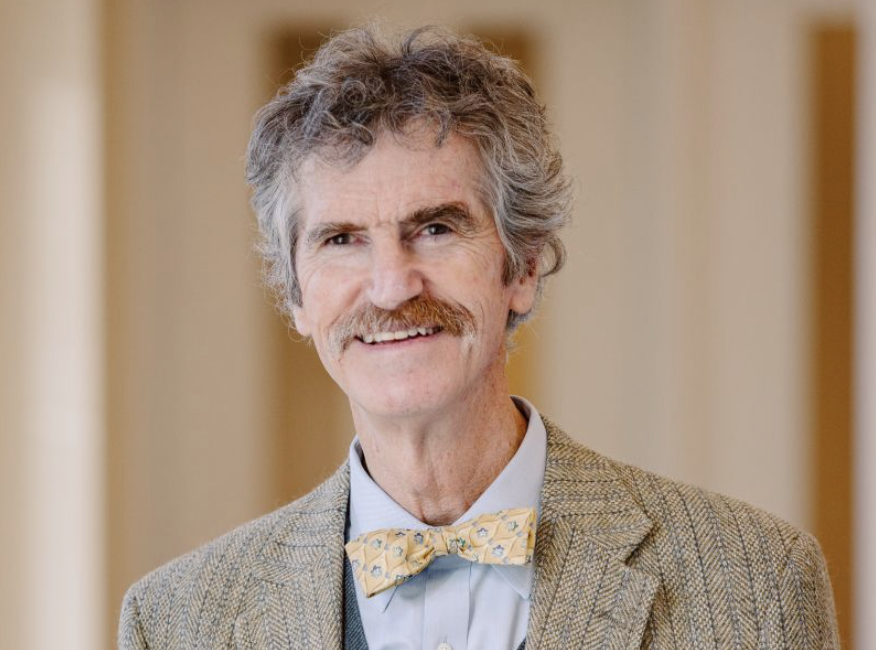
At the heart of St. Sebastian’s School stands a leadership legacy shaped not by authority alone, but by conviction, humility, and an enduring belief in relationships. Over a 34-year career at the Catholic Independent school, Bill Burke cultivated a culture grounded in faith, intellectual rigor, and a deeply personal approach to education, one that extended far beyond the classroom. Burke has been married to his wife, Patty, for 50 years. Together, they raised four sons, each now a husband and father, and today enjoy life as grandparents to seven grandchildren. Even amid the demands of leading a school, Burke’s understanding of family remained grounded in consistency and presence rather than grand gestures. That simplicity reflects a broader pattern in Burke’s life: family and faith. Not as abstract ideals, but as daily commitments that inform how he leads and lives. Even during the demands of leading a school, Burke maintained a steady rhythm of family life rooted in presence, consistency, and shared values. His understanding of leadership, he said, begins at home. “It’s a biological truth, and a spiritual truth, that we’re built to pass it on,” Burke said. However, Burke’s path into education was not predetermined. A graduate of Middlebury College, where he played hockey, he initially assumed he would follow the family profession into law. Instead, a formative year working as a substitute teacher in Boston and with the Big Brother Association changed his direction. Immersed in diverse communities, he began to understand the transformative power of mentorship and relationships. Soon after, at age 23, he accepted a position at Holderness School in New Hampshire, where he would teach, coach, and live in a dormitory. “I just fell deeply in love with learning,” Burke said. Under the mentorship of headmaster Don Hagerman, Burke developed a philosophy rooted in humility and intentional learning. “It’s a willingness to sit at the feet of the masters,” he said. But, mentorship, he emphasized, requires initiative. “It’s incumbent upon the young to access the wisdom of the ages,” Burke said. When the opportunity to lead St. Sebastian’s emerged, Burke approached it as a moment of discernment, not career advancement. “Please, Lord, put me in a place where I can best serve you and my family,” he recalled praying. When he was offered the position in 1990, he saw it as an answer. “I believe the prayer had just been answered,” he said. Burke became the school’s first lay headmaster and quickly clarified its mission, distilling it into a phrase students could live by: “Love God, work hard, take good care of one another.” St. Sebastian’s occupies a unique position within the New England Independent school landscape, something Burke was intentional about articulating. With 380 students in grades 7–12, Burke described St. Sebastian’s as unique among the 16 ISL (Independent School League) schools because it is the only Catholic school. For Burke, that distinction meant the school could be both academically rigorous and deeply mission-driven. “The only reason this school exists is for the glory of God, for our students and their families,” he said. “The rest of us are simply here to serve.” He also emphasized openness. “We’re neither apologetic nor arrogant, nor fake, who we are,” Burke said. From the outset, Burke rejected a top-down leadership model. “I don’t see myself dictating and legislating, but more guiding and serving,” he said. He encouraged open dialogue with faculty and built a culture grounded in trust and shared purpose. “The essence of life is in relationships,” Burke said. That philosophy extended to students. He encouraged them to seek mentors actively and to approach learning with humility and intention. His approach to education centered on formation, not just academic success, but also character. “How do we help this young man become all God wants him to be…all our world needs him to be?” Burke said. Burke’s professional and personal lives were never separate. When he arrived at St. Sebastian’s, he did so as both headmaster and father. Over time, his sons attended the school, and some later returned as faculty members. “For 34 years, I was never there without a son,” Burke said. That belief shaped his view of education as a partnership with families, not a replacement for them. “We rightly regard the parent as a primary educator,” Burke said. “It’s our great joy and honor and privilege to engage in sacred partnership with the parents.” Running parallel to this commitment is Burke’s lifelong Catholic faith. He describes it not as an obligation, but as something deeply personal and constant. “I was one of those kids who made his first communion at age seven. And I knew where I would be every Sunday for the rest of my life,” Burke said. “It was never anything but a joy and an honor.” Even while traveling, that commitment remained unchanged. During a three-week trip to China, Burke and his wife sought out Mass each Sunday. “We told our guide, ‘Look, we’ve got to go to Mass,’” he said. “And it connected us with the people in magical ways.” Today, that same devotion continues in daily life. Burke and his wife attend Mass each morning, take walks together, and spend time with their children and grandchildren, often gathering around shared traditions like golf. That continuity reinforced his belief that schools should support family life, not compete with it. After more than three decades, Burke’s influence is measured not just in institutional success but also in the lives he shaped. Students often reflected their lessons to him: “I’ve never met a happy, lazy person.”
"Your order has to be God, family, job.”
"Love God, work hard, take good care of one another.”
Even in difficult moments, Burke remained committed to each individual with a simple affirmation. “My commitment to you is eternal,” he told one student. Former students and parents continue to seek Burke out, inviting him to speak at weddings and funerals; it's a testament to the enduring relationships he built. At the heart of Burke’s life and leadership is a vision that extends beyond education. “I want for them what I want for everyone: to live long, happy, healthy, holy lives of love and service in this world, and eternal joy in the next,” he said. He often summarizes that mission. “Exude, radiate, and inspire the good, the true, and the beautiful," he said. "Uplift every person you meet, improve every place you grace.” And ultimately, “Get to heaven and take as many people with you as possible,” he added. Burke’s story is not just about leading a school. It is about answering a calling. It's one grounded in family, sustained by faith, and lived out through a lifetime of relationships.
|