
Individuals and families become self-sufficient and prepared for emergencies
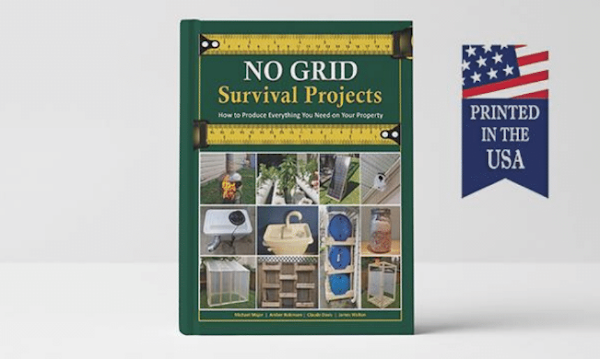
Inside you will find the complete instructions for adding the ingenious DIY projects you need to still have: food, water, power, medicines, and other necessities in a GRID DOWN situation
Hands-on survival guide that teaches you how to live independently
Focuses on real-world survival situations
Helps reduce dependency on modern systems
Useful for both beginners and experienced preppers
Provides practical, actionable solutions, not theory
Instead of depending on uncertain resources, this book empowers you to ==>create your own solutions.

ystems, temperate forest ecosystems, temperate grasslands, coniferous forests, tundra (both polar and high mountain), terrestrial wetlands, freshwater ecosystems and coastal/marine systems. This breadth of topics shows the complexity of plant ecology, since it includes plants from floating single-celled algae up to large canopy forming trees. One feature that defines plants is photosynthesis. Photosynthesis is the process of a chemical reactions to create glucose and oxygen, which is vital for plant life. One of the most important aspects of plant ecology is the role plants have played in creating the oxygenated atmosphere of earth, an event that occurred some 2 billion years ago. It can be dated by the deposition of banded iron formations, distinctive sedimentary rocks with large amounts of iron oxide. At the same time, plants began removing carbon dioxide from the atmosphere, thereby initiating the process of controlling Earth's climate. A long term trend of the Earth has been toward increasing oxygen and decreasing carbon dioxide, and many other events in the Earth's history, like the first movement of life onto land, are likely tied to this sequence of events. One of the early classic books on plant ecology was written by J.E. Weaver and F.E. Clements. It talks broadly about plant communities, and particularly the importance of forces like competition and processes like succession. The term ecology itself was coined by German biologist Ernst Haeckel. Plant ecology can also be divided by levels of organization including plant ecophysiology, plant population ecology, community ecology, ecosystem ecology, landscape ecology and biosphere ecology. First, most plants are rooted in the soil, which makes it difficult to observe and measure nutrient uptake and species interactions. Second, plants often reproduce vegetatively, that is asexually, in a way that makes it difficult to distinguish individual plants. Indeed, the very concept of an individual is doubtful, since even a tree may be regarded as a large collection of linked meristems. Hence, plant ecology and animal ecology have different styles of approach to problems that involve processes like reproduction, dispersal and mutualism. Some plant ecologists have placed considerable emphasis upon trying to treat plant populations as if they were animal populations, focusing on population ecology. Many other ecologists believe that while it is useful to draw upon population ecology to solve certain scientific problems, plants demand that ecologists work with multiple perspectives, appropriate to the problem, the scale and the situ