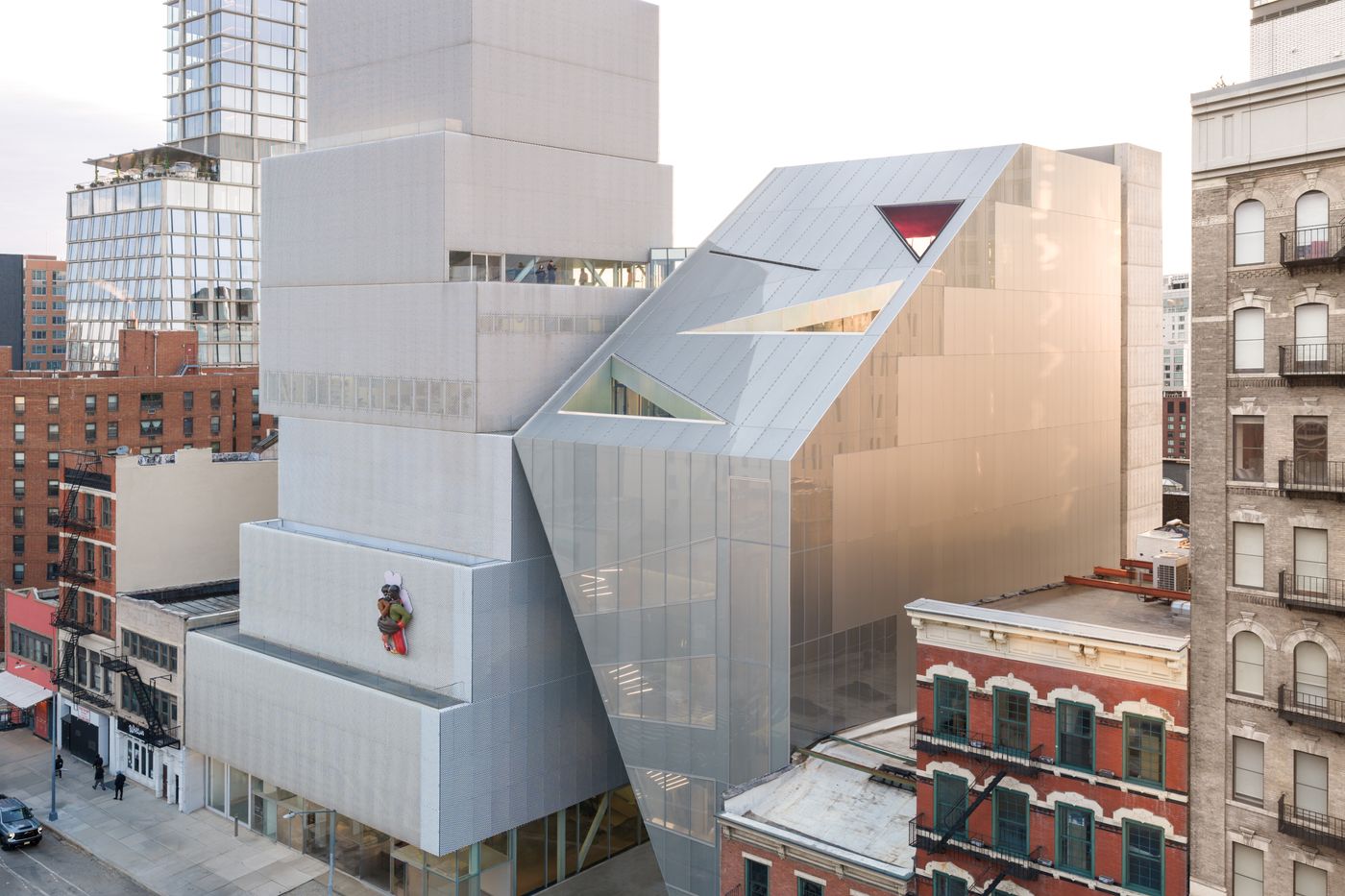
In New York, the fresh ripens into the antique at formidable speed. Sanaa’s New Museum opened on Bowery in 2007, and under a decade later, it already needed more space. After multiple delays and a two-year closure, the museum is reopening with a redesign by the Office for Metropolitan Architecture. It’s a work of radical respect, honoring the idiosyncrasies of the original while letting it breathe. Sanaa’s principals, Kazuyo Sejima and Ryue Nishizawa, may conceivably have mixed feelings about seeing their formerly unconventional creation so lovingly protected and at the same time transformed, as if it were 200 years old instead of 19. But the public unambiguously benefits.
The museum’s first purpose-built home looked like a factory for manufacturing dreams, a tough and exuberant stack of metal-clad boxes so intent on artistic labor that it didn’t even have the time to straighten itself out. Squeezed into a tight lot, it delighted in the drama of verticality. The galleries got smaller and the ceilings loftier as you climbed, so the 27-foot-high fourth-floor gallery felt grand but constrained, as if it had outgrown its container. A long, narrow stairway at the back connected galleries and passed a secret sculpture niche — a rejection of the usual grand lobbies and ceremonial staircases. It was, rather, the institutional equivalent of a speakeasy: Psst, come see some art.