|
by Colette A.M. Phillips, CommonWealth Beacon
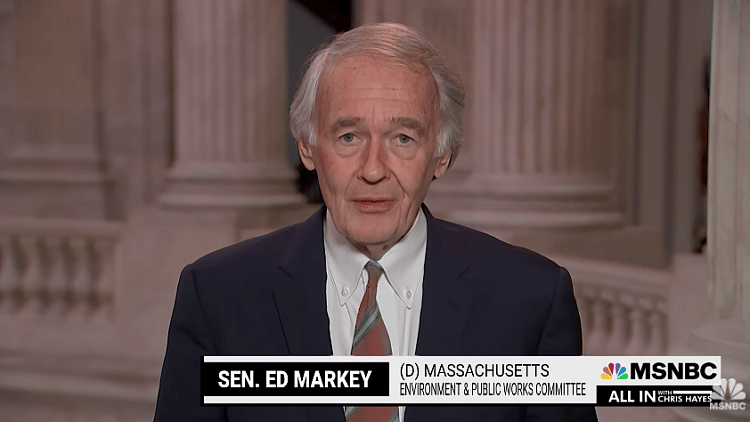
March 18, 2026 OVER SIX DECADES ago, the election of John F. Kennedy inspired a generation to believe that public service is one of the highest callings in democracy. One of those people was the young son of a milk truck driver from Malden, future US Sen. Ed Markey. As Markey would later recount, “That became a moment of great change in our country. It was no longer about the past; it was about the future and what we could do to make a difference in our world.” And to his credit, Ed Markey has made a very big difference. First elected to the US House of Representatives in 1976 and later to the Senate, he has served the people of Massachusetts for more than half a century. His leadership on issues ranging from telecommunications policy to proposing a “Green New Deal” has left a lasting imprint on public policy. But as he approaches his 80th birthday, the time has come to put the common good ahead of personal ambition – and for Sen. Markey to step aside and make room for the next generation of leadership. It’s not just Sen. Markey. Today, Congress is one of the oldest governing bodies in the democratic world. The average age of senators now hovers in the early 70s, while members of the House are not far behind. Republican Sen. Chuck Grassley of Iowa continues to serve at 92, chairing the powerful Senate Judiciary Committee. Across the political spectrum, Americans witnessed the painful reality of what happens when leaders remain in office long past their peak years. The late Democratic senator Dianne Feinstein’s final months in Congress were marked by visible health struggles that raised uncomfortable but necessary questions about whether our political system has the mechanisms to address aging leadership with dignity and responsibility. On the Republican side, Sen. Mitch McConnell stepped down as minority leader after experiencing several highly publicized moments in which he appeared to have a mental brain freeze during press conferences. He continues to serve as Kentucky’s senior US senator, though he will not seek reelection this fall. And of course, in 2024, President Joe Biden resisted calls to step aside due to age – only relenting after a devastating presidential debate in which he appeared to be confused and disoriented, leading Kamala Harris to step in and wage an unplanned 100-day campaign that ultimately led to Donald Trump’s election. Aging is a reality of life, and those who have devoted decades to public service deserve our appreciation. But democracy requires renewal. Every generation faces challenges that are different from the one before it. Climate change, artificial intelligence, geopolitical instability, student debt, housing affordability, and the transformation of the modern workforce are reshaping our society in profound ways. These challenges require leaders who are prepared to engage with the rapidly changing realities of the 21st century. When seats in Congress are held for 40 or 50 years, opportunities for generational leadership become limited. Younger leaders with fresh ideas often struggle to find a path into national public service because the political system is dominated by incumbency and longevity. This is one reason the conversation about term limits continues to gain traction. While the Constitution does not currently impose term limits on members of Congress, the spirit behind that debate reflects a broader public concern: No elected office should become a lifetime appointment. Public service should be about contribution and then transition. Encouragingly, a new generation of leaders is already emerging across the country, members of Congress such as Ayanna Pressley, Jasmine Crockett, Jake Auchincloss, Adelita Grejalva, Joe Neguse, Seth Moulton, Robert Garcia, and Maxwell Frost represent a wave of younger public servants who bring different experiences, perspectives, and energy to the national conversation. Their presence reflects the vitality that new leadership can bring through our political institutions. An uncomfortable truth about President Biden was that he harmed his legacy by taking too long to step aside. If reelected this fall, Sen. Markey will be 86 by the time his term is completed. For all that he has accomplished in his more than 50 years in public office, does he want to be remembered as Biden is today – for putting his own personal ambition ahead of the need to defeat Trumpism? Or, does he want to be revered like Tip O’Neill – who retired at 74 and is still remembered for historic legislative achievements, including strengthening Social Security, and for his belief that “all politics is local”? Sen. Markey was one of those to whom President Kennedy passed “the torch.” His decades of service have earned him a respected place in Massachusetts history. But with the September 1 primary fast approaching, now is the time for the torch to be passed again – to step aside, with dignity and grace, to make space for the future of our democracy. Before it’s too late. Colette A.M. Phillips is president and CEO of Colette Phillips Communications, Inc., a communications and inclusion-focused consulting firm, Founder of Get Konnected! and the author of the book “The Includers: The 7 Traits of Culturally Savvy Anti-Racist Leaders.” She is a member of CommonWealth Beacon's editorial advisory board. This article first appeared on CommonWealth Beacon and is republished here under a Creative Commons Attribution-NoDerivatives 4.0 International License.
|