|



npx workos: An AI Agent That Writes Auth Directly Into Your Codebase (Sponsored)
 |
npx workos launches an AI agent, powered by Claude, that reads your project, detects your framework, and writes a complete auth integration directly into your existing codebase. It’s not a template generator. It reads your code, understands your stack, and writes an integration that fits.
The WorkOS agent then typechecks and builds, feeding any errors back to itself to fix.
Every week, Stripe merges over 1,300 pull requests that contain zero human-written code. Not a single line. These PRs are produced by “Minions,” Stripe’s internal coding agents, which work completely unattended.
An engineer sends a message in Slack, walks away, and comes back to a finished pull request that has already passed automated tests and is ready for human review. The productivity boost scenario is quite compelling.
Here’s what it looks like:
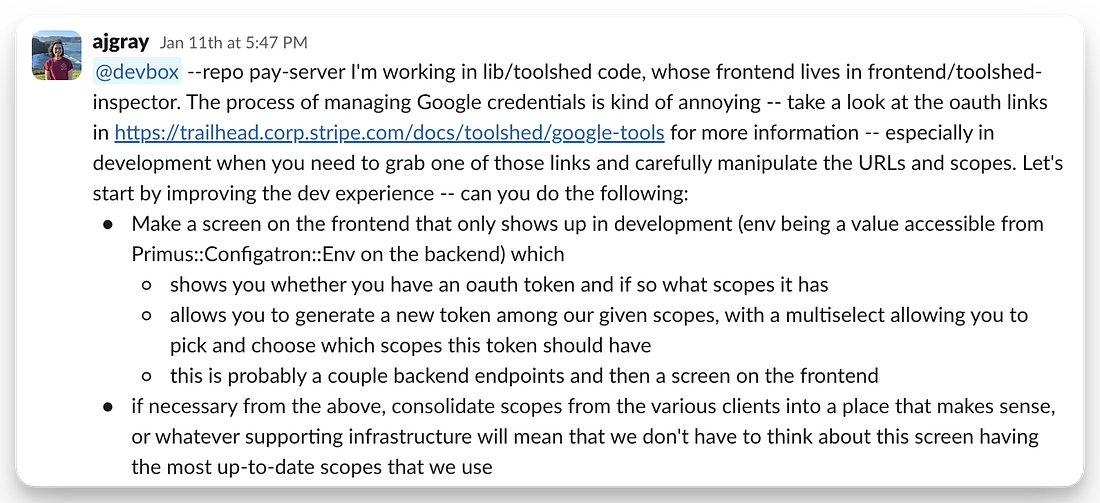 |
Consider a Stripe engineer who is on-call when five small issues pile up overnight. Instead of working through them sequentially, they open Slack and fire off five messages, each tagging the Minions bot with a description of the fix. Then, they go to get coffee. By the time they come back, five agents have each spun up an isolated cloud machine in under ten seconds, read the relevant documentation, written code, run linters, pushed to CI, and prepared pull requests. The developer reviews them, approves three, sends feedback on one, and discards the last. In other words, five issues were handled in the time it would have taken to fix two manually.
However, the primary reason the Minions work has almost nothing to do with the AI model powering them. It has everything to do with the infrastructure that Stripe built for human engineers, years before LLMs existed. In this article, we will look at how Stripe managed to reach this level.
Disclaimer: This post is based on publicly shared details from the Stripe Engineering Team. Please comment if you notice any inaccuracies.
Why Off-the-Shelf Agents Weren’t Enough
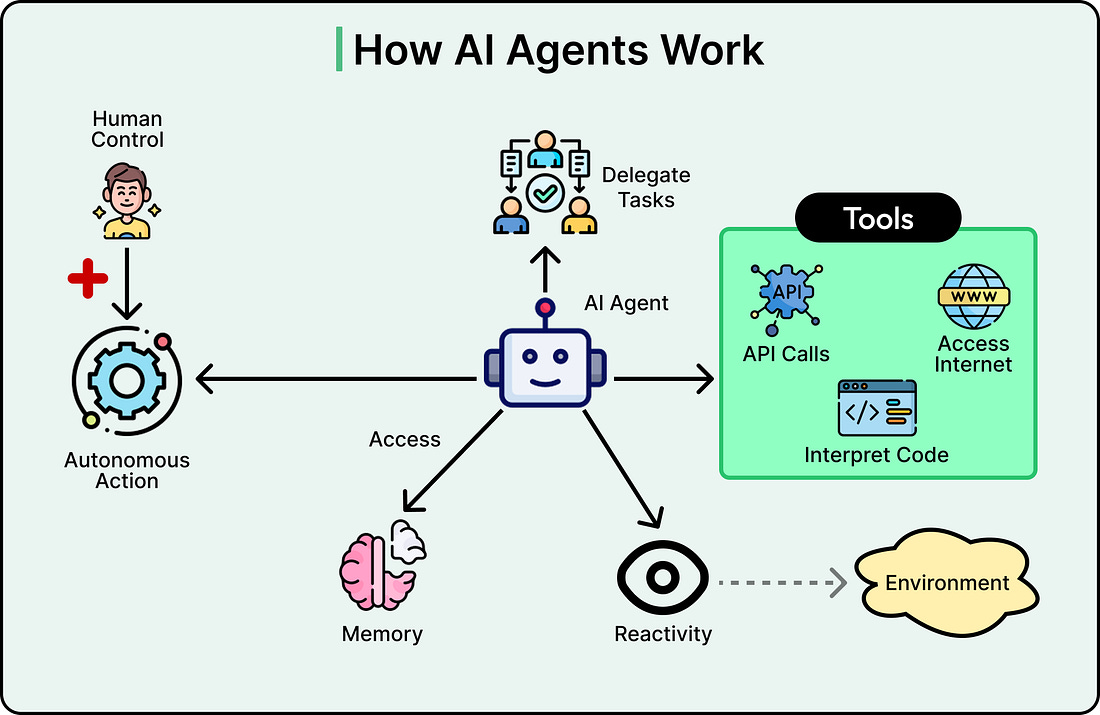
The AI coding tools you’ve probably encountered fall into a category called attended agents. Tools like Cursor and Claude Code work alongside you. Developers watch them, steer them when they drift, and approve each step.
See the diagram below that shows the typical view of an AI Agent:
 |
Stripe’s engineers use these tools too. However, Minions are what’s known as unattended agents. No one is watching or steering them. The agent receives a task, works through it alone, and delivers a finished result. This distinction changes the design requirements for everything downstream.
Stripe’s codebase also makes this harder than it sounds. The codebase consists of hundreds of millions of lines of code, mostly written in Ruby with Sorbet typing, which is a relatively uncommon stack. The code is full of homegrown libraries that LLMs have never encountered in training data, and it moves well over $1 trillion per year in payment volume through production. The stakes are as extreme as the complexity.
Building a prototype from scratch is fundamentally different from contributing code to a codebase of this scale and maturity. So Stripe built Minions specifically for unattended work, and let third-party tools handle attended coding.
Unblocked: Context that saves you time and tokens (Sponsored)
 |
AI coding tools are fast, capable, and completely context-blind. Even with rules, skills, and MCP connections, they generate code that misses your conventions, ignores p