
How To Transform A Typical Money-Draining House Into A Tiny Profitable Off-The-Grid Homestead
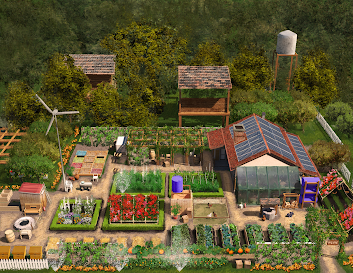
With this knowledge, you can transform from an honest homeowner into an independent, self-sufficient person that has an extra income and doesn’t owe anybody a thing.
You will not be troubled with what happens to the world around you, because everything you need is where is should be: on your property!
The Self-Sufficient Backyard: For The Independent Homesteader
ze of the ginger rhizome is essential to the production of ginger. The larger the rhizome piece, the faster ginger will be produced and therefore the faster it will be sold onto the market. Prior to planting the seed rhizomes, farmers are required to treat the seeds to prevent pests, and rhizome rot and other seed-borne diseases. Various ways Indian farmers do seed treatment include dipping the seeds in cow dung emulsion, smoking the seeds before storage, and hot water treatment. Once the seeds are properly treated, the farmland in which they are to be planted must be thoroughly dug or ploughed by the farmer to break up the soil. After the soil is sufficiently ploughed (at least 3–5 times), water channels are made 60–80 feet (18–24 m) apart to irrigate the crop. The next step is planting the rhizome seed. In India, planting the irrigated ginger crop is usually done in the months between March and June as those months account for the beginning of the monsoon, or rainy season. Once the planting stage is done, farmers go on to mulch the crop to conserve moisture and check weed growth, as well as check surface run-off to conserve soil. Mulching is done by applying mulch (green leaves for example) to the plant beds directly after planting and again 45 and 90 days into growth. After mulching comes hilling, which is the stirring and breaking up of soil to check weed growth, break the firmness of the soil from rain, and conserve soil moisture. Farmers must ensure that their ginger crops are receiving supplemental irrigation if rainfall is low in their region. In India, farmers must irrigate their ginger crops every two weeks at the least between September and November (when the monsoon is over) to ensure maximum yield and high quality product. The final farming stage for ginger is the harvesting stage. When the rhizome is planted for products such as vegetable, soda, and candy, harvesting should be done between four and five months of pl
