|
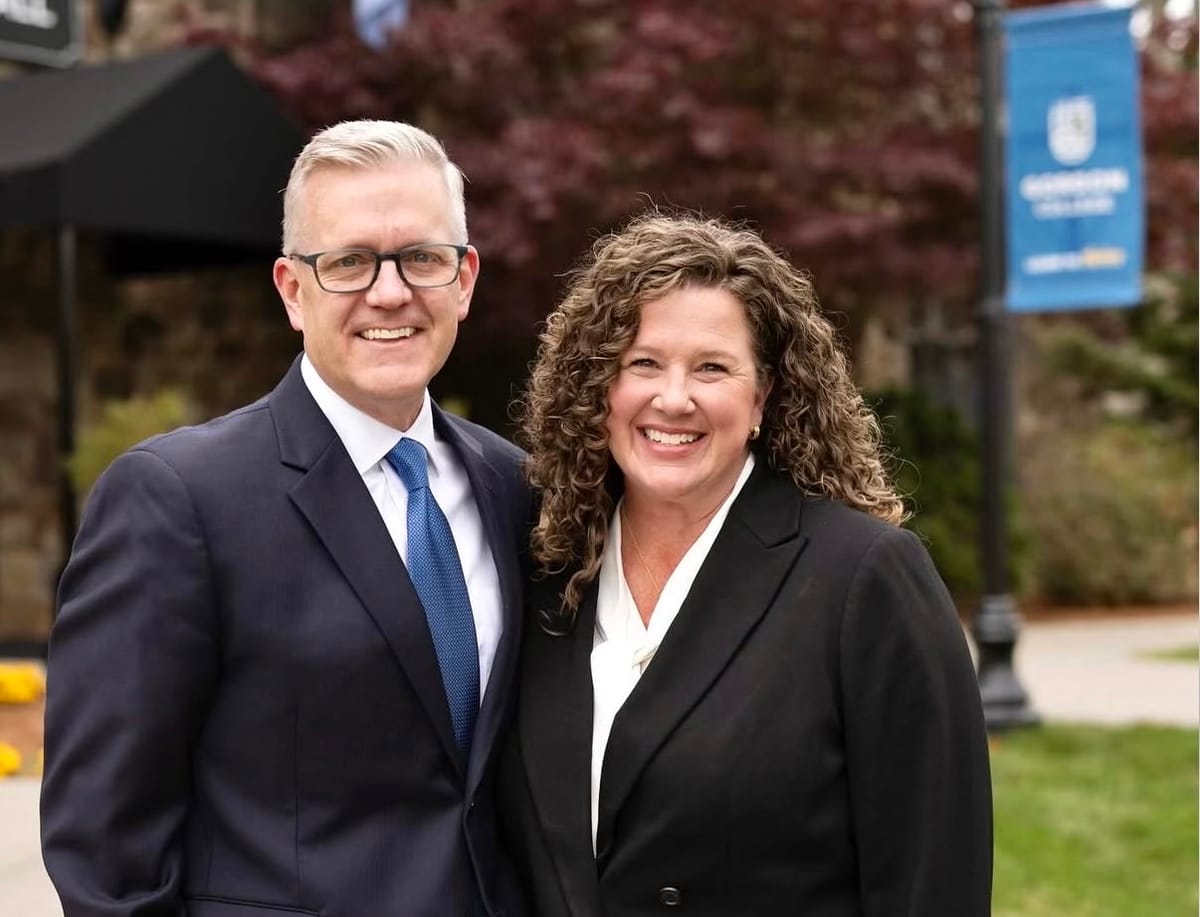
For Michael Hammond, the path to leading Gordon College began long before he stepped into the president’s office. Shaped by a Midwestern upbringing, a career that briefly included work on Capitol Hill, and decades in Christian higher education, Hammond’s leadership philosophy reflects a blend of intellectual rigor, spiritual conviction, and a commitment to service. Hammond became president of Gordon College in 2021 and now leads one of the Northeast’s most prominent evangelical colleges. Growing up in Indiana, Hammond recalls a childhood deeply rooted in faith and family values. Those early experiences, he says, instilled a lasting respect for honesty, responsibility, and hard work—principles that would later guide both his academic career and his leadership style. “I came from a great Christian home,” Hammond explained. “From an early age, I saw examples of people working hard, keeping their word, and treating others with respect," values that have always stayed close to him. That foundation would eventually lead him into Christian higher education, though his first professional chapter unfolded in a very different environment: Washington, D.C. After graduating from college, Hammond moved to the nation’s capital to work in politics during the 1990s. The experience proved formative. Coming from the Midwest, the pace and intensity of Capitol Hill introduced him to a world where ideas and policies carried significant consequences. Working in policy gave Hammond a deeper appreciation for how ideas shape society. Political debates, he observed, often revolve around fundamental questions about values, truth, and the direction of culture. “That really taught me a lot about the world of ideas and that ideas have consequences,” he said. “There’s ideas worth fighting for and worth standing up for on principle.” Although Hammond eventually transitioned away from politics, the lessons from those three years stayed with him. They continue to shape the way he speaks to students today, reminding them that their education can open doors in ways they may not yet imagine. “What you’re doing in college matters,” he often tells students. “As your career unfolds and God opens doors for you, you never know where he’ll lead you,” Hammond said. He often repeats how the work you’re doing now can shape the opportunities you have later. Hammond’s academic journey took him through several institutions that helped shape both his intellectual development and his spiritual worldview. He earned degrees from Taylor University, Wheaton College, and the University of Arkansas. Each stage of that journey contributed something unique. At Taylor and Wheaton, Hammond encountered an education model that emphasized the integration of faith and learning. Rather than treating intellectual growth and spiritual development as separate pursuits, these institutions encouraged students to see them as complementary. “When you think about intellectual development and spiritual development, they’re not at odds with each other,” he said. “They’re not separated in some way by some divide.” That philosophy remains central to his leadership today. At Gordon, Hammond often summarizes the college’s mission as bringing “head and heart together” in service to God and the world. According to Hammond, God created us as both intellectual and spiritual beings. During his graduate studies, Hammond focused his research on American Christianity and evangelicalism. His academic work explored how religious traditions adapt to cultural change and how faith communities respond to shifting social landscapes. Those themes remain relevant in today’s rapidly evolving cultural environment, particularly in New England, where Gordon operates as a Christian institution within a largely secular region. Before becoming president of Gordon College, Hammond served as executive vice president and provost at Taylor University. The role gave him firsthand experience managing the academic life of a university and collaborating closely with faculty. Provosts often serve as the bridge between administrative leadership and the academic community, overseeing curriculum, faculty development, and institutional mission. For Hammond, the position provided both practical preparation and a deeper appreciation for the work of scholars and educators. “They do great research. They’re well read, they’re intellectually gifted, and really interested in thinking about the world of ideas,” Hammond said. “I just love the energy that comes from that.” At Gordon College, Hammond has continued to emphasize the integration of faith and academics, but he believes the concept extends beyond classroom instruction. In recent years, the college has increasingly framed its mission around “faith, learning, and living.” The idea is that spiritual growth should permeate every aspect of campus life. “It’s not just integrating faith into a classroom experience that once our students graduate they leave behind,” he said. “We really believe that as a whole, we integrate our faith into every aspect of our lives.” That approach encourages students to develop habits of spiritual reflection while participating in everything from athletics and music to dining hall conversations and dorm life. “I pray regularly this really simple prayer: that God would let every student who comes to Gordon leave here and graduate one day with a deeper faith in Jesus Christ,” he said. For him, education is not merely about professional preparation but about forming individuals who carry their faith into every sphere of life — from workplaces to families to communities. As president, Hammond frequently reflects on the challenges facing students in a complex and rapidly changing world. From cultural debates to technological disruption, today’s graduates must navigate environments that demand both intellectual flexibility and moral clarity. Gordon’s mission, he believes, is to prepare students to meet those challenges with resilience. Part of that preparation involves encouraging students to wrestle with difficult questions during their college years. By confronting complex ideas in the classroom, Hammond says, they develop the confidence to engage thoughtfully with the broader world. But he also emphasizes a deeper motivation: service. When Hammond welcomes incoming students each year, he reminds them that college is not simply about personal success. “This isn’t about just making you happy. This isn’t just about making you feel successful,” Hammond said when describing the message he shares with incoming students. “Ultimately, it’s about how you can fulfill the calling God has on your life.” Hammond’s home life has shaped his perspective on education. He and his wife have six children, and family life has always existed alongside his work in higher education. In fact, Hammond pursued his doctoral studies while raising a growing family, even welcoming twins during the middle of his PhD program. “I’ve never known working in higher education apart from being a dad,” he said. Today, that connection between family and campus life is especially visible. Four of his daughters currently attend Gordon College, participating in activities ranging from athletics to theater. For Hammond, attending soccer games, theater productions, and other campus events has become both a professional responsibility and a family experience. Raising a large family has also reinforced his belief in the individuality of every student. “In our household of eight people, everyone is different,” he said. “Even our twins have very different personalities.” “I love going to soccer matches. I love watching theater events,” he added. That diversity of personalities has reinforced a lesson he believes applies just as much to students: each student arrives with unique talents, interests, and callings. “The Lord says that we are fearfully and wonderfully made,” Hammond said. As Gordon College continues to expand its programs, including new graduate degrees and doctoral initiatives, Hammond is optimistic about the institution’s future. Founded in 1889, the college traces its origins to a revival movement sparked by evangelist Dwight L. Moody in Boston. Hammond sees Gordon’s mission today as a continuation of that legacy: preparing people to serve God in every profession. “Being a Christian college (in the Northeast), not everyone understands or agrees with our mission, that's okay. It helps sharpen who we are,” Hammond says. “We're very clear and precise about that commitment to Christ and being a Christ-centered institution.” Beyond institutional goals, Hammond also looks forward to the next chapter of family life. As his children gradually reach adulthood, he and his wife are starting to experience the transition to an empty nest. “It's very different, but we love it. We love the time we get to spend serving the college and also just being mom and dad to our kids,” Hammond says. “It's a real blessing.” Still, he views both family and career through the same lens of calling. “For us, it’s always been about serving where God places us,” Hammond said. “That’s true in our family, and it’s true here at Gordon.”
|