VF_FC_PAID_031126
Plus: A pre-Oscars 'fit check and the best of Paris Fashion Week.

Hello, mes amis! Writing to you from Charles de Gaulle as I wait to board my flight to New York for a quick pit stop before taking off to Los Angeles for Oscar weekend and the Vanity Fair Oscar Party at LACMA. I’m flying with my look as my personal item—those sequins are precious cargo!


Today we have a deliciously robust, Oscars-cum-Fashion Week–heavy Fit Check. Paris Fashion Week came to a close yesterday, and with it the fall-winter 2026 runway season. While the world discussed the goings-on in Iran and world leaders flexed their nuclear prowess, the fashion glitterati spent much of the week hunting for Matthieu Blazy’s first delivery for Chanel, which became available just ahead of last weekend. More on that below. On the runway, and in conversations backstage, designers generally eschewed the geopolitical situation.


The best party of the season was not a fashion brand’s but Carlos Nazario’s birthday celebration on Sunday night. As for the best shows? It’s not very diplomatic these days to pick favorites, but here are mine: Dries Van Noten by Julian Klausner (read my profile of him here), Tom Ford by Haider Ackermann (my notes on the show here), and Jean Paul Gaultier by Duran Lantink. Lantink is growing into his role as custodian and propellant of the label quite nicely. He’s also boldly earned Gaultier’s original title of fashion’s enfant terrible—which has been delightfully entertaining to watch. Bring back fun!


It’s been quite the week—shifting between Fashion Week and the height of awards season. It made me think of the trials and tribulations of packing for all this. How do the celebs do it? Today we answer the age-old question—where do celebrities change in between the Oscars and our party, or during awards ceremonies?


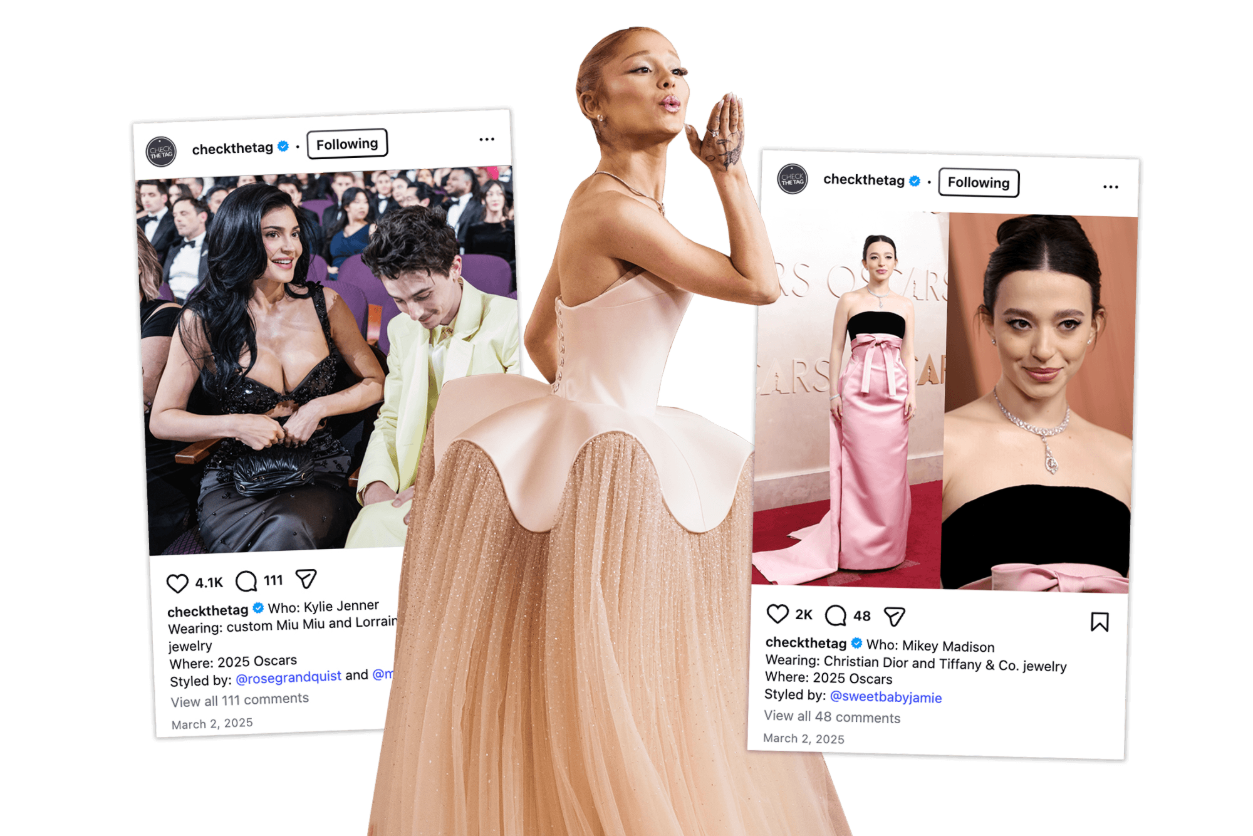
And for today’s Headline, ahead of the craze around outfits at the Oscars and the VF party, I spoke to the founders and masterminds behind Check the Tag, the celebrity-style-credits Instagram account that has become a cornerstone of fashion commentary online. “When we give our credits, we do vogue.com, instyle.com, WWD, and now we also do it with Check the Tag, because everybody watches that in real time,” stylist Jessica Paster told me at Gabriela Hearst’s show at the Petit Palais on Monday. As fashion commentators have become as embedded in the social media fashion-news cycle as magazines, Check the Tag has become particularly crucial.


Mentioned in this issue: Tyla, Gillian Anderson, Lola Tung, Alex Consani, Anok Yai, Archie Madekwe, Chris Horan, Gabriella Karefa-Johnson, Pierpaolo Piccioli, Sam Levinson, Nadège Vanhée, Daniel Roseberry, Michel Gaubert, and many more.

  • This is classic day-after-fashion-month PR behavior. Just as I was about to board my flight home, I received a press release: Harris Reed will be departing Nina Ricci after three and a half years. The collection he showed this past week was his last for the Puig-owned brand. (See also: Carolina Herrera, Rabanne, and Dries Van Noten.) Needless to say, the Reed x Ricci partnership never quite materialized. The collections were visually inconsistent, and despite this project having the theoretical potential to become a red-carpet staple, it simply didn’t because there was not enough there.
  • The press release said that Reed will now focus on his own label, and that the house “will now take the time required to define its next chapter, in line with its long-term strategy.” This is a fragrance-first business, which doesn’t mean that there isn’t a ready-to-wear opportunity here. It just means it needs to be handled by the right designer. Olivier Theyskens, who is launching a new label called Boloria, and Peter Copping, the current Lanvin designer, both did great things at Nina Ricci. The company should look into hiring a great eveningwear designer, like New York’s Christopher John Rogers, and develop a robust VIP strategy with tight seasonal RTW collections. It’s a tale as old as time in fashion for a reason—the right celebrity placements do sell the $60 perfume.
  • This is the most violent DM I received all week, which doesn’t make it not true: “The harsh lighting I’m seeing in some of these venues. Front rows gotta be on high alert.” She was talking about the white box fluorescent lighting that jolted us all awake at Ackermann’s Tom Ford show, and how these intense overhead lights tend to reveal every bit of…work everyone’s gotten done.
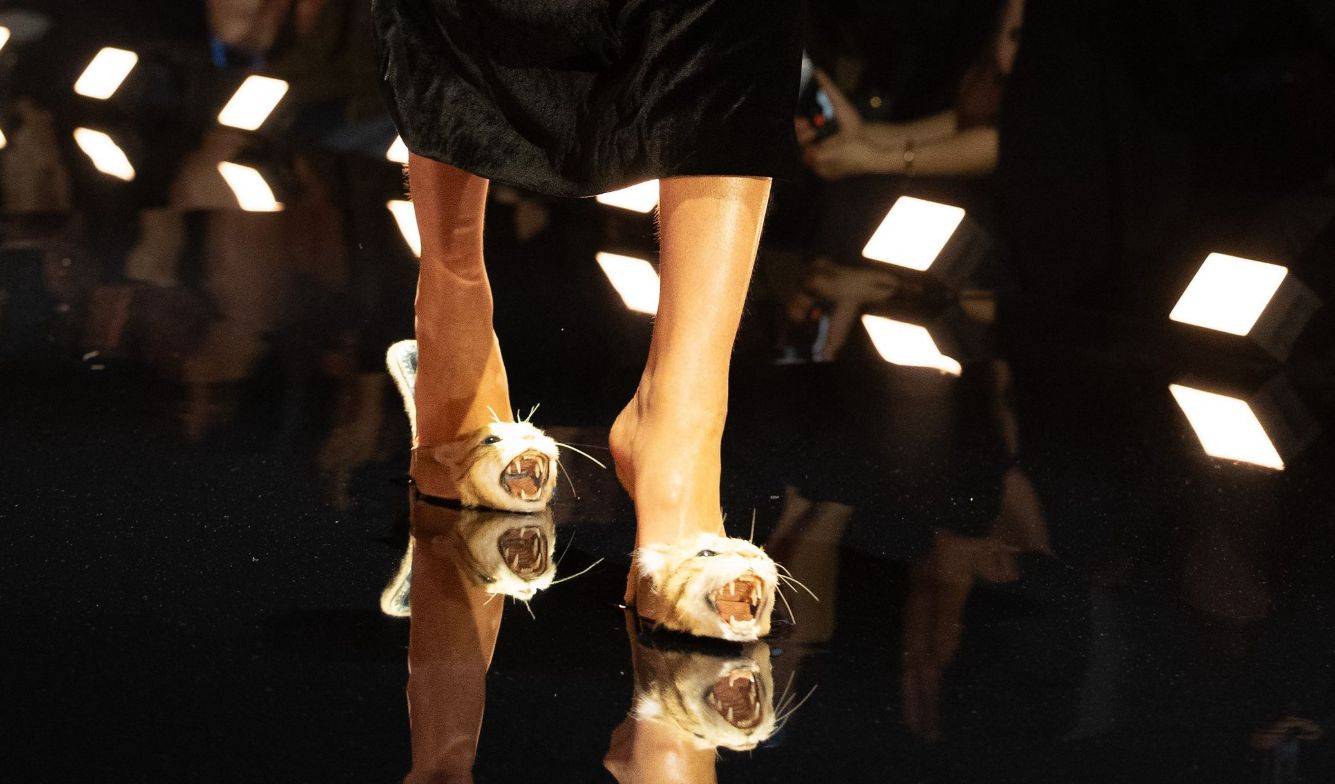
  • “Kitten heels? People are crashing out,” another reader said. She was speaking of Daniel Roseberry’s hilarious literal kitten heels at Schiaparelli, which were modeled after some cute kitties. No fur was used, of course, just painting and molding and airbrushing. They’re quite remarkable in terms of craftsmanship. But of course people are losing it at the mere sight. It’s a surrealist house; everybody, please relax.

Courtesy of Schiaparelli.

  • The mystery of the Hermès tick. The set of Nadège Vanhée’s show this season was filled with greenery. It smelled fabulous—the closest I got all week to touching grass, other than taking in the Miu Miu set, which was similarly made up of grass. (There was also artificial grass at Louis Vuitton, but the brand didn’t accommodate me at the show, so it doesn’t count!) I overheard someone in front of me say they were worried they’d get Lyme disease while sitting at the show. Dot, dot, dot…I can’t imagine Hermès, a paragon of luxury, did not do some pest control. Alas, after I posted about this on Instagram as a joke, an editor replied that he’d seen a tick in his chauffeured car. I asked if he was sure—fulfilling my journalistic duties, obviously—and he said he wasn’t. “Well, it was a bug!” Here’s the thing about New Yorkers: We can’t always tell a tick from just a random bug. And just to clarify—and to avoid a call from a publicist—there were no ticks at Hermès, just some very nice clothes.
  • “Question for your stylist friends,” a DM read, “where and how do people change for the VF party after the ceremony?” Well, I’m sorry to disappoint you, but the answer is less entertaining than you’d think. I asked a few of my favorite stylists, and they said that their clients attending the Oscars will usually book a room somewhere in West Hollywood to go change in before they head back out—no crazy changes in the back of a Sprinter van, unfortunately. I do recall, however, that Chris Horan, stylist to Charli xcx, Christina Aguilera, Demi Lovato, and more, once told me that in-ceremony quick changes are “not very glam.” He said that at the Grammys, for instance, celebs will get a designated 8-by-15-foot “pipe and drape” area in which to change. Picture your favorite pop star putting on some couture behind a curtain in a hallway. In the words of the great Britney Spears: If you want it, “you better work, b-tch.” And finally, a stylist who remained stateside asked me if I had bought anything at Chanel. Dear reader, I cannot emphasize enough how crazy fashion people went for the first delivery of Blazy’s product to stores. Some told me they spent three hours a day at Chanel stores, chasing their preferred shoes or trying on handbags and clothing. It’s great to see the excitement, but I have to admit that it has also underscored to me how insular our industry is—and how much money everyone seems to have. No, I did not buy any Chanel; I can’t afford it. It’s a little mind-boggling that so many people with magazine jobs can. Maybe it’s all credit cards and hidden consulting checks—or hidden trust funds. Alas, I love to see people love fashion and aspire to things. I’m happy for those with seemingly very deep pockets, if only a little bit jealous.

Why this ad?

Kylie Jenner and Ariana Grande: John Shearer/The Academy. Mikey Madison: JC Olivera/WWD and Monica Schipper. All from Getty Images.

The Story Behind Check the Tag, Fashion’s Favorite Instagram Account

The most surprising thing about Check the Tag is not that its founders, two Brazilian sisters, have day-to-day jobs outside of it. It’s that there is no magic trick to their process—just knowledge and speed.

MARCH 11, 2026

Oscar weekend, with its cocktails and dinners and pre-soirees and, most importantly, parties—like Vanity Fair’s—is fashion’s equivalent to Super Bowl weekend. Every stylist is trafficking dresses from Paris Fashion Week, which just wrapped yesterday, to Los Angeles. Everyone in entertainment is looking for a party invite and an outfit, and those of us in the media are asking stylists and labels to disclose the stars they’re dressing. With the proliferation of fashion commentary on social media, it’s all about speed, about being the first one to clock who wore what and where, for talking head commentators and magazines alike.

The fastest of them all is Check the Tag, an Instagram account run by Brazilian sisters Kathleen Miozzo and Wenny Milzfort, which the fashion industry has adopted as its celebrity-style-credits oracle. “Did you get a Zara press release yet?” a magazine editor messaged me after Bad Bunny’s performance at the Super Bowl, for which he wore the Spanish fast fashion giant. She was trying to fact-check what the streets, and the internet, were saying about who had made his look.


“Check the Tag called it. They’re the People of pregnancy announcements,” she said. For those not in media, it’s known in the industry that celebrity PR teams will seed confirmations of such things to People, which is why it’s rarely wrong. Once it reports on something, it’s considered generally safe to do so as well. The same now goes for Check the Tag.


“It is mostly luck,” Miozzo says over Zoom about the explosion of Check the Tag, which is followed by more than 200,000 followers, including celebrities like actor Morgan Spector, major stylists such as Law Roach and Brad Goreski, and top magazine editors like American Vogue’s Chloe Malle and Mel Ottenberg of Interview. “Many accounts do the same thing.”


Except that when they started in 2016, they were alone. The idea of credit-checking celebrity wardrobes was not new; it had been done on X, back when it was still Twitter, and before then on Tumblr and fashion blogs. But once conversation shifted over to Instagram, those who were first to translate successful formats to a new platform were able to grow their audience.


Miozzo and Milzfort, two studied fashion fanatics, recall watching a Brazilian TV program and recognizing that the host was wearing Versace. Miozzo started the account to post about it, using what has become its signature format: a side-by-side photo featuring the look and its runway or archival counterpart, with credits in the caption. Now the two include a poll in the comments for their very involved audience to vote on the outfit, but they don’t express opinions themselves. It’s part of their claim to fame: Check the Tag is practically a news service, and despite having many opinions of their own about fashion, Miozzo and Milzfort keep them to themselves. They’re fans, not critics.


“[That] also, to some extent, doesn’t allow us to monetize the page that much,” Miozzo says. “We’re not personalities…. We are not an influencer, someone people relate to.” The name of the game on social media today largely depends on a face—someone people can follow and with whom they can familiarize themselves. Check the Tag does not have that—it could if its founders were to step into the spotlight, but the sisters agree it would go against the ethos of their account.

“People…love the page because they can go and give their opinions, but, to some extent, it makes it harder for us,” Miozzo says. They currently have a Patreon account to which followers can subscribe for $2 a month, though there is no exclusive content, as they believe their content should be free. They also offer advertising to brands.

“I’ve seen editors refresh that Instagram page every minute during an event’s red carpet,” says stylist Brandon Tan.

“We want to do this as a profession,” Milzfort says. “Our dream is to have the page be our main income, because we love this, and we feel like this has the potential to become our profession.” They’ve been in contact with Meta and Instagram in the past, they say, though it has not led to much. The platform can help “creators”—as in, content creators—grow, but usually when there is an external figure it can introduce to partners and stand behind.

Their account’s other distinguishing features include the volume of red-carpet posts, be they from an awards ceremony or a premiere, and the speed at which they’re made. The founders post practically in real time. “When we give our credits, we do vogue.com, instyle.com, WWD, and now we do it with Check the Tag, because everybody watches that in real time,” stylist Jessica Paster says. Paster’s assistants will typically send credits to the Check the Tag sisters once talent has hit the red carpet, and sometimes she will DM the information to them herself. Paster also likes that they’re Brazilian, saying that she wants to support her fellow Latinas. “I love it that a Brazilian gets a piece of the pie,” she says.


It’s an arduous task; on one hand because it’s just the two of them—there was a third member whom they parted ways with because he’s pursuing a political career in the United States—and on the other because it requires a lot of speedy, organized work. There’s a master spreadsheet of credits, there’s back-and-forth communication with brands and stylists, and there’s just a lot of frantic work in posting the actual content. This Sunday, for instance, they’ll work long LA hours from Brazil, posting well through the night as they cover both the Academy Awards ceremony and Vanity Fair’s party. Frankly, it doesn’t sound too far off from the goings-on at any given fashion magazine on a day like the Oscars.


Except that magazine editors are working their full-time jobs. Miozzo and Milzfort are not. They are doing this on the side while working day-to-day jobs as translators, which makes it all the more impressive.

Miozzo estimates that 60% of their credits information comes from brands and stylists directly. The balance comes from their ability to clock a look or find it online—and quickly.


“I consider Check the Tag resourceful in different ways,” says Brandon Tan, who styles Omar Apollo and Sombr. “As a stylist, their key values to me are in amplification and research. At a very basic level, brands agree to dress your client with the goal of exposure. Check the Tag helps get those looks in front of a focused audience while encouraging engagement and discourse like a special interest forum.”


The account, in a way, also works as a press release, Tan says. He doesn’t share information in advance, but he does share it immediately once he’s seen images become available online. He also argues that it has become instrumental for magazine editors when it comes to putting together a best-dressed list. He would know; he’s worked at GQ and is currently fashion director at Cosmopolitan. “I’ve seen editors refresh that Instagram page every minute during an event’s red carpet,” Tan says.


Miozzo and Milzfort’s ascent with Check the Tag has not gone without a snafu or two. They say they try to cover as many events as they can, though they now completely abstain from politics. Miozzo recalls declaring that they would not be covering Donald Trump’s second inauguration last year, which she says prompted both overwhelming support and a flurry of disgruntled feedback. They also cover events in Brazil, like the wedding of socialite Esther Marques, who wore Alaïa by Pieter Mulier. Check the Tag’s audience is around 60% US-based and 20% Brazilian, with the remaining 20% split across the rest of the world.


They’ve also been asked to take down looks when they’ve received negative feedback in the comments, or when the final outfit was out of the stylist’s control, or when someone wore a look by a brand without its blessing, either by purchasing it or borrowing it from a retailer.

But budging is not their style. Keeping their posts a forum for commentary is. Tan, for example, will oftentimes read the comments under a post to vibe-check an outfit. But people can be mean. The internet is the Wild West, and Check the Tag has no intention of becoming its sheriff. Picture it more like an old-timey saloon.


Still, the goal down the line is to grow the account and find ways to make it a viable business. The founders currently share the information they collate for their spreadsheet with outlets like E! News—for a price, of course. And after securing a spot with the media on the red carpet for the Brazilian premiere of All’s Fair, they have raised their ambitions once more, aspiring to create and share more live, in-person content. “I haven’t really been active in journalism for years and years, and I [came] out of retirement with Kim [Kardashian],” Milzfort recalls, laughing.


Yet they are aware that to thrive in the age of social media, Check the Tag will likely need a face in order to continue growing. They will, at the very least, need to establish more content verticals and diversify their platforms for reach, even if the initial idea is to stay on social media. Miozzo and Milzfort have not yet committed to either of these ideas. But big ambitions come with concessions.