| | The US says it is accelerating its war on Iran, China’s Luckin Coffee acquires Blue Bottle, and the ͏ ͏ ͏ ͏ ͏ ͏ |
| |  | Flagship |  |
| |
|
The World Today | 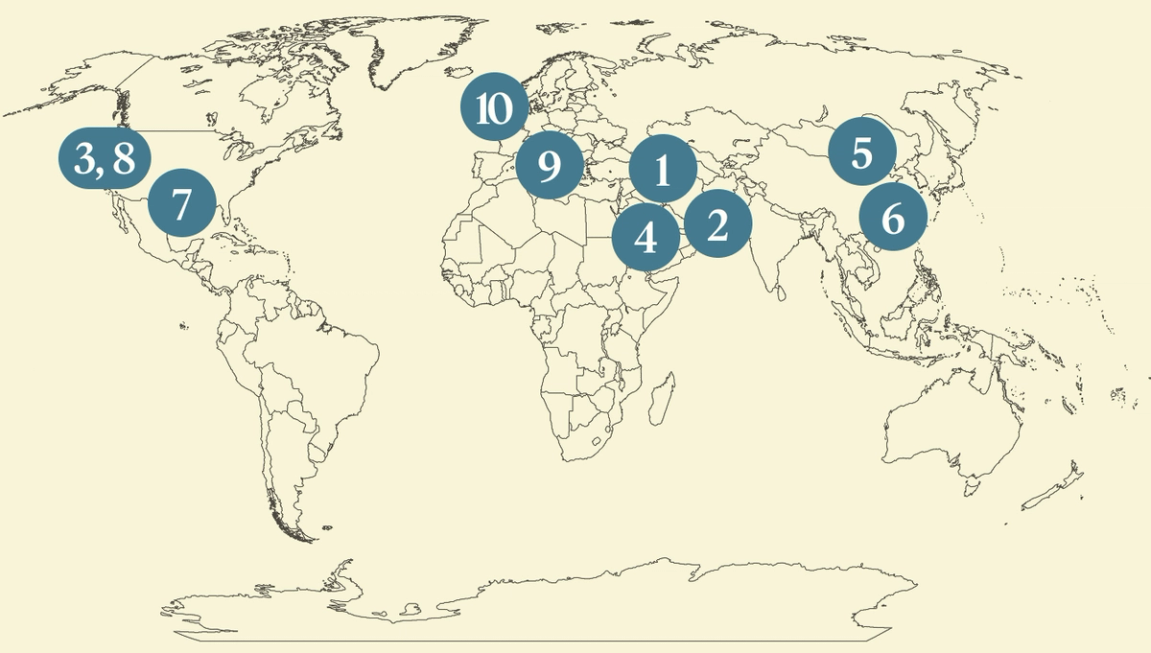 - US accelerates Iran war
- Trump’s Hormuz plan tested
- Pentagon uses Claude in Iran
- A new geopolitical commodity
- EU plan to shut out China
- Luckin buys Blue Bottle
- Texas leads in battery race
- Google sued over chatbot
- Pope’s AI sermon warning
- Autism ‘spectrum’ debate
 Iran’s dissident rappers. |
|
US is accelerating Iran attacks |
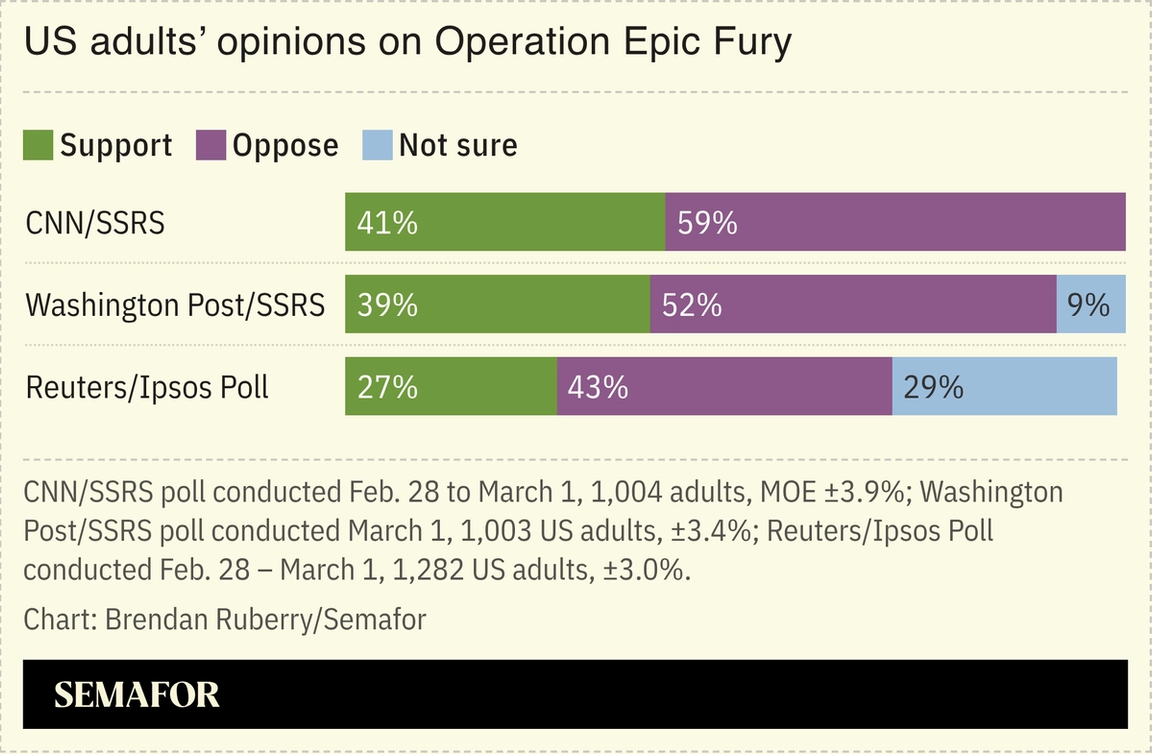 The US said Wednesday that it is “accelerating” its war on Iran, as the scope of the conflict widened: NATO shot down an Iranian ballistic missile headed toward Turkey, a US submarine sank an Iranian warship in the Indian Ocean, and European countries deployed military assets to the Middle East. Concerns are mounting about the conflict’s impact on the global economy, as are questions over Washington’s endgame. The White House pushed back on criticism over its conflicting messages, saying the goal is to “guarantee that Iran can never obtain a nuclear weapon.” While President Donald Trump is considering a US role in post-war Iran, he told reporters Wednesday: “Everybody that seems to want to be a leader, they end up dead.” |
|
Hormuz insurance plan confusion |
 Tankers near the UAE. Amr Alfiky/Reuters Tankers near the UAE. Amr Alfiky/ReutersThe US government said Wednesday it would introduce a series of measures to stabilize oil trade in the Gulf, as Washington sought to ease rising concerns of a potential energy shock amid the Iran conflict. The announcement came as traders remained skeptical and confused about President Donald Trump’s pledge to insure and protect oil tankers passing through the Strait of Hormuz, the critical energy chokepoint that Iran has effectively closed. One shipping association called it “unrealistic,” while Gulf insurance costs jumped 12-fold. Trump’s plan signals an acknowledgment that the conflict could erode the pillars of his economic agenda, a geopolitics analyst argued: “He is trying to buy more time. He needs the oil market to cooperate.” |
|
US military using Claude in Iran |
 US Navy/Handout via Reuters US Navy/Handout via ReutersThe US military is leveraging Anthropic’s Claude in its expanding campaign against Iran, despite a bitter feud with the AI startup. The Pentagon deployed the powerful tool during its attack on Iran within hours of banning it, and is reportedly still using it, underscoring the government’s challenge in giving Claude up even as it threatens to blacklist its maker. The threat has led some defense tech firms to switch to other AI models, and many of Anthropic’s investors have remained silent, Semafor’s Reed Albergotti reported. But Anthropic’s stance over the use of its tech in warfare is a public relations victory for the company, Albergotti wrote; employees at Google and OpenAI are now pushing for guardrails around the military’s use of AI. |
|
Water is strategic commodity in Iran war |
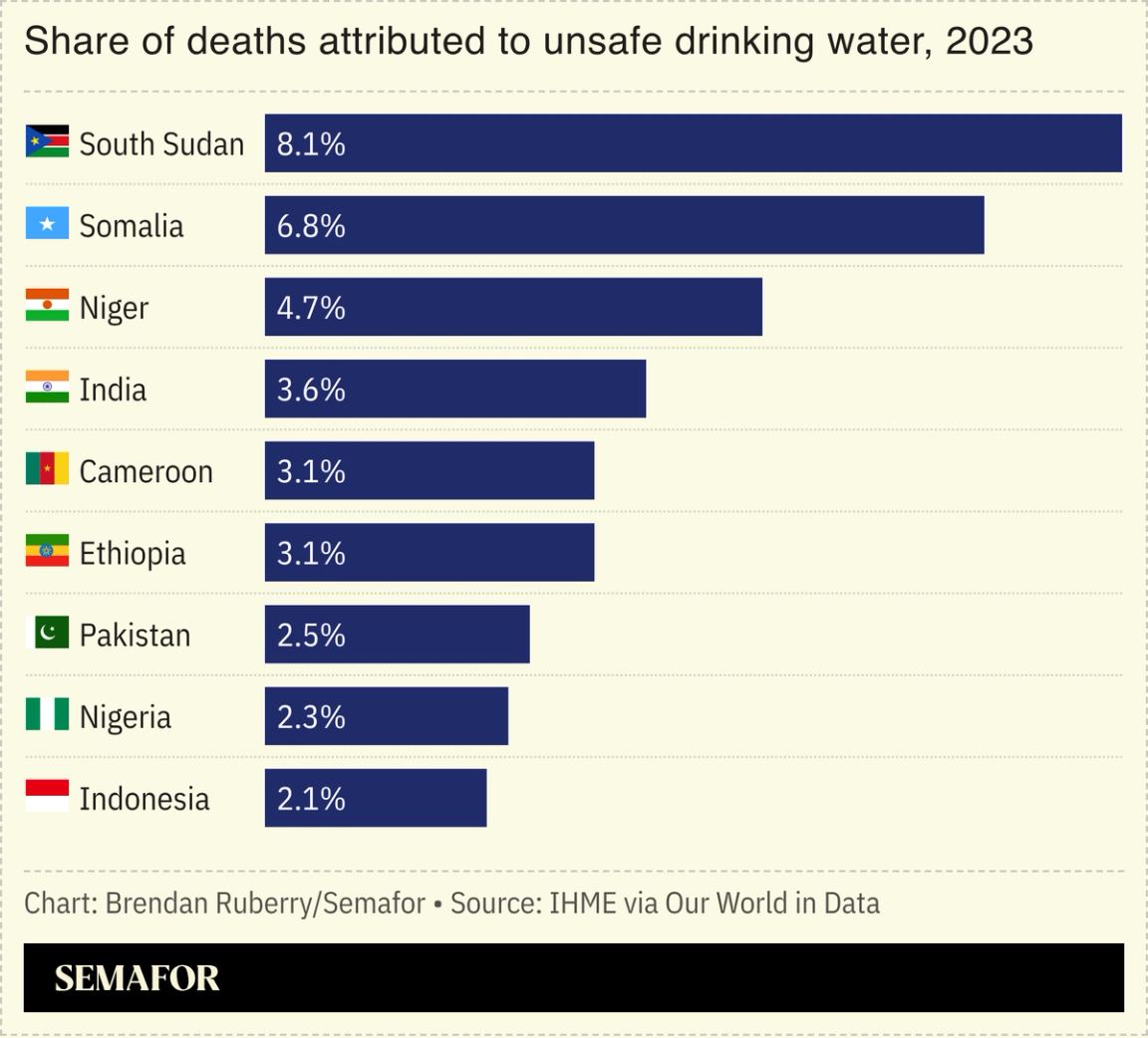 The geopolitical commodity that decides the outcome of the US-Iran war may not be oil, but water, a Bloomberg columnist argued. Iran has considered relocating its capital amid acute ongoing shortages, and both Tehran and US regional allies like Saudi Arabia and the UAE are heavily dependent on supplies from desalination plants. These could present enticing soft targets if the war escalates further. Illegal under international law, the routine targeting of critical infrastructure has a direct precedent in the Ukraine war. The Eurasia Group named water a top global risk for 2026, noting that roughly half of humanity faces water scarcity annually — which, though it rarely causes violence on its own, “heightens grievances, accelerates displacement, and becomes a tool for control.” |
|
EU’s Made in Europe push targets China |
 Kai Pfaffenbach/Reuters Kai Pfaffenbach/ReutersThe EU unveiled a series of measures on Wednesday to kickstart its sluggish manufacturing and reduce reliance on cheap Chinese imports. Brussels’ “Made in Europe” push targets the strategic sectors of clean tech, auto manufacturing, and energy-intensive industries like aluminum and steel. The plan effectively “tightens the screws on Beijing’s future investments” in the EU, Euronews wrote, as the bloc races to stem a projected loss of 600,000 automotive jobs over the next 10 years. The proposals reveal Europe’s anxiety over its ability to compete with cheap Chinese products, along with heightened security concerns linked to Chinese investments, “and a new-found urgency to do something about both,” the South China Morning Post wrote. |
|
China’s Luckin acquires Blue Bottle |
 Brendan McDermid/Reuters Brendan McDermid/ReutersThe owner of China’s largest coffee chain, Luckin, acquired upscale US café operator Blue Bottle, as the Chinese company continues its aggressive westward expansion. Luckin recently opened its 30,000th store in China, eclipsing local competitors by offering a wide variety of cut-rate beverages. But its CEO recently stressed the need for the company to broaden its price range, Caixin wrote, signalling a close to years of bruising price wars; Luckin opened its first high-end store in Shenzhen last month. Price, though, appears to remain key to Luckin’s US efforts. Last summer, a New York location offered cold brew for just $2, or about one-fourth of what a Manhattanite would pay at Blue Bottle. |
|
Republican states lead on battery storage |
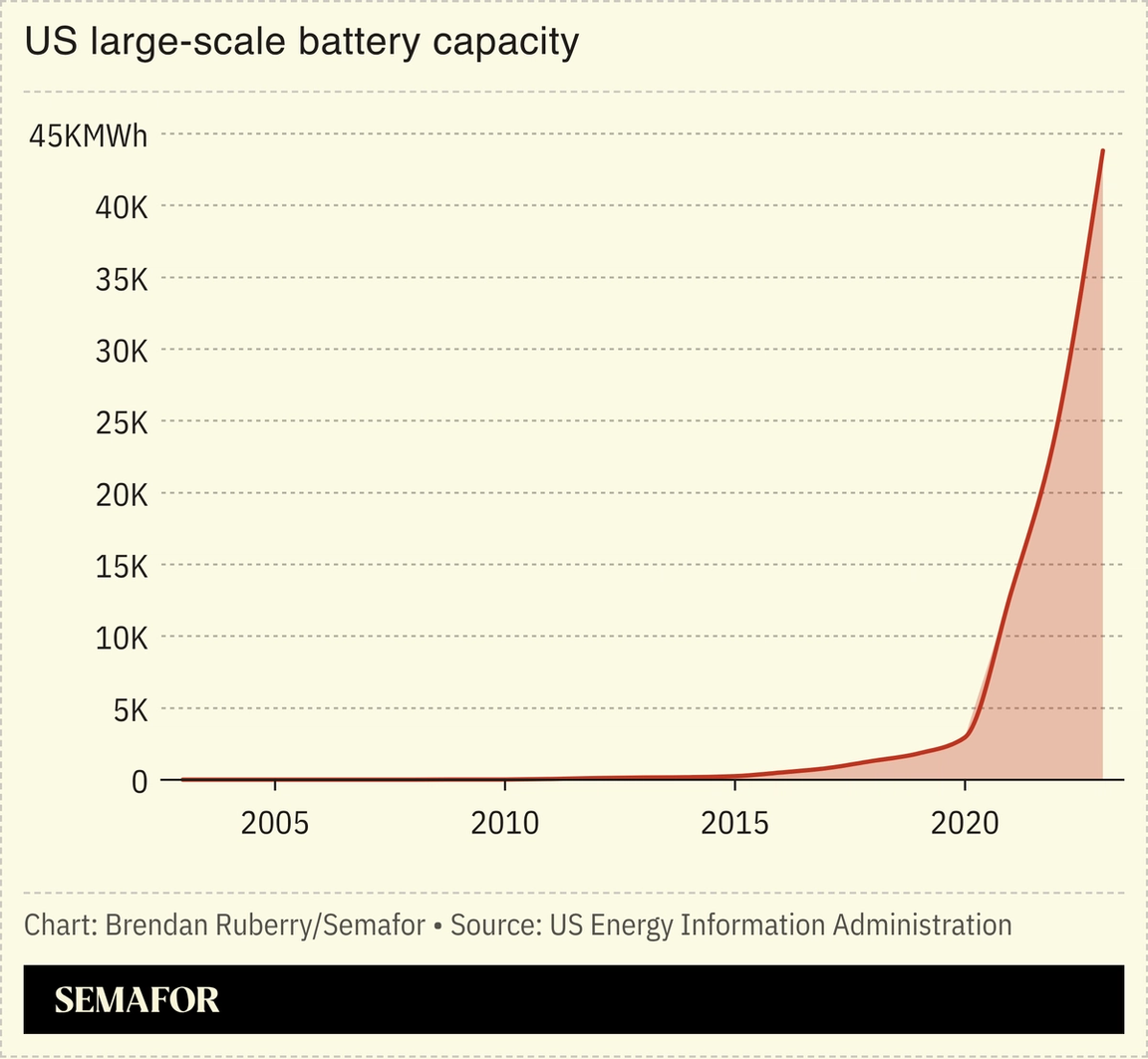 The US state of Texas is on course to overtake California in battery storage. US battery installations hit a record 57.6 gigawatt-hours last year, up 30% on 2024. Despite US President Donald Trump’s attacks on renewable energy, Republican-led states led the way, building two-thirds of utility-led storage. A homegrown manufacturing industry is also booming as EV batterymakers pivot to grid storage. Falling costs and growing reliability have made batteries not just “a partisan climate solution,” Electrek argued, but a “tool that utilities simply can’t ignore.” Trump’s attacks on solar power also appear to be easing as some of his prominent allies tout the clean energy source amid voter concerns over rising electricity costs and AI data center buildout. |
|
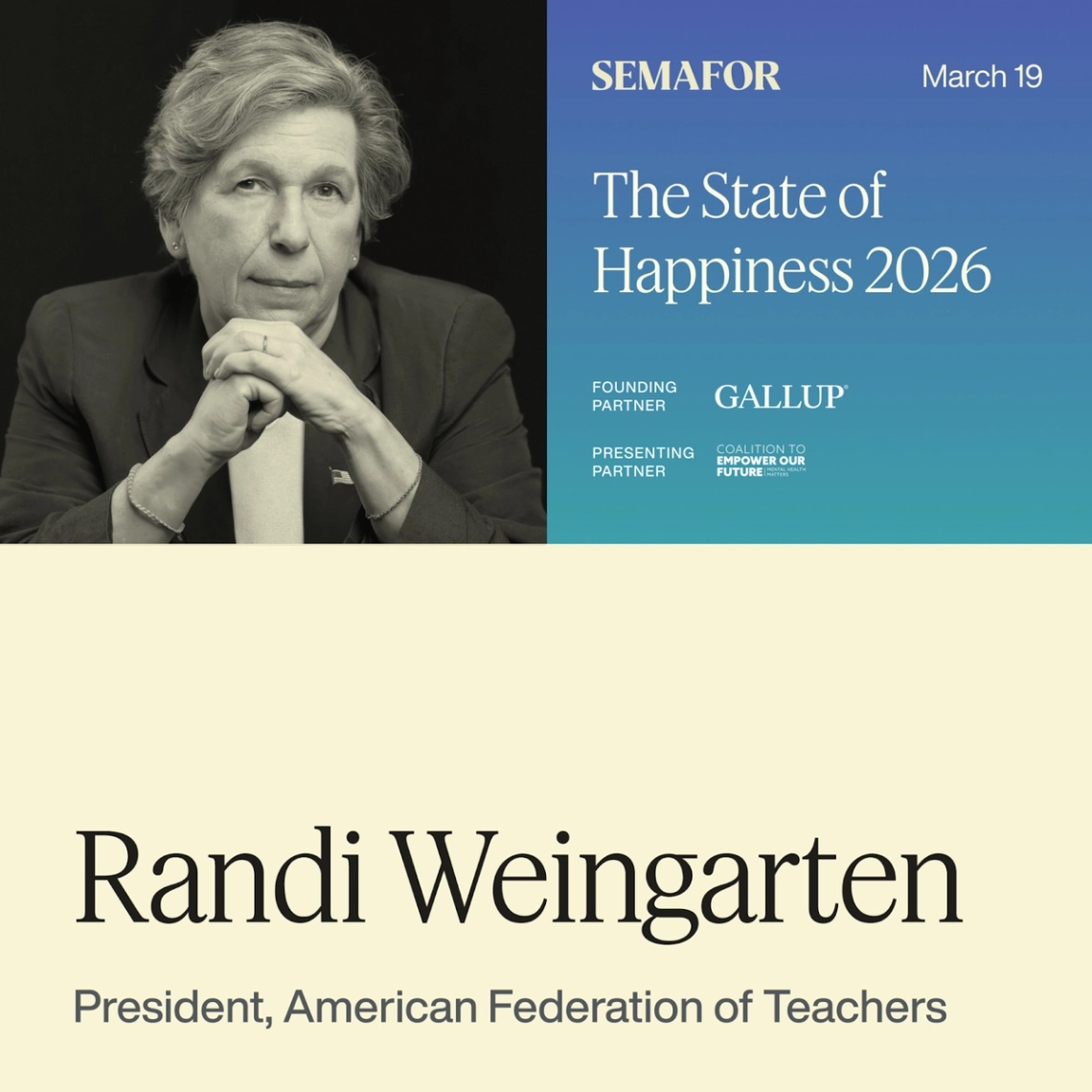 On Thursday, March 19, Randi Weingarten, President, American Federation of Teachers, will join Semafor for The State of Happiness in 2026: Wellbeing in the Digital Age. The 2026 World Happiness Report, powered by new global data from Gallup, reveals striking generational shifts in wellbeing. From rising loneliness to changing patterns of social connection, the findings challenge assumptions about technology, social media, and happiness. In partnership with Gallup, Semafor will bring together leaders across research, policy, media, and technology to explore what the evidence means—and how institutions and communities can foster deeper connection in a rapidly evolving digital world. Join us for a forward-looking conversation on resilience, belonging, and the future of human connection.
March 19 | Washington, DC | RSVP → |
|
|
Google faces wrongful death suit over Gemini |
 Manuel Orbegozo/Reuters Manuel Orbegozo/ReutersA wrongful death lawsuit filed against Google on Wednesday alleged the company’s Gemini chatbot sent a man on dangerous “missions” and eventually instructed him to kill himself. The company said its models “generally perform well” in risky scenarios, and noted the bot had previously referred the user to a crisis hotline. Preventing real-world harm has become a significant technical and legal challenge as companies race to build the most sophisticated AI models: In January, Google and Character.ai settled a lawsuit brought by the family of a teenager who died by suicide. A former OpenAI researcher who resigned from the company wrote in The New York Times that models optimize for engagement by appearing more “flattering and sycophantic,” thereby nurturing user dependency. |
|
Pope warns against AI-generated homilies |
 Guglielmo Mangiapane/Reuters Guglielmo Mangiapane/ReutersThe Pope warned Catholic priests not to use AI to write their sermons, saying “the brain needs to be used.” Leo XIV, the first US-born pop |
|
|


