Hi! Great news for anyone who’s been able to completely erase the eighth and final season of “Game of Thrones” from their minds, with a movie reportedly in the works at Warner Bros. — a fiefdom that has itself been hotly contested of late. Today we’re exploring: |
- Rate cut: Opendoor is offering below-market mortgages to homebuyers on its platform.
- Big ticket: The DOJ’s landmark Live Nation-Ticketmaster antitrust trial kicked off yesterday.
- Beholden state: Almost one-fifth of home transfers in California last year were inherited.
|
Opendoor CEO says it will offer 4.99% mortgages — even as its profit per home thins |
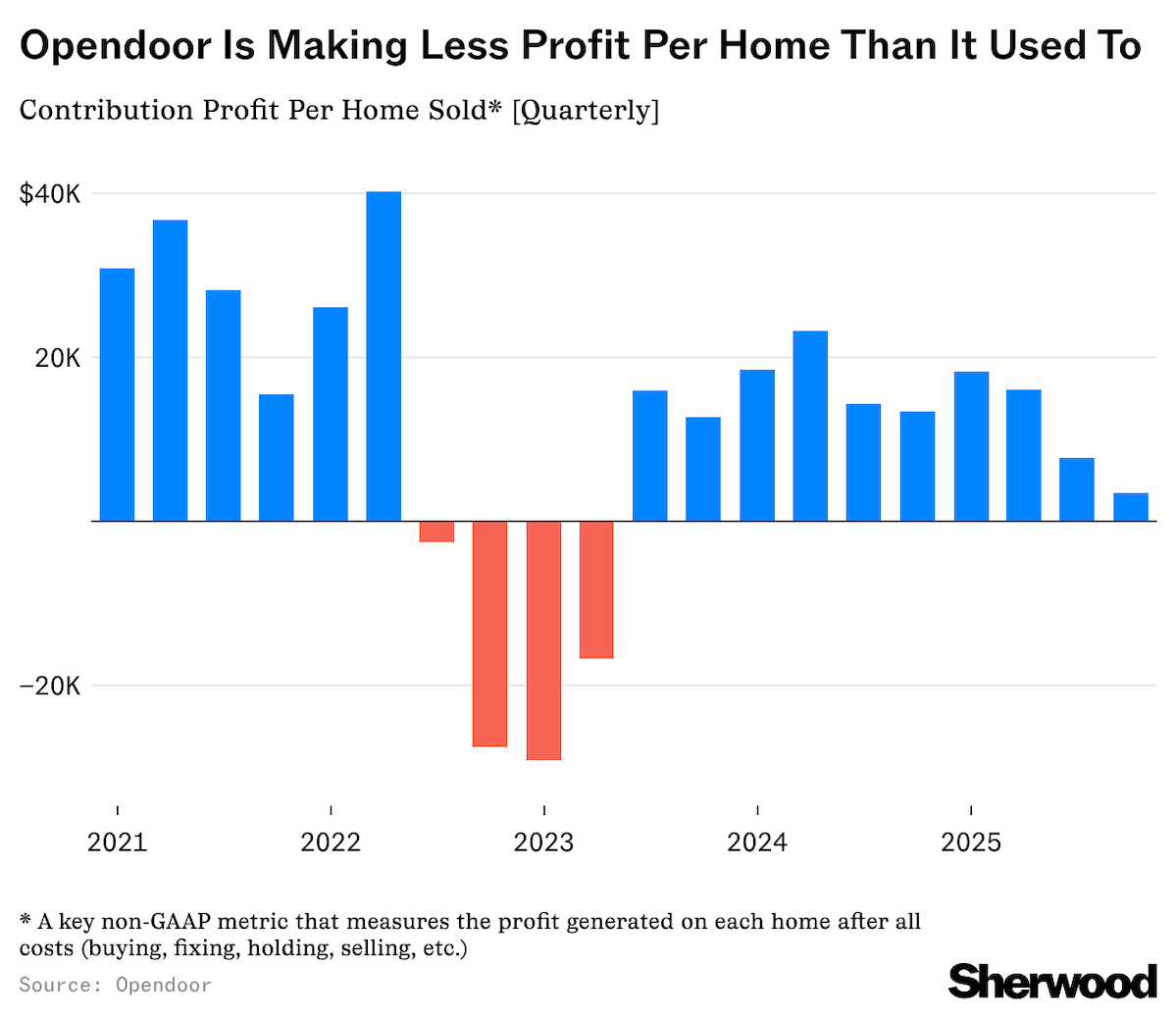
Opendoor wants to sell its buyers a cheaper mortgage... at a time when it’s already been making less money on every house it sells.
On Tuesday, CEO Kaz Nejatian posted on X that the online home-flipping company is offering 4.99% mortgages to buyers who purchase homes through its platform. Though he added that the rate isn’t “forever or to everyone,” that’s still almost a full percentage point lower than the 5.98% average 30-year mortgage rate.
The company recently relaunched a mortgage lending platform, a business it exited in 2022 when soaring interest rates squeezed its balance sheet. While still in its early stage, Nejatian said he’s “very, very bullish” on the offering in the company’s latest earnings call.
So, how are lower rates possible? It isn’t “new math,” Nejatian wrote on X, arguing that they come from stripping out middlemen costs (typically paid to brokers, salespeople, and operations) and automating much of the process.
The new strategy could actually prove as much a lifeline for Opendoor itself as for homebuyers, given that its core business — buying homes instantly from sellers and flipping them for a profit — has been under pressure for years. |
In the fourth quarter of 2025, the iBuyer generated about $3,500 of contribution profit per home, or what’s left after buying, renovating, holding, and selling it. That’s roughly a quarter of the $13,500 it earned a year earlier, and an even smaller fraction of what it made during the housing boom around the pandemic. Meanwhile, full-year revenue fell 18% to $4.4 billion and its net loss more than tripled to $1.3 billion.
Last month's Q4 results still topped Wall Street expectations as Opendoor delivered faster inventory turns — yet investors seemed skeptical that a below-market-rate mortgage can fix already thinning margins, with shares down more than 7% in early trading Tuesday following Nejatian’s post. |
The DOJ thinks that Live Nation-Ticketmaster has a monopoly on the live music industry. Could it have a point? |
During his opening statement on Tuesday, David Dahlquist, attorney for the US Justice Department, told jurors: “The concert ticket industry is broken, in fact the concert industry itself is broken. It is controlled by a monopolist. It is controlled by Live Nation.” By contrast, Live Nation’s opening remarks for what could be the most consequential legal battle the modern music industry took a more jovial tone, pointing to popular artists’ concerts to underscore that the entertainment giant is “all about bringing joy to people’s lives and doing it lawfully.”
|
The Nation vs. Live Nation
|
The DOJ first filed the antitrust lawsuit back in 2024, accusing Live Nation — which merged with ticket sales and distribution company Ticketmaster in 2010 — of illegally monopolizing the live music market. Now, over the next six weeks, a jury will decide whether the combined company has wielded its dominance to stifle competition and whether it should be broken up or otherwise penalized.
Incidentally, Live Nation-Ticketmaster also released its full-year earnings for FY2025 around two weeks ago. So, just how big is the music titan today? |
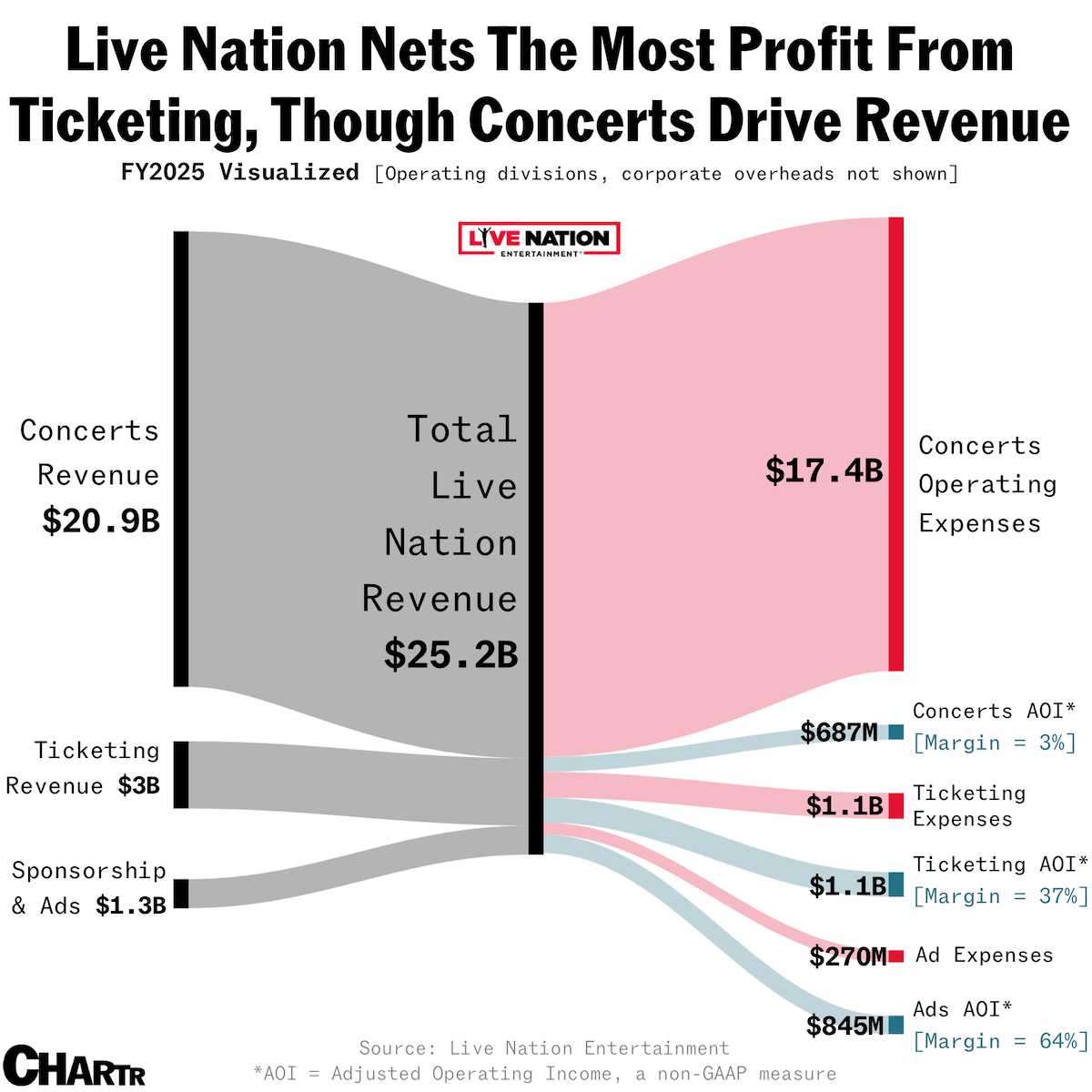
The company posted record-breaking revenue of $25.2 billion in 2025, with its concert division generating around $20.9 billion — equivalent to 83% of its year-end total — while its ticketing division accounted for just $3 billion (~12%).
Though concerts have long been the beating heart for revenue in the Live Nation business, its ticketing system is actually the profit center, with a 37% adjusted operating profit margin, netting $1.1 billion over the period compared with a much smaller 3% margin for concerts (~$687 million).
Indeed, Live Nation’s ticketing system is expected be a major pressure point in the DOJ’s monopoly case — but why has the company drawn scrutiny over its pricing model in particular? |
|
|
Index options are a rapidly growing segment of the derivatives market. In aggregate, average daily volume across all index options has grown 68% since the end of 2022 — but Nasdaq-100 Index® Options (NDX®) have notched 345% growth in the same period. |
In fact, over the past three years, Nasdaq-100 Index Options have seen robust uptake in the retail market. For investors interested in hedging, risk management, or income generation, the outperformance of the Nasdaq-100 Index and its index options present a powerful tool to gain exposure or manage index risk. Nasdaq-100 Index Options come in two sizes, 100% (NDX) and 1% (XND®) of the full value of the Nasdaq-100 Index, offering flexibility for different portfolio types. With daily, weekly, monthly and long-term expirations available, NDX options have varied use cases for a range of strategies.
Discover the possibilities of Nasdaq-100 Index Options with the custom-built Options Architect tool or get institutional-quality insights at the Nasdaq Options Insights Hub. |
|
|
Inherited homes made up almost 1 in 5 property transfers in California last year |
California dreamin’... about my parents’ place.
According to data from real-estate insights firm Cotality cited in The Wall Street Journal, some 17.5% of home transfers last year in the state with the largest economy in the US were inherited, in a clear sign that getting a foot on the Cali property ladder has become more difficult unless someone you know has already clambered up first.
|
Double it and give it to the next person |
For some idea of how the Californian real-estate landscape has changed: 30 years ago, inherited homes accounted for an 8.7% share of property transfers in the state, with the vast majority (87.7%) coming through resold properties and the rest via new home sales.
While the share of passed-down homes has gradually ticked up since then, the 2025 figure represents a new high in the Golden State... and is more than double the 8.8% rate seen across the rest of the US. |
Besides younger would-be homeowners having to rely on family to get into one of America’s most expensive markets, what else is causing the boom in California?
For starters, Californians tend to hold onto their homes for longer, with Redfin data out yesterday showing it as the state with the highest average tenures. Whilst American homeowners stayed put for some 12 years on average, the rate rocketed to 20 years in California, leading to a “‘til-death-do-us-part” approach to property, per one LA financial adviser speaking with the WSJ.
Lengthy tenures in the state make sense for a variety of reasons — not least Proposition 13, a 1978 amendment which effectively capped annual increases in property tax to 2%, cultivating a “lock-in effect.” Add in the fact that some inheriting heirs can still benefit from the lower tax rate, despite the state tightening rules around this in 2021, and California’s “keep it in the family” culture begins to make more sense.
|
|
|
-
Stick, not twist: Job hopping may not be worth it anymore, as new data from Bank of America shows that the raise from switching jobs in January was less than half the 2019 average.
-
Netflix’s co-CEO thinks that rival Paramount’s $79 billion debt pile from its merger deal with Warner Bros. could lead to $16 billion in cost-cutting.
-
While a record $189 billion in global venture capital was invested into startups last month, a whopping 83% of that figure was spent across just three companies.
-
Chipping in: Billionaire Tesla bull Leo KoGuan just bought 1 million shares of Nvidia on Tuesday to “show support” to a “nervous market,” per an interview with Bloomberg.
-
Despite falling short of the live viewership record, Bad Bunny’s Super Bowl halftime show set a new global viewership record, notching 4.1 billion viewers worldwide in 24 hours.
|
|
|
Nasdaq-100 Index® Options have seen a 345% increase in average daily volume since Q2 2022. See why NDX® and XND® are essential tools for all types of traders and how they could support your strategy.
|
|
|
-
Reuters maps the global oil chokepoint in the Strait of Hormuz, which carries around a quarter of the world’s supply.
-
Mainstream is the new niche… Only 6 songs released in 2025 clocked more than 1 billion streams on Spotify.
|
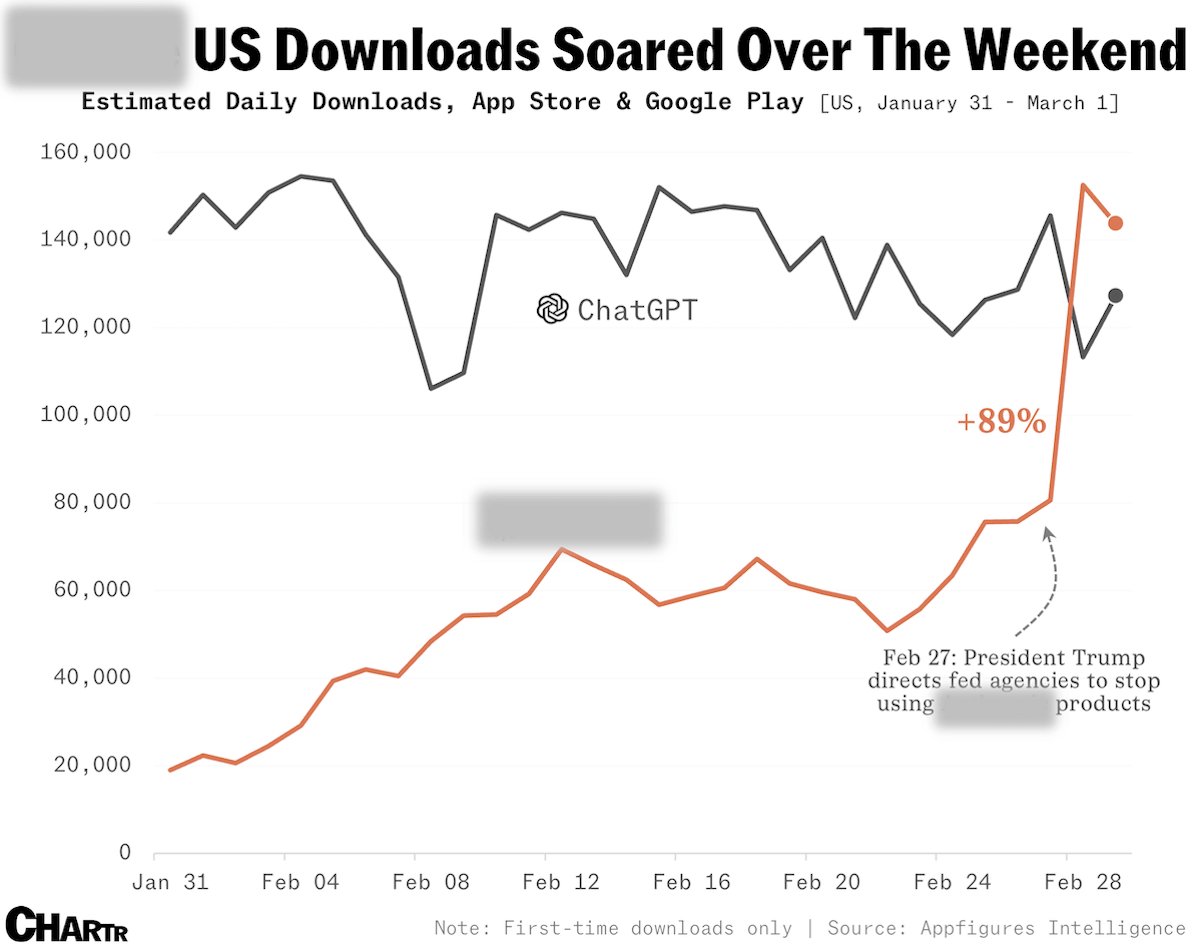
Off the charts: Which app soared to the top of the US free App Store chart over the weekend, with daily downloads outpacing estimated figures for rival ChatGPT? [Answer below]. |
Not a subscriber? Sign up for free below. |
Advertiser’s disclosures:
Nasdaq® is a registered trademark of Nasdaq, Inc. The information contained above is provided for informational and educational purposes only, and nothing contained herein should be construed as investment advice, either on behalf of a particular security or an overall investment strategy. Neither Nasdaq, Inc. nor any of its affiliates makes any recommendation to buy or sell any security or any repre |
| |
|