| | In today’s edition: The Gulf is closing ranks, and energy prices spike as traffic through the Strait͏ ͏ ͏ ͏ ͏ ͏ |
| |  | Gulf |  |
| |
|
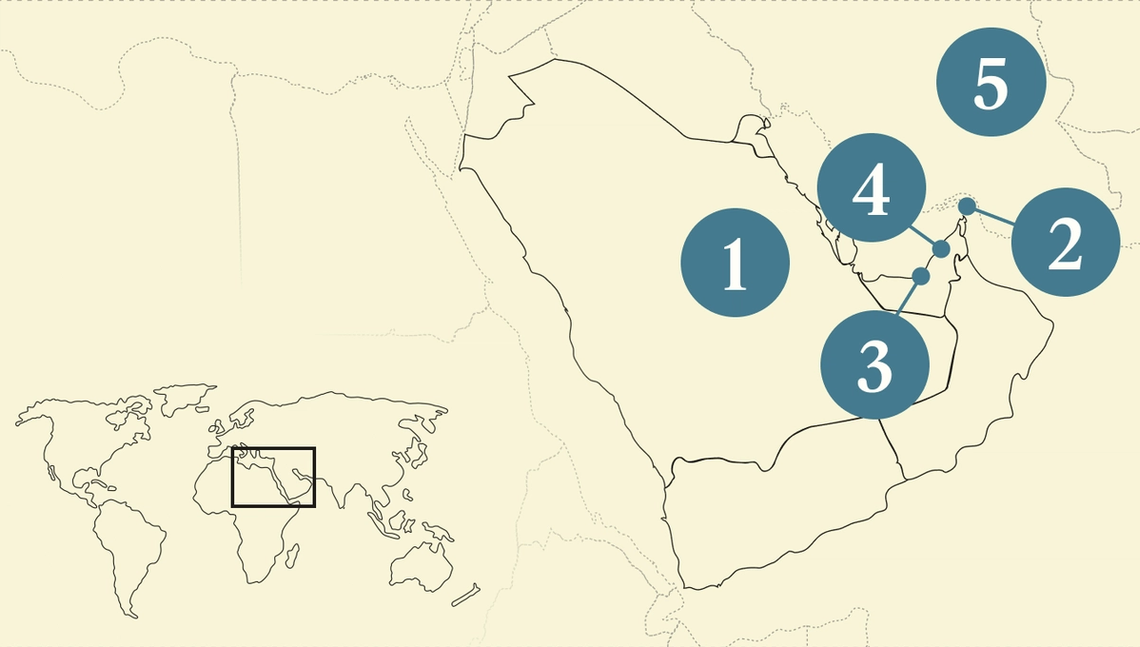 - Escalations and evacuations
- Hormuz closure roils markets
- Air defense calculus
- MBZ strolls Dubai Mall
- Yachts and armored trucks
 The jokers and the wolves. |
|
 The Gulf is closing ranks. Faced with Iran’s attacks, the rift between Saudi Arabia and the UAE has, for now, disappeared. Leaders and governments are coordinating their response, and the collective focus is security. The cost of Iran’s strikes is rising. Beyond the expense for the military of intercepting missiles and drones, large portions of the Gulf economy are stalling. JPMorgan has trimmed its non-oil growth forecasts across the region by 0.3 percentage points. Qatar’s shutdown of LNG production — and the prospect of Gulf oil output disruptions — threaten billions of dollars a day in lost revenue. For people living here, the strain is starting to show. Attacks on data centers have disrupted banking and online services. Governments say they have sufficient food supplies, but many people are hoarding, and it seems some sellers are gouging: Kuwait capped prices on food at Feb. 28 levels, requiring ministerial approval for increases. Flights from the UAE have partially resumed, but they seem focused on repatriation, taking circuitous routes to avoid missile threats. The UAE’s economy minister said on Tuesday that around 17,000 people have traveled on safe routes so far, and more flights are planned to move roughly 27,000 people a day, as conditions permit — a far cry from the roughly 300,000 who would typically depart from Dubai and Abu Dhabi every day. While we tend to focus on trends among the Gulf’s wealthy, the more vulnerable populations are facing difficult choices. I’ll conclude by leaning on the worst Middle East reporting tropes: the views of barbers and drivers. As I write this on the road between Dubai and Abu Dhabi, my driver said he hasn’t been able to cover his $110 daily car fee since Saturday due to a lack of customers. His employer has partially waived it, for now. My barber isn’t seeing many customers either and is weighing whether he needs to find a land route back to Syria if he can’t make ends meet. |
|
Mixed messages to US citizens abroad |
 A security forces vehicle patrols an area in Riyadh. Stringer/Reuters. A security forces vehicle patrols an area in Riyadh. Stringer/Reuters.The US State Department urged Americans to immediately leave more than a dozen Middle East countries due to “serious safety risks.” The advisory note said US citizens should depart countries including Bahrain, Qatar, Saudi Arabia, and the UAE by commercial means. That was published around the same time that the US embassy in Riyadh was hit by two Iranian drones. The incident caused a small fire but no injuries. The Saudi foreign ministry warned that the attack “will push the region toward further escalation,” while the embassy’s own advice to American citizens in Saudi Arabia was — in contradiction to the State Department’s guidance — to shelter in place. Meanwhile, more than 100,000 British citizens — about a third of the total in the Gulf — have registered their presence in the region with the UK government, as part of preparations in case of an evacuation order. Evacuation flights have begun departing the UAE after airport closures that have disrupted some of the world’s busiest airports. As the fallout unfolds, international firms in the region have asked staff to work from home — including a growing number in Saudi Arabia — and many international schools have switched to remote learning. — Matthew Martin |
|
Energy prices spike on Hormuz closure |
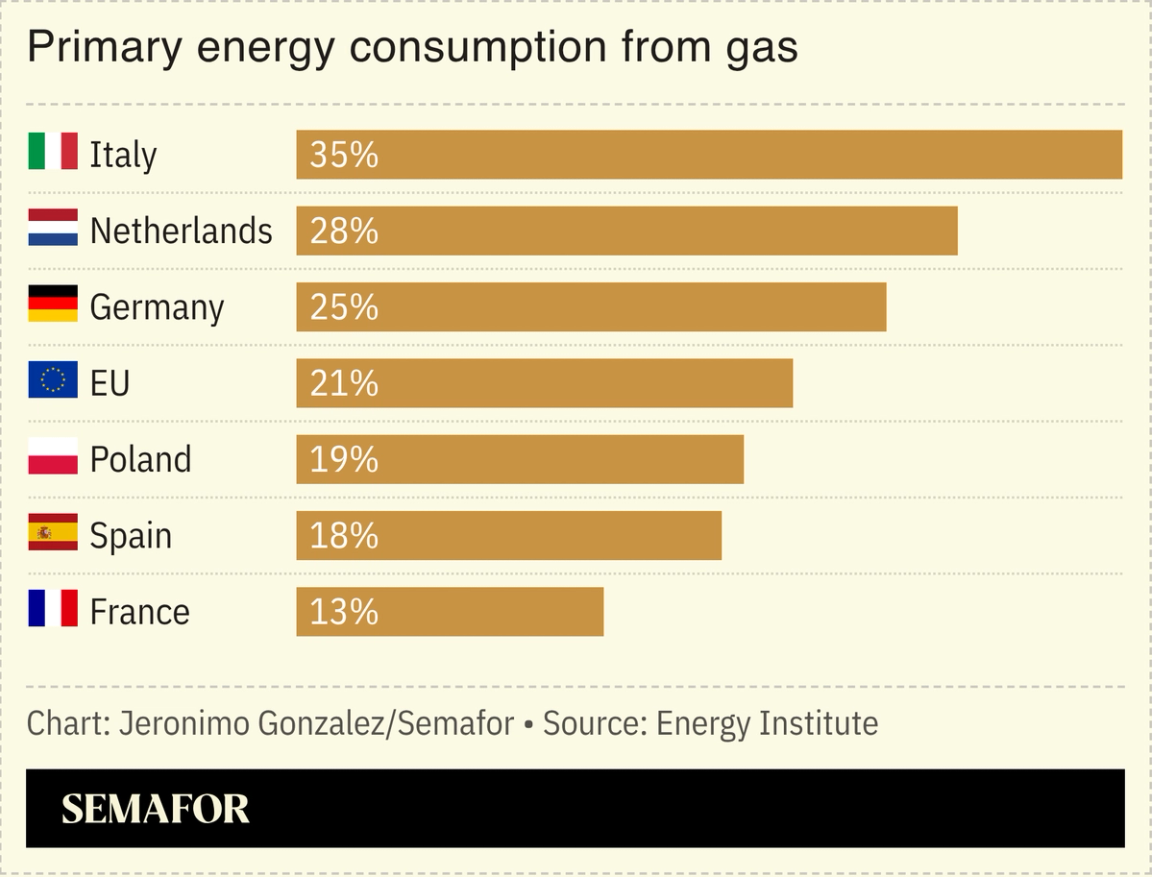 Oil and gas prices surged as tanker traffic through the Strait of Hormuz ground to a halt and Iranian drone attacks affected production at crucial facilities in Qatar and Saudi Arabia. Brent crude rose to more than $80 a barrel Tuesday, at one point touching a one-year high. Gas prices have spiked more than 70% since the weekend after production was suspended following a drone strike at QatarEnergy’s largest LNG export facility. Attacks on Gulf energy infrastructure will stir memories of the 2019 drone strikes on Saudi facilities, which temporarily knocked out oil production. Defense systems have been beefed up since then, which probably leaves Iranian threats to close the Strait of Hormuz as the bigger concern to global markets and Gulf economies. Oil could hit more than $100 a barrel if the Strait remained impassable for more than a few weeks, Commerzbank said in a note. Regional stock markets also slumped — the Saudi exchange is down since the outbreak of hostilities and the Qatar bourse fell by the most in about six years; UAE exchanges remain closed. Not everyone has turned negative on the Gulf as a destination for money flows: BlackRock noted it would not change its investment view on the region, and that it “stands ready to lean against any market over-reactions,” while State Street said in a note that higher commodity prices and risk-off sentiment would likely only last a few weeks. — Matthew Martin |
|
 A missile is intercepted in Qatar. Saleh Salem/Reuters. A missile is intercepted in Qatar. Saleh Salem/Reuters.Gulf states have intercepted the majority of the missiles and drones launched from Iran, and officials insist their weapons systems are well stocked. While there are no details about depletion rates, there is a discrepancy between offense and defense in the missile math: US Secretary of State Marco Rubio said on Monday that Iran can produce 100 missiles a month and thousands of suicide drones, while the US can only make “six or seven interceptors” in the same period. In the June war between Israel and Iran, interceptor depletion became a challenge, and Israel had to make trade-offs over which incoming missiles to target, allowing some “civilian areas to be hit in order to preserve crucial strategic installations,” The Wall Street Journal reported. |
|
Life in Dubai, Riyadh holds daily rhythm |
 @khouri1000/Khalid Al Khoori/Instagram @khouri1000/Khalid Al Khoori/InstagramDubai’s leadership did not hold a press conference to calm nerves following Iran’s strikes. Instead, UAE President Mohamed bin Zayed Al Nahyan was seen walking through Dubai Mall and later having tea with Dubai Crown Prince Hamdan bin Mohammed Al Maktoum. Videos circulated of MBZ stopping to speak with shoppers, asking “Are you happy?” and posing for photos with children. The country’s population read it as reassurance without words, a visual message that life goes on. Social media users — expats and locals alike — took the opportunity to praise the country’s handling of the war, from both military and social perspectives. In Riyadh, the daily rhythm has largely held, despite Iran’s strikes on the US embassy last night. The only public warning from civil defense concerned rainfall in the Riyadh Region. Across the Gulf, families are still gathering for Ramadan iftars. In many smaller cities, the atmosphere remains subdued but steady, so much so that if you were not checking your phone, nighttime in Ramadan bazaars in Jeddah, the second-largest Saudi city, would give no indication of how tense the region has become. — Manal Albarakati |
|
 The damage at Ayatollah Ali Khamenei’s compound. Pleiades Neo (c) Airbus DS 2026/Handout via Reuters. The damage at Ayatollah Ali Khamenei’s compound. Pleiades Neo (c) Airbus DS 2026/Handout via Reuters.“We knew Tehran like we know Jerusalem,” one Israeli intelligence official told the Financial Times in an account of how the plan unfolded to kill Ayatollah Ali Khamenei at his closely guarded compound. Traffic cameras in the Iranian capital had been hacked for years, funneling crucial intel straight to Tel Aviv. The FT story is among several that have caught our attention, including a deeply reported article on US President Donald Trump’s decision to go to war, published in The New York Times, that describes what the CIA and members of the administration were saying in the runup to Feb. 28. The Carnegie Endowment for International Peace dug into the use of drones: The US used low-cost one-way attack drones for the first time, a tactic ripped from Iran’s playbook; Tehran has been using its Shahed systems extensively with similar intent. And Bloomberg recounted a Polish entrepreneur’s efforts in trying to get himself and 18 colleagues on a trip to Dubai out of the suddenly on-edge city, with attempts to book a yacht to Mumbai and an armored vehicle to Oman (both fell through). Some 20,000 Russian vacationers are also stranded, according to the outlet. |
|
 A burning aircraft falls from the sky in Kuwait. Social media via Reuters. A burning aircraft falls from the sky in Kuwait. Social media via Reuters.Wars bring out the best and the worst in people — and in our social media age, they also bring memes. On Monday, three US F-15 Strike Eagles were shot down in Kuwait in what US Central Command described as an “apparent friendly fire incident.” All six pilots ejected safely and were largely greeted warmly by Kuwaiti citizens and residents — once they knew they were Americans. In one video, a man thanks a pilot for her service, assuring her that she’s in no danger. In another, some men drive up hoping to capture an Iranian, but are disappointed: “We came here to clobber him,” one says, before telling his friend to drive away. On the other side, scammers are exploiting the crisis, posing as officials from the fictitious “Dubai Crisis Management” bureau to access bank accounts and rob Gulf citizens and residents who may be distracted by the war. — Mohammed Sergie |
|
|


