|
 |


 |
DONALD TRUMP ISSUED an executive order last week to boost production of glyphosate, a widely used pesticide that’s long been the subject of lawsuits over possible effects on health. And the reaction on social media was exactly what you’d expect to hear from environmentalists on the left.
“Absolutely disgusting and shameful”
“Literally no justification for the way this was done”
“A middle finger to public health”
But these posts didn’t come from Trump’s progressive critics. They came from some of his most enthusiastic supporters: influencers who identify as part of the Make America Healthy Again movement.
MAHA is the loose coalition of activists, social media figures, and like-minded voters who believe America is being slowly poisoned by the food and pharmaceutical industries. Their preoccupations include fighting environmental toxins and hawking wellness products, promoting natural diets, and challenging mainstream science on vaccines.
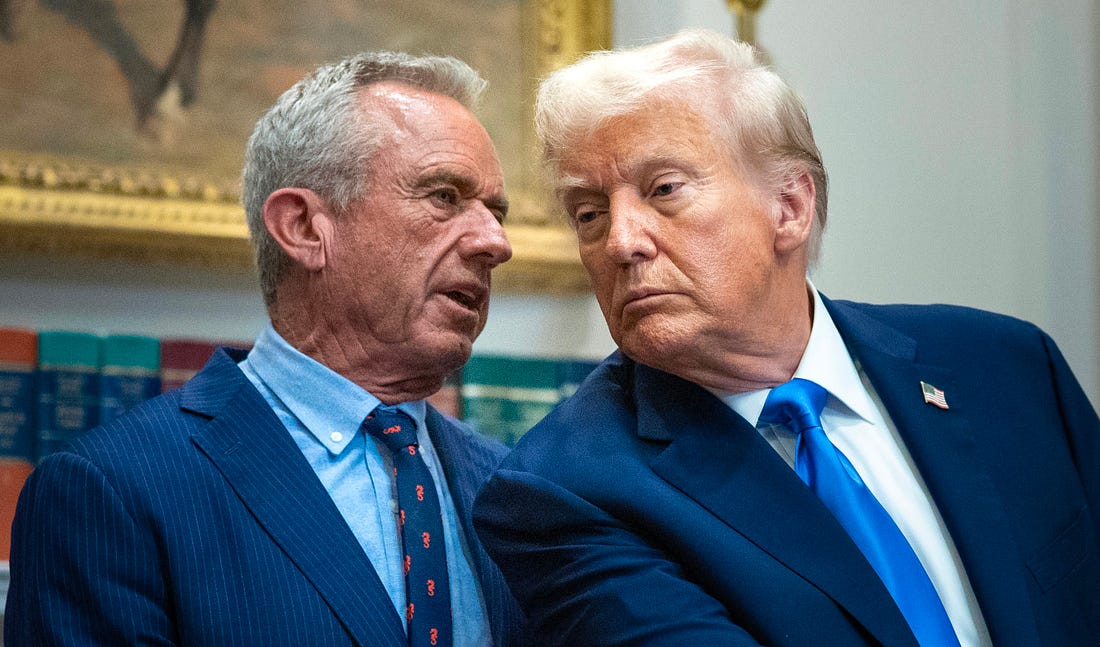
In 2024, they threw their support behind the presidential campaign of Robert F. Kennedy Jr., who had adopted the MAHA slogan as a twist on Trump’s MAGA branding. The informal coalition got behind Trump after Kennedy withdrew from the race and Trump embraced Kennedy and his agenda.
Early on, they felt their faith was being rewarded. Trump tapped Kennedy to lead the Department of Health and Human Services, with a mandate to “ensure that everybody will be protected from harmful chemicals, pollutants, pesticides, pharmaceutical products, and food additives.”
But that was then. In the wake of Wednesday’s executive order and a series of episodes leading up to it, MAHA’s leaders say they feel like Trump has betrayed their trust and, in the process, alienated their followers.
“Have we ever lost the midterms this early or is this a new record?,” the conservative, MAHA-adjacent podcaster Alex Clark tweeted.
The question was rhetorical and, obviously, the fate of the GOP’s congressional majorities won’t depend on MAHA’s mood alone. But it’s not hard to see why Clark and her fellow MAHA faithful have so many doubts about Trump’s true priorities—and why those doubts are evidence of a significant fissure that’s developed within his coalition.
“I READ AN ARTICLE TODAY,” Trump said during his January 2026 cabinet meeting, “where they think Bobby is going to be really great for the Republican party in the midterms.”
The article he had in mind ran in Politico. It was one of several dispatches in the media citing GOP strategists who said Kennedy and his agenda could help Republicans hold on to—and even energize—swing voters who were becoming disenchanted with Trump over his handling of the economy, immigration, and other issues.
The evidence for this included polling showing that broad, bipartisan majorities support Kennedy’s calls for healthier eating and more exercise. And there’s good reason to think Trump’s advisers believe it. In the last few weeks, Kennedy has been one of the administration’s most visible public emissaries, headlining a “Take Back Your Health” tour that is hitting politically important states and sitting for interviews with both 60 Minutes and Theo Von.
That kind of publicity campaign doesn’t happen without the White House’s encouragement, although it’s an open question as to how much the tour is actually helping. The Theo Von podcast was where Kennedy talked about snorting cocaine from a toilet seat. And just a few days later the HHS social media team posted a video of Kennedy working out in jeans and chugging whole milk in a sauna with Kid Rock, the aging arena rocker turned MAGA provocateur.
But a bigger political problem with making Kennedy the front man for the administration is not the occasional odd video. It’s that a big part of his agenda—and the one for which he is most beloved among some MAHA adherents—turns out to be highly unpopular.
“The food and pesticide piece is the most compelling part of the MAHA narrative—that is what appeals to the vast majority of folks, even across some political lines,” Marissa Padilla, executive vice president at Global Strategies