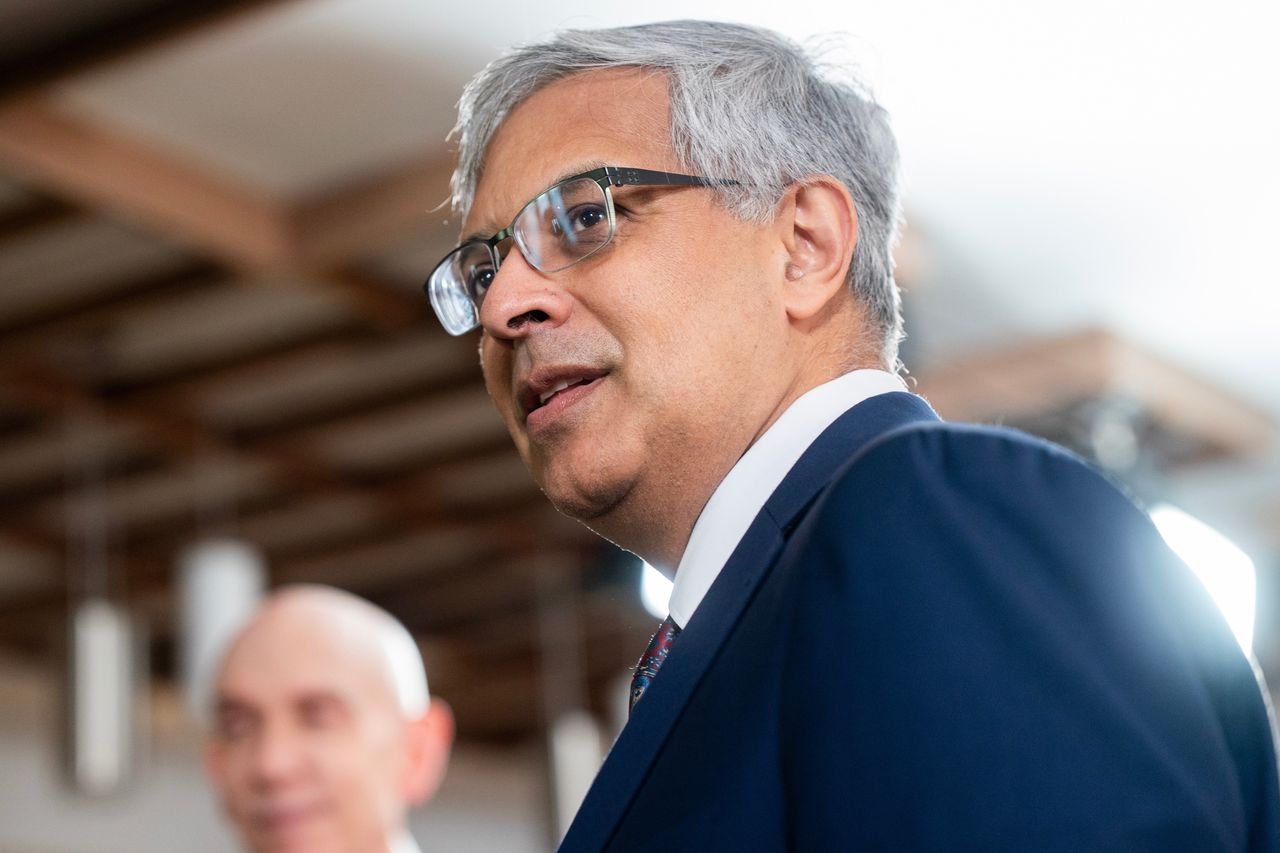
| |  | Industry Rx | At the PhRMA confab, top Trump administration health official Mehmet Oz made an effort to sell the industry on a plan to turn the principles around drug pricing deals into law. PhRMA, meanwhile, has derided the move as imposing price controls. Oz, who leads the Centers for Medicare and Medicaid Services, told the audience that the administration wants to codify the most-favored nation (MFN) drug pricing deals that compel companies to lower their prices in the U.S. to align their prices with other wealthy nations. There’s the possibility, he said, that a “future administration will take more drastic, draconian steps in ways that would hurt this industry.” He appealed to companies to help craft the legislation to come up with something that “can preserve the needs of industry while not hurting the American people.” → Oz was being interviewed by Pfizer CEO Albert Bourla, who didn’t push back on the idea of codification. Pfizer was the first company to cut a MFN-related deal with the administration. After the election in 2024, Oz said, President Donald Trump held a dinner with top health officials and executives, including Bourla and Eli Lilly CEO David Ricks to discuss the problem of high drug costs and potential solutions. “The nice thing about the power to convene is that you'll actually help design a plan that doesn't hurt you,” Oz said. The MFN deals, which are confidential, impacted future products — allowing the pharmaceutical industry to launch new drugs at whatever price they wanted, as long as it matches overseas prices, Oz said — and products in Medicaid, the low-income health program for Americans, where “prices are lower anyway, so it wasn't as hurtful,” he added. → In a briefing with reporters after the conference, PhRMA CEO Steve Ubl pushed back on the idea of codifying the principles of the MFN deals. Overall, 16 companies made agreements with the Trump administration, most of which were announced in flashy White House news conferences and praised by executives. I asked Ubl to parse the difference in tone between PhRMA’s members on those deals and how the association talks about them. “There's a big difference between voluntary agreements that individual companies are having discussions with the administration about and codifying, on a broad basis, price controls in legislation,” Ubl said. Although many large pharmaceutical companies will also privately say they oppose Congress stepping in to turn MFN pricing policies into legislation, they’ve been hesitant to publicly bash the idea. Trump administration officials, including Oz, have been on Capitol Hill to urge lawmakers and staff to come up with a MFN bill, but the effort has been met with slight skepticism thus far. However, the push could get stronger as Politico reported on Tuesday that Trump pollster Tony Fabrizio is urging the president’s inner circle to keep focusing on the administration’s drug pricing effort as the November midterms approach. Ubl argued that policymakers and regulators should focus on other issues — including doing more to reform pharmacy benefit managers and the 340B discount drug program. He said it’s an argument he’ll be making as Trump urges lawmakers to move forward with codifying the deals. “There's much more common ground than areas of disagreement,” Ubl said. | 

_tstmp_1756933376-1920-1080.png)