| | In this edition, the rift between Anthropic and the Pentagon spreads to Palantir, and AI agents can ͏ ͏ ͏ ͏ ͏ ͏ |
| |  | Technology |  |
| |
|
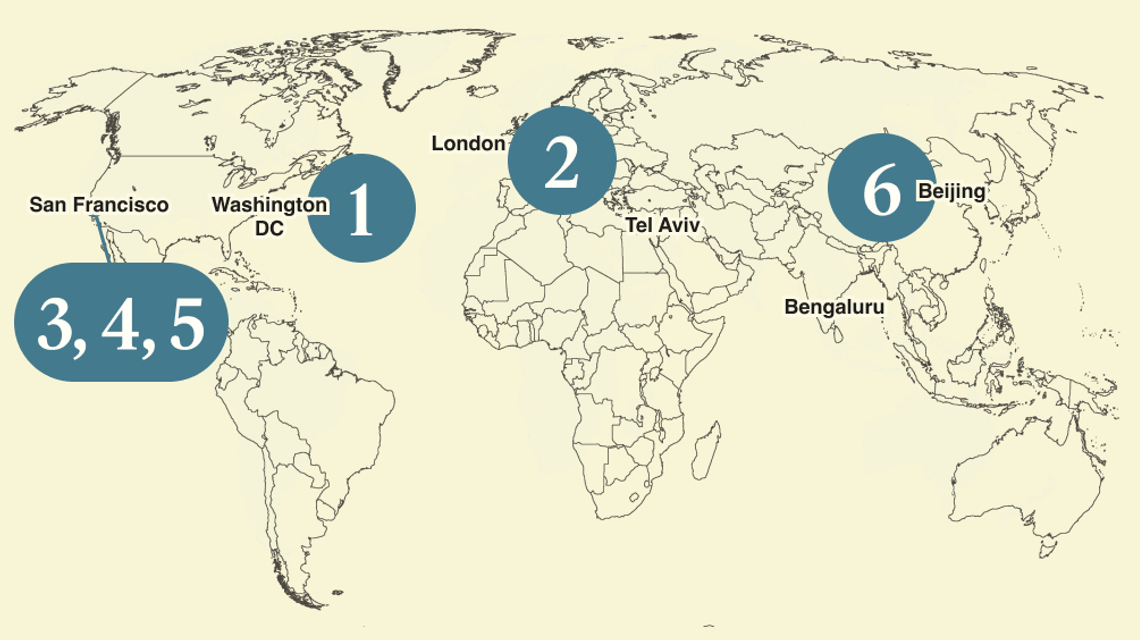 - Anthropic, Pentagon rift deepens
- Europe gets AI boost
- Apple takes on Meta
- Mixed messaging
- Google’s new grid
- China’s AI giveaway
 What the rift between Anthropic and the Pentagon could mean for the future of AI in government, and a new startup offers human labor to AI agents. |
|
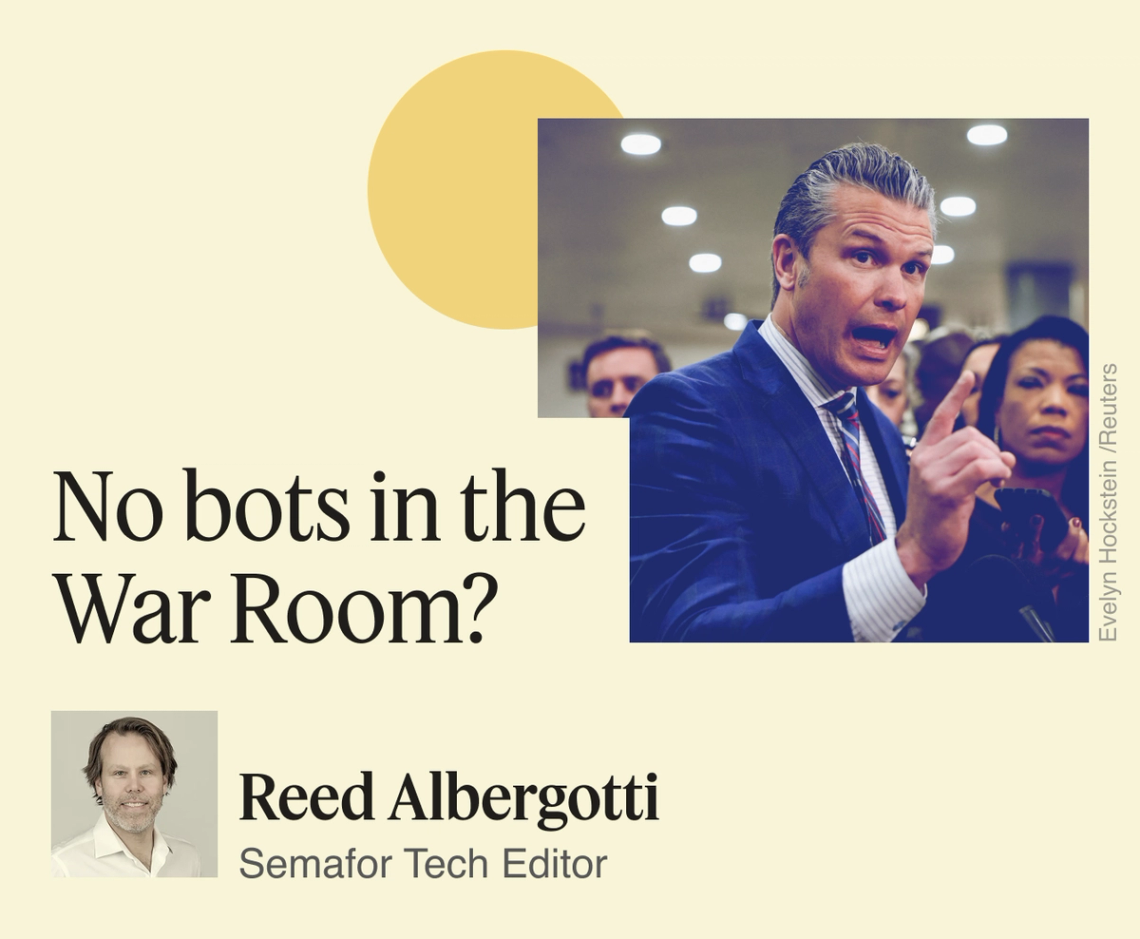 Today, we have new details of the long-running soap opera involving Anthropic and the federal government — a conflict we first broke last May. Anthropic executives and employees were upset because the Claude chatbot was used in at least some part of the capture of Nicolás Maduro earlier this year. Some even threatened to resign. This happened, in turn, because Anthropic has a contract to provide its services to Palantir, which has contracts with the Department of Defense and aids in classified military operations. Senior Pentagon officials are now considering whether they can continue to use Anthropic in military operations. (More on that below.) But this is a fight that didn’t need to happen. And while politics played some role — Anthropic would not have raised an issue if the technology had been used, for instance, to take out Osama bin Laden — a broader question is at play. There’s a non-political ideology at Anthropic and other AI companies that the technology they are building is so powerful, so earth-shattering, that they have no choice but to police how it is used and by whom. But from the Pentagon’s point of view, there’s no choice but to worry about a technology provider that wants to pick and choose how its technology can and should be used. What if Anthropic pulled the plug on its AI in the middle of a critical military operation because it fell into some gray area? If tech companies are concerned about their technology, the best way to ensure it’s not misused is to focus on transparency and accountability, so if anyone does abuse it, they’ll be held accountable. |
|
The Pentagon’s growing rift with Anthropic |
 Joshua Roberts/File Photo/Reuters Joshua Roberts/File Photo/ReutersThe brewing conflict between the US military and Anthropic has its roots in the changing nature of the software stacks used by the Pentagon. Anthropic is one of the few “frontier” large language models available for classified use by the US government because it is available through Amazon’s Top Secret Cloud and through Palantir’s Artificial Intelligence Platform — which is how its Claude chatbot ended up appearing on the screens of officials who were monitoring last month’s raid to capture Nicolás Maduro. An exchange between Anthropic and Palantir about the operation eventually led to the former’s rupture with the Pentagon (an Anthropic spokesman denied Semafor’s account of the exchange). Anthropic wants carve-outs that prohibit certain surveillance and autonomous weapons restrictions, according to people familiar with the matter. Meanwhile, a Defense Department official told Semafor that the military is beginning to lose trust in Anthropic, viewing their models as a possible “supply chain risk,” and making hazy threats about barring subcontractors (like Palantir) from using them. An official designation like that, which would be a rare move by the Pentagon, could scare even private sector customers away from Anthropic and threaten its business prospects just as the company prepares for an initial public offering later this year. Read on for the rest of the details on the rift. → |
|
|
Europe looks to catch up on AI |
 France’s president with the CEOs of DeepMind and Mistral AI. Ludovic Marin/Reuters. France’s president with the CEOs of DeepMind and Mistral AI. Ludovic Marin/Reuters.Europe is fighting for ground in the AI race, and two big moves this week have it inching ahead. French startup Mistral AI made its first acquisition, buying a Parisian AI infrastructure company, as it tries to move from simply developing models to becoming a one-stop shop. And a top British AI researcher is looking to raise $1 billion for a new company building “superhuman intelligence,” in what would be the largest-ever European seed round. David Silver, formerly of Google DeepMind, sparked a flurry of excitement as investors raced to find competitors to US and Chinese AI giants. Europe still remains well behind Silicon Valley. Mistral’s $14 billion valuation, which makes it Europe’s largest AI firm, is barely 2% of the estimated worth of OpenAI. But Europe doesn’t need to go one-for-one with the US. It is competing more closely with the UAE, South Korea, India, and a few other nations for the No. 3 global spot. Losing that would be a blow to the bloc, which tried to wield its influence on the industry through rulemaking but fell short largely due to pressure from the US and Big Tech. |
|
Apple finding new footing in hardware |
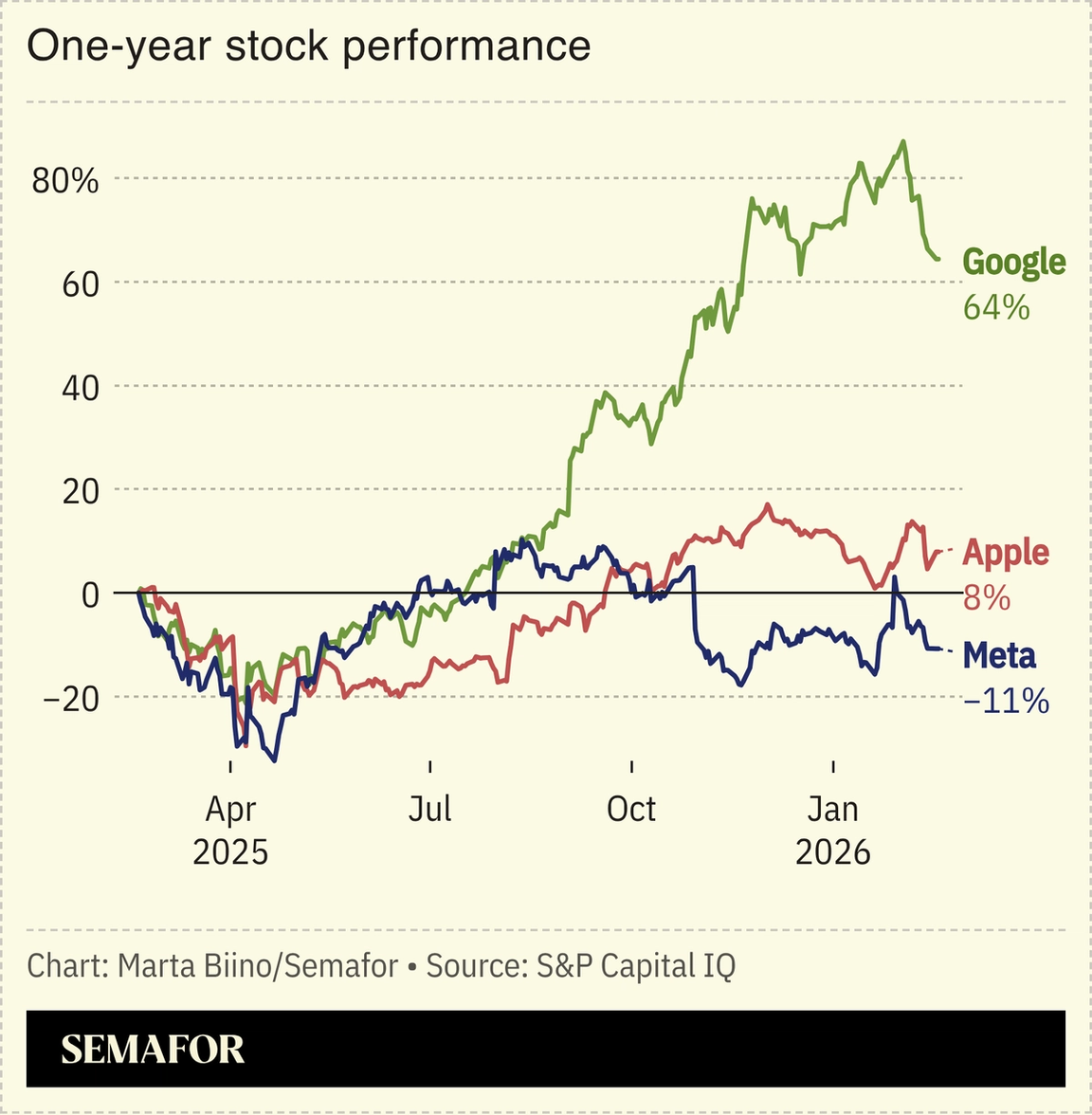 Apple is pressing ahead in developing three wearables as it tries to define the next major way humans will interact with AI. In direct competition with Meta, Apple’s smart glasses will serve as a constant AI companion, able to take pictures, play music, answer questions, and perform actions, like inputting information from a physical invitation into a digital calendar, Bloomberg reported. AI-supported AirPods with cameras are also in the works, as is a pendant that serves as an extension to the phone. The pendant, which can attach to a shirt or necklace, is a particularly risky experiment after similar products have drawn criticism or failed. After a shaky start in model development, Apple has struggled to find its footing in the AI race. A partnership with Google’s Gemini to power the next generation of Siri brought it back to the present. While the iPhone maker hasn’t been able to carve a niche as a software leader in AI, its install base and manufacturing network position it as a serious contender in the next hardware space. |
|
OpenAI, Perplexity take opposite approaches to ads |
 Courtesy of OpenAI Courtesy of OpenAIKnowing your audience is one thing, but how you want to appear to them seems trickier for AI firms. While OpenAI recently began testing ads in the free version of ChatGPT to expand its revenue streams, Perplexity has reversed course, winding down its advertising push late last year and saying it won’t rely on ads in the future. “The challenge with ads is that a user would just start doubting everything ... which is why we don’t see it as a fruitful thing to focus on right now,” a Perplexity executive told the Financial Times. Perplexity was an early adopter of testing sponsored answers that ran alongside its chatbot responses. “A user needs to believe this is the best possible answer, to keep using the product and be willing to pay for it,” the executive said. The split decisions on advertising is becoming a point of contention for AI firms, as seen during Anthropic’s Super Bowl commercial swiping at OpenAI, and CEO Sam Altman knocking back. Anthropic has signaled it won’t pursue ads as a business model, and Google, whose AI business is underpinned by ads in traditional search, hasn’t yet added them directly into Gemini, though it shows ads in some other AI-powered products. However, the debate over ads has become much larger than one business decision versus another: it’s a form of virtue signaling about how each AI company views engaging with its audience and what the future of AI-powered information gathering looks like. |
|
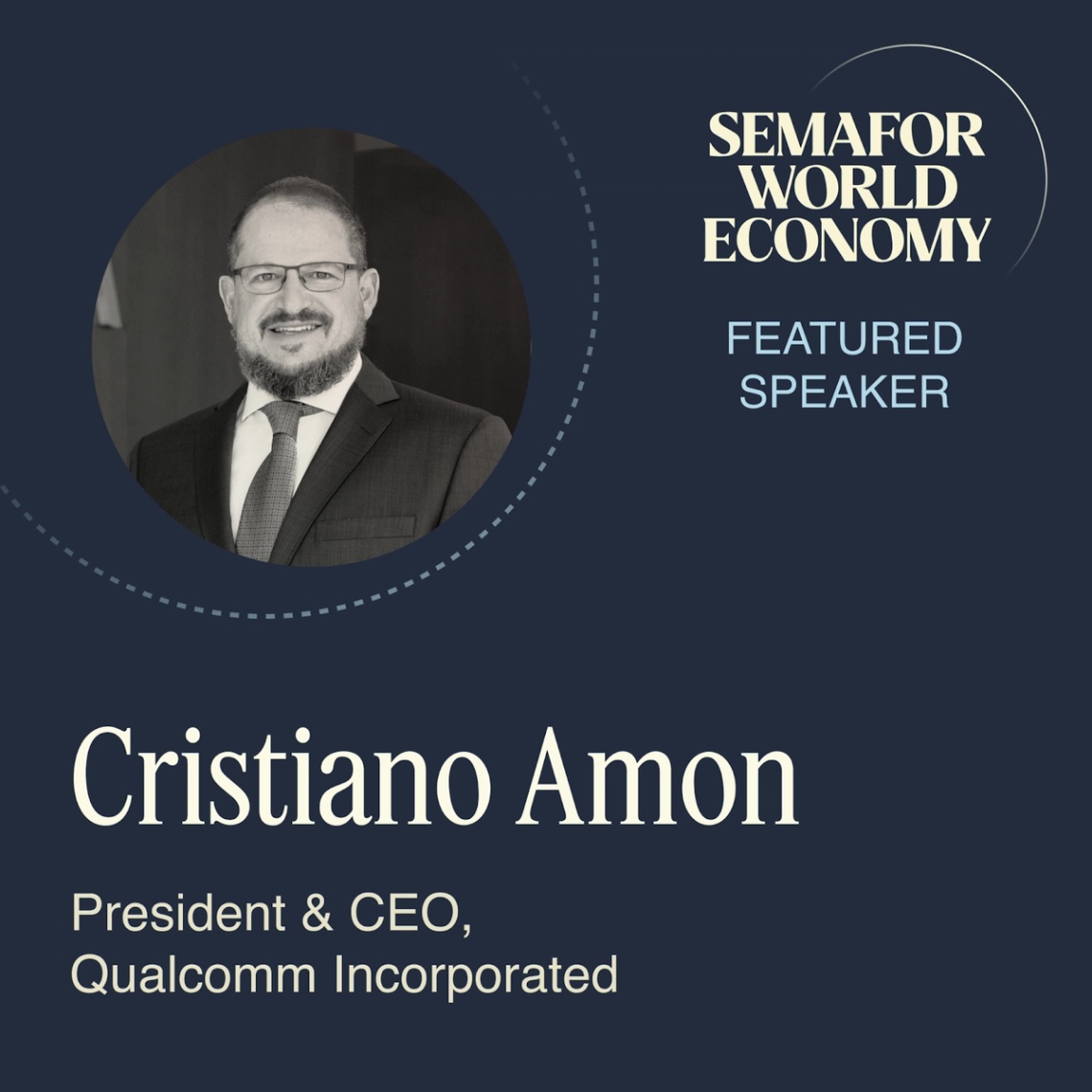 This April, President & CEO of Qualcomm Incorporated, Cristiano Amon, will join global leaders at Semafor World Economy — the premier convening for the world’s top executives — to sit down with Semafor editors for conversations on the forces shaping global markets, emerging technologies, and geopolitics. See the first lineup of speakers here. |
|
 Mike Blake/File Photo/Reuters Mike Blake/File Photo/ReutersGoogle and the grid tech company CTC Global launched a new AI-driven product designed to squeeze more juice from electricity grids. The technology uses fiber-optic sensors to capture data about real-time activity and strain on power lines, which it will process using Google software, including Google Earth Engine and the data warehousing service BigQuery. It will then feed insights into Tapestry, a grid modeling project by Google parent Alphabet’s moonshot lab X, Semafor’s Tim McDonnell reports. This will allow utilities to push more power through the lines, up to 120% of their previous capacity, at a lower cost than building new power generation stations, CTC Chief Executive J.D. Sitton told Semafor. The project is in a pilot stage with plans to add more utility users in the year ahead. Efforts like this are becoming more common as tech and utility companies realize they won’t be able to build new infrastructure fast enough to meet the rapidly increasing demand. That demand is also putting financial pressure on communities. Energy providers have generally downplayed the effects of data centers on individuals’ electricity bills, but utility company Exelon has been more explicit. The supply shortfall has left customers facing record-high prices, the CEO told Tim, and the company has rolled out a series of steps — including reduced bills for low-income customers — to help address the disparity. Read on for Tim’s thoughts on the proposals. → |
|
|
China puts tech freebies to the test |
 Maxim Shemetov/Reuters Maxim Shemetov/ReutersThe year of the freebies. Chinese tech companies continued their Willy Wonka-style push to attract chatbot users this week during Lunar New Year celebrations by giving away tech, shopping vouchers, and even cash. The companies already offer free chatbots but are trying to boost their bottom lines by increasing engagement in a way that’s culturally resonant. It’s a much different strategy than the tiered subscription-based models American tech companies often offer. (A similar giveaway war has played out across industries in China, from food delivery to fast fashion, which has contributed to recent deflationary pressures.) Still, everything free comes at a cost. Alibaba, Baidu, and Tencent will altogether spend 4.5 billion yuan ($649 million) on cash incentives during the holidays, Bloomberg reported. And ByteDance offered its chatbot users tech winnings including humanoid robots, electric vehicles, and drones. Right now, the competition is largely happening among Chinese companies within their borders, while the US ones fight each other through capability advancements and advertising jabs. The Lunar New Year giveaways have primarily happened inside China, but those firms are also looking for global reach. If the Chinese tech firms extend similar incentives to individuals in the US or in other markets where American frontier models are competing for market share, they could pose a new and serious threat to the US’ global tech dominance. Chinese models are formidable competitors to American ones, and people like free things, which US companies aren’t accustomed to handing out. — Rachyl Jones |
|
|


