Thanks for reading The Briefing, our nightly column where we break down the day’s news. If you like what you see, I encourage you to subscribe to our reporting here.
Greetings!
The “rough vibes” at OpenAI have gotten less choppy, allowing SoftBank boss Masayoshi Son to shed some personal financial risk in the company’s big OpenAI investment.
A little-noticed disclosure in SoftBank’s earnings report released Thursday said that Son no longer was on the hook for the roughly $1 billion personal guarantee he had pledged so a SoftBank-managed investment fund could invest tens of billions in OpenAI. But he retains a longstanding arrangement that enriches him personally if the investment fund does really well—which the OpenAI investment makes much more likely.
Son’s arrangement gets lost sometimes amid the questionable corporate governance practices that have become common across the AI race—but it’s a doozy. It essentially gives him the opportunity to make billions of dollars personally, disproportionate to other SoftBank shareholders, if OpenAI goes public and trades up into the trillions of dollars in market cap.
Here’s how it works: SoftBank has invested an enormous sum, $34.6 billion, in OpenAI, which translates into an 11% stake in the creator of ChatGPT. But the investment isn’t parked directly on SoftBank’s balance sheet. Instead, it sits entirely in the 2019 investment fund known as Vision Fund 2. The fund borrowed $8.5 billion from its parent, SoftBank, to make some of the investment, with Son putting up a personal guarantee as well to support the loan.
He had good reason to make the guarantee. A previously disclosed arrangement gave Son the right to earn 17.25% of the profits in Vision Fund 2, once its realized and unrealized value exceeds the cost of investment by 30%.
Until recently, Son’s hopes of cashing in weren’t looking good. You might remember the fund made hundreds of bad bets on startups. As of a year ago, before its OpenAI investing streak, Vision Fund 2 had lost $23 billion, or 40% of the money it had invested. Much of the SoftBank investing team in Silicon Valley and beyond, meanwhile, had been dismantled.
It’s a rosier story now—and more concentrated. Thanks largely to Son’s bet on OpenAI, the fund is nearly in the black, down only about 3%, after a $19.8 billion gain for its OpenAI stake, SoftBank said this week. It will be able to book an even larger gain if OpenAI raises additional tens of billions at a $750 billion valuation.
All of this has been great for SoftBank’s stock price, which has doubled over the past year and which served as a publicly traded proxy for OpenAI sentiment. But the man who could get an outsize benefit is Son himself, thanks to his right to a share of Vision Fund 2 profits. To be sure, the fund is still a ways off from generating the return he needs to earn his payout.
In the meantime, Son no longer appears to risk much of the downside, even if OpenAI’s “rough vibes” return. SoftBank said Wednesday its loan to Vision Fund 2 had been repaid and converted to preferred equity. SoftBank itself gets profits first if the Vision Fund 2 is a modest success, but it still holds a lot of risky investments, of course. And it is relying heavily on debt to fund its AI funding commitments.
AI may have figured out software engineering, but Masa remains the master of financial engineering.
Pinterest’s Pullback
This is a no-excuses market. Pinterest stock dropped 18% in after-hours trading on Thursday after the online scrapbooking firm reported a fourth-quarter revenue growth slowdown of several percentage points. Pinterest’s 14% revenue increase was within the range of projected outcomes the company had announced in early November, but at the very bottom of the range.
Pinterest blamed its slowdown on a new furniture tariff, which caused big retailers that advertise on Pinterest to pull back on their spending. Pinterest executives had warned of the possibility of such a slowdown in November, when the company reported its third quarter.
On Thursday, CEO Bill Ready seemed to understand the message he needed to give—not that it softened the blow. “We are not satisfied with our Q4 revenue performance,” he told analysts on a conference call, adding: “We are moving with urgency to return over time to the mid to high teens growth or better than we have been consistently delivering.” At its after-hours trading level of just above $15, Pinterest stock has now fallen to its lowest point since April 2020, when the pandemic was battering the market.—Martin Peers
In Other News
• U.S. Assistant Attorney General Gail Slater, who led the Trump administration’s antitrust enforcement, has resigned. Before President Donald Trump hired her for the role in late 2024, Slater was widely known as a tech hawk who had criticized the outsize power of companies like Google and Amazon.
• Anthropic said Thursday it had raised $30 billion in funding led by Singapore wealth fund GIC and Coatue Management, giving it a new valuation of $380 billion valuation, including the funding.
• Airbnb’s revenue growth accelerated to 12% in the fourth quarter, while free cash flow rose 13.7% to $521 million. Shares of the accommodation-rental platform rose 5.7% in after-hours trading.
• Instacart stock rose 15% after it reported 12% higher fourth quarter revenue of $992 million. The company’s gross transaction volume, or the total value of orders on its platform based on prices shown on Instacart’s app, was up 14% in the December quarter, which executives said was its fastest growth rate in three years.
Today on The Information’s TITV
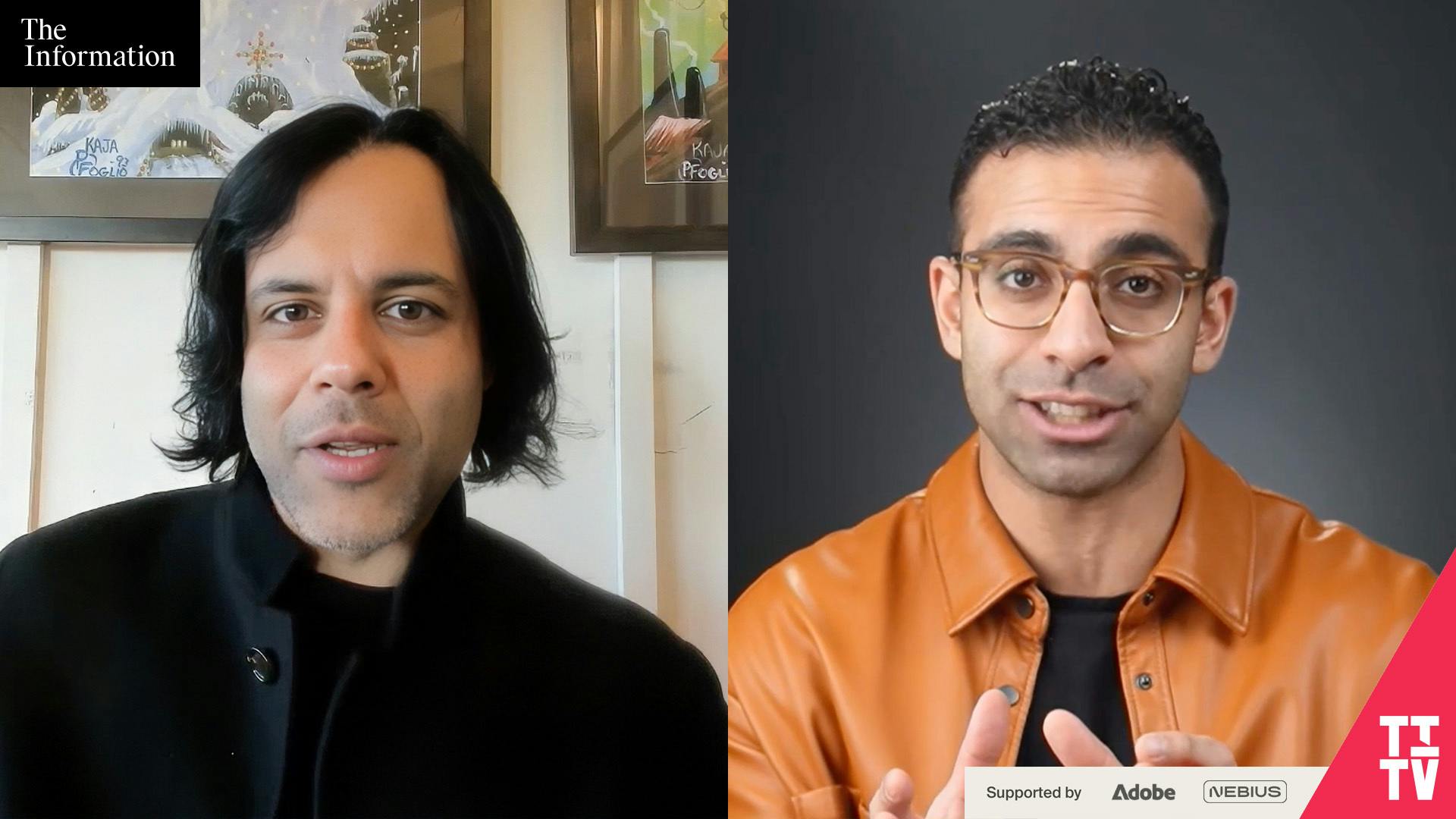
Check out our latest episode of TITV in which we speak with Robinhood’s co-founder about his new orbital data center startup focused on outer space.
Recommended Newsletter
Start your day with Applied AI, the newsletter from The Information that uncovers how leading businesses are leveraging AI to automate tasks across the board. Subscribe now for free to get it delivered straight to your inbox twice a week.
Play with the pros. Join The Information for two intimate days of tennis and conversation, featuring on-court time with Madison Keys and Darren Cahill and discussions on tech leadership and innovation. Request an invite today.
Join The Information at the New York Stock Exchange on Monday, April 27, to hear from top executives and investors on how the rapid buildout of AI is reshaping tech, finance, and capital markets