Thanks for reading The Briefing, our nightly column where we break down the day’s news. If you like what you see, I encourage you to subscribe to our reporting here.
Greetings!
AI’s insatiable need for cash is proving to be a dream for dealmakers. Our scoop from Wednesday night that OpenAI was in talks to raise as much as $60 billion from Nvidia, Microsoft and Amazon was followed by a Wall Street Journal report today that Amazon alone might put in $50 billion. Meanwhile, Reuters reported on Thursday that Elon Musk was contemplating merging xAI and SpaceX ahead of an expected SpaceX IPO. Such a combination could make it easier for him to meet xAI’s massive cash needs—and it could make the SpaceX IPO appeal to a broader range of investors.
There’s no guarantee any of these deals will happen, although there’s a logic to the SpaceX-xAI combination that’s hard to ignore (see our prediction for 2026 that xAI would merge with one of Musk’s other companies). As for the OpenAI fundraising, given the proliferation of reports over the past couple of weeks about who might put in money (SoftBank is supposedly in for $30 billion), you might think someone is trying to fuel the equivalent of a bidding war between potential investors. But let’s assume those reports are accurate. There has to be a lot more going on here than big companies putting money in as equity investors. After all, these are huge sums for anyone.
Amazon, for instance, only (only!) had $94 billion in cash and securities as of Sept. 30. That amount has surely grown a bit since then, as the fourth quarter is its strongest and it raised $15 billion in bonds in November. Even so, $50 billion would be a big chunk of change for the company. Amazon will surely want something in exchange. OpenAI has already committed to spending $38 billion on renting servers from Amazon’s cloud unit over the next few years. You can imagine Amazon also negotiating a deal to sell OpenAI its Trainium AI chips and striking a partnership with OpenAI’s ChatGPT on shopping. (We speculated along those lines in mid-December, when we broke the news that Amazon was in talks to invest $10 billion or more in OpenAI.)
The interests of other big investors are even more obvious. Microsoft on Wednesday night reported that 45% of business it has booked for the next few years but has yet to recognize in revenue comes from OpenAI, which tells you Microsoft has a big incentive for OpenAI to have enough money to meet its commitments. Nvidia has a similar motivation: It already has a tentative deal to invest up to $100 billion in OpenAI over time as the AI firm adds more computing capacity, including Nvidia chips. Nvidia’s investment in the funding round could lead to the finalization of that agreement. As for SoftBank, well…Masayoshi Son likes to be close to what’s hot.
Apple’s Big Quarter
Investors’ love affair with Apple is well and truly over. The iPhone maker on Thursday reported a 16% increase in revenue and profits for the December quarter, easily its strongest quarter in many years. And what did Apple shares do? They hardly moved, rising less than 1% in after-hours trading. (For more, see here.)
The reason isn’t hard to figure out. Soaring prices for memory chips in recent weeks—a byproduct of the AI boom, which has created intense demand for memory chips to fuel data centers—is rippling throughout tech. Given how important memory chips are to phones, the question is whether smartphone makers’ margins will shrink as they pay more for memory. Analysts bombarded Apple CEO Tim Cook on a conference call on Thursday night with questions about how that might affect Apple.
Cook acknowledged that rising memory prices could weigh on its March-quarter margins, although any impact seems likely to be minor as Apple’s projection for gross margin in the March quarter was virtually unchanged from the December quarter.
Cook implied there might be more of an impact in the future. “We do continue to see market pricing for memory increasing significantly” beyond the March quarter, he said. “As always, we’ll look at a range of options to deal with that.”
That sounds ominous. There has been chatter that rising memory costs might force phone makers to jack up prices. On that point, Cook declined to comment. Stay tuned!
In Other News
• The chair of the U.S. House Committee on China said Nvidia’s “extensive technical support” of Chinese AI startup DeepSeek helped it develop “frontier” AI models despite export controls that limited its access to Nvidia’s most advanced hardware, according to a letter seen by The Information.
• Apple has acquired Q.ai, an AI startup specializing in “silent” communication technology, which allows people to interact with voice assistants in noisy environments or in public spaces where speaking aloud is intrusive.
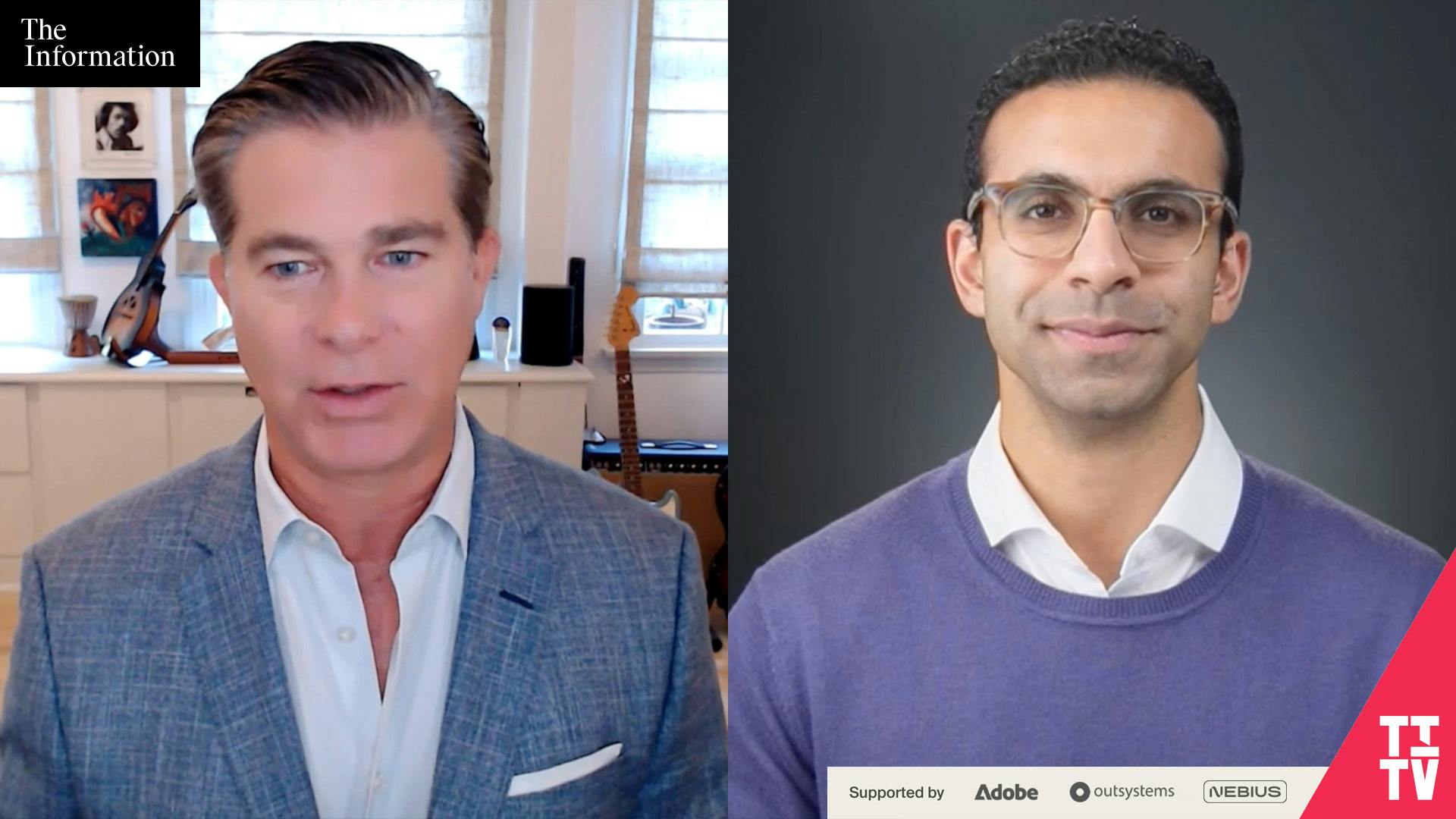
Today in The Information’s TITV
Check out our latest episode of TITV in which we unpack Meta, Microsoft, Tesla and ServiceNow's quarterly results.
Recommended Newsletter
Start your day with Applied AI, the newsletter from The Information that uncovers how leading businesses are leveraging AI to automate tasks across the board. Subscribe now for free to get it delivered straight to your inbox twice a week.
Join The Information for an intimate, two-day experience at Indian Wells, where tech leaders, investors, and innovators come together around a shared love of tennis. Request an invite today.