Welcome back to Buffering, and congrats to the Oscar campaigning geniuses at Apple TV for snagging a best picture nomination for F1. The streamer treated the Brad Pitt vehicle like a theatrical blockbuster vs. just another piece of content, and the strategy worked: A big hit at the box office, the movie generated more buzz and viewership when it landed on Apple TV last month, and is now getting an Oscar glow-up. Even if it won’t make Apple tons of money, it definitely helped the streamer’s image with both consumers and filmmakers. It almost surely won’t pull a Coda and take home the big prize, but it’s a win nonetheless. This week’s newsletter has some more movie news ahead, including Netflix’s latest effort to convince theater owners it’s serious about getting into the exhibition business via Warner Bros. and a dispatch from my colleague Chris Lee on the future (and recent past) of Star Wars at Disney. We’ve also got reports on YouTube’s state of the streamer letter, Substack trying to make Substack TV a thing, and a look at why Netflix is trying to launch its version of America's Got Talent. As always, thanks for reading.
|
— Joe Adalian, West Coast editor
|
|
|
➼ Sinners Makes Oscars History |
Ryan Coogler probably feels like the king of the world. When this morning’s Academy Award nominations concluded, Sinners had racked up 16 noms, beating the record of 14 held by Titanic, All About Eve, and La La Land. It leads this year’s Oscar nominations, with One Battle After Another trailing with 13. (Mike De Luca and Pam Abdy at Warner Bros. Discovery are having the time of their lives today.) Even without the introduction of the Achievement in Casting category, Sinners still would’ve broken the record. Costume designer Ruth E. Carter also made history as the most-nominated Black woman in any category. Here are some more snubs and surprises. —Savannah Salazar
|
|
|
It would not be an overstatement to call Kathleen Kennedy stepping down as president of Lucasfilm Hollywood’s longest-gestating, slowest moving, least surprising executive shuffle. Over her 14-year run as George Lucas’s handpicked torch bearer, Kennedy thrilled and pissed off the Galaxy Far, Far Away faithful with a confoundingly mixed track record. The eight-time Oscar-nominated producer-turned-studio chieftain steered the most recent trilogy of Star Wars movies (each of which lost more money than the one immediately preceding it), the botched Solo spinoff (where Ron Howard had to come in and reshoot a movie Phil Lord and Chris Miller had been directing) and a couple other spinoffs to a cumulative $6 billion. More infamously, she hired and fired a murderers row of directors to helm a roundelay of now-aborted Star Wars movies and trilogies (the Game of Thrones dudes, Taika Waititi, Patty Jenkins, Colin Trevorrow, Josh Trank, et al). She brought the franchise’s movie business to a standstill — this May’s Mandalorian and Grogu will arrive as the first franchise installment since 2019 — and was singularly blamed for every Lucasfilm commercial and creative misstep.
And yet. Without Kennedy’s go-ahead for Disney+’s Mandalorian series, it’s unlikely the platform would have gotten off to its strong start in 2019, pulling in way more subscribers than expected upon launch. And the two D+ seasons of Andor (which Kennedy championed, consistently defending showrunner Tony Gilroy’s unique vision) now stand as the streaming service’s most premium sci-fi product. In her replacements Dave Filoni and Lynwen Brennan, the Disney studio division can spread Kennedy’s vast brand-management responsibilities between (respectively) a Kevin Feige–like fanboy with deep institutional knowledge of Star Wars arcana and a day-to-day operations apparatchik. —Chris Lee
|
|
|
➼ Substack Is Coming for Your Living Room |
Good news for anyone who can't get enough lukewarm center-right political takes: Someone has built a TV app for Chris Cillizza. OK, technically Substack is launching a TV platform for its wider service, not just for the author of the “So What” newsletter. But Substack — which, depending on your point of view, is either a glorious collection of independent journalists and compelling voices or, as a 2024 investigation by The Atlantic described it, “a home and propagator of white supremacy and anti-Semitism”— chose to introduce its new venture with this banger of a quote from Cillizza: “Video doesn’t have to live in any one place. It needs to be wherever someone chooses to consume it. The Substack TV app does just that for me and my work.” Say what you will about the blindingly bland nature of Cillizza’s commentary, but in this case, he does sort of nail the raison d’être of Substack TV: Even if all of the content on it is already in the main Substack app, and, in many cases, including Cillizza’s work, also posted to YouTube, it probably doesn’t hurt to also put this video on a streaming app that can be easily accessed in the same place folks stream Netflix or HBO Max. But this really is a very niche play: At launch, Substack TV will only be accessible via Google TV and Apple TV (the latter being one of the tiniest TV platforms out there), which means the tens of millions of consumers who use Roku, Amazon Fire, Samsung TV and other devices will just have to wait a little longer for their Cillizza TV. –J.A.
|
|
|
Subscribe now to get unlimited access to everything New York, including subscriber-only newsletters, exclusive perks, the New York app, and more. |
|
|
Photo: WireImage, Emma McIntyre |
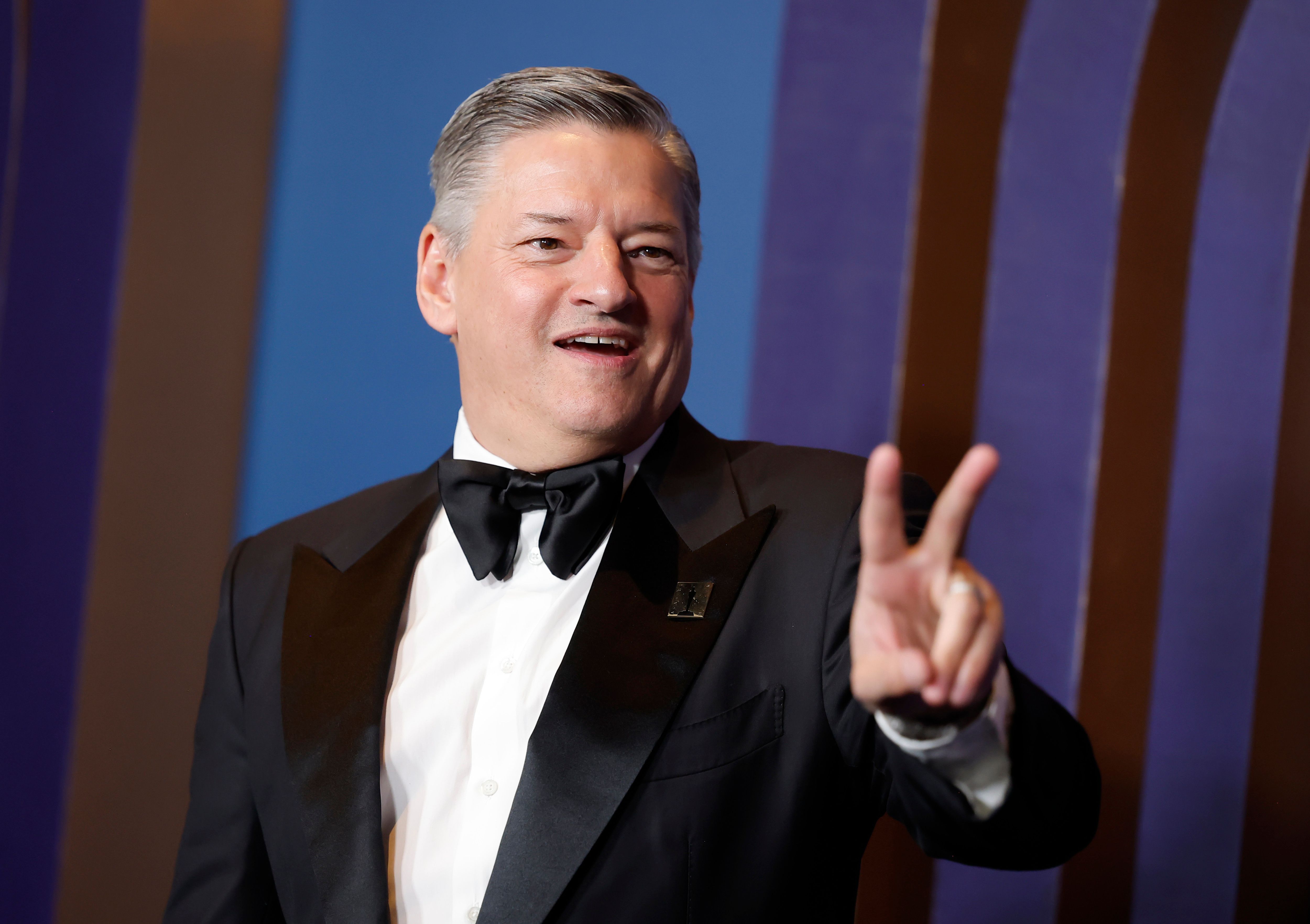
Netflix reported fourth-quarter earnings Tuesday, and while there was good news on the subscriber front — the streamer added nearly 25 million subscribers in 2025 — the event was mostly another opportunity for execs to tout the virtues of their (now all-cash) Warner Bros. Discovery deal. In particular, they hammered home the message that, under Netflix control, Warner Bros. Pictures would continue to make movies for theaters — even though Ted Sarandos spent much of the last decade loudly declaring otherwise. “We were not in the theatrical business when I made those observations; when this deal closes, we will be,” he told investors. “I've said it many times: This is a business and not a religion.”
According to him, when Netflix had previously looked into the idea of getting into theatrical distribution, it had to consider all the costs — and risks — of starting from scratch. “It just didn’t make the cut,” he said. But with WB under Netflix’s red umbrella, “We will have the benefit of having a scaled, world-class theatrical-distribution business with more than $4 billion of global box office.” Sarandos also reiterated a promise he made late last week when he told the New York Times he would keep WB movies off of Netflix for at least 45 days after they open in theaters, meeting a key demand of major theater chains.
No doubt those chains are skeptical that Sarandos means what he says, or are worried that WB would dramatically cut back on the number of movies it makes overall if Netflix takes over. But even if Netflix might not keep the status quo at WB Pictures, it also wouldn’t make much sense for the company to spend so much money for Warners and then immediately abandon the studio’s theatrical business. WB movies make money, both in theaters and on streaming. Should Netflix win WB– and Paramount today reaffirmed it’s not giving up on its hostile takeover bid– why would it give up a readily available revenue source, particularly when those Warners movies will end up streaming on a Netflix-owned platform (either HBO or Netflix proper)?
|
|
|
YouTube vs. Netflix: The Battle for Creators
|
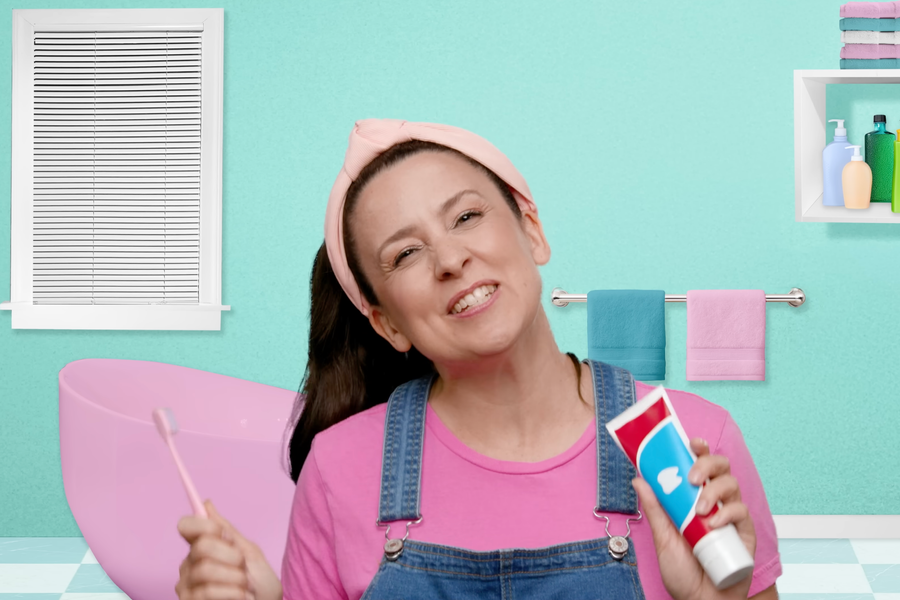
Ms. Rachel. Photo: Netflix |
At this stage, it feels pointed that YouTube chose the day after Netflix’s earnings call to release its now-annual state of the platform letter, penned by CEO Neal Mohan. But such are the times. In the modern streaming wars, Netflix and YouTube are no longer adjacent businesses but direct rivals, much to the benefit of the former’s antitrust posture. Last year, Mohan’s headline claim was that YouTube is the new television — provocative then, more accepted now — and in this year’s edition, he doubles down while naming a sharper front in the competition: creators.
The letter is, as these things tend to be, a mix of strategic signaling and corporate chest-thumping. Mohan wants to remind you that YouTube has been number one in U.S. streaming watch time for nearly three years, per Nielsen; that Shorts now averages 200 billion daily views; and that YouTube has paid creators over $100 billion in the past four years alone. He name-checks the titanically popular kids creator Ms. Rachel’s two Children’s & Family Emmy nominations as proof that “creators are defining this next era of entertainment,” adding, notably, "It's a powerful start, but we need to see more recognition like this." The implication being that the industry still hasn't fully absorbed that YouTube is television now, and that they should.
But woven throughout is an argument that feels aimed squarely at Netflix’s recent creator push. Netflix, of course, has spent the last year operationalizing its entry into the creator economy; Ms. Rachel’s few episodes on the platform have made her show one of Netflix's top ten most-watched television-shaped programs in the back half of last year. (Rachel Accurso’s Gaza advocacy did little to dull her popularity.) The company has also added video podcasts from The Ringer, iHeartMedia, and Barstool, with results still to come, and announced original “podcasts” with Pete Davidson and Michael Irvin despite the fact there will be no audio versions available beyond the platform. (They seem like talk shows with podcast aesthetics and uncertain labor classifications.) The strategy is legible: Netflix is treating YouTube as a feeder team.
Mohan’s letter reads, in part, as a preemptive rebuttal. YouTube isn’t merely a launchpad, he argues, but the destination. "For every idea a creator dreams up, we provide the business model to match," he writes, touting expanded shopping integrations, brand partnership tools, and fan-funding features. The platform paid out that $100 billion without requiring creators to hand over their IP or wait for a green light. The pitch to creators: why take a Netflix deal when you can own everything yourself?
And yet, you can read the letter's closing note as conceding the tension. "I'm often asked to predict who the most important creator on YouTube will be in five or ten years," Mohan writes. "My answer is always the same: it's someone you've never heard of and that person is starting their channel today.” It's meant to sound inspirational: your old friend YouTube as the eternal engine of discovery. But it also underlines the dynamic YouTube can't fully escape. The platform mints new talent; Netflix writes checks to the stars that emerge. YouTube positions itself as the future of entertainment. Netflix is happy to let them prove it, then make an offer.
|
|
|
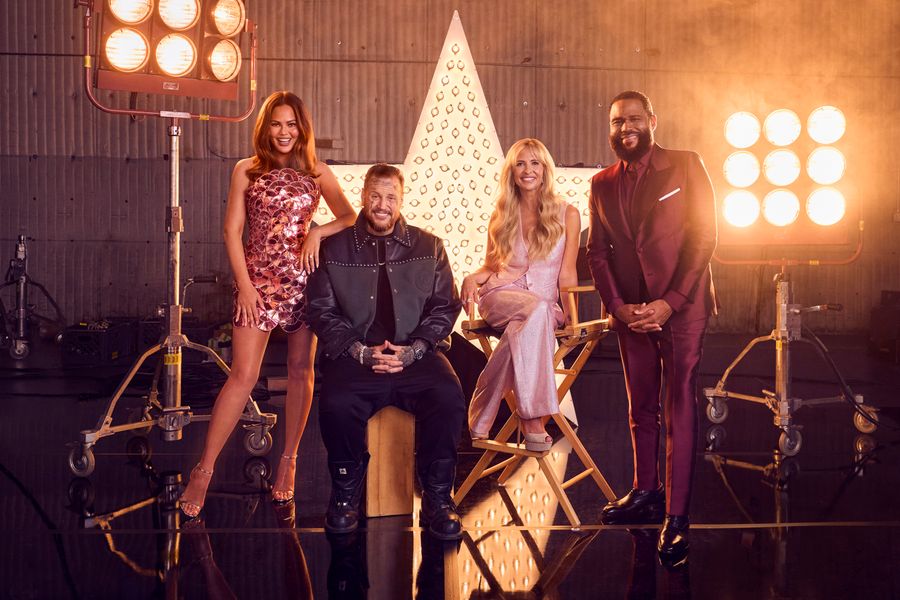
Star Search. Photo: Netflix |
Just a few weeks after the successful launch of Queer Eye in February 2018, a group of Netflix programmers gathered inside a small auditorium at the company’s Hollywood headquarters to map out a strategy for taking over the world of reality TV. The meeting, which I attended as part of my reporting for a bigger story about the fast-growing streamer, was filled with enthusiastic talk about dozens of projects across almost every imaginable genre of unscripted. But while nearly everything discussed came to fruition within a year or two, one goal remained elusive: creating the Netflix version of a live talent competition like American Idol and The Voice. Eight years later, that’s about to change.
This week, Netflix premiered Star Search, finally giving the streamer its own live weekly competition series in which home audiences help determine winners. The service has tried its hand at talent shows before — most recently with last year’s Building the Band — but those series were taped months in advance and didn’t offer a chance for viewer buy-in. By contrast, Star Search will play out in real time, with new episodes airing live around the world Tuesday and Wednesday nights at 9 p.m. ET, and audiences will be able to vote on contestants using either their remote controls or, if they’re watching on their phones, the Netflix mobile app.
Although Star Search fits nicely with Netflix’s recent push into live programming such as boxing matches, holiday football games, and weekly WWE matches, Jeff Gaspin, the streamer’s vice-president of unscripted series for the U.S. and Canada, says he’s not doing the show because of some platform-wide mandate to add live content. Rather, he says Star Search, and a larger focus on broadcast-style reality at Netflix, is part of a longer game the streamer has been playing since the days of House of Cards. “It’s a constant iteration, a constant evolution of the content — but you can’t do it all at once. It’s a 10-, 15-, 20-, 30-year process,” Gaspin explains. And having already successfully conquered so many cable-style reality formats (docuseries, food shows, dating experiments), the streamer is now aiming its programming artillery — and algorithm — at one of the few remaining formats still dominated by broadcast networks such as ABC and NBC. “The reason I came here two years ago is to not only offer the cable content, but to start offering the content that you would have gotten if you were still watching broadcast,” Gaspin says. “We believe there’s an appetite for it, and we want to serve that appetite. Simple as that.”
|
|
|
|