| | | | |  | By Megan R. Wilson | Did someone forward this newsletter to you? Sign up here to get it in your inbox. In today’s issue: What health insurers have to say to Congress about high prices. … How much the health insurance industry spent lobbying the Trump administration and Capitol Hill. … Bill Gates discusses a new partnership between the Gates Foundation and OpenAI. … And more. Hello and welcome to the Health Brief newsletter. We’re already at midweek! There’s a lot to unpack, so let’s just get into it. Send your best story tips and health policy intel to megan.wilson@washpost.com. If you prefer to message me securely, I’m also on Signal at megan.434. This newsletter is published by WP Intelligence, The Washington Post’s subscription service for professionals that provides business, policy and thought leaders with actionable insights. WP Intelligence operates independently from the Washington Post newsroom. Learn more about WP Intelligence. | 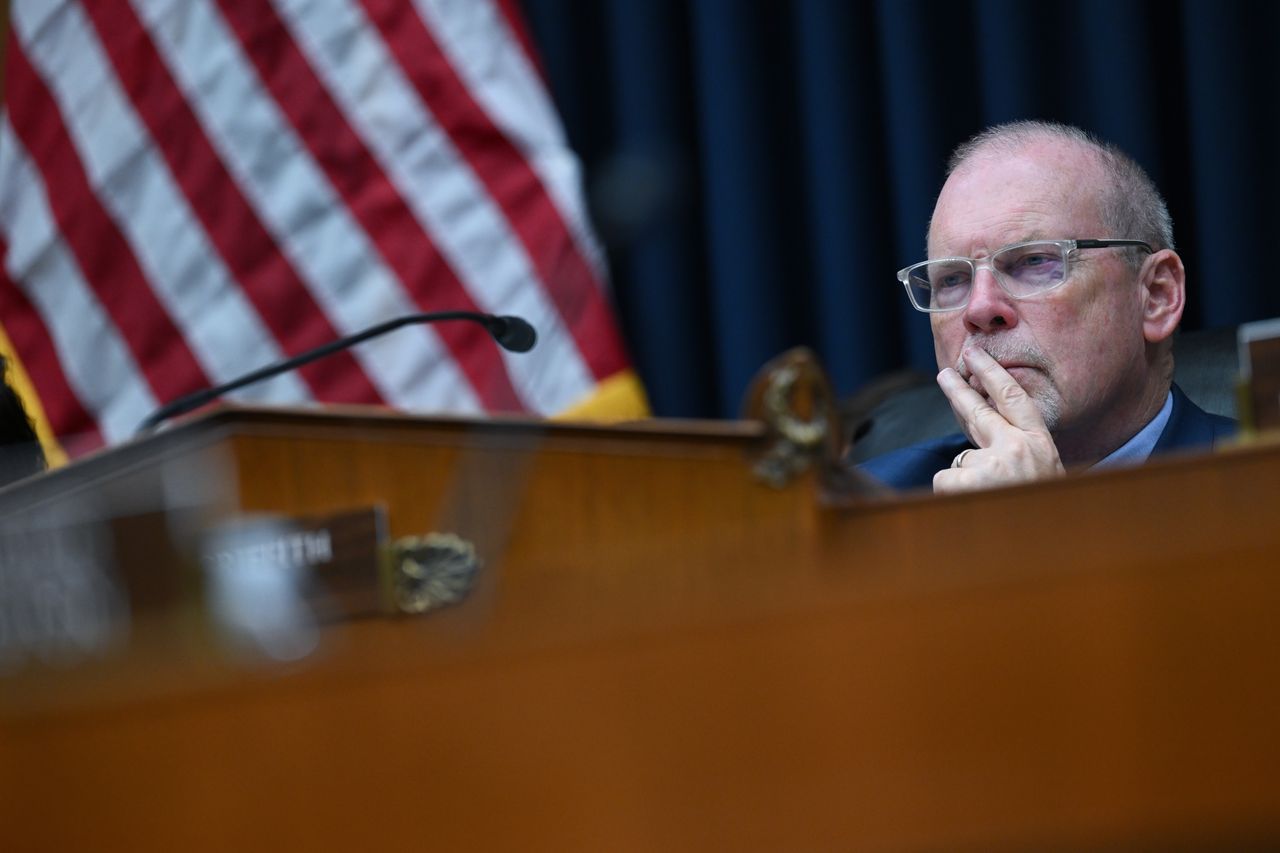 | | Rep. Morgan Griffith (R-Virginia), who leads the House Energy and Commerce health subcommittee, will oversee the first of two hearings featuring health insurance execs on Thursday. (Matt McClain/The Washington Post) | | | |  | The Lead Brief | Five health insurance executives are armed with an answer as they prepare for two House panels to grill them about rising costs: It’s other industry players’ fault. The executives all plan to emphasize the role that insurers play in keeping health costs down and point to hospitals and drugmakers as the main culprits for the ballooning cost of care. They’re expected to tell Congress that they understand that patients are frustrated by high prices. And they say they want to help, offering solutions to the frustration with prior authorization, the practice that critics argue is overused to deny or delay care. → This is according to prepared remarks released by the House Energy and Commerce Committee, the first of two marathon hearings scheduled for Thursday. Newly released lobbying disclosures show that the companies have already been heavily engaged. More on that below. But first, the schedule: The health execs — from Ascendiun, Cigna, CVS Health, Elevance Health and UnitedHealth Group — face the Energy and Commerce’s health subcommittee at 9:45 a.m. Thursday. Then they’ll appear before the House Ways and Means Committee at 2 p.m. Both panels have jurisdiction over health care. → As Peter Whoriskey in The Washington Post newsroom writes in his latest piece, health insurance companies make for a perfect villain. The industry’s largest players have become sprawling organizations, some of which have their own network of doctors, affiliated pharmacies or operate the companies that decide which medications plans will even cover. For patients, insurers are the face of a denied procedure or drug. But they’re only one piece of the byzantine puzzle. (Groups representing hospitals and the pharmaceutical industry are already pushing back on the planned testimony, arguing insurers are trying to dodge scrutiny. WHAT INSURERS WANT Although similar themes are trumpeted by many of the companies — taking aim at how the pharmaceutical industry uses the patent system to maintain exclusivity on drugs and fixing the arbitration system for surprise medical bills, for instance — not all of them have the same policy prescriptions. For example, Ascendiun, the parent company of Blue Shield of California, supports many reforms to pharmacy benefit managers (PBM) that the larger industry players have pushed back against. This includes banning a practice called spread pricing, in which a PBM charges a plan more for a drug than it reimburses the pharmacy upon dispensing it. Other policies likely to be floated Thursday: - Reducing paper: Several companies will discuss the need to further digitize health records and many of the processes involved in a patient getting care, with Ascendiun mentioning the need to ditch a stubborn reliance on fax machines. The goal would be to reduce the administrative burden for physicians and insurers and improve coordination.
- Imposing site-neutral payments: Plans will push lawmakers to pursue policies that would reimburse hospital-owned clinics for services at the same rate as a doctor’s office, thereby reducing the cost of care. Hospitals have pushed back on these kinds of policies, arguing that they would threaten their financial stability.
- Targeting drugmakers: Insurers will float several proposals taking aim at the pharmaceutical industry, including eliminating or restricting how drug companies advertise their products directly to patients, arguing that it drives up demand for expensive, brand-name drugs.
- Expanding health savings accounts: HSAs are available for people with high-deductible health plans. However, some of the companies are pushing Congress to lower the deductible threshold for HSA eligibility and broaden the types of services — such as mental health care — that can be covered at no cost before the deductible is reached.
WHAT’S NEXT While there has been some momentum behind policies including PBM reform and narrow versions of site-neutral payment policies, Congress is unlikely to find broad consensus on many of the issues expected to be raised during the hearings. Overall, the hearings will likely focus on a myriad policy ideas and ways to potentially improve health care for Americans. But comprehensive reforms will be difficult to achieve — especially during an election year — as Congress has most recently been tackling issues in a piecemeal way. Still: This is the first in a series of hearings on health care costs and other sectors are likely to be put under the microscope. Advocates are likely on guard in case new legislation does emerge. Just because something doesn’t have momentum now doesn’t mean that will remain the case if the balance of power shifts. | | | | | | Industry Rx | The most recent legislative conversation around affordability has been driven, in part, by the debate over boosted federal subsidies to help more people afford health insurance on the Obamacare exchanges. Conservatives — including Brian Blase, who leads the influential think tank Paragon Health Institute — argue that the subsidies, which expired at the end of December, drive up coverage costs and only enrich insurers. President Donald Trump and some Republicans in Congress argue that the money should instead be directed to patients in health savings accounts. But, in his testimony, UnitedHealth Group CEO Stephen J. Hemsley extends an olive branch. The company wants to “voluntarily eliminate and rebate our profits this year” to the people it covers through Obamacare plans as “Congress continues to work toward more long-term solutions.” A company spokesperson clarified that means giving any profit earned from these plans directly to patients. The details are still being worked out with the Trump administration. UnitedHealth Group expects to have about 1 million people enrolled in Obamacare plans this year, a small portion of its overall business. | | | |  | Chart check | | _tstmp_1769041792-1280-0.png) | | AHIP, the main trade association for the health insurance industry, spent more than $17 million on lobbying last year, according to newly released lobbying disclosures. That’s a 46 percent increase over 2024. In the final three months of 2025 alone, the group spent nearly 60 percent more on advocacy than during the same period the year before — and AHIP President and CEO Mike Tuffin tells me that’s only just beginning. “We welcome the bipartisan focus on making health care more affordable. We have a lot to say about that,” Tuffin said Wednesday when asked about the numbers. “You can expect us to be very active at the federal level in 2026.” Lobbying spending generally increases for many industries during the first year of a new presidential administration or Congress — and 2025 had both. It was a busy year: Republicans enacted a tax-and-domestic-policy law that contained sweeping cuts to Medicaid, regulators examined the Medicare Advantage program, and lawmakers debated whether to extend the enhanced Affordable Care Act subsidies. UnitedHealth Group, the nation’s largest insurer, spent more than $11.7 million on lobbying last year, a 71 percent jump over the amount it spent in 2024. During the fourth quarter, which runs from October through December, it spent more than $2.5 million lobbying. Its lobbying disclosure forms list nearly every salient health policy issue: the use of artificial intelligence, prior authorization, the law meant to curb surprise medical bills, drug pricing and PBM reforms, Medicare Advantage payment reforms, veterans health issues, health care modernization, and Medicaid coverage policies. CVS Health spent nearly $10 million in 2025, lobbying on a multitude of issues such as PBM reforms, a bill to curtail direct-to-consumer drug advertising and measures to change how Medicare Advantage plans are reimbursed. Aetna, which is owned by CVS Health, announced last year it would be leaving the ACA marketplace in 2026, so it was not among the organizations pushing Congress to extend the enhanced subsidies in the last three months. None of the companies provided any additional intel about their figures. | | | | | | Questions With… | — Authored by WP Intelligence lead health analyst Rebecca Adams. Billionaire Bill Gates sat down with The Washington Post CEO and publisher, William Lewis, at the World Economic Forum in Davos. The conversation touched on a new investment in Africa using artificial intelligence, last year’s massive federal funding cuts and how innovation will impact the world in the next five years. Here are some highlights: 1. Gates announced a new $50 million global health partnership leveraging OpenAI’s artificial intelligence to help deliver medical care in Africa. The project, called Horizon 1000, will launch in Rwanda and expand to Kenya, South Africa and Nigeria. The idea is to reduce the amount of paperwork required for medical systems, while simultaneously increasing capacity and quality. Gates said that the AI model would understand native languages and record consumers’ symptoms, help schedule appointments and provide advice to patients such as pregnant women seeking dietary information. “In Africa, there are very few doctors. So you’re mostly meeting with clinicians with limited understanding, and they are very overloaded,” Gates said. “The biggest cost of running the medical systems in Africa is the personnel costs.” The goal: to have the technology in use in 1,000 primary health care clinics by 2028. 2. In 2025, childhood deaths rose for the first time in decades, Gates said, in part because of federal cuts to international aid. Gates said the U.S. government cut aid “abruptly and cruelly [with] no warning.” By the numbers: Last year, 4.8 million children under 5 years old died, up from 4.6 million in 2024. Gates said that much of his own philanthropy will focus on reducing annual childhood deaths by about half over the next 20 years. Gates said he’s talking with the Trump administration and Congress “about trying to get that money back,” adding that some of the cuts happened due to misunderstandings by members of DOGE, the government cost-cutting operation founded by Elon Musk. In one instance, Gates said, there was confusion between the Gaza Strip in the Middle East and Gaza, Mozambique, in Africa. “They canceled medicine that we gave to pregnant women to avoid them infecting their babies with HIV,” Gates said. “And they said publicly, ‘Oh, this was money for condoms for Hamas.’ Well, they didn’t even read the grant, because the grant says Gaza, Mozambique. It's about a thousand miles away.” But: Gates seemed positive about the discussions he’s having with government officials and the spending bills Congress has been moving, which rejected many of Trump’s requested cuts. 3. Lewis called AI “the subject” of the week at Davos, asking Gates for his predictions on the future of technology. Although Gates touched on the downside of AI — including terrorism and political upheaval risks and job market disruptions — he said it also has the potential to be revolutionary in a positive way. “Mankind is very inventive, and AI will accelerate our ability to be inventive,” Gates said. He said the Gates Foundation has worked with Anthropic, Google, OpenAI, Microsoft and “there’s even a few cases where we use some of the Chinese models.” “Over the next 20 years [when] all my money will be spent, I believe we can get childhood deaths down to 2.5 million,” Gates said. | | | | | | Jobs Report | — Tanisha Carino joined drugmaker UCB as head of strategy and U.S. corporate affairs. She’s also been named to the board of the WHO Foundation, an independent organization that supports the World Health Organization. Carino most recently worked at public affairs firm Brunswick Group. — Brian Blaser, president and CEO of QuidelOrtho, has been named chair of AdvaMedDx, a division of the medical device industry group AdvaMed focused on in vitro diagnostic test manufacturers. Blaser succeeds Thierry Bernard, the chief executive officer of QIAGEN, and will serve a two-year term. | | | | |


_tstmp_1756933376-1920-1080.png)