|



 |
PN is supported by paid subscribers. Become one ⬇️
The right of the people to be secure in their persons, houses, papers, and effects, against unreasonable searches and seizures, shall not be violated, and no Warrants shall issue, but upon probable cause, supported by Oath or affirmation, and particularly describing the place to be searched, and the persons or things to be seized. — Fourth Amendment to the US Constitution
This is the bedrock principle of the Bill of Rights, protecting ordinary people, regardless of their citizenship status, when they interact with law enforcement. And the Trump administration has simply ignored it because it interferes with the racist dragnet being unleashed on American cities.
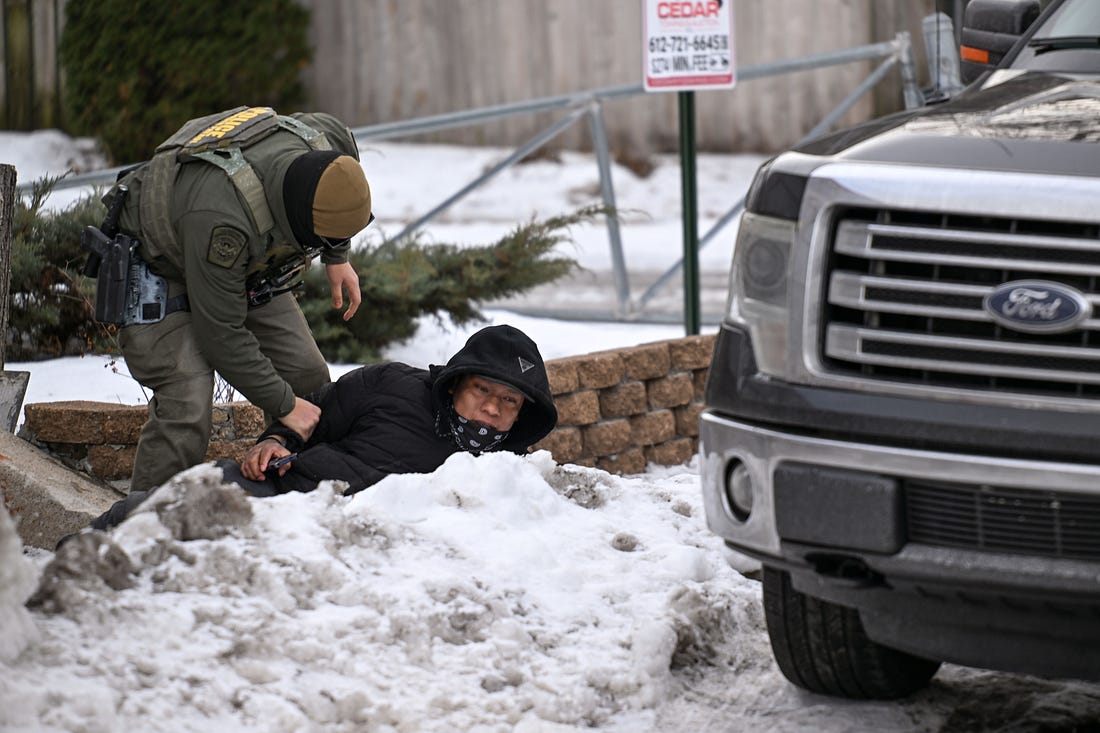
Over and over, DHS goons descend on areas where immigrants congregate, grab every non-white person they encounter, and drag them away with little regard for their citizenship status. Then they send out indignant liars like DHS Assistant Secretary Tricia McLaughlin to spew nonsense about how this is all perfectly legal.
“Our officials use reasonable suspicion,” McLaughlin claimed on Fox News, explaining the standard federal law enforcement officers use to detain people. “That's protected under the US Constitution 4th Amendment."


But none of that is true.
Unreasonable, improbable, illegal
The Department of Homeland Security deliberately confuses reasonable suspicion and probable cause in hopes that no one will notice that ICE and CBP are making illegal arrests as standard operating procedure.
The Fourth Amendment guarantees that the government cannot arrest a person without probable cause to believe he or she committed a crime. It requires a warrant “supported by Oath or affirmation, and particularly describing the place to be searched, and the persons or things to be seized.” Law enforcement officers are, however, allowed to arrest someone without a warrant if they witness a crime taking place or in exigent circumstances where the suspect might flee.
 |
|
In the 1968 case Terry v. Ohio, the Supreme Court granted police the power to “stop and frisk” people on the street based on reasonable suspicion — a lower standard than probable cause. In Terry, a police officer in Cleveland observed three men appearing to case a store with the intent to rob it. He approached the men, patted them down, found guns in their coats, and arrested them for carrying illegally concealed weapons. One defendant, John Terry, challenged the arrest claiming that being patted down violated the Fourth Amendment’s prohibition on unreasonable searches and seizures. In an 8-1 ruling, the Court held that being stopped and frisked by an officer who has reasonable suspicion of a crime is a “minor inconvenience and petty indignity.”
Justice William O. Douglas, the lone dissenter, warned that “to give the police greater power than a magistrate is to take a long step down the totalitarian path.” And he was right. Terry stops, as they came to be known, were weaponized against Black and brown people, who are routinely accosted on the street by racist police.