| |  | | | | |  | By Megan R. Wilson | Did someone forward this newsletter to you? Sign up here to get it in your inbox. In today’s issue: The Hill’s health plan 2.0. … Health groups update lawsuit against RFK Jr. over new vaccine schedule changes. The industry push to pass PBM reform kicks off. … And more. Welcome back to Health Brief. The Senate is out this week, but the House is here. Meanwhile, Congress has come up with a compromise government funding package that includes long-awaited reforms to pharmacy benefit managers and the renewal of a popular voucher program aimed at increasing treatments for rare pediatric diseases. The House plans to vote on it this week. Next week, it flips: The Senate’s back and the House is out. And the clock is ticking: The government runs out of money on Jan. 30. Let’s get into it. Send your best story tips and health policy intel to megan.wilson@washpost.com. If you prefer to message me securely, I’m also on Signal at megan.434. This newsletter is published by WP Intelligence, The Washington Post’s subscription service for professionals that provides business, policy and thought leaders with actionable insights. WP Intelligence operates independently from the Washington Post newsroom. Learn more about WP Intelligence. | 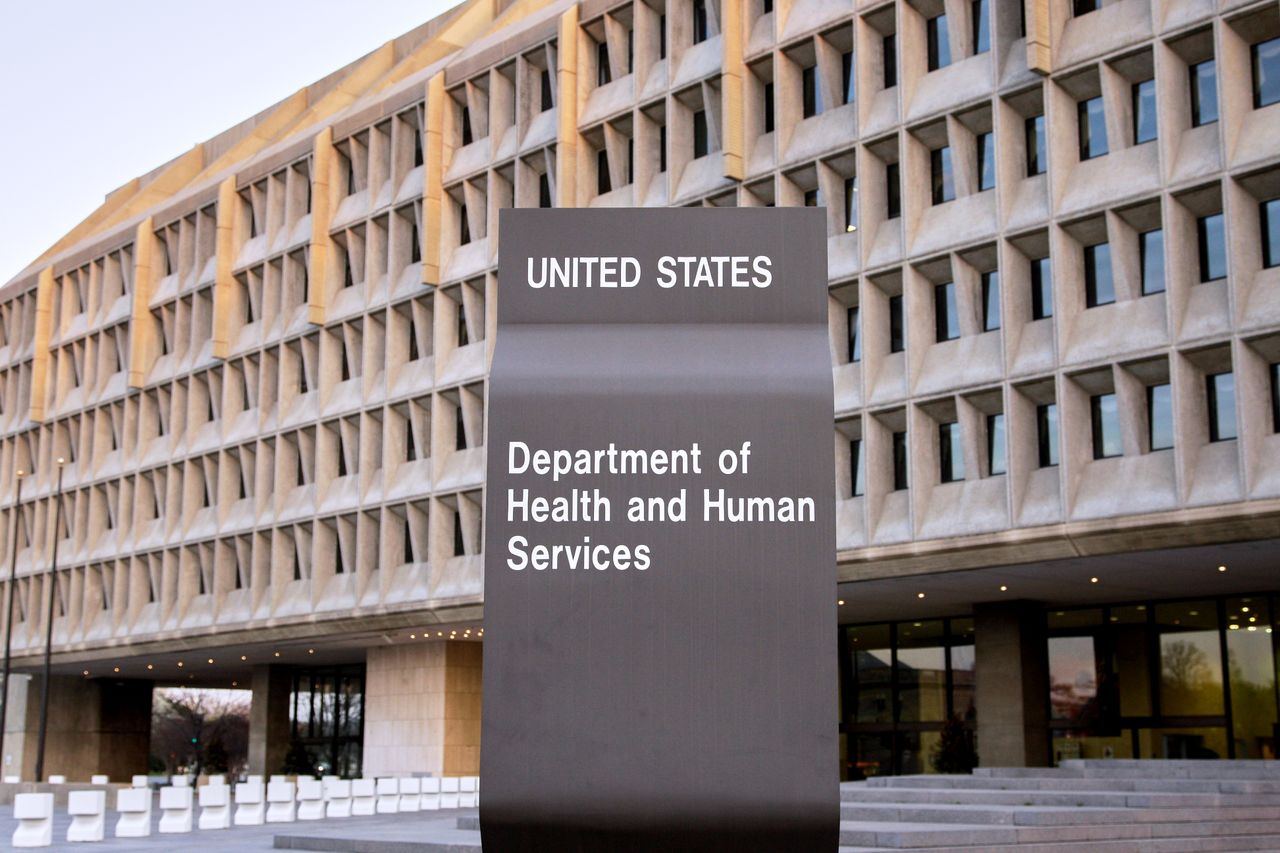 | | Congress largely avoided cutting funding for health agencies. (Alex Brandon/AP) | | | |  | The Lead Brief | The so-called “minibus” joint offering from the House and Senate — which includes funding for multiple agencies, extends several expiring health policies and offers provisions targeting pharmacy benefit managers — provides $116.6 billion in discretionary funding for the Department of Health and Human Services. → The figure matches the amount approved by Senate appropriators last year, rather than the $108 billion the House appropriations panel initially supported. It’s also much higher than the $93.8 billion in President Donald Trump’s budget request. The big picture: Despite the slash-and-burn DOGE cuts agencies experienced at the outset of the Trump administration’s second term, Congress has rejected much of Trump’s requests to further cut health funding and top health agencies are emerging relatively unscathed. Although Republicans tout that the compromise legislation eliminates about $100 million across HHS, Democrats are bragging that they’d beat back deeper rollbacks and inserted protections for certain funding. Even though funding for many programs or agencies is relatively flat, lobbyists are saying that — in the current budgetary and political climate — is considered a victory. FUNDING NOTES - The Centers for Disease Control and Prevention would receive $9.2 billion, more than double what the Trump administration had requested as it sought to slash the agency’s funding. House Republicans had proposed cutting the CDC’s funding by almost 20 percent.
- The National Institutes of Health would get nearly $48.7 billion, which includes $1.5 billion for research funding agency ARPA-H. That’s a slight increase from the amount enacted in fiscal 2025 but a 40 percent bump from the amount allocated in Trump’s budget request.
→ Sen. Patty Murray (Washington), the top Democrat on the Senate Appropriations Committee, detailed increases in research funding for cancer (increased by $128 million), Alzheimer’s disease (by $100 million) and ALS (by $15 million). It also bumps up the funding for the National Institute of Allergy and Infectious Diseases, the office formerly run by Anthony S. Fauci, by $23 million. EXTENDERS The measure also extends several programs, including: - Telehealth and virtual care: A one-year extension of telehealth flexibilities originally enacted during the covid pandemic allows people on Medicare to see their doctors virtually. Advocates and industry groups have been pushing for a permanent extension. The package would also extend a “hospital at home” program for five years — through Sept. 30, 2030 — which authorizes people to receive inpatient care in their homes.
- Community health center program funding: The package extends the Community Health Center Program funding, which was set to lapse. Funding, however, has only been renewed year-to-year, and advocates have been urging lawmakers to provide a longer-term fix.
- No Surprises Act: The package would provide $42 million in funding to continue implementing the law, which is meant to protect patients from surprise medical bills.
POLICY - PBMs: Pharmacy benefit managers, which negotiate discounts with drugmakers and select which medicines an insurance plan will cover, have been in the congressional crosshairs for years. The “minibus” package revives some of the legislative proposals Congress has been considering, including provisions that would require increased transparency and oversight of their business practices and contract terms.
Another part of the legislation would separate (or “delink”) a PBM’s revenue from the price of medicines it selects for Medicare Part D plans to cover. Critics have argued that PBMs have an incentive to choose higher-priced drugs so they can exact larger discounts from pharmaceutical companies and pocket the difference, a claim the industry has denied. Instead, the legislation would allow PBMs to collect a “bona fide” fee for the service they provide. PBMs would also be required to “pass through” any rebates on medications that they receive from drugmakers to the commercial health plans they contract with. - Priority review vouchers: A bill reauthorizing a Food and Drug Administration program that aims to incentivize companies to develop treatments for rare pediatric diseases has been attached to the funding package. The program, which is broadly popular, expired in December 2024.
Under the program, companies that receive the FDA’s approval on products meant to treat rare illnesses in children receive a “voucher” that can be redeemed for the future expedited reviews of another product. Or they can sell the voucher to someone else. Slashing weeks off of the FDA’s approval time can be considered very valuable. Case in point: Jazz Pharmaceuticals recently sold one of these priority review vouchers for $200 million. - Cancer testing coverage: The package would allow Medicare to cover multi-cancer early detection screening tests — something that several top industry players have been pushing Congress to tackle.
- Site-neutral payments: It would also require hospital-owned outpatient clinics located away from the facility to bill for services with their own national provider identification number (NPI), differentiating them from the hospital they’re affiliated with.
This falls under the “site-neutral payment” reform umbrella, which aims to equalize payments for providers regardless of whether a service is provided in a hospital outpatient department or doctor’s office. The hospital industry has pushed back against the reforms, arguing that the clinics still have to comply with costly regulations and cutting reimbursements would batter their balance sheets. WHAT’S NOT IN IT Congress is sticking with what they’d already discussed in previous spending packages and avoided topics that require intense negotiation, such as a revival of the enhanced Affordable Care Act subsidies. Lawmakers also didn’t turn any of Trump’s latest health care policy blueprint into legislative text. It remains to be seen how that will be handled as some of the policies — such as codifying the policies behind the administration’s most-favored-nation drug pricing deals — will struggle to garner broad Republican support, let alone getting Democrats on board. | | | | | | Strategy File | The inclusion of PBM reforms has already kicked off a renewed infusion of advocacy spending from industry groups pushing lawmakers to act. → The National Association of Chain Drug Stores (NACDS) on Tuesday launched a six-figure ad campaign pushing lawmakers to pass the PBM-targeted policies contained in the “minibus,” which the group said is the “best and most immediate opportunity to deliver meaningful reform.” The two ads — “Real Reform” and “Get it Done” — will air this week and next on cable television, digital platforms, and streaming services in D.C. The ads argue that a lack of action harms patients’ access to care and contributes to pharmacy closures. “Congress knows the PBM system is broken, and patients and pharmacies are paying the price for continued inaction,” said Steven C. Anderson, who leads NACDS. The group says that more than 2,200 pharmacies have closed in the last year alone. “Absent action in this spending package, pharmacy closures will continue to accelerate, further eroding access to care — particularly for seniors and rural communities,” the group said. | | | | | | Numbers Game | 25 percent The percentage of traditional Medicare beneficiaries who utilized telehealth to receive care at least once in 2024, according to data from the Centers for Medicare and Medicaid Services. That’s nearly 6.8 million people out of the 27.4 million people who were enrolled in fee-for-service Medicare, not Medicare Advantage plans administered by insurance companies. - Medicare beneficiaries in urban areas are slightly more likely to have utilized telehealth.
- Dual-eligibles — or people who qualify for both Medicare and Medicaid, the health program for low-income Americans — are more likely to use telehealth.
In 2020, nearly half of Medicare beneficiaries used telehealth at least once. That figure has been in decline since the pandemic began, and is now plateauing. → In addition to being eligible for Medicare after turning 65, some people are able to enroll in the government-run health care program due to disabilities or having permanent kidney failure, regardless of age. - People who receive Medicare because of their disabilities are more likely to use telehealth (nearly 30 percent) than Medicare beneficiaries who are enrolled in the program due to age (roughly 10 percent).
| | | | | | Industry Rx | The Pharmaceutical Research and Manufacturers of America (PhRMA) added a 34th member: Stemline Therapeutics, a biopharmaceutical company focused on cancer treatments. The association, which boasts more than $521 million in revenue, represents brand-name drugmakers including Eli Lilly, Novartis and Pfizer. → PhRMA spent $37.9 million on lobbying the federal government last year, according to disclosures. Stemline Therapeutics, and its parent company Menarini Group, don’t have any federal lobbyists. | | | | | | Litigation Report | A group of organizations led by the American Academy of Pediatrics amended their lawsuit against Health Secretary Robert F. Kennedy Jr.’s to address the most recent changes to the childhood vaccine schedule they allege were made “without consideration of the relevant factors or providing any reasoned explanation.” Earlier this month, HHS announced it would be decreasing the number of shots recommended for kids from 17 to 11. Kennedy said the move was being made to align the U.S. with other developed nations, and the administration has called America an “outlier.” However, Denmark — the country Kennedy has modeled the new U.S. recommendations after — is the dissident among other wealthy nations. Canada, Australia and Britain all recommend between 15 to 17 vaccines for children. → Aaron Gregg in The Washington Post has the full report on the lawsuit, which argues that top Trump administration officials, including Kennedy, have not properly considered how the new policy would endanger families and burden the health care system. - The plaintiffs — consisting of seven public health organizations, a physician and two patients — have accused Kennedy of “inappropriately” influencing a key vaccine advisory committee by packing it with unqualified experts who hold anti-vaccine views.
- Earlier this month, a federal court in Massachusetts denied the Trump administration’s request to dismiss the lawsuit.
What it means for providers: The change in the vaccine schedule has prompted concern among some providers and confusion for parents, even though the administration said insurance will still cover the vaccines if parents choose to get them. Meanwhile, some pediatricians are ignoring the new guidelines, The Post’s David Ovalle reported Monday. | | | | | | | | | | |


_tstmp_1756933376-1920-1080.png)