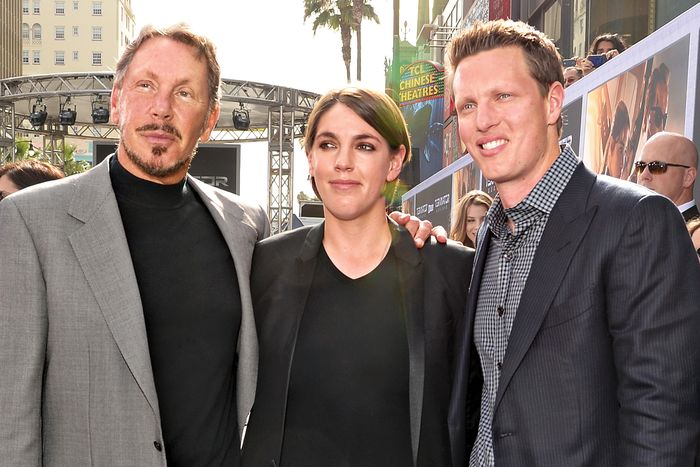
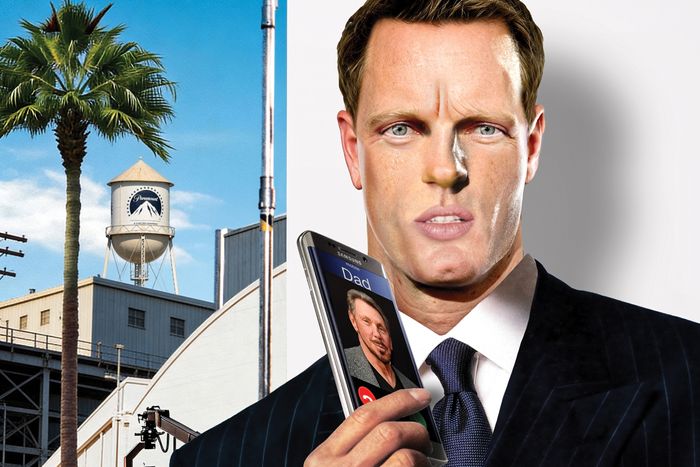
Joe Adalian: So I think your profile is not necessarily sympathetic toward David Ellison, but it’s also definitely not judgmental. You say at one point that he doesn’t fit the nepo baby stereotypes: He’s not some party animal out there living a wild life on dad’s money. But he is also not someone who has had to build himself up from nothing, like so many media moguls have. Does that not shape how he conducts himself and runs his businesses?
Reeves Wiedeman: Look, we all have our own struggles. His dad is a very, very rich, very powerful dad — but not around all that much. The thing I heard over and over again from people who have a neutral to even complimentary view of David Ellison is that not only would he not be pursuing Warner Bros. or have bought Paramount, but he wouldn't have started Skydance, the company that he ran relatively anonymously for 10 years, without his dad's money. There is just no part of his career that would have happened without his dad. The credit that you can give to him is that he has tried to earn his place once he's gotten there.
JA: David is the CEO. But certainly since the Warner Bros. bid became public, there have been more questions about how involved Larry is in the media business. Do you get any sense that Larry is running things more, or at least using his son to quietly advance his own media agenda?
RW: I don't know that I have a definitive answer. If you take the early days of David's career in Hollywood, he wanted to get into movies. His dad said, “Sure, here’s tens of millions of dollars to do that.” David wanted to start Skydance, and he had a business plan and he was serious about it. And from the early days, his dad said, “You know what, this sounds fun. I want to do this with my son.” People I talked to at Skydance said Larry would show up every now and then, but he really was not a meaningful presence. In terms of Larry's interest now, I may be proven a bit naive, but I don't think this is a Larry Ellison, want-to-take-over-the-media-conspiracy, right-wing sort of thing that it has been made into.
As we talk about in the piece, the Ellisons have a mixed political record. For Larry, it's leaned toward Trump in recent years. For David, it's really only leaned towards Trump in the past year. And everything we know about him prior to this is he was a pretty solidly Hollywood-progressive California Democrat. Neither of them in their careers have really shown an interest in controlling the media in the way that you think of with a family like the Murdochs.
So all the conversations about CBS and CNN are really important. But what you're seeing is kind of a byproduct of David Ellison's ambition: He has always wanted to own a movie studio. I think Larry saw the attempt to buy Paramount as A.) kind of fun, B.) exciting, and C.) a pretty good business deal. Skydance made out pretty darn well and bought this amazing asset relatively cheaply, especially once you consider what Paramount is. I really think the Ellisons see this as a way to create this giant entertainment entity that will be able to compete, and maybe even win, against the Netflixes and Disneys of the world. And if that means that they have to tinker with CBS and with CNN, I think they're willing to do it. That is the dangerous thing.
JA: I also wonder how much of this quest for size goes back to something you explore in the profile, which is David’s love of blockbuster movies. By creating this megacorporation with Paramount, Skydance, and Warner, he wants to create his own version of a blockbuster film: a blockbuster corporation.
RW: That's a good analogy. Rather than, “I bought Paramount, and I'm gonna go try to build this thing into a competitor,” it's, “We're going big and we’re just going to buy this other, much larger thing with my dad's money — or at least a lot of it.”
JA: And then you’re going to have to take me seriously.
RW: Exactly.
Eric Vilas-Boas: One of the narratives we’ve seen thrown around is the idea that Paramount is a better buyer for Warners because it is not a Netflix, not a tech giant. But with the Oracle money and Larry Ellison backing Paramount: How’s that different from any other tech giant?
RW: I mean, you look around Hollywood, it's all tech money now. The bigger point is streaming: If Netflix gets HBO Max, then it truly is this giant that dwarfs everything else except YouTube, which is of course part of the antitrust drama. And with Paramount, getting Warner Brothers and HBO Max would put its service on the level with Netflix, with Disney+.
Six months ago in Hollywood, there was this view of David Ellison: He loves movies and wants to put movies in theaters. Yeah, his movies might stink, but at least he wants to do that. The way the Warner Bros. thing has been handled so poorly, by Paramount, has turned people against him. Weirdly, Paramount has made Netflix look less dangerous. If you went back six months ago, and presented to people the possibility that Netflix was going to own Warner Bros., they'd be really frightened. Of course many people still are, but…
JA: It's absolutely a “lesser of two evils” option. I think Ellison benefited from amazing PR handling. A whole bunch of stories broke during the Paramount courtship painted him as inevitable. They’ve been trying to do the same thing with Warner Bros., but in this case, Warner Bros. has really been aggressive at pushing back on that narrative. The Warner Bros. people see Netflix as better able to handle and absorb their company — essentially more competent in managing a giant empire than Ellison.
And your story makes a great point, Reeves: If you take out the Tom Cruise of it all, there really isn't that much success at Skydance over the years. The question is — where does he get off thinking he can be a mogul? Where do you stand on the competency question? Has David Ellison learned enough? Is he smarter than people give him credit for or is he just not nearly as smart as he thinks he is?
RW: I kept coming back to this idea of he's smart enough, he's savvy enough, he's shrewd enough, to have gotten by. But is he a visionary? Ted Sarandos, Bob Iger, whatever you think of individual decisions they've made, these are people who have the track record of incredibly savvy operators. David is not quite that. One thing about him which we sort of don't get into in the piece is he has a whole team around him of people who are Hollywood veterans. Whatever happens, good or bad, is on their shoulders at least as much as his. One thing David does get credit for over the years is listening to people, from the very beginning of his career.
It's going to be a different challenge whether he gets Warner Bros. or not, but if he doesn't, then he’ll have to figure out his dad's money. There isn't really something else out there to go buy. And so he’ll have to win on making better movies and shows. And that isn't necessarily, aside from the Tom Cruise movies, something that Ellison and Skydance have proven themselves capable of doing.
EVB: You quote a former Skydance employee as saying David is “entering a period where he’s going to transform,” and that he may not like what he turns into. It made me think about the reports from the Warner Bros. bidding war of him texting last-ditch appeals to Zaslav in the night. There's an air of desperation to all of that.
RW: Throughout this, part of me thought: David Ellison, you had a pretty good thing going. You ran this company, you got to make Mission: Impossible movies, you got to make Top Gun, the kinds of movies that you love. Yeah, it wasn't perfect. But I can’t imagine David Ellison wants to be at the White House for a state dinner with the Crown Prince of Saudi Arabia and constantly in DC talking to antitrust regulators. He's a guy who, unlike some Hollywood executives, loves talking about scripts and being on set. He is going to have to do things that don't sound nearly as fun.
The other thing is, despite the fact that I don't necessarily think that he is a right-wing ideologue who wants to drastically transform CBS News or CNN, the public thinks that he is. The way that they have kowtowed to the Trump administration has done them no favors in feeding that perception. When I mention David Ellison to friends, that's what they know him for. Suddenly your life is just very different.
JA: We're now at the stage where Paramount is expectedly suing. Netflix is reportedly thinking of going all-cash with their offer. Do you have any predictions on where this is going to go?
RW: I go back and forth. Netflix is the leader in the clubhouse with a deal. That gives them a huge advantage. If I were betting, I would say Netflix ends up with the company, but I don't think that it is a clear path or that it's going to be a done deal anytime soon.
EVB: I would say Netflix if only because it's probably hard to convince shareholders of something that the board has voted against, despite the Ellisons’ best efforts. And Netflix is indicating that they're going to fight.
JA: I have long thought it will be Netflix, too. They don't need Warner Bros., but they do potentially need to make Paramount fight for Warner Bros. If Paramount ends up winning, Netflix walks away with a nearly $3 billion breakup fee, while also having slowed down Ellison’s empire-building plans. That's a win for Netflix. They've made them fight for it. They've slowed the inevitability.
I don't think that’s the main motivation behind Netflix trying to make this deal, but I think it could be worth keeping in mind. It goes back to the psychology in your story: How much is Larry willing to just say, “Okay, we'll pay even more, as long as we win.” And the Trump of it all is another complete wild card. Who knows what he and this administration will ultimately do? There's this UFC fight. This could all come down to July 4 or Trump’s birthday, or whenever they hold it?
RW: Maybe we get David Ellison and Ted Sarandos in the ring. Or Ted and Larry. I don't know. It might be fairer.