A Paris special, featuring designs from Coutansais Castillo, a chat with Héloïse Garro and a modernist desk by Pierre Chareau.
|
Wednesday 14/1/26
|

|
|
London
Paris
Zürich
Milan
Bangkok
Tokyo
Toronto
|
|
|
|

Pardon my French
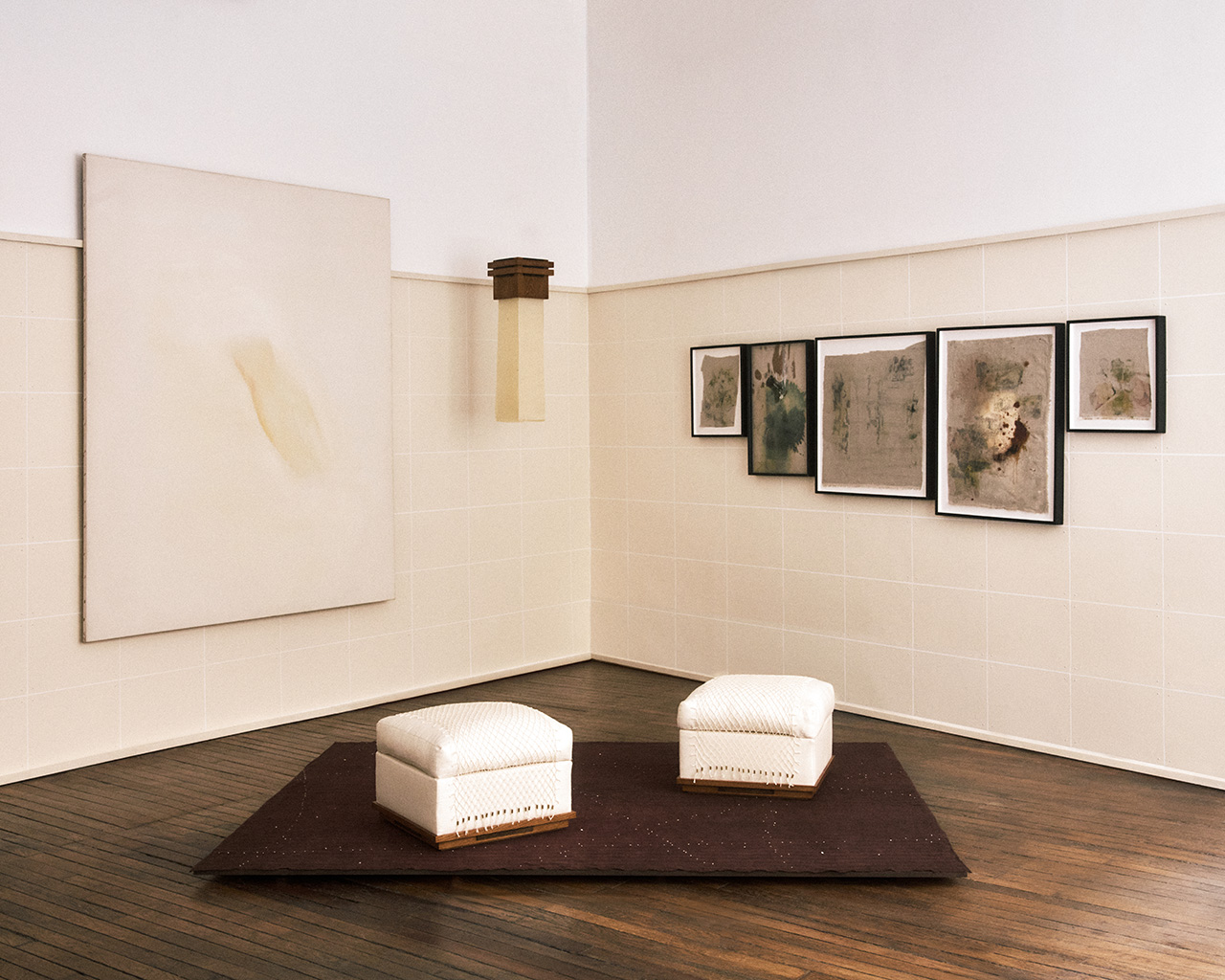
Bonjour et bienvenue to this week’s dispatch, our Paris Dećo Off and Maison&Objet special. We start with a French toast to the art deco movement in the form of Paris interiors studio Coutansais Castillo’s first collection of limited-edition furniture (pictured). Then we talk textiles with the founder of Garro Éditions, Héloïse Garro, take a seat at the modernist desk that steeled itself against the tastes of the time and peruse a new installation at Liaigre’s second Parisian showroom. First out of the Métro and into the City of Light is Monocle’s design editor, Nic Monisse.
|
|
OPINION: nic monisse
Setting the scene
The design industry’s year kicks into gear this week in the French capital. Paris Dećo Off, which starts today and focuses on textiles and wallpapers, will see exhibitions and product launches take place in showrooms across the city. Featuring name brands and smaller makers, it complements one of the industry’s largest trade shows, Maison&Objet, taking place in the halls of the Nord Villepinte Exhibition Centre. Here, we take the creative scene’s temperature with five of the week’s exhibitors.
John Pomp at Triode Gallery, 28 Rue Jacob
There’s a back-to-school energy in Paris as old friends catch up post holidays and new introductions are made – a boon for designers such as John Pomp and a reminder that in-person events remain important for the creative community. “We are prioritising personal connections,” says Pomp. In Paris, he’ll meet clients and potential partners atTriode Gallery, where he’s showing new work. “Paris Dećo Off has become a destination for the international community to celebrate and share inspiring pieces. Many US clients come here and it’s a pivotal moment for us to connect with them and others from all around the world – France, the UK, Spain, Russia, Germany and Japan.”
Haydn von Werp at Librairie Michel Bouvier, 14 Rue Visconti
As much as material innovation is lauded, knowing when to use a specific material is important. It’s something that Haydn von Werp is executing perfectly in his new furniture collection, Arcus. “For my designs, materials are allowed to speak through their inherent qualities: stone for its gravity, wood for its warmth, metal for its precision,” says Von Werp. “Balance, rhythm, weight and clarity have endured because they respond to us in the same way that cities such as Paris or Rome do. The shapes [of the Arcus collection] are simple because they come from buildings and ideas that people already know.”
Pierre Frey at 47 Rue des Petits Champs
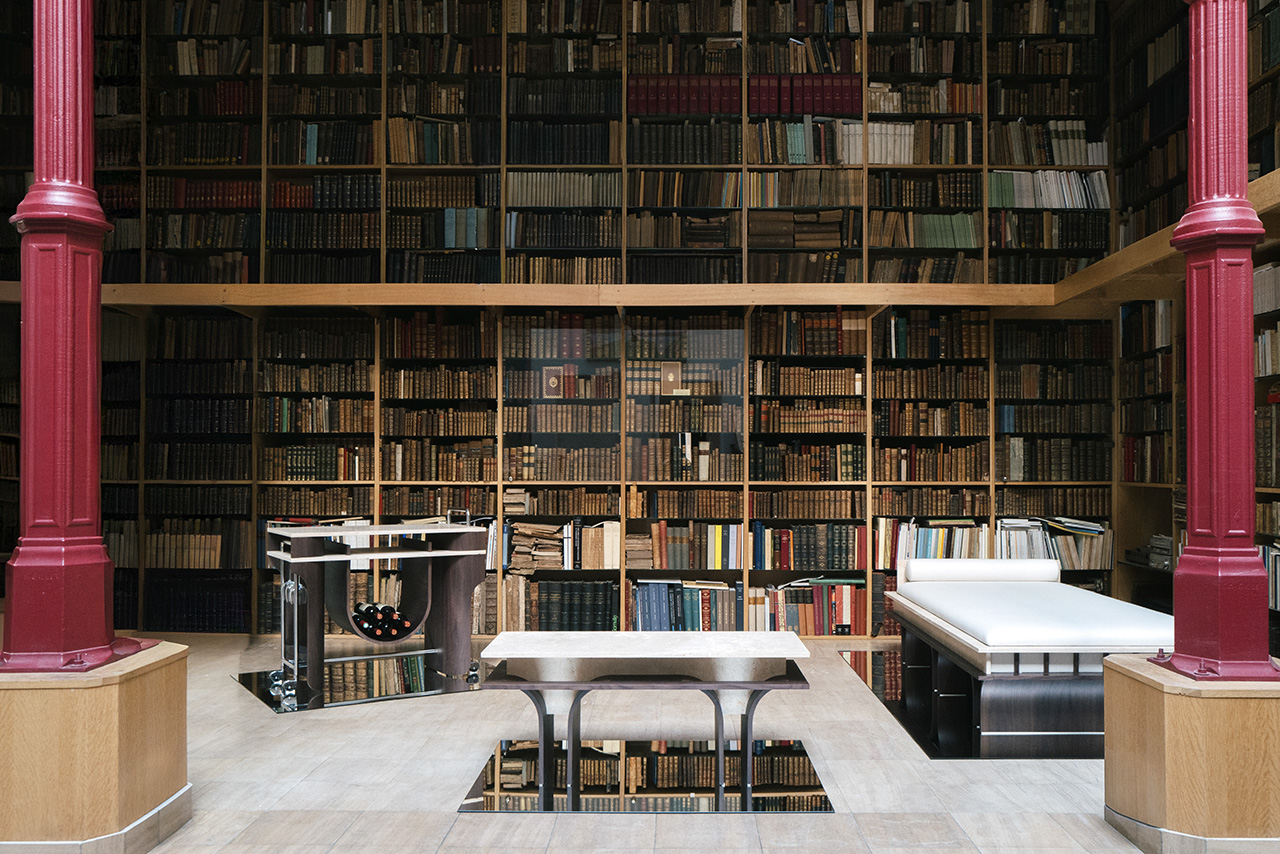
For brands such as Pierre Frey – a French design house renowned for its fabrics, wallpapers and custom-made rugs – Paris Dećo Off is key: it’s the most significant event that focuses on the sectors of the design industry that the 90-year-old family firm specialises in. This week it will show its new collection alongside a performance by fresco artist Raphaël Schmitt. “Innovation in our sector lies in the dialogue between heritage and experimentation: new fibres, sustainable processes, digital tools and renewed interest in artisanal techniques, especially in wallpapers,” says communications director Pierre Frey. “The future of interiors will be increasingly tactile, narrative and responsible.”
Sandra Benhamou at Galerie Dina Vierny, 36 Rue Jacob
The lines between art and design are becoming increasingly blurry. It’s something that Sandra Benhamou is capturing with her exhibition As de Rêve – a showcase at Galerie Dina Vierny that presents her furniture alongside works curated by the gallery. “Art nourishes the imagination, opening emotional and conceptual territories, while design translates that emotion into something tangible and lived-in,” says Benhamou. “Together, they enrich one another: art brings depth and narrative, while design brings presence, intimacy and duration.”

Toyine Sellers at Hästens, 52 Rue de l’Université
Craft’s resilience – and resurgence – has been well documented. Despite being defined by the use of the human hand, we’re still seeing new machines and materials applied to the creation of furniture and objects. South African-born, France-and-Sweden-based textile artist Toyine Sellers is turning that idea on its head. “Using traditional looms is fundamental to my practice because they embody a deep history of knowledge and skill, and operate at a different pace – one that privileges the journey over the destination,” says Sellers, who is presenting her first outdoor collection this week. “Opportunities for material and textile innovation come from pushing traditional techniques into new contexts. By using historic looms and methods in unexpected ways, new textures and functions can emerge without losing the integrity of craft.”
Nic Monisse is Monocle’s design editor. For more on Paris’s outstanding creative community, head to monocle.com to read our report on its impressive design ecosystem. And don’t forget to consult our Paris City Guide.
|
|
Arts AlUla  MONOCLE MONOCLE
|
|
DESIGN NEWS: Coutansais Castillo
Taking shape
Despite a century passing since the art deco movement revolutionised the world of architecture, design and art, it continues to inspire – particularly in its birthplace of Paris. Case in point is Coutansais Castillo, the Paris-based interior architecture firm that is showing its first collection of limited-edition furniture this week. Presented at Dvir Gallery in Le Marais, these pieces represent a declaration of intent from co-founders Clara Rebillard Castillo and Victor Poirier Coutansais, who launched their studio this past summer. Consisting of an ottoman, a lantern, a console and a carpet, all proudly made in France using traditional artisanal techniques, the collection references art deco through its geometric simplicity.
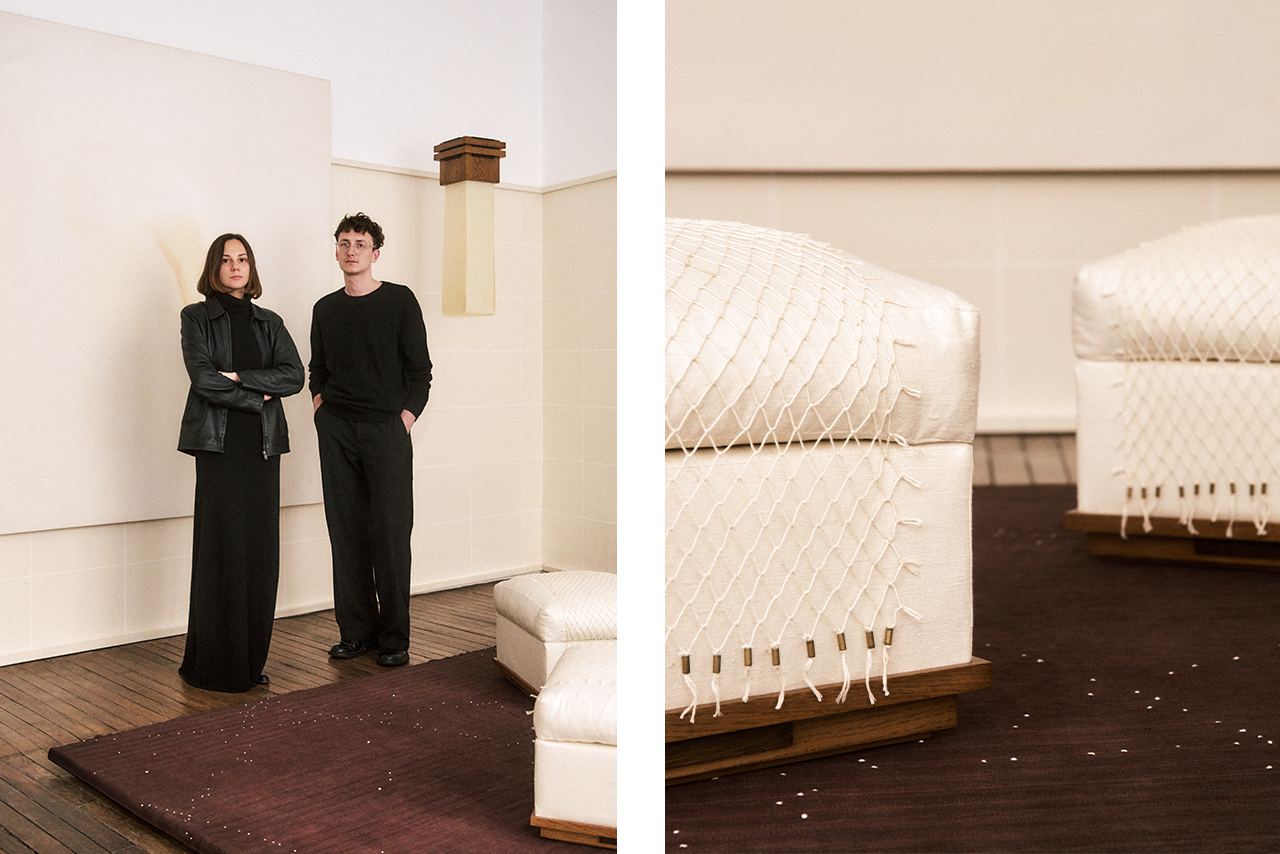
“The collection lays the foundations for a formal language, where cultural and historical references are intertwined,” says Clara Rebillard Castillo. The pair started with a minimalist framework evocative of 1940s art deco but Victor Poirier Coutansais notes that “dissonance is provided by iconoclastic details drawing on craftsmanship, vernacular styles and other eclectic sources of inspiration”. A standout from the collection is the solid oak base ottoman, with traditional feather upholstery covered in unbleached silk and a knotted cotton net with brass beads.
Visit Coutansais Castillo’s debut collection at Dvir Gallery from 14 to 19 January. Dvir Gallery, 13 rue des Arquebusiers. And for more insights into the world of contemporary design, click here.
|
|
WORDS WITH... Héloïse Garro
Spinning a yarn
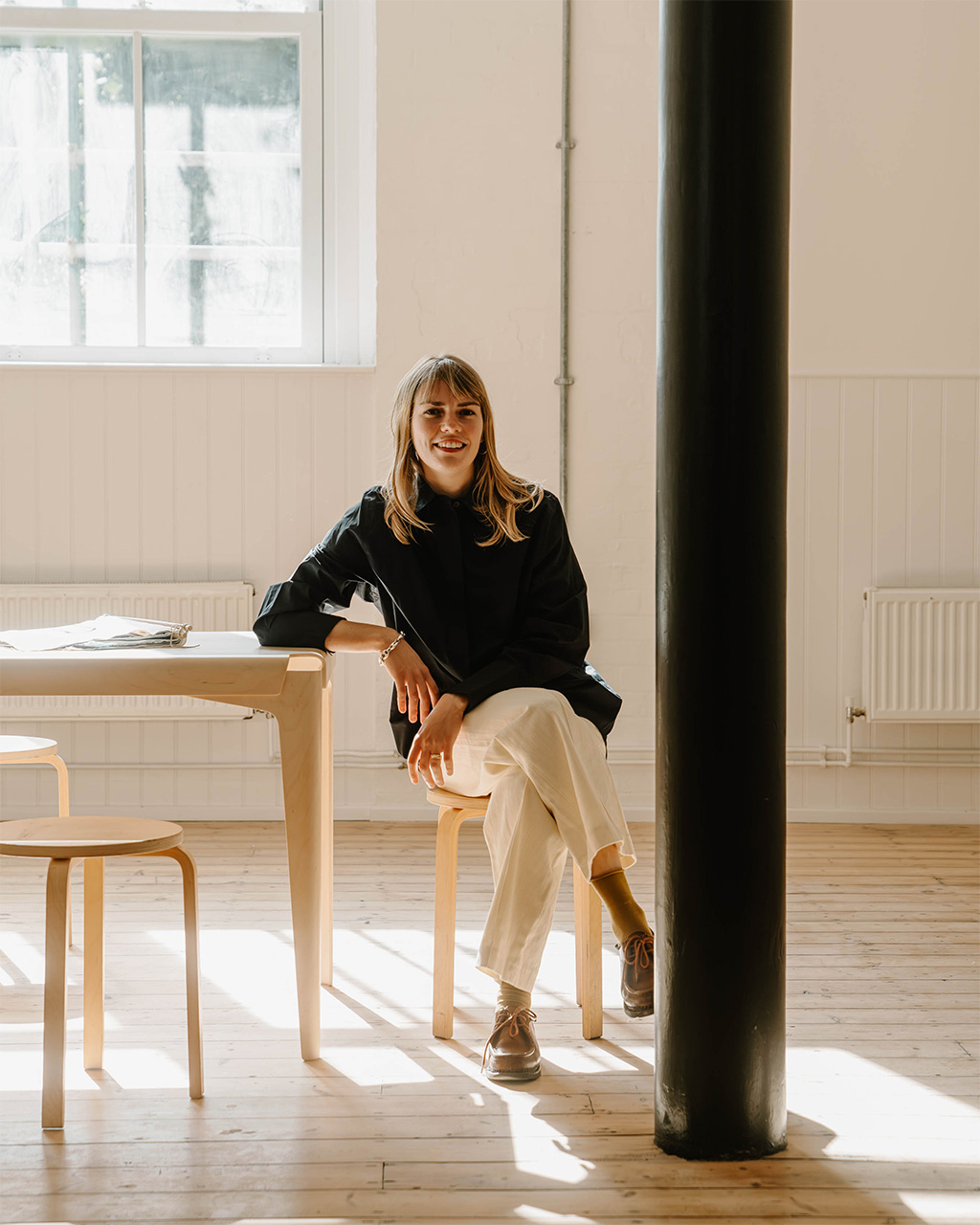
Héloïse Garro is the founder of Garro Éditions, a textile company that sits at the intersection of art, craft and design. For this year’s edition of In the City, Maison&Objet’s showcase beyond the trade hall, the brand is presenting a collaboration with French artisan bedmaker Nation Literie in which its 100 per cent linen textiles – by Amer Musa, Claud Christian, Marcus Oakley, Henry Moore, Pauline Deltour and Sybille Berger – are upholstered as headboards, mattresses and beds.
Tell us what you’re presenting during In the City. Why is it significant?
We are very excited to start our collaboration with Nation Literie. To celebrate, we’re presenting Folk-Lore, an installation curated by set designer Maxime Chaiblaine. It explores our companies’ shared values: a contemporary approach to tradition with a profound respect for craftsmanship.
What designer or movement has influenced you the most?
Finnish architect Alvar Aalto is a constant influence. Everything from his buildings and door handles to his furniture has a story. His attention to detail is really inspiring. I lived in London for four years, so the UK is also central to my work, particularly the Arts and Crafts movement founded by William Morris. The Penwith Society, founded in 1949 by Barbara Hepworth and others, resonates a lot too. It was established to promote modern and abstract art alongside traditional work.
The sky’s the limit: what work of design would you love to buy?
The Maison Louis Carré in Bazoches-sur-Guyonne is the only house designed by Alvar Aalto in France – it is a building but also an incredible work of design. Louis Carré was an art dealer, so there are many subtle nods to this in the home’s layout and lighting. I would add Henry Moore’s bronze “Reclining Mother and Child” to my garden. It would be extraordinary to see it every day from the bay window of my living room.
What’s a recurring source of inspiration?
There is a brilliant quote by the British painter David Hockney: ‘People have to look at things.’ Everything can be a source of inspiration, from arts and music to people and places.
A favourite project that you’ve worked on?
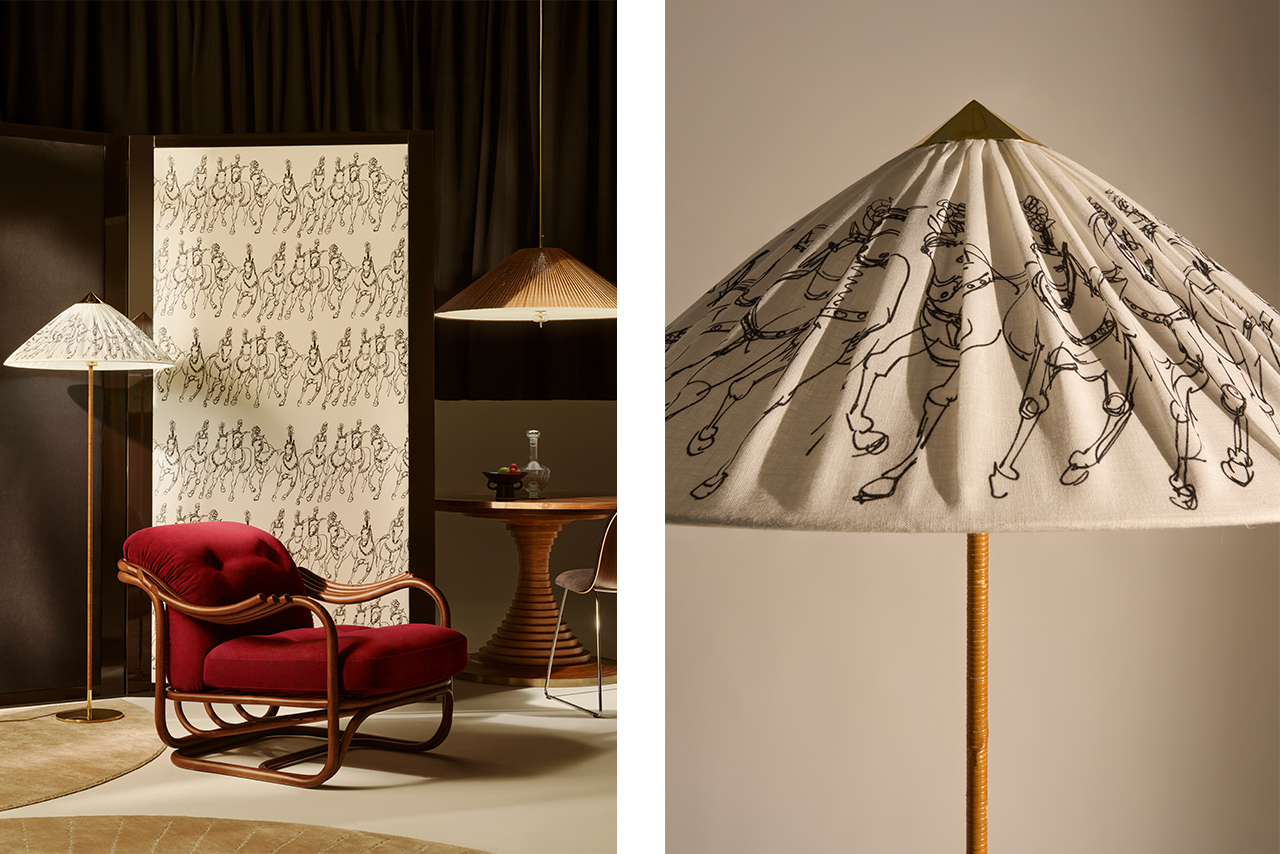
We worked with Danish brand Gubi last year to create a special-edition 9602 floor lamp. The opportunity to feature a textile by Henry Moore on a light designed by Paavo Tynell perfectly embodies my vision for Garro Éditions. It was a blending of sculptural elements, shapes, forms, archetypes and drawings, all integrated into a functional object.
A priority for you or the industry in the coming years?
To be authentic and truthful by proposing quality products and open-minded creativity. Let designers be designers and don’t let technology or trends dictate your vision.
For those visiting Paris in January, where should they visit?
Grab a coffee at I/O, then head to Yvon Lambert bookshop – it is currently displaying drawings by Philippe Weisbecker. After sampling chocolates at Jacques Genin, take the metro to the Rive Gauche and visit Musée Zadkine, an artist’s house and workshop, just steps from the Luxembourg Gardens. After that, make your way back to Le Marais, passing by Galerie Amélie du Chalard and Notre-Dame Cathedral – the renovation is sensational. Finish up for dinner at L’Orillon or Des Terres. The next morning, swing by record shop A-One Paris and enjoy coffee at Comets. After, pop into nearby furniture gallery Dank, whose owner, François-Xavier, always has an amazing selection of objects.
Visit ‘Folk-Lore’ at Saint-Anne Galerie, 44 Rue Saint Anne, Paris. And, to hear more from creatives such as Héloïse Garro, tune in to ‘Monocle on Design’.
|
|
from the archive: Bureau pour Robert Mallet-Stevens
Nerves of steel
When browsing modernist gems at Maison&Objet, it’s worth recalling how different the reception was when they were first created. Take, for example, this desk and chair designed by Pierre Chareau in 1927 for fellow French architect and designer Robert Mallet-Stevens. Chareau cajoled a metalsmith to produce his furniture designs in sheet metal. They were startlingly unadorned and came with strange flourishes such as swivelling side tables and cabinets. Only a few dozen were sold, mostly to other architects. One even went to Chareau’s photographer, perhaps as a substitute for payment. No company put them into production.
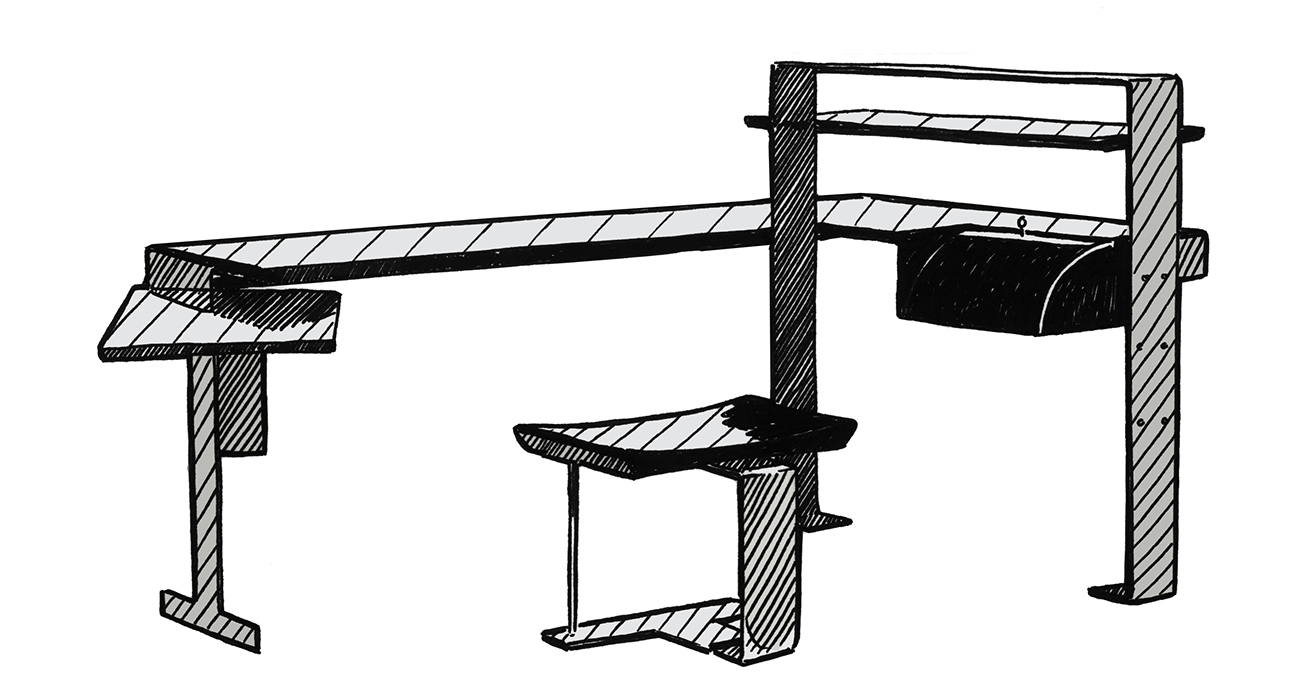
The French furniture industry’s rejection of modernism is what led Chareau and a group of architects to found the Union des Artistes Modernes (UAM) in 1930, which worked to popularise the avant garde. Almost a century on, the scarcity of this series means that pieces now sell for six or seven figures. Judging by such bottomless demand, UAM certainly succeeded.
|
|
the project: Liaigre
It goes both ways
In Paris, collectable pieces often blur the boundaries between art and design. It’s therefore unsurprising that French design house Liaigre’s second Parisian showroom on Rue du Faubourg Saint-Honoré is currently channelling the look and feel of an art collector’s home. Titled La Maison du Collectionneur, the installation features works by modern names such as Kai-Chun Chang and Charles Pollock, alongside striking, minimal sculptures by Parvine Curie and Otake Yuichi. A selection of 19th- and 20th-century prints from photography dealer Barnabé Moinard completes the collection.
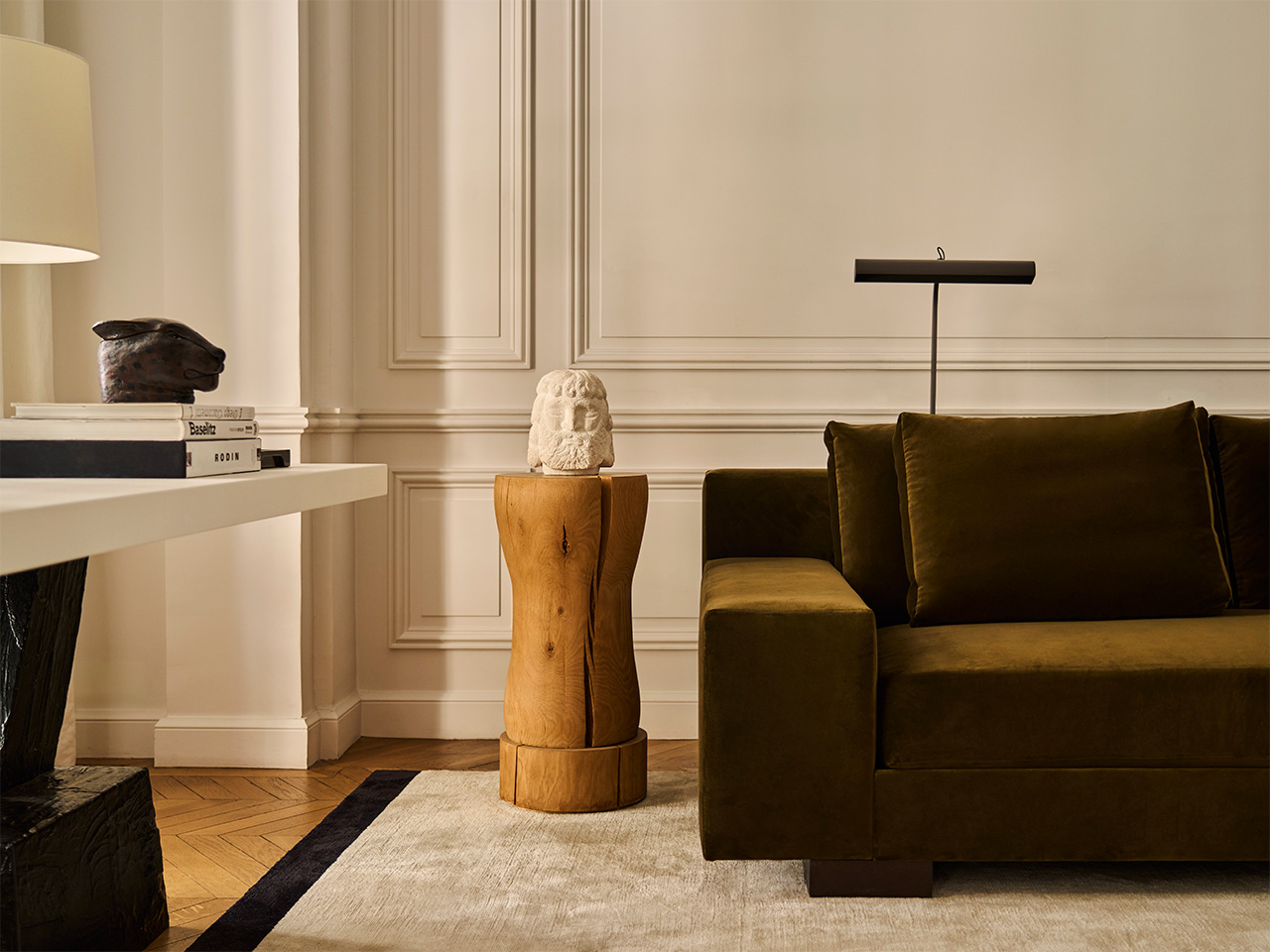
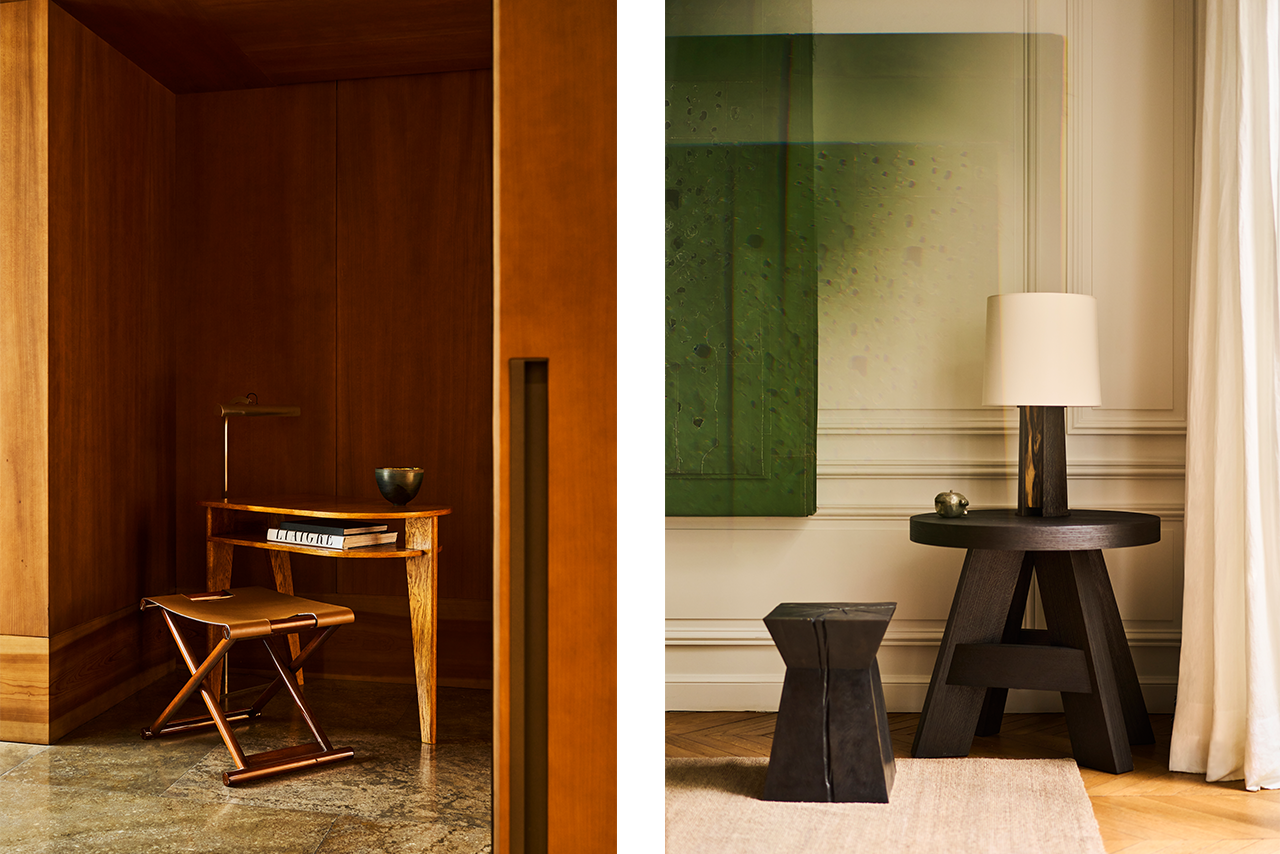
Unexpected and historic design pieces also appear, such as bronze animal sculptures sourced from Paris- and Shanghai-based Galerie Dumonteil, and an 18th-century Aubusson tapestry from antique-textile experts Maison Tahissa. This curated backdrop provides thoughtful context for Liaigre’s own work, including plush, forest-green velvet sofas and the safari-inspired Bazane folding stool. It’s something of a reset for the brand – one that embraces decorative pieces that complement the more refined Liaigre style. It’s a cross-disciplinary sensitivity that shows how design often leads to an interest in art – or perhaps the other way around.
studioliaigre.com
Visit ‘La Maison du Collectionneur’ at the Liaigre showroom at 77 Rue du Faubourg Saint-Honoré.
|
|
| | |