The Louvre’s price hike, three stories you might have missed and a smart butter knife from Flawk.
|
Wednesday 14/1/26
|

|
|
London
Paris
Zürich
Milan
Bangkok
Tokyo
Toronto
|
|
|
|

Good morning from Midori House. For more news and views, tune in to Monocle Radio. Here’s what’s coming up in today’s Monocle Minute:
THE OPINION: Bringing back the Shah of Iran is a bad idea
CULTURE: The Louvre wants non-Europeans to foot the bill
DAILY TREAT: Sharpen your kitchen skills with Flawk’s butter knife
THE LIST: Three stories you might have missed on monocle.com
|
|
Iranian protesters are blinded by nostalgia – reinstating the Shah won’t fix everything
By Hannah Lucinda Smith
|

|
The Islamic Republic, which was born of revolution in the late 1970s, is still using 20th-century tactics to suppress dissent. Last week the country’s government turned off the internet to stem the protests that have brought what could be the largest crowds to the streets since the Green Movement of 2009. It isn’t working. Cutting off electronic communications in an age of widely available, privacy-enhancing technology is near impossible.
Some protestors are calling for the return of Iran’s royal family through the former Shah’s son, Reza Pahlavi, who has spent most of his life in exile in the US. But the regime’s opponents should be wary of harking back to simpler times. In many ways, nostalgia for the old system is unsurprising. Iran’s youthful population, which has a median age of 34, has little memory of the Shah’s era, so it is natural that they would look back on photographs of pre-revolution Tehran, with its stylish, miniskirt-clad women and disco-playing nightclubs, and yearn for what their country lost. On top of this, the Islamic Revolution has been delegitimised by 47 years of brutality under the guise of a morally righteous theocracy. Over the past decade, Iranians’ living standards have been battered by soaring inflation, largely as a result of US sanctions. This is particularly galling when the sons of mullahs drive around in luxury cars.
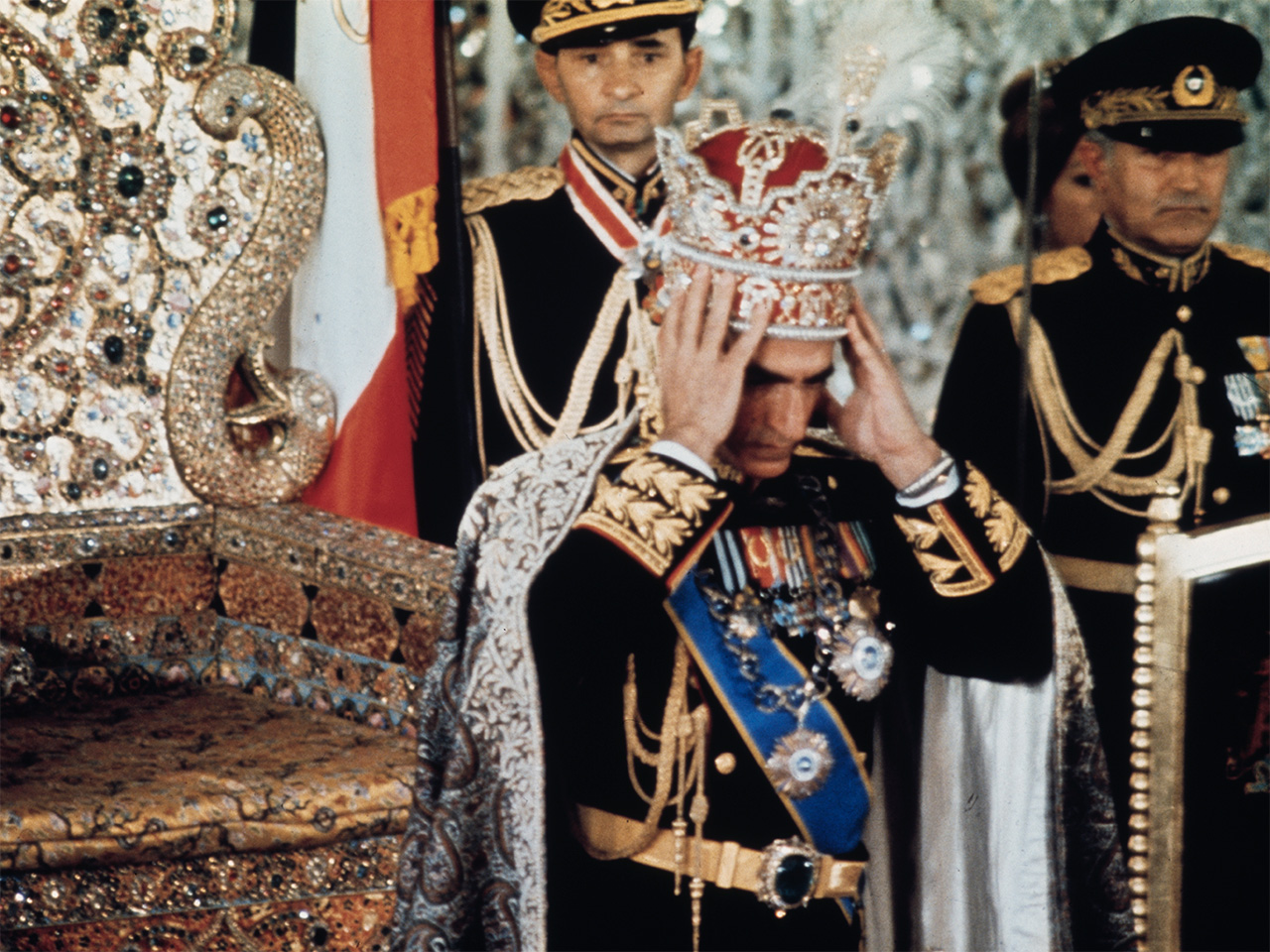
Heavy is the head: The Shah of Iran’s coronation in 1967
However, nostalgia for the system that was deposed in 1979 is both dated and dangerous. The old Shah was already seriously ill when he was overthrown and died a little more than a year later. His son has not been to Iran since he fled as a teenager. In recent days, Pahlavi has begun speaking publicly in support of the protests. While he has said that it is up to Iranians to decide what kind of system of governance they want, he is apparently keen to wield some influence, either as a figurehead or a political powerbroker. If he really wants to help his country and perhaps atone for the mistakes of his father, he should rule out a return to power.
The problem is that Iranians have few other good options. Most of the organised opposition is murky and compromised, particularly the most vocal group, the People’s Mojahedin Organisation (MEK), which is cult-like and archaic, having started as a leftist opposition to the Shah. Today it is based in Albania and has won the backing of only a few fringe figures, including Rudy Giuliani, Donald Trump’s former personal lawyer. Some opposition leaders are viewed as aligned with Saudi Arabia, a country that would have much to gain by destabilising its regional rival – but little reason to promote democracy there given that it is also an autocratic state.
Nostalgia is a powerful force in modern politics but it necessarily glosses over anything that detracts from its roseate view. The Shah’s regime was not as tyrannical as that of the Ayatollah but neither was it democratic or free. These two things are what Iran’s people need and want. Reza Pahlavi’s rhetoric offers a good impression but there was genuine popular appetite for the Shah’s overthrow in 1979. By rallying around an avowed monarchist, Iran could simply slip from one form of autocracy to another. To reach something better, nostalgia should be tempered with honesty and the courage to forge a new, brighter future for Iran.
Hannah Lucinda Smith is Monocle’s Istanbul correspondent. For more opinion, analysis and insight, subscribe to Monocle today.
|
|
HITACHI ENERGY  MONOCLE MONOCLE
|
|
culture: France
Art imitates life: Is it the Louvre that is now robbing people blind?
Foreign tourists arriving at the Louvre’s ticket booth are set to be in for a surprise (writes Anita Riotta). Starting today, the world’s most-visited museum will raise its ticket prices for non-European Economic Area visitors by 45 per cent, asking them to fork out €32.
The price hike has caused quite the stir in France. The museum’s trade unions have decried the policy as “shocking philosophically, socially and on a human level”. The Louvre was founded to bring art and culture into the lives of all socioeconomic classes and a significant portion of its 500,000 artworks and artefacts come from outside of Europe. Can it really justify charging an Egyptian visitor more to see the Great Sphinx of Tanis than their French counterpart? Apparently so.
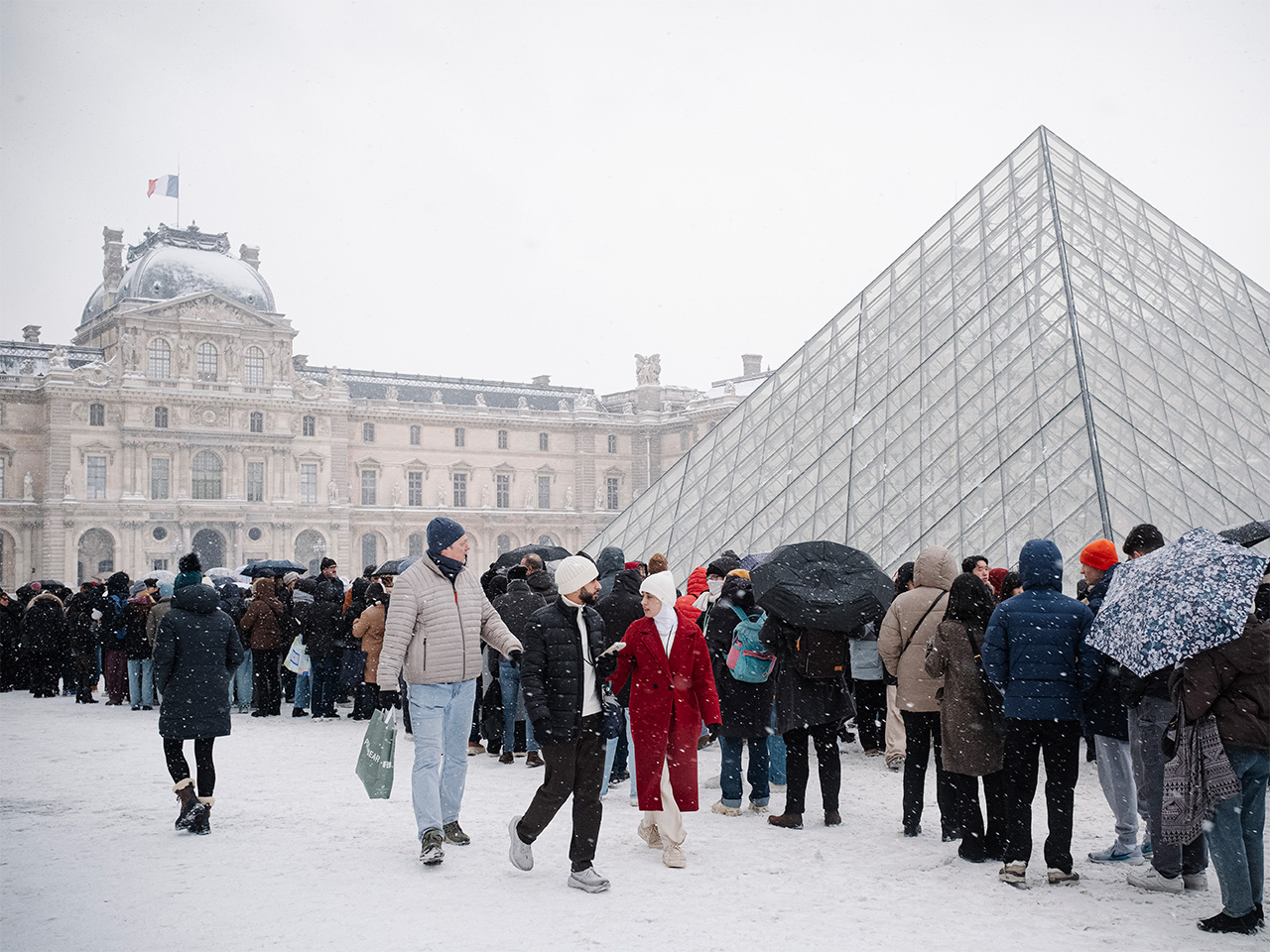
Pyramid scheme? The Louvre hikes its prices with promise of investment
The Louvre has defended the price increase by pointing to the reported €20m a year needed to “tackle structural issues”. That would include restorations and state-of-the-art security upgrades. Though these needs are not to be underestimated, generosity and transparency are part of the institution’s spectacle. Welcoming a staggering nine million visitors annually from all over the world, the Louvre is more than just a museum – the glass pyramid has become a lodestone for the world’s cultural imagination. Everyone, regardless of their nationality, should have an equal chance to ponder the “Mona Lisa” smile and contemplate the “The Winged Victory of Samothrace”.
|
|
• • • • • DAILY TREAT • • • • •
Make your kitchen a cut above with a Flawk butter knife
Singapore-born London-based Ashley Law is a small-scale property developer with a keen eye for design. But after establishing her practice, Flawk, in 2022, she has now decided to home in on smaller objects, starting with this stainless-steel butter knife with a beaded handle.
“Knives often celebrate hallmark occasions whilst also being used daily,” says Law. “I wanted a versatile version that could also be a statement object.” Functional design, it seems, is Law’s bread and butter.
flawk.co.uk
|
|
|
Sponsored by Hitachi Energy
|
|
|
|
|
|
the list: global
Small talk, fine fare and airline loyalty
Keeping an eye on the Monocle world has never been easier. You can stay on top of our news and opinion pieces on monocle.com, as well as our latest magazine articles, radio shows, films and shop offers. Here are three of the stories that you might have missed recently.
|
|
Monocle Radio: THE URBANIST
What energy should we take into 2026 in order to face climate change head on?
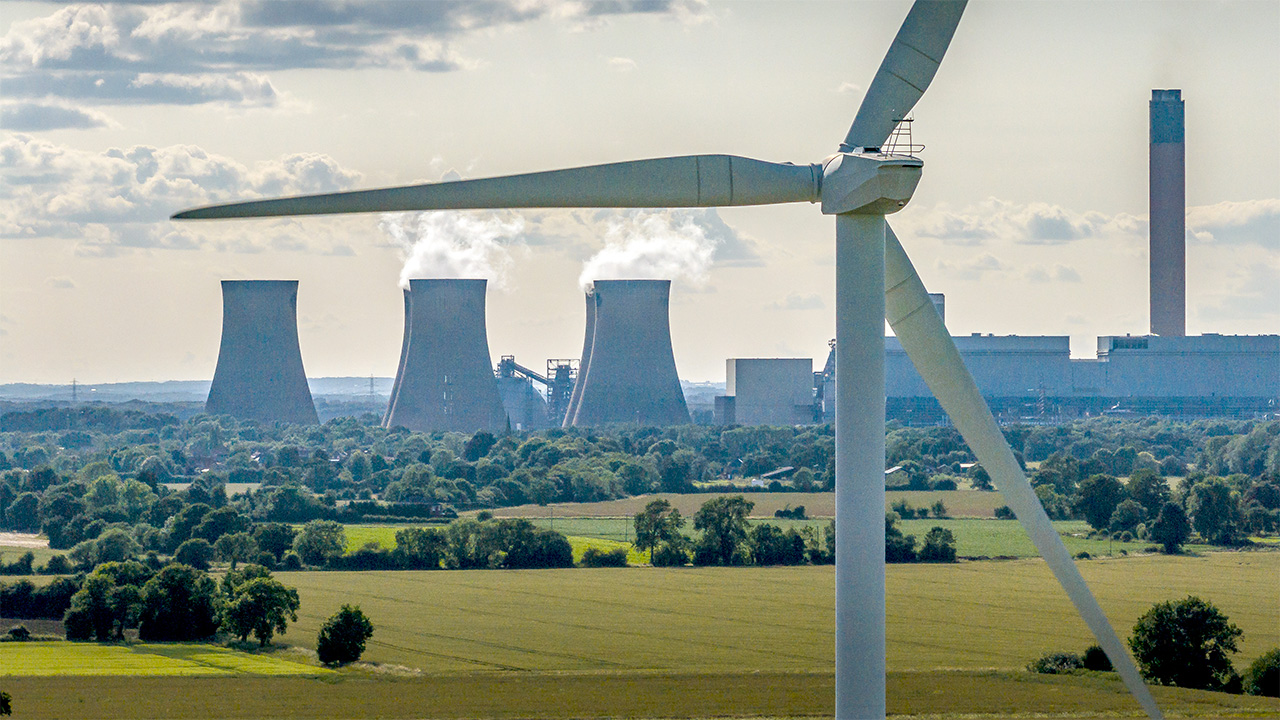
We meet Dr Gary Yohe, a Nobel Peace Prize recipient for his work on the United Nations Intergovernmental Panel on Climate Change. Then: we discover the stories behind Britain’s cooling towers, a brutalist structure that once dominated our skylines.
|
|
| | |


