Lumina Foundation is working to increase the share of adults in the U.S. labor force with college degrees or other credentials of value leading to economic prosperity.
In the early 2000s, Jack Miller, a wealthy entrepreneur who made his fortune founding and selling an office-supply company, became interested in fixing higher education. So he convened a meeting of 50 professors at the University of Chicago in 2004, and he walked away having identified a problem he wanted to help fix: what he deemed a crisis in civics education.
More than 20 years later, the organization that grew out of that gathering—the Jack Miller Center for Teaching America’s Founding Principles and History—is playing an influential role in staffing the civic-thought schools that are cropping up at campuses across the nation.
Cuts to federal funding that supported students of color and undocumented students dominated headlines in the first year of the Trump administration. But advocates for student parents say the administration has gutted programs these students rely on, leaving a fifth of the country’s college students vulnerable to financial hardship or even at risk of abandoning their education altogether.
In two recent examples, the U.S. Department of Education nixed grants for on-campus childcare at more than a dozen colleges this summer; funding for the federal grant program Child Care Access Means Parents in School was already uncertain after Trump recommended axing it in his proposed budget for 2026.
Two colleges—Central Washington University and Hudson County Community College in New Jersey—are implementing new tools designed to streamline enrollment and financial aid processes after researchers found that even small administrative challenges can derail students from completing their degrees.
The institutions began rolling out a suite of guides, exercises, and communications in June 2025 as part of MDRC's "On the Path to a Degree 2.0" initiative, with the experiences of the colleges' students and staff members forming the foundation of this work.
Last year, higher education policy underwent a significant transformation. Congress passed a massive spending package over the summer, dubbed the "One Big Beautiful Bill Act," that makes major changes to federal student lending and other higher education policies. And the Trump administration pursued large-scale policy changes, such as new restrictions on international enrollment.
This year, colleges will begin to bear the brunt of many of those changes.
American colleges and universities are facing significant challenges. The Trump administration has waged a legal and rhetorical battle against the country’s elite institutions. Some high school students are questioning the value of a college diploma. In turn, there’s been a veritable firehose of news stories about a generational pivot away from college due to some combination of ruinous costs, close-minded campus cultures, and appealing alternatives.
Whatever the challenges of higher education, the narrative has raced far ahead of the reality.
For many professors, teaching has always been about more than delivering subject-specific content. Derek Bruff, director of the University of Virginia’s Center for Teaching Excellence, believes the core mission of college is to help students develop critical thinking, problem-solving, and judgment skills that prepare them for life beyond the classroom.
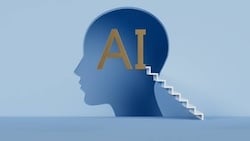
But with artificial intelligence offering such a convenient tool to offload those skills, professors are re-evaluating how they approach their goals, sending ripple effects to instruction, assessments, and student interactions.




.jpg?width=500&upscale=true&name=istockphoto-1465708226-612x612%20(1).jpg)