Thanks for reading The Briefing, our nightly column where we break down the day’s news. If you like what you see, I encourage you to subscribe to our reporting here.
Greetings!
Sam Altman, look behind you. Sundar Pichai is catching up. Google on Sunday announced it was adding the ability to buy stuff within its Gemini AI chatbot, using Google Pay to complete the transaction, essentially matching OpenAI’s Instant Checkout feature. This is a big deal, according to my colleague Ann Gehan, who was at the NRF retail conference in New York where Pichai spoke on Sunday. Ann tells me Google will have an advantage over OpenAI because unlike the ChatGPT creator, Google already has lots of product data and retailer relationships, thanks to its search ad business.
OpenAI’s lack of such data has proved a stumbling block, Ann wrote in a story this past week, slowing down the company’s ability to quickly connect lots of merchants to its Instant Checkout service. The fact that lots of people already have Google Pay accounts may also give Google an edge, as it will be easier for shoppers to buy stuff if their payment information is already saved. That doesn’t mean a Gemini shopping service will be a slam-dunk success or Amazon CEO Andy Jassy has to fret too much. It’s too soon to tell how much consumers want to buy things via an AI chatbot, particularly when many are already used to the ease of Amazon.
Moreover, Google has dabbled around the edges of shopping for a long time, without success. More than a decade ago it launched Google Express, an attempt to compete directly with Amazon. Google shut it down in 2019. The company still has a Google Shopping site, but it links shoppers to retailers’ websites rather than being an e-commerce destination in itself. Google has added AI features for shopping over the past few months, but so far none appear to have made much of an impact. For all those reasons, we don’t want to overstate the significance of the latest announcement.
The impact may be most felt by OpenAI. It’s notable that Walmart, which partnered with OpenAI to let shoppers buy on its site through ChatGPT, announced a similar deal with Google today. Shopify, which is an OpenAI partner, also worked with Google. Clearly these companies want to hedge their bets. No one knows yet whether AI will boost shopping, and if it does, which chatbot it will use. Today’s news is, however, another sign that OpenAI’s early lead over Google in AI is shrinking. (Meanwhile, OpenAI is also facing competition in healthcare, as Anthropic signaled on Sunday it plans to establish its Claude AI in the health care industry).
Another Round of Tech Layoffs May Be on the Way
We may be heading into a new season of big tech layoffs, potentially starting this week at Meta Platforms. Business Insider reported on Thursday that Meta’s Reality Labs chief, Andrew Bosworth, had called an all-hands meeting for Wednesday, one he called the “most important” of the year, where everyone is urged to attend. Rumors of big cuts coming at Reality Labs early this year have swirled for months, so it wouldn’t be surprising if he announced them at this week’s meeting.
And if there’s one business where cuts seem necessary, it’s Reality Labs. It’s no secret that Meta CEO Mark Zuckerberg has poured oodles of money into that division in the past few years in an effort to build virtual and augmented reality devices, as well as prepare for the futuristic metaverse. Reality Labs has enjoyed a big hit with its Ray-Ban smart glasses, but that hardly justifies the division’s cumulative operating loss of $70 billion since 2021. And now that Zuckerberg has a new, even more expensive obsession—competing with Google and OpenAI to become a leader in AI—it seems inevitable Reality Labs would have to cut costs somewhere.
It has been notable that since late 2024, Meta has dropped what was practically boilerplate language from its quarterly outlook that it expected Reality Labs’ operating losses to continue to rise. And lately, those losses seem to be plateauing: The third-quarter operating loss of $4.432 billion was only 0.09% higher than the one for the year earlier. Maybe any cuts announced this week will start to reduce those losses.
Any layoffs at Meta could be a prelude to large cuts at other big tech companies. Layoffs have become common in tech in the past three years, since a late 2022 realization that many companies had overhired in the immediate post-pandemic era. Lately, though, enormous investment in AI appears to be forcing big tech companies to cut costs wherever they can. In late October, when Amazon said it would cut 14,000 corporate jobs, the company said it was “shifting resources to ensure we’re investing in our biggest bets,” as well as reducing bureaucracy. All the big tech businesses, with the exception of Apple, are pouring money into AI, so don’t be surprised if we see layoffs at all of them.
In Other News
• Elon Musk’s xAI burned through $7.8 billion in cash in the first nine months of 2025, Bloomberg reported Thursday evening, reflecting the high costs of AI development.
• Andreessen Horowitz has raised over $15 billion across five new funds, its biggest fundraising ever.
• Meta Platforms announced on Friday that it had agreed to a series of nuclear power deals for its data centers, making it one of the biggest corporate buyers of nuclear energy in the U.S.
• Indonesia blocked xAI’s Grok chatbot, due to the risk of sexual “deepfakes” on the service, Reuters reported, the latest sign of rising criticism of sexual imagery on the site.
• OpenAI and SoftBank will each invest $500 million in SB Energy, a SoftBank-backed data center developer that’s building a site for the Stargate project.
Friday on The Information’s TITV
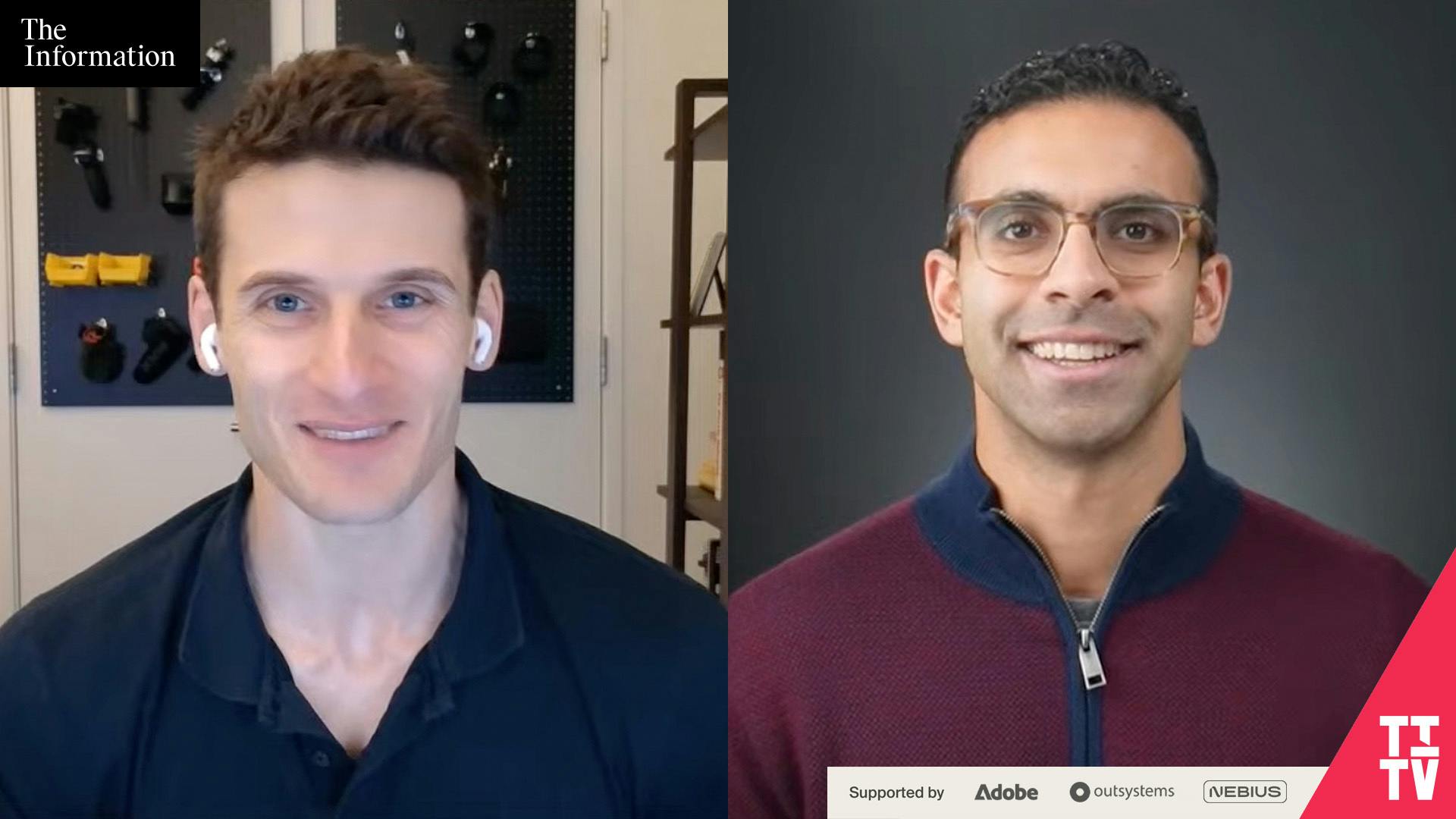
Check out our latest episode of TITV in which we unpack a busy week of AI and health news with the CEO of Ro.
Recommended Newsletter
AI Agenda by Stephanie Palazzolo separates hype from reality and explains how AI is transforming industries. The 4x/week newsletter details the innovation and disruption happening in AI, from the AI startup funding frenzy to the major technological breakthroughs that will set the agenda for decades to come. Sign up today.