
It's a discovery that has sent shockwaves across the medical establishment...
It appears we have finally uncovered what exactly triggers Alzheimer's through this brain scan...
No, its NOT old age, genetics or vitamin deficiencies...
It appears that Alzheimer's is triggered because of this THING in your brain! (You can't imagine what activates it).
And now that we know this, we can protect ourselves against Alzheimer's and other memory diseases and possibly reverse them.
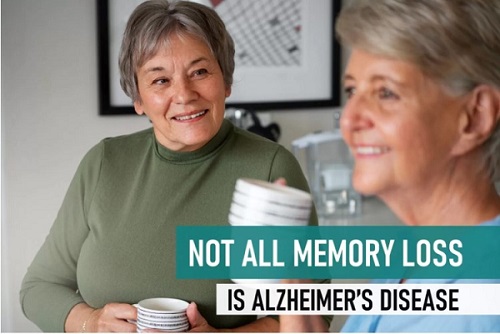
This surprising thing is that you can do it simply by using the items in your home right now.
Because this specific method that you are about to discover can demolish the entire Alzheimer's industry, but it can be taken down at any moment.
So visit the page while you still can.
ers, also known as blossoms and blooms, are the reproductive structures of flowering plants. Typically, they are structured in four circular levels around the end of a stalk. These include: sepals, which are modified leaves that support the flower; petals, often designed to attract pollinators; male stamens, where pollen is presented; and female gynoecia, where pollen is received and its movement is facilitated to the egg. When flowers are arranged in a group, they are known collectively as an inflorescence. The development of flowers is a complex and important part in the life cycles of flowering plants. In most plants, flowers are able to produce sex cells of both sexes. Pollen, which can produce the male sex cells, is transported between the male and female parts of flowers in pollination. Pollination can occur between different plants, as in cross-pollination, or between flowers on the same plant or even the same flower, as in self-pollination. Pollen movement may be caused by animals, such as birds and insects, or non-living things like wind and water. The colour and structure of flowers assist in the pollination process.
After pollination, the sex cells are fused together in the process of fertilisation, which is a key step in sexual reproduction. Through cellular and nuclear divisions, the resulting cell grows into a seed, which contains structures to assist in the future plant's survival and growth. At the same time, the female part of the flower forms into a fruit, and the other floral structures die. The function of fruit is to protect the seed and aid in its dispersal away from the mother plant. Seeds can be dispersed by living things, such as birds who eat the fruit and distribute the seeds when they defecate. Non-living things like wind and water can also help to disperse the seeds. Flowers first evolved between 150 and 190 million years ago, in the Jurassic. Plants with flowers replaced non-flowering plants in many ecosystems, as a result of flowers' superior reproductive effectiveness. In the study of plant classification, flow
