Conquer Your Trauma Like Ebenezer Scrooge Decades before Freud, ‘A Christmas Carol’ showed how to face childhood anguish and choose a better life.
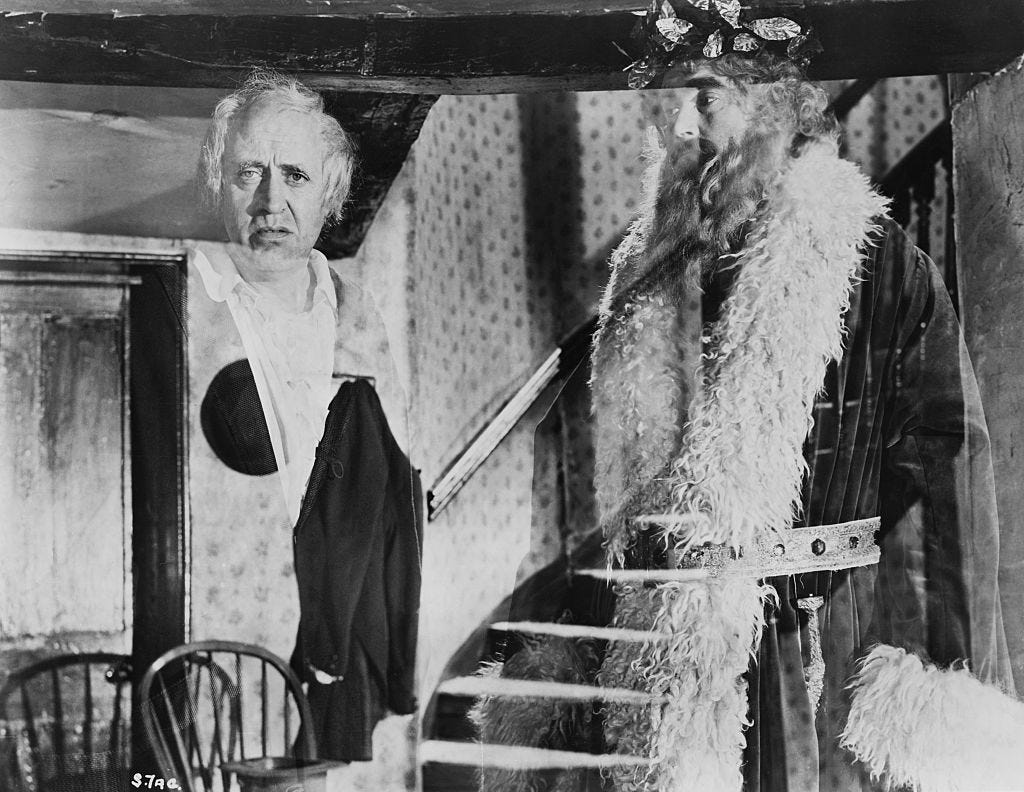
This phantasmagorical tale of a mean old miser—confronted, on a seemingly endless Christmas Eve, by the consequences of his misspent life—never gets old. (John Springer Collection/Corbis via Getty Images)
When we meet Ebenezer Scrooge in the opening pages of A Christmas Carol, he is “a tight-fisted hand at the grindstone . . . a squeezing, wrenching, grasping, scraping, clutching, covetous old sinner.” Muttering his catchphrase—“Bah! Humbug!”—he begrudges Londoners their annual Christmas cheer and generally exudes such nastiness that even seeing-eye dogs steer the blind away from him. Long before that, though, Scrooge had been a child: a bookish boy, packed off to a decrepit rural boarding school by what author Charles Dickens hints is an abusive father, and abandoned there each year at Christmastime while other students visit home. When the reader learns this, the emotional trajectory of the story changes. The reader shifts from despising Scrooge to understanding him, or even rooting for him. This article is featured in Culture and Ideas. Sign up here to get an update every time a new piece is published. I return to A Christmas Carol every December—not in one of the countless film, television, radio, stage, or cartoon adaptations, but by rereading Dickens’s novella. This phantasmagorical tale of a mean old miser—confronted, on a seemingly endless Christmas Eve, by the consequences of his misspent life—never gets old...
Become a paid subscriber Get access to our comments section, special columns like TGIF and Things Worth Remembering, tickets in advance to our live events, and more. UPGRADE TODAY |