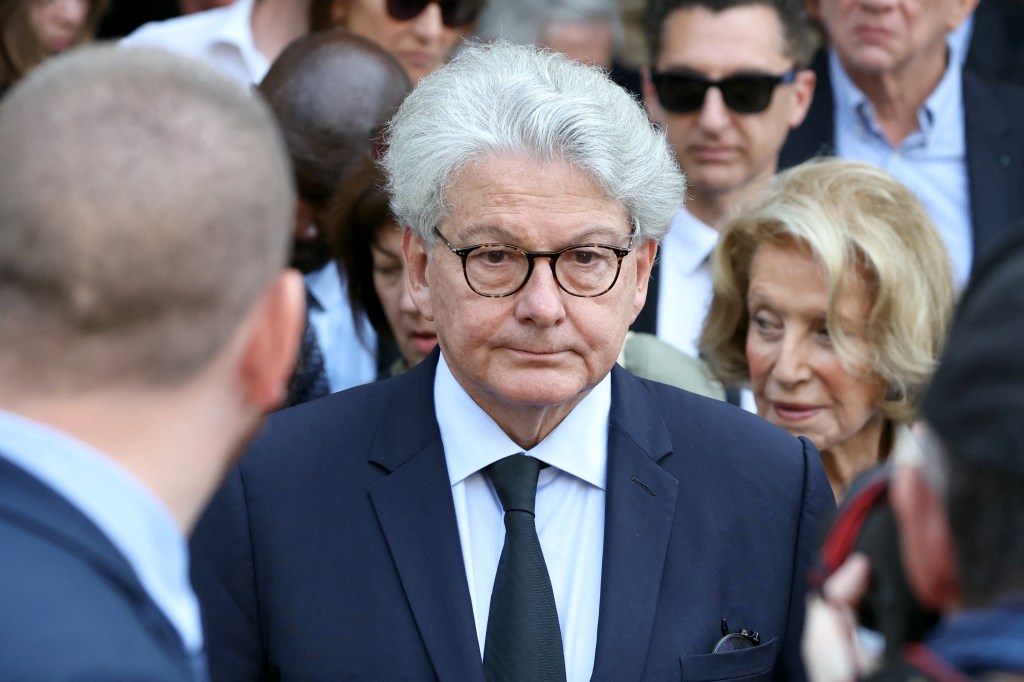
 Thierry Breton, former European Commissioner for the Internal Market, in Paris on June 13, 2025. Thomas Samson/AFP/Getty Images
Boy, that escalated quickly.
Secretary of State Marco Rubio said Tuesday that the U.S. would bar five prominent Europeans from entering the country because they had allegedly helped stifle Americans’ right to free speech.
The five in question include former European Commission member Thierry Breton, Center for Countering Digital Hate CEO Imran Ahmed, Global Disinformation Index co-founder Clare Melford, and Anna-Lena von Hodenberg and Josephine Ballon of the German digital rights organization HateAid.
In a statement, Rubio accused the five of leading efforts “to coerce American platforms to censor, demonetize, and suppress American viewpoints they oppose” as part of a “global censorship-industrial complex.”
In a social media post, Breton—who ran France Télécom in the aughts—responded: “Is McCarthy’s witch hunt back?” adding: “To our American friends: ‘Censorship isn’t where you think it is.’”
The move takes up a notch the Trump administration’s objection to European efforts to regulate the potential harms of social media platforms and AI.
Many of the largest tech companies, including Google and Meta, are American; virtually all of them have faced recent investigations or fines by EU watchdogs.
Of particular concern is the EU’s Digital Services Act. This month, the EU imposed its first penalty under the DSA, issuing a $140 million fine against X—the social media service controlled by former Trump administration employee Elon Musk—for deceptive practices and breaching transparency obligations.
The EU also found Meta violation of bloc rules. Both companies have been vocal about their abandonment of content oversight teams to prioritize “free expression”—an issue that President Trump once sued them over.
—AN 
