| | The SCOTUS blocks Trump’s National Guards deployment, the US increases its Caribbean forces, China a͏ ͏ ͏ ͏ ͏ ͏ |
| |  | Flagship |  |
| |
|
The World Today | 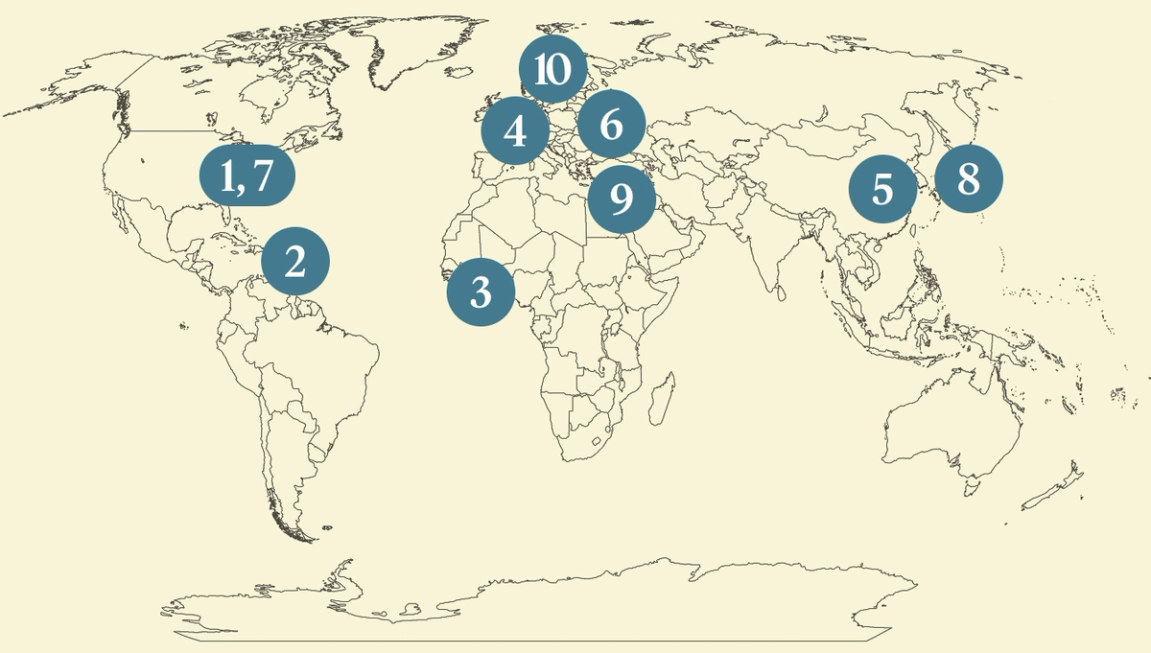 - SCOTUS blocks Guard
- US boosts Caribbean force
- US ambassadors quit Africa
- Europe-US tensions rise
- China stands by Russia
- Russia takes Ukrainian city
- Foreign drone ban in US
- Japan adjusts to inflation
- Bethlehem celebrates
- Christmas Day viewing
 Semafor’s Africa editor recommends a book about the liberation of Ghana. |
|
Court blocks Chicago troops |
 Bonnie Cash/Reuters Bonnie Cash/ReutersThe US Supreme Court blocked the deployment of National Guard troops to Chicago, in a setback for President Donald Trump. The White House had said the troops were necessary to fight crime, but city officials objected. Trump has deployed, or threatened to deploy, the Guard to several other cities, often over the heads of local authorities, and the SCOTUS decision could make it easier for other jurisdictions to block the move. The decision is a rare high court loss for the administration, The Washington Post noted: The court has a 6-3 conservative majority, and has backed the White House in decisions to freeze foreign aid, fire officials at independent agencies, and strip protection from immigrants. |
|
US strengthens forces in Caribbean |
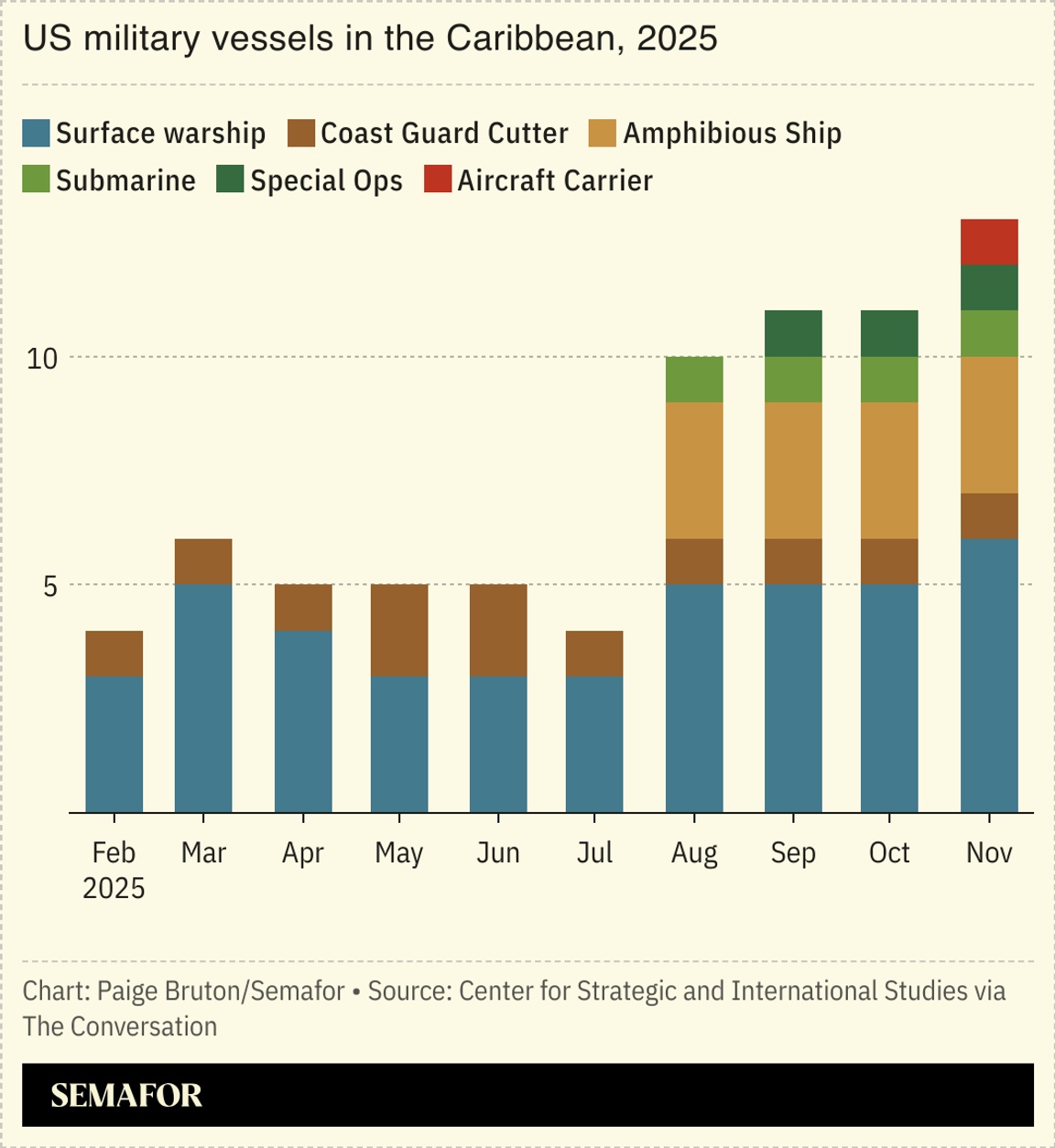 The US moved additional troops and equipment to the southern Caribbean, giving Washington increased firepower for a possible military action against Venezuela. The deployment came as the UN Security Council met to discuss Washington’s campaign against Caracas. Though the Trump administration initially claimed its operations in the Caribbean were focused on halting drug trafficking, senior officials have in recent weeks confirmed the true goal is ousting Venezuelan President Nicolás Maduro from power, with the US ambassador to the UN on Tuesday vowing to deprive the regime in Caracas of resources. The US campaign on Venezuela threatens to spiral into a wider geopolitical conflict, with Chinese and Russian officials condemning Washington’s blockade of the South American nation. |
|
Trump withdraws Africa ambassadors |
 Jessica Koscielniak/File Photo/Reuters Jessica Koscielniak/File Photo/ReutersUS President Donald Trump’s mass recall of ambassadors will leave Washington without top-level representatives in more than half the countries of sub-Saharan Africa, highlighting the White House’s shift away from the continent. Less than a year into his second term, Trump has upended US-Africa relations: His administration’s sudden cuts of aid to the continent have left dozens of countries struggling to get by, while his tariff regime has compounded the economic pressure on many. Nonetheless the Trump administration has vied to outcompete China on strategic projects in Africa, especially those focused on rare earths — key for the defense and tech industries — the vast majority of which are controlled by Beijing. |
|
US denies visas over EU ‘censorship’ |
 Thierry Breton. Yves Herman/Reuters. Thierry Breton. Yves Herman/Reuters.Washington denied visas to five European citizens, including a former EU commissioner, for “censorship” of US social media. Thierry Breton was the architect of the EU’s Digital Service Act, which imposed stringent content moderation requirements on tech platforms. The US secretary of state said Breton and the four others were “radical activists… targeting American speakers and American companies.” The State Department is also taking aim at the UK’s Online Safety Act, which requires age verification on sites hosting adult material. Transatlantic tensions are high: Washington’s recently released strategy document seemed to disparage the US-Europe alliance, the two sides disagree over the route to peace in Ukraine, and President Donald Trump called European leaders “weak.” |
|
 In today’s fast-changing global environment, business leaders are responding by innovating and seizing opportunities in real time. Shifting dynamics, emerging technologies, and rising expectations demand leadership that is both decisive and forward-looking. On Tuesday, Jan. 20, Semafor editors will sit down with global executives in Davos to discuss agility, cross-border collaboration, and bold action in the next era of business. Jan. 20 | Davos | Request Invitation |
|
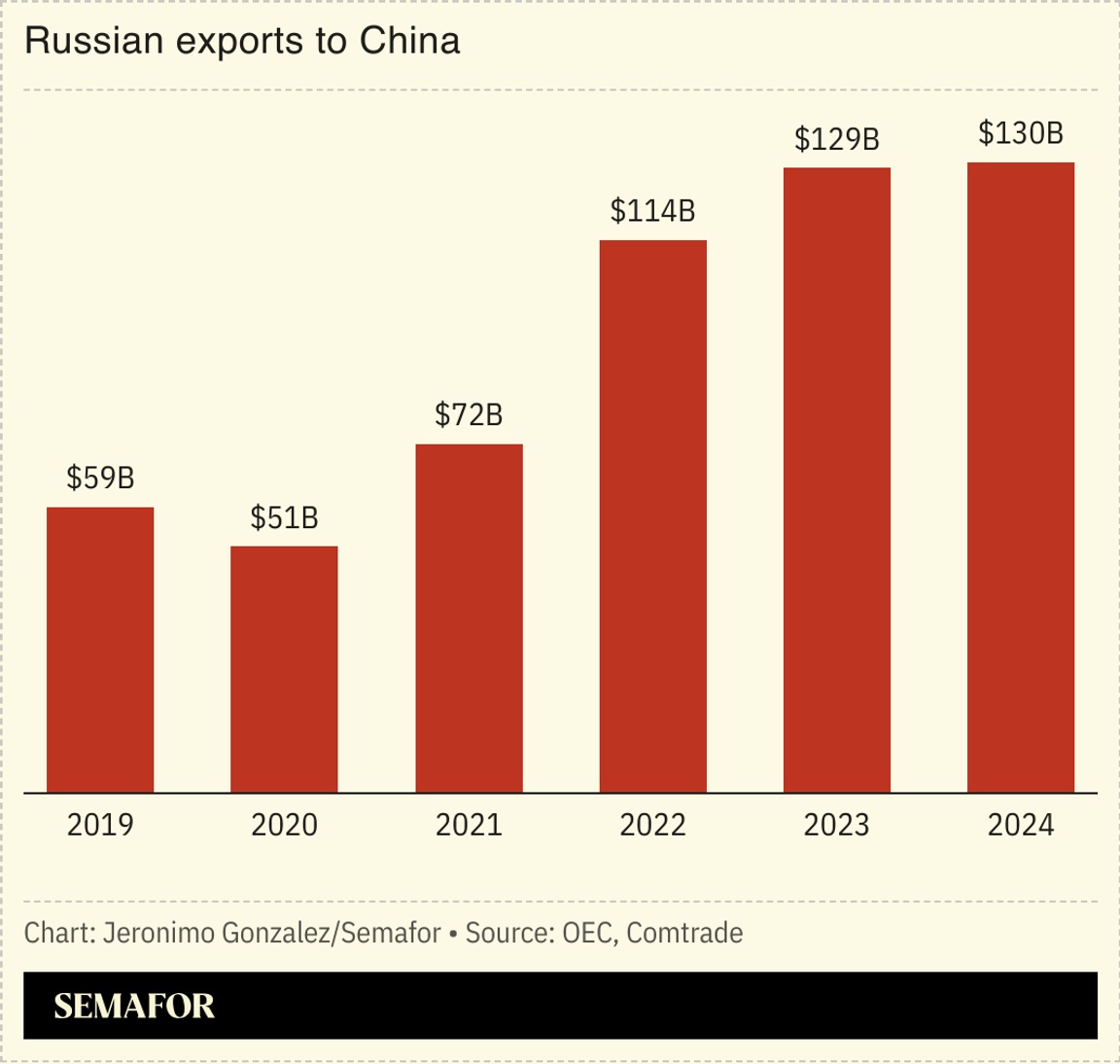 Russia’s ambassador to China said Western sanctions on both nations had only helped bring them closer together, with the envoy claiming bilateral ties are at their “highest level in history.” Since Russia launched its full-scale invasion of Ukraine almost four years ago, Western leaders have repeatedly pressed China to condemn Moscow’s offensive. But Beijing has remained steadfast in its support for its neighbor, extending Russia an economic lifeline by boosting trade: Russian pipeline gas exports to China have increased almost 25% this year, helping the Kremlin offset plummeting European purchases. Just this month, Chinese leader Xi Jinping again rejected an overture from his French counterpart. “No matter how the external environment changes… major powers should always demonstrate independence,” he said. |
|
Russian troops take key town |
 Alex Babenko/Reuters Alex Babenko/ReutersUkrainian troops withdrew from Siversk, a strategically significant town that had helped Kyiv slow the Russian advance. The capture eases Moscow’s advance to the cities of Kramatorsk and Sloviansk, part of Ukraine’s industrial belt. Meanwhile Ukrainian President Volodymyr Zelenskyy said Russia had launched a “massive” overnight bombardment targeting his country’s energy infrastructure, prompting power cuts as winter temperatures plummet. The attacks, which killed at least three people, reportedly involved as many as 600 drones. Attempts at a ceasefire have stalled in recent weeks, with recent US intelligence reports warning that Russian President Vladimir Putin’s aim of capturing all of Ukraine and even other parts of Europe that belonged to the Soviet Union remains unchanged despite Western sanctions. |
|
US bans foreign-made drones |
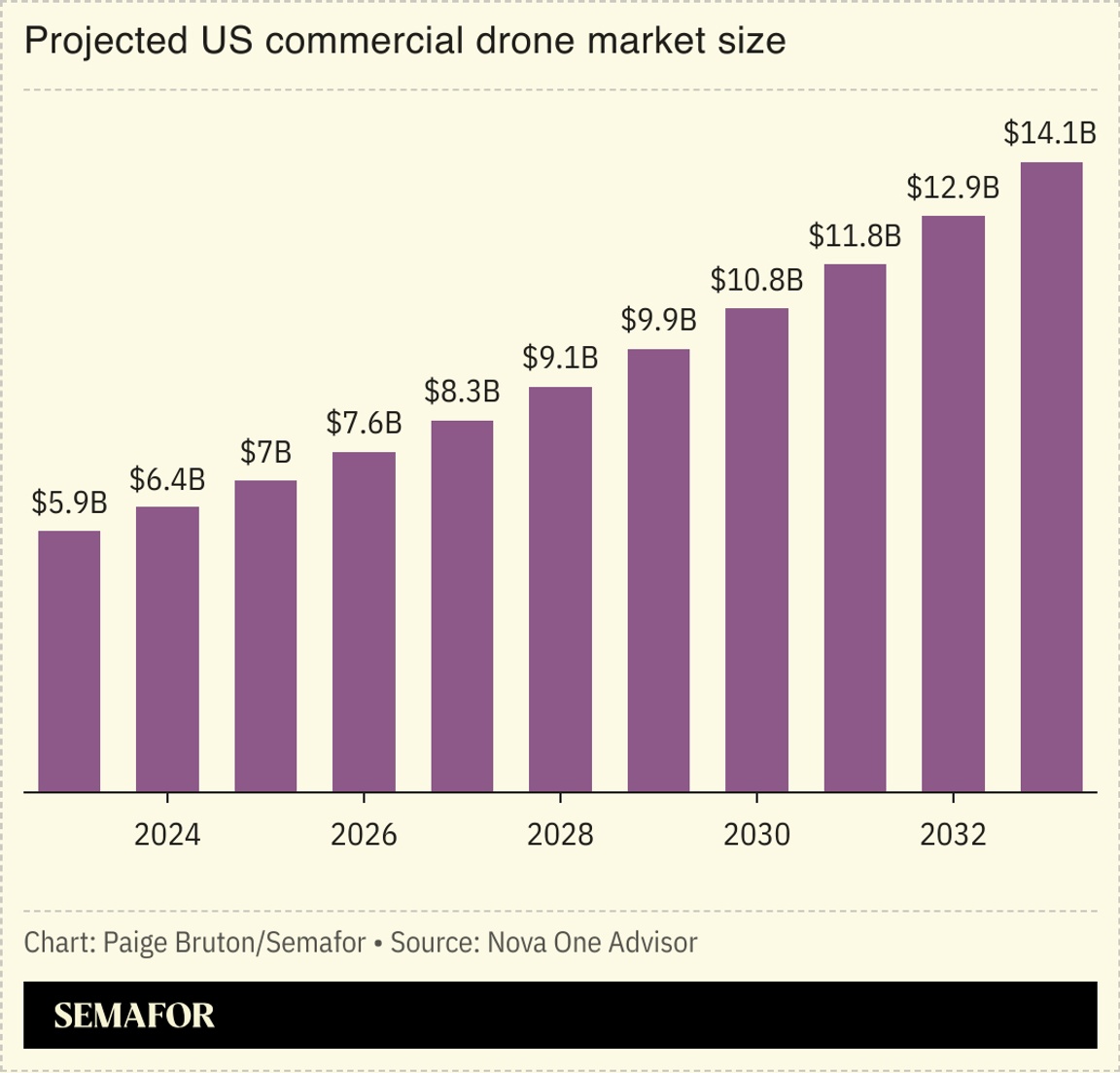 The US banned sales of new foreign-made drones over security concerns, sparking a backlash. Commercial drone users met the new ban with dismay: One Chinese company, DJI, dominates the US drone market. DJI models are used by thousands of businesses from real-estate surveyors to agriculture, as well as by emergency services, but its ties to Beijing are murky, and its drones were banned for US military use in 2017. DJI accused Washington of “protectionism,” while the US regulator said it was intended to “unleash American drone dominance.” As yet, though, no domestic equivalent exists, and drone users are concerned for their businesses. “American drones can’t compete,” one operator told The Wall Street Journal. |
|
Pilot pen highlights Japan’s inflation |
|
Bethlehem celebrates Christmas once more |
 Mussa Qawasma/Reuters Mussa Qawasma/ReutersBethlehem lit its Christmas tree for the first time since 2022, as a fragile truce holds in Gaza. Christian mythology says the city is the birthplace of Jesus Christ, and it has traditionally seen a stream of tourists and pilgrims. But two years of war — and before that COVID-19 — all but ended that flow: One tour guide told the Financial Times that before the war, he would take three or four groups a day, but “everything was cancelled” once hostilities broke out. Travelers have not returned in numbers, but public celebrations will recommence. Palestine once had a sizable Christian population of its own, but it has fallen from 11% of the total to around 1% since World War II. |
|
|


