Welcome back to Buffering, where the news that we have lost Rob Reiner still somehow doesn’t feel quite real. Find some time if you can over the next few weeks to appreciate his many, many cultural works. As for this week’s newsletter, we’ve got a look at Wednesday’s stunning (but not completely unexpected) news that the Oscars will be leaving linear television for YouTube in 2029, and why that’s not a complete disaster for ABC and owner Disney. We’ve also got the latest on Bari Weiss, a look at Netflix’s continued expansion into video podcasts, and what happened this week in the war for Warner Bros. Thanks for reading, and here’s wishing you the happiest of holidays, whatever you celebrate.
|
—Joe Adalian, Vulture's West Coast editor |
|
|
➼ Bari Night Live: Saturday’s heavily-hyped Bari Weiss “town hall” with Charlie Kirk’s widow, Erika, was a Nielsen non-event, and relative to what CBS News spent on production and promotion, sort of a disaster: Just 1.87 million people watched the show, barely better than a rerun of The Wall on NBC and fewer than the network’s first-run episode of 48 Hours at 10 p.m. the same evening. So, of course, despite the audience clearly signaling their complete lack of interest in this format, Weiss and her bosses at Paramount have decided to double down on the idea, greenlighting more faux intellectual forums.
Thursday morning, CBS News said it was launching a series of so-called town halls and debates modeled after Saturday’s Weiss-Kirk summit, only now the effort will be co-produced with The Free Press, the Weiss-founded newsletter bought by Paramount earlier this year. The lineup for what is being called “The Things That Matter” is currently filled with dynamic crowdpleasers like … Vice President JD Vance, Maryland Gov. Wes Moore and OpenAI’s Sam Altman, while the debate topics scheduled include barn-burners such as “The Sexual Revolution: Has Feminism Failed Women?,” “Does America Need God” and “Should Gen Z Believe in the American Dream.” It’s worth noting that CBS did not indicate that any of these events would actually air on the network, nor were any specific dates attached. (PSA: We’ve got more on Weiss a bit further down in the newsletter.)
➼ Peacock’s “Arrival”: When Peacock launched five years ago, it made a big deal about how little advertising viewers would see: No more than five minutes per hour. The NBCU streamer still carries far fewer minutes of commercials per hour than linear TV and even many streaming platforms, but it’s also finding new and more intrusive ways to put ad messages in front of your eyeballs.
First came those on-screen ads that pop up whenever you put a title on pause. Now comes news that early next year Peacock will greet users with what it’s pitching to sponsors as “arrival ads”: When users open up Peacock in a browser or on TV, they’ll be warmly welcomed by a commercial that runs in the background of their profile page — exposing you to an ad message before you even get to your shows and movies. In a press release, NBCU said the initiative is about “turning the platform’s front door into an interactive brand moment,” which in English translates to, “Here’s another way to make more money we can spend on buying up even more sports rights.” On the bright side, users who pay for ad-free Peacock will not have to see these commercials, per an NBCU rep contacted by The Verge.
➼ Instagram Is Coming for Your TV: The Meta-owned company is testing a new app designed specifically to watch Reels on the big screen. This is emphatically not the same as IGTV, its erstwhile longform video experiment. Instead, it looks a lot more like a traditional TV streaming app — just one populated with vertical videos. |
|
|
ABC Lost the Oscars to YouTube. Good? |
Photo-Illustration: Vulture; Photo: Frazer Harrison/Getty Images) |
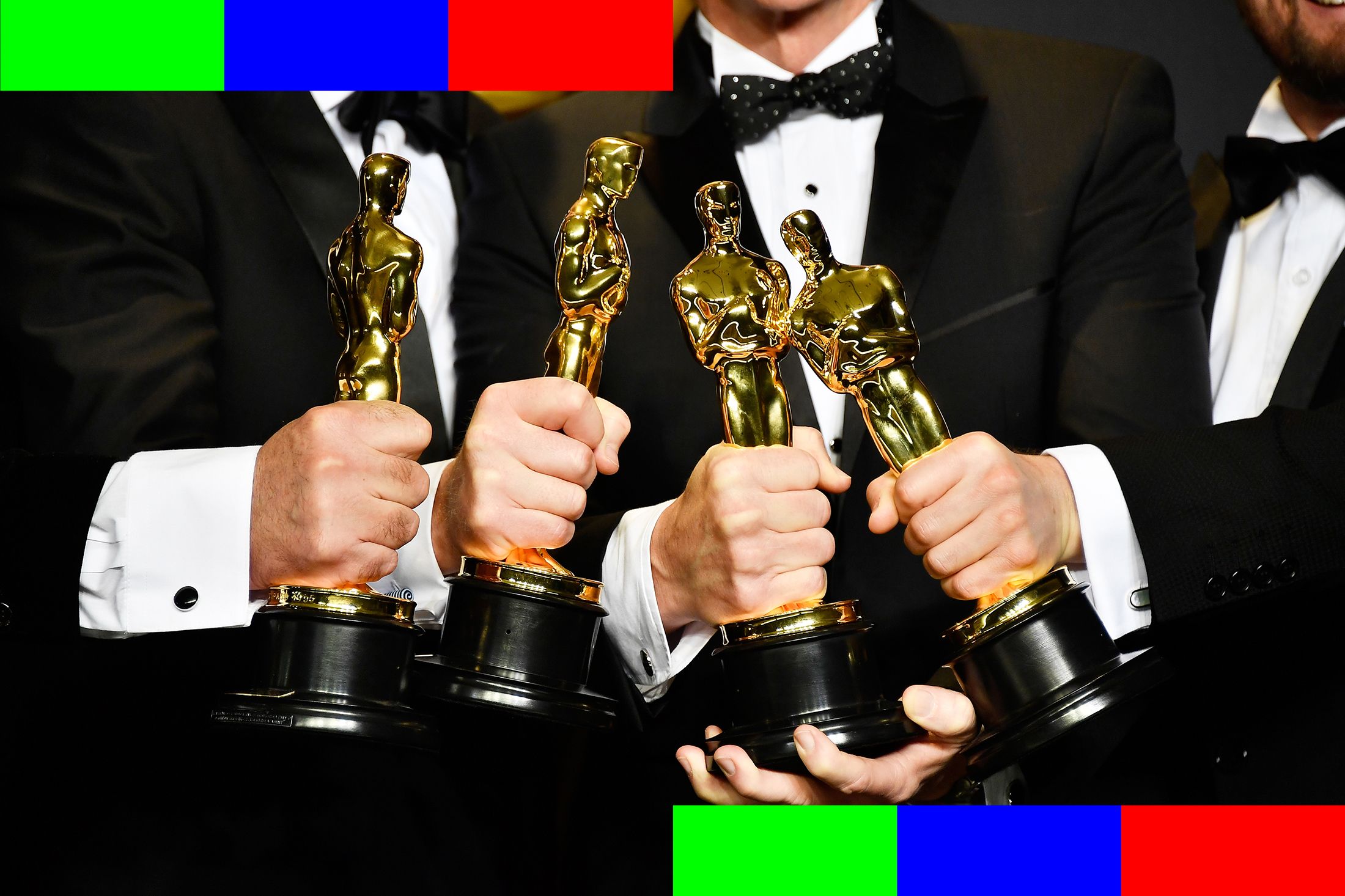
Wednesday’s announcement that the Academy Awards will ditch ABC for YouTube starting in 2029 is one folks in Hollywood will be processing for weeks, if not months, to come. There are going to be a lot of opinions on whether this is good for the movie business, whether the show will have as much (or more) cultural impact by airing on a digital platform, and what sort of creative changes to the telecast might be facilitated by the move to streaming. I would argue that because there’s so much we still don’t know — everything from YouTube’s goals for the show to what the TV and streaming landscape will look like three years from now — it would be wise not to make too many predictions about What Will Happen to what is still a pretty significant event on the American cultural calendar. But I will say this: For Disney, losing the Oscars to YouTube kinda feels like a blessing.
Per published reports, the company was spending upwards of $100 million every year on a show which this year reached just shy of 20 million viewers. That’s a strong number in today’s TV environment, for sure, and since the Oscars also still pull in lots of premium advertisers — and thus many millions in ad revenue — it’s not as if there isn’t still a significant upside to being the home of the event. But unlike the Super Bowl, the relative ad haul for the Oscars is nowhere near what it used to be decades ago, both because ratings are so much lower and because advertisers are just spending so much less on anything on linear TV that’s not live sports. And while 20 million viewers might be a strong number, it’s not a blockbuster.
Consider: ABC was able to attract about 10 million live viewers last month for the season finale of Dancing With the Stars, a show which costs a lot less than what the network has been paying the Academy. Netflix executives love talking about program “efficiency,” a fancy way of saying how much bang for the buck any given show offers. The Oscars are a great showcase, a potent tool to promote other Disney TV shows and movies, and just a great, prestigious tentpole for any network to have — but they’re hardly a profit engine. Losing the Oscars isn’t going to blow a hole in the ABC business model the way, say, losing the NFL would destroy a network like Fox.
In years past, I’d also point out that the $100 million ABC was handing over to the Academy could now be pumped into developing more scripted series or other programming initiatives. Alas, the way legacy companies like Disney treat their broadcast networks, I don’t think ABC is going to just be able to use its Oscars savings on making more episodes of High Potential or a Will Trent spin-off. Instead, the money will probably be funneled into Hulu or, perhaps, has already been spoken for by the new high-profile awards show Disney Entertainment co-chair Dana Walden snapped up late last year — the Grammys, which moves to the Alphabet network in 2027. I believe Walden stepped up to steal the Grammys from CBS in part because she wasn’t sure ABC would be able to continue to make economic sense of the Oscars, and wanted to make sure the network still had a big live tentpole in the first quarter of the year. (For the record, however, ABC-Disney unscripted guru Rob Mills told me earlier this year that he didn’t think that was the case. “I don’t think the Grammys were in any way, shape, or form bought as an insurance policy,” he said, adding that he was looking forward to both shows existing on the network for at least two years “and hopefully more.”)
But even if ABC’s development budget might not be in for a windfall, not having to worry about shouldering so much money for a show whose ratings have fallen far below what they were when Disney made its last Oscars deal feels like a good thing in the aggregate for the network. And what’s more, the fact that the show is going to YouTube and not another broadcast network or even a subscription streamer like Netflix means that Disney and ABC at least don’t have to worry about one of their main programming rivals taking custody of the child they’ve raised for decades. YouTube isn’t in the traditional TV programming business, and thus isn’t the same kind of competitor for subscription dollars or ratings that other broadcast networks and SVOD platforms are to Disney. That could change — remember what I said about making predictions? — but the Oscars going to Google’s YouTube feels like a lot less of an ego blow than had the show ended up somewhere like NBC or Netflix.
The one area where Disney and ABC do compete with Google and YouTube is, of course, the battle for eyeballs and advertising revenue. And while we have no idea yet how (or even whether) YouTube sees the Oscars as a way to evolve its programming strategy, we can be pretty certain that the company sees the show as a massive new weapon to soak up as much advertising revenue as possible. Having what is often referred to in the ad industry as the “Super Bowl for women” opens up all sorts of potential sales opportunities for Google, ones specifically tied to a live, scheduled event— something YouTube (and Netflix) clearly believe they need more of. That’s why earlier this year, YouTube also stepped up to buy the rights to its first exclusive NFL game, and for several years now, it’s been steadily upgrading its investments around its live streams of Coachella.
These events let Google’s ad sales teams offer clients the ability to reach a certain kind of consumer during a very specific timeframe. So much streaming viewership is non-linear, with audiences literally watching “on demand,” but advertisers also want to reach consumers who tune in at a given hour so they can reach them with time-sensitive messages (think movie studios or retailers). The Oscars is one of the best examples of such programming, not just for the live telecast but also for the events and pageantry surrounding it: the red carpet, the parties, the pundits’ predictions. You can bet all of that will be packaged and sold by Google in ways that ABC’s Oscar Sunday offering could never imagine.
|
|
|
Photo-Illustration: Joe Darrow; Source Photos: Getty Images |
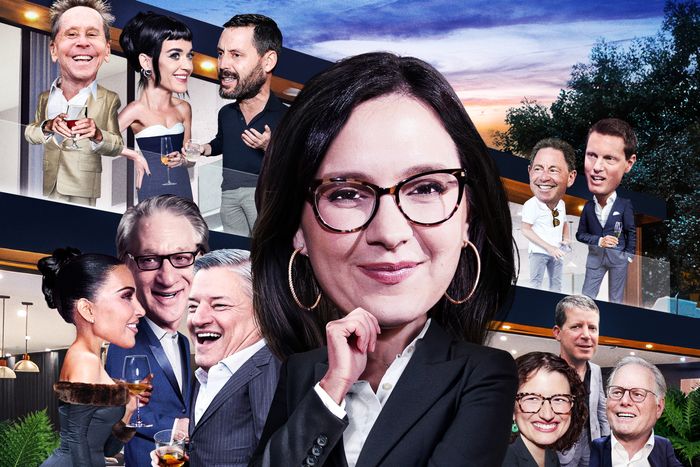
In 2021, the Hollywood producer Brian Grazer was on a bike trip in South America with some friends, including media mogul Barry Diller, former Allen & Company president Herbert Allen Jr., and former Activision chief Bobby Kotick. A registered Democrat at the time, Grazer was expressing his frustration with the woke fever gripping the country and was considering holding a salon at his Santa Monica home to discuss the issue. Allen suggested Grazer get in touch with his son Herb Allen III, who now runs the family’s boutique investment bank, which is known for its billionaire-heavy media-tech confab, held each year in Sun Valley, Idaho. When Grazer spoke to the younger Allen, he said, “You should talk to Bari Weiss.”
Weiss had recently arrived in Los Angeles from New York, a city she’d left behind in 2020 along with her job editing and writing for the New York Times’ “Opinion” section. Although Weiss technically left of her own volition — blasting the paper for its “illiberal environment” in her publicly posted resignation letter — it felt as though she had been hounded out in the wake of the Tom Cotton op-ed fiasco, during which her boss, James Bennet, had been forced to step down amid a newsroom revolt. Grazer invited Weiss and her partner, the then–Times journalist Nellie Bowles, to his home, as well as some friends including Kotick, New England Patriots owner Robert Kraft, and Warner Bros. Discovery CEO and president David Zaslav. Weiss knew Kraft only vaguely through Columbia Hillel and didn’t recognize Zaslav at all. She had never met Kotick, who would become a key investor in the Free Press, the news and opinion site she and Bowles would launch on Substack in 2022. But her naïveté was part of her charm — as was her evident talent. “She struck me as someone with moneymaking DNA,” said Kotick.
In the years since, Weiss, now 41, has gone from meeting moguls to becoming one. She turned her anti-woke, anti-elite, and often MAGA-tolerant newsletter into a full-fledged media company, then sold it in October for $150 million to David Ellison, the 42-year-old chairman of newly consolidated Paramount Skydance. As part of the deal, Weiss became the editor-in-chief of CBS News — the kind of legacy outlet she burnished her name railing against. Only a few years earlier, as a mid-level editor at the Times, Weiss had expressed anxiety to colleagues about asking for a $10,000 raise. Now she has returned to New York as one of the most powerful and well-remunerated people in all of media. “Coming out west to get your fortune is kind of a timeworn tradition,” a friend of Weiss’s said. But as Broadway producer and media strategist Alex Levy, another friend, put it, “Bari did not set out to get rich. She set out to make an impact. And the rich is just incidental to that.”
The move to L.A. was essential to Weiss’s reinvention. |
|
|
Photo-Illustration: Joe Darrow; Source Photos: Getty Images |
Netflix has had a busy few weeks as it moves to fend off David Ellison and Paramount to acquire Warner Bros. Discovery, one of Hollywood’s most storied studios, but amid all that corporate drama, it’s worth keeping an eye on the company’s other, less historic targets. Its budding video-podcast strategy. Two months after announcing a pact to bring select Spotify shows onto the platform, Netflix unveiled two additional deals this week: one with Dave Portnoy’s Barstool Sports and another with iHeartMedia.
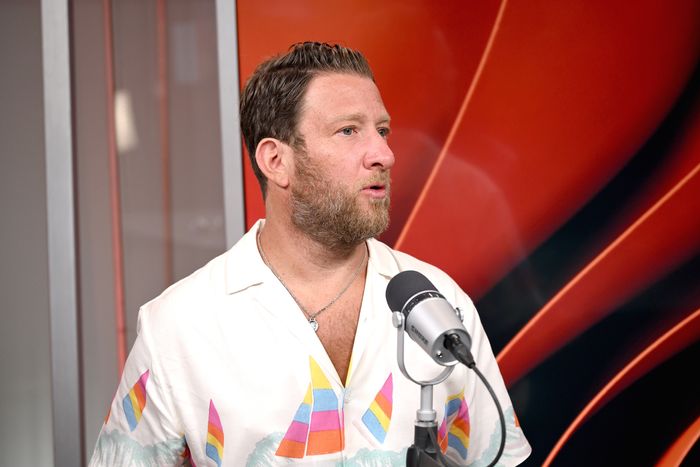
The Barstool agreement, announced today, will bring three shows to Netflix: the flagship Pardon My Take, the NHL-focused Spittin’ Chiclets, and The Ryen Russillo Show, which recently departed Bill Simmons’s The Ringer and relaunched via a new joint venture with Portnoy. The iHeartMedia partnership, announced on Monday, is broader, encompassing 15 titles including My Favorite Murder, Dear Chelsea, and New Rory & MAL. Intriguingly absent for now is Las Culturistas, though iHeartMedia teases that more additions are likely to be announced in the month to come. Perhaps most notably, the slate also includes The Breakfast Club, the influential morning radio show most closely associated with Charlamagne tha God, who currently co-hosts it alongside DJ Envy, Jess Hilarious, and Loren Lorosa.
Netflix is framing both arrangements as “exclusive video podcast partnerships,” meaning that full video versions of these shows will live exclusively on Netflix, while their audio feeds will remain widely available elsewhere. An iHeartMedia spokesperson noted that shows can still upload video clips to their social media and on YouTube. Rollout is slated for early 2026, with new episodes and a limited back-catalogue window appearing on the service. Taken together, the deals will bring Netflix’s total number of video podcasts to just over 30 — that is, unless it announces yet another partnership before the strategy goes live in the New Year.
These two new deals subtly reshape how we should think about Netflix’s emerging video-podcast strategy. The underlying logic remains unchanged: Netflix gains a fresh vein of low-cost, evergreen talk programming that helps it compete for attention against YouTube, which has rapidly absorbed much of the podcast ecosystem and, more broadly, has been positioning itself as a direct rival. In return, Spotify and now iHeartMedia and Barstool Sports secure another massive distribution outlet capable of pushing their shows to even larger audiences. Those distributors also presumably collect licensing fees along with the cachet of being associated with Netflix, which still carries a more premium aura than YouTube.
On the flip side, the expansion makes Netflix’s original Spotify arrangement feel far less singular. |
The Latest Dispatch From the War for Warners…
|
Photo: Joe Pugliese and John Nowak, Warner Bros. Discovery |
… Is a photo-op! Doesn’t Warner Bros. Discovery CEO David Zaslav just look so cozy nestled between Netflix co-CEOs Greg Peters and Ted Sarandos? A picture really can say a thousand words, and — in Zaslav’s case — point at the $567 million golden parachute he’s set to collect assuming WB’s deal with Netflix goes through.
This week brought that future incrementally closer to fruition, with the WBD board formally, unanimously rejecting Paramount’s rival $108 billion bid to take over the entire company. “Unsolicited, inferior and illusory,” were the words they used to describe David Ellison’s hostile $30-per-share offer in the press release, which expressed confidence that the Netflix bid could overcome the regulatory hurdles on the horizon. But as WBD board chair Samuel Di Piazza told CNBC, “It was not a hard choice.” —Eric Vilas-Boas
|
|
|
|