This issue: Some industry people’s unfiltered thoughts on the year in books, a report from Feeld’s second magazine launch party, and an exclusive. |
|
|
What Book Industry Folks Really Thought About The Year in Books We polled some insiders.
|
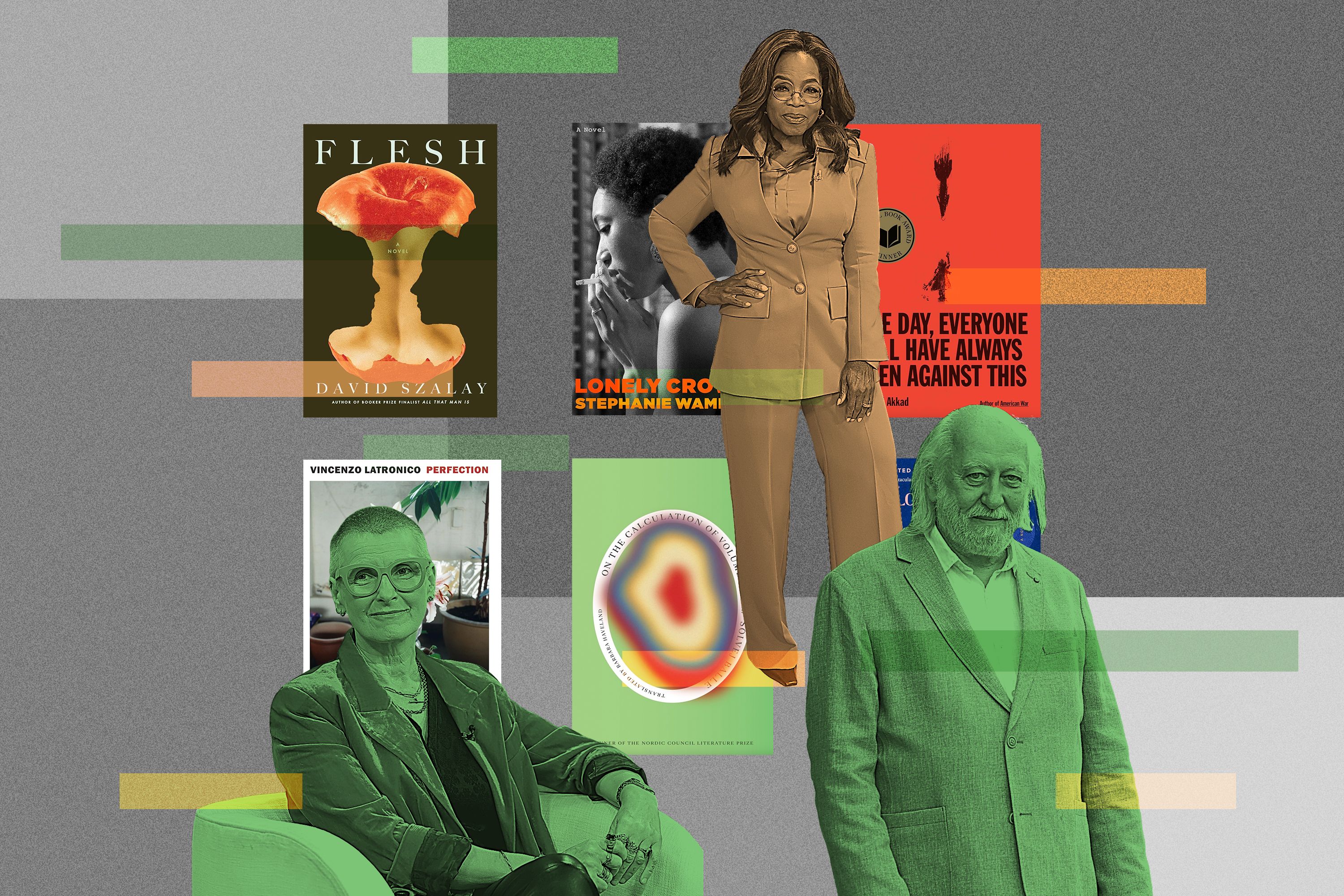
Vulture; Photos: Getty Images, Publishers |
|
|
Dear Book Gossipers,
You don’t need me to tell you that it was, in many ways, a hellish year. Unfortunately, books weren’t entirely exempt from that. Book sales fell in the first half of 2025, and while AI continued to erode our ability to write and think for ourselves, tireless (and tiring) discourse raged on about whether men have been forever exiled from the kingdom of letters. But before we close the book on 2025 forever, let’s get it down in writing that there’s a great deal to feel hopeful about. For one: Readers didn’t stop gathering, and in fact they devised new ways to do so. Seemingly every week in New York, I heard about packed in-person readings, panels, and release parties; book clubs bringing together old and new friends; and the arrival of a series of genuinely exciting, sharp new magazines and imprints. Not long ago, on a Saturday night in Brooklyn, I saw two young women separately exit the train and continue to read their books while climbing up the subway stairs. Not to mention that Dua Lipa’s book club anointed David Szalay’s book at NYPL a month before it won the Booker. All to say that being a literary citizen is now chicer and more essential than ever.
For the final Book Gossip of the year, we wanted to capture a wide-ranging insider snapshot of the year in books, so my colleague Emma Alpern and I sent out a 26-question survey to our industry connections asking what trends we need to retire in 2026, whether authors should be on Substack, what title was most overhyped this year, and, of course, what gossip lit up their group chats. Here are 28 agents, scouts, writers, publicists, and magazine and book editors’ unfiltered thoughts on the current state of the industry.
|
|
|
Twenty-four percent thought Perfection, by Vincenzo Latronico, was the most surprising best seller this year.
|
“A minimally plotted novel in translation about bored European millennials? It’s a brilliant book, but by no means an obvious runway hit. I’d love to see what that original P&L looked like …” —Maya Raiford Cohen, associate editor at Astra House |
|
|
There was a book of the summer, according to just over half of people polled.
|
|
|
Stephanie Wambugu’s Lonely Crowds got the most nods, followed by Great Black Hope, by Rob Franklin, and, yes, Perfection, by Vincenzo Latronico.
|
|
|
The most-deserving big prizewinners were David Szalay’s Flesh and Omad El Akkad’s One Day Everyone Will Have Always Been Against This, which won the Booker Prize and the National Book Award, respectively.
|
|
|
The most overhyped books of the year were The Loneliness of Sonia and Sunny and “these horrendously tedious Calculation of Volume books from Denmark,” as one respondent put it.
|
|
|
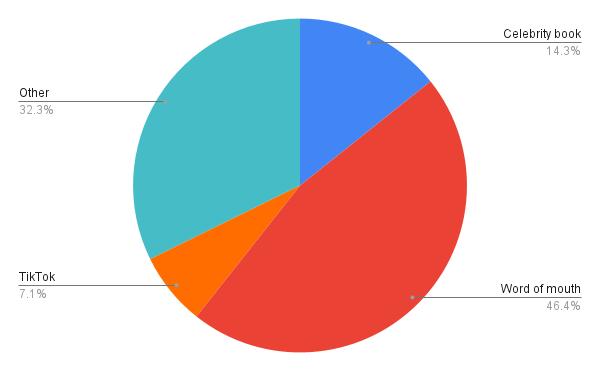
Word of mouth matters most for book sales. Listicles and reviews got zero votes in this category.
|
“I used to work in publicity, and the rule of thumb was: “It takes people seeing a book five times before they buy it.” The goal is to make people feel like they’re missing out on what everyone is talking about if they don’t read a particular book.” —An editor at an indie press |
|
|
Oprah Winfrey, Reese Witherspoon, and Jenna Bush Hager are the celebrities whose book clubs actually sell units, though some of our survey respondents don’t believe any of them do anymore.
|
“Jenna, Reese, and Oprah can still move the needle, but nowhere NEAR the way they used to.” —A writer and editor “Reese if the book's about white people. Otherwise, Oprah.” —An agent “None are reliable drivers of sales anymore.” —An editor at a big-five publisher |
|
|
Regarding the “men don’t read” discourse, only 11 percent believe it to be a genuine crisis. Nearly a third are completely unconcerned.
|
“A few (male) editors have told me they wish they could figure out what men would read, what books they would buy. I think they do read. They read nonfiction and genre fiction, mostly. And then they probably read the canon. They’re just not reading, like, contemporary literary fiction, and I don’t know if that’s bad or good. I also think it’s a question of generations — they’re wondering what younger millennial men are reading and Gen-Z boys/men. They’re young, and their tastes are as yet unformed, so ... get to work!” —A literary agent
|
|
|
The literary trend we need to retire in 2026:
|
“Internet/autofiction novels stemming out of the downtown literary scene.” —Chloe Texier-Rose, assistant director of publicity, Little, Brown “Moody, vibes-based books: craft a plot around which to put your beautiful sentences. Nobody wants to write narrative anymore, but that’s where the fairy-monster-sex books are running laps around the litfic authors.” —An agent “Navel-gazing novels about writers looking at their phones.” —A publicist at a big-five publisher
“Zibby Owens.” —An editor at a big-five publisher “Age gap novels. I’m happy for you or I’m sorry that happened, but I’m not reading another one. And also publishing all front-list literary fiction as hardcovers! We (those of us who publish literary fiction) should take a cue from genre fiction and publish more trade paperback originals at a more affordable price.” —Maya Raiford Cohen, associate editor at Astra House “Trans memoirs. Every trans writer gets suckered into writing a memoir or essay collection — oftentimes for a six-figure advance! — and not a single one has ever broken out. Cis readers do not care about our feelings. Do a novel instead; at least those sometimes succeed.” —Naomi Kanakia, author and writer of the Woman of Letters Substack
“Calling a book ‘small’ or ‘quiet’ feels like a backhanded insult — corporate shorthand for ‘we don’t have the imagination, or the willingness to recognize certain readers, to publish this well.’” —VP and executive editor at a big-five publisher “Unconsummated queer longing — let the girls fuck.” —An agent
“I think it’s time for a series wrap on books about: incels, life online, people doing cocaine in downtown New York, and, most of all, characters who don’t care about anything.” —An editor at an indie press “We’ve got to stop literary ‘It’-girl-ing people!” —A critic
“Ten-plus city book tours! They don’t pay dividends in terms of book sales and accelerate publicist burnout.” —publicist at a big-five publisher “Novels about groups of friends grappling with an act of profound violence that changed their lives forever. Romantasy needs to die; sorry, just watch a porno, you freaks.” —An agent |
|
|
Should authors be on Substack?
|
“To the extent it helps them build an audience, yes; to the extent it represents a distraction from writing their next book, no.” —An agent “No. I always think after reading an author’s Substack, You know what this could have used? An editor.” —Editor at an independent publisher “Yes, but it’s going to end poorly. Some will be wildly successful, but eventually users will get bored of the format and move on. They should do it with an all-or-nothing, eat-while-hot mentality.” —An agent
“Yet to come across a Substack that didn’t need an editor or didn’t need to be shorter. As a magazine editor, I’m also seeing writers rush out with good but half-baked ideas, ideas for pieces I would pay for, but not once they’re out there for free.” —A magazine editor “Seize the means of production. Let’s just write posts on sticky notes.” —A writer |
|
|
The best book event in 2025 …
|
“The Nightboat gala after-party: no readings and a proper dance floor.” —An editor at an independent publisher
“The Patio launching a book at TJ Byrnes.” —An agent “The Paris Review Spring Revel. True every year.” —VP and executive editor at a big-five publisher “The Booker — they just know how to do it.” —An agent |
|
|
The worst book event in 2025 …
|
“I hate to say it but most bookstore book launches (Books are Magic, Community, The Strand, etc.) fell into this category for me this year. I think the format of an author, speaking with a friend or a mentor, to a room of friends who mostly haven’t had time to read the book, or are really only there out of friendship and support, for over an hour on a weeknight between work and dinner, is just a really tired format. I’m liking what McNally Jackson is doing for its launch events — getting several authors together around a theme, rather than a single title.” —A magazine editor
“I went to one reading at KGB and walked in and walked right out — it was so crowded.” —A literary agent “The Whiting Awards ceremony: painfully earnest speeches.” —An editor at an independent publisher
“I've only heard secondhand about it, and it involves people I don’t want to speak ill of. All I’ll say is that a broken air conditioner provides a B or C plot for the catastrophe.” —A magazine editor |
|
|
Why are book sales down this year?
|
“Attention is no longer a renewable resource and nobody knows how to sit still anymore.” —Maya Raiford Cohen, associate editor at Astra House “The high cost of new hardcovers and prestige TV.” —Penina Roth, curator of the Franklin Park reading series
“I think it ends up being a lack of quality. Editors are overwhelmed and overworked, while being expected to acquire more. Meanwhile, more single-person agencies are popping up run by people with no publishing experience or background, and, ergo, no understanding of the etiquette (which isn’t their fault!) This means that editors get hundreds more submissions for books outside of their genre that they need to sort through, and spend more time dealing with agents who do not know what they’re doing. Most editors just don’t have time to really edit, which means that books that are good never become great, and a lot of things slip through the cracks. It’s disheartening to see books with SERIOUS plot holes get their flowers.” —An agent
“It’s the phones. It’s always the phones.” —A writer and an editor
“People are reading like they are scrolling — for dopamine — but that means lots of books face a ‘user experience problem’ since literary novels, short stories, histories, memoirs, etc. aren’t designed to push the big, red happy button in our brains (whereas romantasy and self-help are truly designed to do that). And publishers delude themselves into thinking that they are doing marketing well. They have been behind the ball for years in this space, and it shows.” —An agent “I think as long as food and housing costs are up, book sales are going to be down.” —An editor at an indie press
“In New York? Everyone was busy canvassing for Mamdani.” —A book scout |
|
|
FSG, NYRB, N+1, and Joyland Editions are putting out the most exciting work right now.
|
“New York Review Books has done some really smart publishing in the last few years, especially picking up non-U.S. writers (Perfection; Susie Boyt’s Loved and Missed; Gwendoline Riley, who has a new book coming in April). I’m excited about Joyland Editions; Cora Lewis’s Information Age was a great first book.” —A book scout |
|
|
Everyone is at least a little concerned about the use of AI in publishing.
|
|
|
What author do you suspect is using AI?
|
Yes, some names were named, but no one was mentioned more than once. |
“The ones who got book deals based on how many followers they have.” —Maris Kreizman, author and critic
“Romantasy authors.” —An agent “I would most suspect memoirs that are ghostwritten (ghostwriters work hard and fast, and many of them are amazing, but it’s too tempting to take shortcuts when your name isn’t even on the cover).” —A magazine editor |
|
|
Ben Lerner’s Transcription is going to be huge in 2026.
|
“Lerner writing a very short book is a canny move, I think we’ll see a trend of literary novels being either 120 pages or 500 pages, with much less in the middle.” —A magazine editor |
|
|
|