|
|
 
The discovery of Brontotholus harmoni, a new dome-headed dinosaur species, in Montana's Two Medicine Formation has provided paleontologists with five distinct fossils, including a prominent skull dome, according to a study in the Zoological Journal of the Linnean Society. The research places the plant-eating Brontotholus on a separate evolutionary branch, challenging previous assumptions about pachycephalosaurid relationships and highlighting the complexity of ancient dinosaur ecosystems. |
|
|
|
|
Flow automatically syncs classes, rosters, assignments, and grades between your Student Information System and Learning Management System. No more manual updates or duplicate work. Learn more about Flow. |
|
|
|
| ADVERTISEMENT |  |
|

| |
 |
| (Stephanie Melillo/Getty Images) |
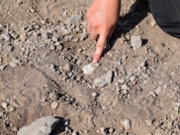
Scientists have identified the 3.4 million-year-old Burtele foot fossil as belonging to Australopithecus deyiremeda, a species that lived alongside the more well-known Australopithecus afarensis. This discovery, detailed in Nature, suggests that multiple hominin species coexisted and had different adaptations for bipedality and diet. |
|
|
Astronomers have observed a supermassive black hole flare in the galaxy NGC 3783 that triggered an ultrafast outflow, with winds reaching 19% of the speed of light. "For the first time, we've seen how a rapid burst of X-ray light from a black hole immediately triggers ultra-fast winds, with these winds forming in just a single day," said astronomer Liyi Gu.
|
|
The Bo people, known for the ancient practice of hanging coffins on cliffs in southern China, have been traced through DNA analysis to modern descendants in Yunnan province. The study, published in Nature Communications, reveals that the Bo did not vanish as previously thought, but have maintained their distinct culture for 3,000 years. The research highlights the Bo's connections to Neolithic coastal populations and the cultural exchanges in the region. |
|
| |
 |
| (Anadolu/Getty Images) |
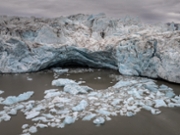
Research published in AGU Advances highlights the role of tiny turbulent whirls and heat loss in driving the vertical circulation of the Arctic Ocean. As climate change accelerates sea ice melt and increases the influx of warmer water, the balance between surface fluxes and turbulence is expected to shift, potentially impacting the Atlantic Meridional Overturning Circulation, which is crucial for weather patterns in Europe and North America. |
|
About 1 million children in the US became obese during the COVID-19 pandemic, increasing the obesity rate from about 21% to 23%, according to a study in the journal Pediatrics. The study found that minority and disadvantaged youth, as well as those already overweight, were particularly affected. |
|
|
Nearly half the TikTok videos about epilepsy promote false information, some of which is potentially harmful, but 90% of content from traditional medical professionals is generally accurate, according to a study presented at the American Epilepsy Society's annual meeting. Another study found that much of the information on various platforms about cannabidiol therapy for epilepsy is either inaccurate or insufficient. Videos and content with inaccurate or misleading information have the highest engagement, researchers reported.
|
|
|
|
|
Sometimes layoffs are necessary, but brand damage isn't. Discover how top companies use career transition services to protect morale, culture, and reputation. Get the 2025 Improving Career Transition report and lead with empathy and impact. Download now » |
|
|
|
| ADVERTISEMENT |  |
|

|
Researchers at Penn State University have received a four-year, $3.2 million NIH grant to develop the PSU Child VAD, a ventricular assist device designed for children ages 1 to 11 who have heart failure. The project aims to fill a critical gap in treatment options, as no long-term heart pumps are currently approved for this age group.
|
|
|
|
|
See the world, build the future with Roboflow's vision AI. Enable your team to efficiently train and deploy vision models for automated quality oversight. Download the SmartPulse today! |
|
|
|
|
|

| | |